Compare commits
78
Commits
v0.15.0
...
3f0766ccbe
| Author | SHA1 | Date | |
|---|---|---|---|
 ietm64 |
3f0766ccbe | ||
|
ietm64
|
b9020cb46f | ||
|
ietm64
|
10574ba0c5 | ||
|
ietm64
|
ace2e486fc | ||
|
ietm64
|
c008c22e09 | ||
|
ietm64
|
bf606c23d1 | ||
|
ietm64
|
1898e8b1ae | ||
|
ietm64
|
e77ad85be9 | ||
|
ietm64
|
11939fe39e | ||
|
ietm64
|
8958822545 | ||
|
ietm64
|
007bcce8a7 | ||
|
ietm64
|
a985bbd018 | ||
|
ietm64
|
1c9ac524db | ||
|
ietm64
|
abf66733fe | ||
|
ietm64
|
763219412b | ||
|
ietm64
|
cccf2b85db | ||
|
ietm64
|
6ae9238fee | ||
|
ietm64
|
0ef1380265 | ||
|
ietm64
|
9a7e93b162 | ||
|
ietm64
|
106754fd77 | ||
|
ietm64
|
0c0581e894 | ||
|
ietm64
|
dae0508c93 | ||
|
ietm64
|
cbd59a5bd9 | ||
|
ietm64
|
d759bc8131 | ||
|
ietm64
|
ac7648f9fe | ||
|
ietm64
|
d9a90f8412 | ||
|
ietm64
|
2e9632de49 | ||
|
ietm64
|
fbb1956e17 | ||
|
ietm64
|
8c6b642975 | ||
|
ietm64
|
d926545e3d | ||
|
ietm64
|
b323c681f8 | ||
|
ietm64
|
e7063b31e3 | ||
|
ietm64
|
ab658f27b0 | ||
|
ietm64
|
c2947cfef8 | ||
|
ietm64
|
67ac4cc68f | ||
|
ietm64
|
c2f162d823 | ||
|
ietm64
|
ad3ea0e9e6 | ||
|
ietm64
|
0c44e42a22 | ||
|
ietm64
|
1c8b24c5dd | ||
|
ietm64
|
177967af55 | ||
|
ietm64
|
42c4b53ced | ||
|
ietm64
|
3e9e828225 | ||
|
ietm64
|
51eb907078 | ||
|
ietm64
|
9f0359d8c0 | ||
|
ietm64
|
587e0fe097 | ||
|
ietm64
|
5c3c58265f | ||
|
ietm64
|
f72161e41e | ||
|
ietm64
|
4d05aa5118 | ||
|
ietm64
|
beafbc2fa9 | ||
|
ietm64
|
b2c3800bf8 | ||
|
ietm64
|
268f4721ce | ||
|
ietm64
|
11a33b1cf0 | ||
|
ietm64
|
f670735100 | ||
|
ietm64
|
c1e3a20e5a | ||
|
ietm64
|
a9242ba1e1 | ||
|
ietm64
|
3896c5b4cb | ||
|
ietm64
|
b999aa54ad | ||
|
ietm64
|
9bd66613b6 | ||
|
ietm64
|
18f5a260b0 | ||
|
ietm64
|
c0e1da78c8 | ||
|
ietm64
|
5bc038acd8 | ||
|
ietm64
|
f347dcd357 | ||
|
ietm64
|
46fea8d53c | ||
|
ietm64
|
e05b26563f | ||
|
ietm64
|
dc66199177 | ||
|
ietm64
|
b133d0f16d | ||
|
ietm64
|
024d37dea6 | ||
|
ietm64
|
997aadf5b5 | ||
|
ietm64
|
560c07d5c3 | ||
|
ietm64
|
5aa08a3a27 | ||
|
ietm64
|
13f4b994ab | ||
|
ietm64
|
d1653b8bea | ||
|
ietm64
|
4d049274f9 | ||
|
ietm64
|
eb78a75621 | ||
|
ietm64
|
f04ecf1021 | ||
|
ietm64
|
72fe5e6215 | ||
|
ietm64
|
7dfa9c3655 | ||
|
ietm64
|
7aa174d75a |
@@ -0,0 +1,86 @@
|
||||
name: Tests unitaires
|
||||
|
||||
# Gate de qualité : lance les 3 suites unitaires (Java / Python / Angular) à
|
||||
# chaque push sur main et sur chaque PR. Une suite rouge fait échouer la CI
|
||||
# (et, via la branch protection Gitea, peut bloquer le merge).
|
||||
# Le build/push des images (release.yml) dépend AUSSI de ces tests via `needs`.
|
||||
on:
|
||||
push:
|
||||
branches: [main]
|
||||
pull_request:
|
||||
branches: [main]
|
||||
|
||||
jobs:
|
||||
core:
|
||||
name: Core (Java · mvn test + JaCoCo)
|
||||
runs-on: ubuntu-latest
|
||||
# Les tests Core utilisent une VRAIE base PostgreSQL (cf.
|
||||
# src/test/resources/application.properties, ddl-auto=create-drop).
|
||||
# On en fournit une en service container. Sur Gitea (job en conteneur),
|
||||
# le service est joignable par son NOM d'hôte `postgres`.
|
||||
services:
|
||||
postgres:
|
||||
image: postgres:16-alpine
|
||||
env:
|
||||
POSTGRES_DB: loremind_test
|
||||
POSTGRES_USER: loremind_test
|
||||
POSTGRES_PASSWORD: loremind_test
|
||||
options: >-
|
||||
--health-cmd "pg_isready -U loremind_test -d loremind_test"
|
||||
--health-interval 10s
|
||||
--health-timeout 5s
|
||||
--health-retries 10
|
||||
steps:
|
||||
- uses: actions/checkout@v4
|
||||
- uses: actions/setup-java@v4
|
||||
with:
|
||||
distribution: temurin
|
||||
java-version: '17'
|
||||
cache: maven
|
||||
# Maven wrapper (./mvnw) : le runner Gitea n'a pas `mvn` préinstallé et
|
||||
# setup-java n'installe que le JDK → le wrapper bootstrappe Maven lui-même.
|
||||
# `mvn test` exécute aussi jacoco:report + jacoco:check (plancher 60%).
|
||||
- name: mvn test (via wrapper)
|
||||
working-directory: core
|
||||
env:
|
||||
SPRING_DATASOURCE_URL: jdbc:postgresql://postgres:5432/loremind_test
|
||||
SPRING_DATASOURCE_USERNAME: loremind_test
|
||||
SPRING_DATASOURCE_PASSWORD: loremind_test
|
||||
run: |
|
||||
chmod +x ./mvnw
|
||||
./mvnw -B test
|
||||
|
||||
brain:
|
||||
name: Brain (Python · pytest + couverture)
|
||||
runs-on: ubuntu-latest
|
||||
steps:
|
||||
- uses: actions/checkout@v4
|
||||
- uses: actions/setup-python@v5
|
||||
with:
|
||||
python-version: '3.12'
|
||||
cache: pip
|
||||
cache-dependency-path: brain/requirements-dev.txt
|
||||
- name: Install deps (test)
|
||||
working-directory: brain
|
||||
run: pip install -r requirements-dev.txt
|
||||
- name: pytest (+ plancher couverture 50%)
|
||||
working-directory: brain
|
||||
run: pytest --cov=app --cov-report=term-missing --cov-fail-under=50
|
||||
|
||||
web:
|
||||
name: Web (Angular · vitest + couverture)
|
||||
runs-on: ubuntu-latest
|
||||
steps:
|
||||
- uses: actions/checkout@v4
|
||||
- uses: actions/setup-node@v4
|
||||
with:
|
||||
node-version: '20'
|
||||
cache: npm
|
||||
cache-dependency-path: web/package-lock.json
|
||||
- name: npm ci
|
||||
working-directory: web
|
||||
run: npm ci --no-audit --no-fund
|
||||
# vitest run --coverage applique les seuils définis dans vitest.config.ts.
|
||||
- name: vitest (+ seuils couverture)
|
||||
working-directory: web
|
||||
run: npm run test:unit:coverage
|
||||
@@ -82,9 +82,11 @@ jobs:
|
||||
if: failure()
|
||||
run: docker compose -f docker-compose.yml -f docker-compose.e2e.yml logs --no-color
|
||||
|
||||
# v3 obligatoire : l'API artifacts v4 n'est pas supportée par Gitea
|
||||
# (GHESNotSupportedError — constaté sur le job MegaLinter).
|
||||
- name: Upload Playwright report
|
||||
if: always()
|
||||
uses: actions/upload-artifact@v4
|
||||
uses: actions/upload-artifact@v3
|
||||
with:
|
||||
name: playwright-report
|
||||
path: web/playwright-report/
|
||||
|
||||
@@ -0,0 +1,104 @@
|
||||
name: Qualité & Sécurité
|
||||
|
||||
# Analyse statique (MegaLinter, config racine .mega-linter.yml) + CVE des
|
||||
# dépendances (Trivy). Workflow SÉPARÉ de ci.yml : un rouge qualité ne bloque
|
||||
# pas la chaîne tests → release pendant la phase de rodage. Une fois la base
|
||||
# assainie, on pourra l'ajouter aux checks requis de la branch protection.
|
||||
on:
|
||||
push:
|
||||
# beta inclus : c'est la branche de dev, le feedback qualité doit y vivre
|
||||
# (ci.yml/e2e.yml, eux, restent volontairement sur main + PR).
|
||||
branches: [main, beta]
|
||||
pull_request:
|
||||
branches: [main]
|
||||
|
||||
jobs:
|
||||
megalinter:
|
||||
name: MegaLinter (PMD · Ruff · Bandit · gitleaks · hadolint)
|
||||
runs-on: ubuntu-latest
|
||||
steps:
|
||||
- uses: actions/checkout@v4
|
||||
with:
|
||||
# Historique complet : requis par gitleaks (scan de l'historique)
|
||||
# et par le mode "fichiers modifiés seulement" en PR.
|
||||
fetch-depth: 0
|
||||
# Flavor "cupcake" : image allégée couvrant les langages courants
|
||||
# (Java/Python/TS inclus). Si un linter activé manquait à la flavor,
|
||||
# MegaLinter échoue en l'indiquant → remplacer par oxsecurity/megalinter@v9
|
||||
# (image complète, plus lourde).
|
||||
- name: MegaLinter
|
||||
uses: oxsecurity/megalinter/flavors/cupcake@v9
|
||||
env:
|
||||
# main → scan complet du dépôt ; beta et PR → seulement les fichiers
|
||||
# modifiés par rapport à main (rapide, feedback ciblé).
|
||||
VALIDATE_ALL_CODEBASE: ${{ github.ref == 'refs/heads/main' }}
|
||||
# v3 obligatoire : l'API artifacts v4 (@actions/artifact 2.x) n'est pas
|
||||
# supportée par Gitea (GHESNotSupportedError constaté avec v4).
|
||||
- name: Publier les rapports
|
||||
if: always()
|
||||
uses: actions/upload-artifact@v3
|
||||
with:
|
||||
name: megalinter-reports
|
||||
path: megalinter-reports/
|
||||
|
||||
web-lint:
|
||||
name: Web (ESLint · angular-eslint + sonarjs)
|
||||
runs-on: ubuntu-latest
|
||||
steps:
|
||||
- uses: actions/checkout@v4
|
||||
- uses: actions/setup-node@v4
|
||||
with:
|
||||
node-version: '20'
|
||||
cache: npm
|
||||
cache-dependency-path: web/package-lock.json
|
||||
- name: npm ci
|
||||
working-directory: web
|
||||
run: npm ci --no-audit --no-fund
|
||||
# Lint via la toolchain du projet (et non via MegaLinter : ESLint a
|
||||
# besoin des plugins de web/node_modules et du contexte Angular).
|
||||
# Config + règles : web/eslint.config.js (sonarjs = règles "à la Sonar").
|
||||
- name: ng lint
|
||||
working-directory: web
|
||||
run: npm run lint
|
||||
|
||||
trivy:
|
||||
name: Trivy (CVE dépendances Maven / pip / npm)
|
||||
runs-on: ubuntu-latest
|
||||
steps:
|
||||
- uses: actions/checkout@v4
|
||||
# Pour résoudre pom.xml (versions héritées du parent Spring Boot), Trivy
|
||||
# télécharge les BOMs depuis Maven Central — qui finit par rate-limiter
|
||||
# l'IP du runner (429). Parade officielle : peupler ~/.m2 AVANT le scan,
|
||||
# Trivy lit le cache local en priorité. Le cache setup-java (clé pom.xml)
|
||||
# rend l'étape quasi gratuite d'un run à l'autre.
|
||||
- uses: actions/setup-java@v4
|
||||
with:
|
||||
distribution: temurin
|
||||
java-version: '17'
|
||||
cache: maven
|
||||
- name: Précharger le cache Maven (~/.m2)
|
||||
working-directory: core
|
||||
run: |
|
||||
chmod +x ./mvnw
|
||||
./mvnw -B -q dependency:go-offline
|
||||
- name: Installer Trivy
|
||||
run: curl -sfL https://raw.githubusercontent.com/aquasecurity/trivy/main/contrib/install.sh | sh -s -- -b /usr/local/bin
|
||||
# Scanne les manifestes du dépôt (pom.xml, requirements*.txt,
|
||||
# package-lock.json) contre les bases CVE. --ignore-unfixed : on ne
|
||||
# bloque que sur les vulnérabilités qui ONT un correctif publié.
|
||||
# --offline-scan : AUCUNE requête vers Maven Central pendant la
|
||||
# résolution — Trivy allait y chercher les POMs parents même avec le
|
||||
# cache rempli, et l'IP du runner finissait rate-limitée (429, 30 min).
|
||||
# Tout est déjà dans ~/.m2 grâce au dependency:go-offline ci-dessus ;
|
||||
# contrepartie : une dépendance absente du cache serait ignorée en
|
||||
# silence (impossible ici, go-offline échouerait d'abord).
|
||||
- name: Scan des dépendances (HIGH/CRITICAL bloquants)
|
||||
run: |
|
||||
trivy fs . \
|
||||
--scanners vuln \
|
||||
--severity HIGH,CRITICAL \
|
||||
--ignore-unfixed \
|
||||
--offline-scan \
|
||||
--skip-dirs node_modules \
|
||||
--skip-dirs docusaurus \
|
||||
--exit-code 1
|
||||
@@ -12,6 +12,9 @@ env:
|
||||
GHCR_NAMESPACE: igmlcreation
|
||||
|
||||
jobs:
|
||||
# NB : pas de job de test ici. Le gate qualité vit dans ci.yml (push main + PR) ;
|
||||
# avec la branch protection Gitea (checks requis sur main), on ne tague donc que
|
||||
# du code déjà vert. release.yml ne fait que builder/pousser les images.
|
||||
build:
|
||||
runs-on: ubuntu-latest
|
||||
strategy:
|
||||
@@ -44,7 +47,7 @@ jobs:
|
||||
|
||||
# Detection du canal :
|
||||
# - tag vX.Y.Z -> stable (push :latest + :version sur les repos publics)
|
||||
# - tag vX.Y.Z-beta* -> beta (push :beta + :version sur les repos GHCR prives
|
||||
# - tag vX.Y.Z-beta* -> beta (push :beta + :version sur les repos GHCR publics
|
||||
# loremind-beta-<component> ; backup Gitea avec :version)
|
||||
- name: Extract version & channel
|
||||
id: meta
|
||||
@@ -71,8 +74,8 @@ jobs:
|
||||
${{ env.GHCR_REGISTRY }}/${{ env.GHCR_NAMESPACE }}/loremind-${{ matrix.component }}:${{ steps.meta.outputs.version }}
|
||||
|
||||
# Build & push canal BETA
|
||||
# GHCR : repos prives loremind-beta-<component> (gated par PAT distribue
|
||||
# via le relais Patreon aux tiers Compagnon).
|
||||
# GHCR : repos PUBLICS loremind-beta-<component> (canal beta libre ;
|
||||
# le switcher bascule IMAGE_NAMESPACE vers ce prefixe).
|
||||
# Gitea : backup prive avec :version uniquement (pas de :latest pour ne
|
||||
# pas faire upgrader les installs branchees sur Gitea).
|
||||
- name: Build & push ${{ matrix.component }} (beta)
|
||||
|
||||
@@ -1,36 +1,120 @@
|
||||
name: Desktop installers
|
||||
|
||||
# Produit les installeurs de BUREAU (.msi Windows pour l'instant) et les publie
|
||||
# Produit les installeurs de BUREAU (.msi Windows + AppImage Linux) et les publie
|
||||
# en tant qu'assets d'une GitHub Release, sur tag `v*`.
|
||||
#
|
||||
# Complementaire au pipeline Gitea Actions (.gitea/workflows/release.yml) qui,
|
||||
# lui, build et pousse les IMAGES Docker. Ici on est sur GitHub car jpackage et
|
||||
# PyInstaller ne savent PAS cross-compiler : le .msi DOIT etre construit sur un
|
||||
# runner Windows, et GitHub en fournit gratuitement (windows-latest).
|
||||
# lui, build et pousse les IMAGES Docker. Ici on est sur GitHub car jpackage ne
|
||||
# sait PAS cross-compiler : le .msi DOIT etre construit sur un runner Windows et
|
||||
# l'AppImage sur un runner Linux — GitHub fournit les deux gratuitement.
|
||||
#
|
||||
# Prerequis : le depot Gitea doit etre mirrore vers GitHub (push mirror, tags
|
||||
# inclus) pour que le tag declenche ce workflow.
|
||||
#
|
||||
# Tag stable vX.Y.Z -> GitHub Release PUBLIQUE avec le .msi attache.
|
||||
# Tag beta vX.Y.Z-beta* -> AUCUNE publication publique. Le .msi est depose en
|
||||
# ARTEFACT PRIVE du run (telechargeable seulement par
|
||||
# toi via l'onglet Actions) ; tu le joins ensuite a un
|
||||
# post Patreon reserve a un palier. Patreon = la
|
||||
# barriere d'acces (equivalent du registry prive +
|
||||
# relais pour les images Docker beta).
|
||||
# Tag beta vX.Y.Z-beta* -> GitHub Release PUBLIQUE marquee « pre-release » : le
|
||||
# canal beta est libre. /releases/latest l'ignore, donc
|
||||
# seules les installations beta en sont prevenues
|
||||
# (cf. DesktopUpdateService).
|
||||
|
||||
on:
|
||||
push:
|
||||
tags: ['v*']
|
||||
# Declenchement MANUEL depuis l'onglet Actions ("Run workflow"). Utile quand un
|
||||
# tag a ete pousse AVANT que le workflow existe sur GitHub (ne se redeclenche
|
||||
# pas tout seul), ou pour rejouer un build. Saisir la version SANS le "v".
|
||||
workflow_dispatch:
|
||||
inputs:
|
||||
version:
|
||||
description: "Version a builder (doit correspondre a un tag existant, ex: 0.15.0 ou 0.15.0-beta)"
|
||||
required: true
|
||||
|
||||
permissions:
|
||||
contents: write # requis pour creer la Release et y attacher le .msi
|
||||
|
||||
jobs:
|
||||
windows:
|
||||
runs-on: windows-latest
|
||||
# GATE : les 3 suites unitaires (Java / Python / Angular) doivent passer avant
|
||||
# de construire le .msi. Tourne sur ubuntu-latest (moins cher/plus rapide que
|
||||
# windows) ; le build natif lui-meme reste sur windows-latest via `needs`.
|
||||
# Auto-suffisant : ne depend PAS du resultat de Gitea (CI separee), il rejoue
|
||||
# les memes tests ici. Un test rouge => pas d'installeur publie.
|
||||
tests:
|
||||
runs-on: ubuntu-latest
|
||||
# Base PostgreSQL réelle pour les tests Core. Sur les runners GitHub (job sur
|
||||
# la VM, pas en conteneur), le service est joignable via localhost + le port mappé.
|
||||
services:
|
||||
postgres:
|
||||
image: postgres:16-alpine
|
||||
env:
|
||||
POSTGRES_DB: loremind_test
|
||||
POSTGRES_USER: loremind_test
|
||||
POSTGRES_PASSWORD: loremind_test
|
||||
ports:
|
||||
- 5432:5432
|
||||
options: >-
|
||||
--health-cmd "pg_isready -U loremind_test -d loremind_test"
|
||||
--health-interval 10s
|
||||
--health-timeout 5s
|
||||
--health-retries 10
|
||||
steps:
|
||||
- uses: actions/checkout@v4
|
||||
with:
|
||||
ref: ${{ github.event_name == 'workflow_dispatch' && format('v{0}', inputs.version) || github.ref }}
|
||||
|
||||
- name: Set up JDK 17
|
||||
uses: actions/setup-java@v4
|
||||
with:
|
||||
distribution: temurin
|
||||
java-version: '17'
|
||||
cache: maven
|
||||
- name: Core — mvn test (+ JaCoCo check)
|
||||
working-directory: core
|
||||
env:
|
||||
SPRING_DATASOURCE_URL: jdbc:postgresql://localhost:5432/loremind_test
|
||||
SPRING_DATASOURCE_USERNAME: loremind_test
|
||||
SPRING_DATASOURCE_PASSWORD: loremind_test
|
||||
run: |
|
||||
chmod +x ./mvnw
|
||||
./mvnw -B test
|
||||
|
||||
- name: Set up Python 3.12
|
||||
uses: actions/setup-python@v5
|
||||
with:
|
||||
python-version: '3.12'
|
||||
cache: pip
|
||||
cache-dependency-path: brain/requirements-dev.txt
|
||||
- name: Brain — pytest (+ couverture)
|
||||
working-directory: brain
|
||||
run: |
|
||||
pip install -r requirements-dev.txt
|
||||
pytest --cov=app --cov-report=term-missing --cov-fail-under=50
|
||||
|
||||
- name: Set up Node 20
|
||||
uses: actions/setup-node@v4
|
||||
with:
|
||||
node-version: '20'
|
||||
cache: npm
|
||||
cache-dependency-path: web/package-lock.json
|
||||
- name: Web — vitest (+ couverture)
|
||||
working-directory: web
|
||||
run: |
|
||||
npm ci --no-audit --no-fund
|
||||
npm run test:unit:coverage
|
||||
|
||||
windows:
|
||||
needs: tests
|
||||
runs-on: windows-latest
|
||||
# Reprises par le job `publish` (tag de la release, statut pre-release).
|
||||
outputs:
|
||||
tag: ${{ steps.ver.outputs.tag }}
|
||||
isbeta: ${{ steps.ver.outputs.isbeta }}
|
||||
steps:
|
||||
# En declenchement manuel, on checkout le TAG correspondant a la version
|
||||
# saisie (sinon checkout prendrait la branche par defaut). En push de tag,
|
||||
# on prend la ref poussee.
|
||||
- uses: actions/checkout@v4
|
||||
with:
|
||||
ref: ${{ github.event_name == 'workflow_dispatch' && format('v{0}', inputs.version) || github.ref }}
|
||||
|
||||
# Apporte jpackage (lanceur d'empaquetage natif) dans le PATH.
|
||||
- name: Set up JDK 21
|
||||
@@ -57,38 +141,130 @@ jobs:
|
||||
shell: pwsh
|
||||
run: choco install wixtoolset -y --no-progress
|
||||
|
||||
# Version de l'installeur = version du tag (numerique, sans suffixe -beta).
|
||||
- name: Derive version from tag
|
||||
# Tesseract OCR : non preinstalle sur windows-latest. Requis pour que
|
||||
# build-windows.ps1 embarque l'OCR des PDF scannes (sinon il skip en
|
||||
# degradation gracieuse). Installe dans %ProgramFiles%\Tesseract-OCR.
|
||||
- name: Install Tesseract OCR
|
||||
shell: pwsh
|
||||
run: choco install tesseract -y --no-progress
|
||||
|
||||
# Version de l'installeur = version du tag (push) OU de l'input (manuel).
|
||||
# Sorties : version (numerique X.Y.Z pour le MSI), tag (vX.Y.Z[-beta]),
|
||||
# isbeta (true/false) — independant du nom de ref (qui est une branche en manuel).
|
||||
- name: Derive version
|
||||
id: ver
|
||||
shell: pwsh
|
||||
run: |
|
||||
$full = "${{ github.ref_name }}" -replace '^v','' # ex: 0.15.0-beta.1
|
||||
$num = ($full -split '-')[0] # ex: 0.15.0
|
||||
"version=$num" >> $env:GITHUB_OUTPUT
|
||||
if ('${{ github.event_name }}' -eq 'workflow_dispatch') {
|
||||
$raw = '${{ inputs.version }}'
|
||||
} else {
|
||||
$raw = '${{ github.ref_name }}'
|
||||
}
|
||||
$raw = $raw -replace '^v','' # 0.15.0 ou 0.15.0-beta
|
||||
$num = ($raw -split '-')[0] # 0.15.0
|
||||
$isbeta = if ($raw -like '*-beta*') { 'true' } else { 'false' }
|
||||
"version=$num" >> $env:GITHUB_OUTPUT
|
||||
"tag=v$raw" >> $env:GITHUB_OUTPUT
|
||||
"isbeta=$isbeta" >> $env:GITHUB_OUTPUT
|
||||
|
||||
- name: Build Windows installer
|
||||
shell: pwsh
|
||||
run: .\installers\desktop\build-windows.ps1 -Version ${{ steps.ver.outputs.version }}
|
||||
|
||||
# STABLE uniquement : Release GitHub publique avec le .msi.
|
||||
- name: Publish installer to GitHub Release (stable)
|
||||
if: ${{ !contains(github.ref_name, '-beta') }}
|
||||
uses: softprops/action-gh-release@v2
|
||||
with:
|
||||
files: core/target/dist-out/*.msi
|
||||
fail_on_unmatched_files: true
|
||||
generate_release_notes: true
|
||||
|
||||
# BETA uniquement : artefact PRIVE (pas de release publique). A recuperer
|
||||
# via l'onglet Actions puis a joindre a un post Patreon gate par palier.
|
||||
- name: Upload installer as private artifact (beta)
|
||||
if: ${{ contains(github.ref_name, '-beta') }}
|
||||
# Le .msi est passe au job `publish`, seul a creer la release.
|
||||
- name: Keep installer for the release
|
||||
uses: actions/upload-artifact@v4
|
||||
with:
|
||||
name: loremind-beta-${{ steps.ver.outputs.version }}-msi
|
||||
name: installer-windows
|
||||
path: core/target/dist-out/*.msi
|
||||
retention-days: 90
|
||||
if-no-files-found: error
|
||||
retention-days: 7
|
||||
|
||||
# TODO (plus tard) : job `linux` sur ubuntu-latest produisant un AppImage
|
||||
# (jpackage --type app-image + appimagetool) + PyInstaller Linux du Brain,
|
||||
# attache a la MEME release. Reutilise la meme matrice / les memes etapes.
|
||||
# LINUX : AppImage (1 fichier, toutes distros) attache a la MEME release.
|
||||
# Tourne sur ubuntu-latest (jpackage ne cross-compile pas -> build natif Linux).
|
||||
# Brain empaquete via python-build-standalone (pas de Python embeddable Linux
|
||||
# officiel ; pas de PyInstaller -> pas de faux positif AV). Memes regles de
|
||||
# publication que windows : stable -> release publique ; beta -> pre-release.
|
||||
linux:
|
||||
needs: tests
|
||||
runs-on: ubuntu-latest
|
||||
steps:
|
||||
- uses: actions/checkout@v4
|
||||
with:
|
||||
ref: ${{ github.event_name == 'workflow_dispatch' && format('v{0}', inputs.version) || github.ref }}
|
||||
|
||||
# Apporte jpackage (empaquetage natif) dans le PATH.
|
||||
- name: Set up JDK 21
|
||||
uses: actions/setup-java@v4
|
||||
with:
|
||||
distribution: temurin
|
||||
java-version: '21'
|
||||
|
||||
- name: Set up Node
|
||||
uses: actions/setup-node@v4
|
||||
with:
|
||||
node-version: '20'
|
||||
|
||||
# Pas de setup-python : le Brain utilise SON python-build-standalone
|
||||
# (telecharge par le script, avec son propre pip). Le host n'en a pas besoin.
|
||||
|
||||
# Version (numerique X.Y.Z) + tag + isbeta, comme le job windows.
|
||||
- name: Derive version
|
||||
id: ver
|
||||
run: |
|
||||
if [ '${{ github.event_name }}' = 'workflow_dispatch' ]; then
|
||||
raw='${{ inputs.version }}'
|
||||
else
|
||||
raw='${{ github.ref_name }}'
|
||||
fi
|
||||
raw="${raw#v}" # 0.15.0 ou 0.15.0-beta
|
||||
num="${raw%%-*}" # 0.15.0
|
||||
case "$raw" in *-beta*) isbeta=true ;; *) isbeta=false ;; esac
|
||||
echo "version=$num" >> "$GITHUB_OUTPUT"
|
||||
echo "tag=v$raw" >> "$GITHUB_OUTPUT"
|
||||
echo "isbeta=$isbeta" >> "$GITHUB_OUTPUT"
|
||||
|
||||
- name: Build Linux AppImage
|
||||
env:
|
||||
# Authentifie l'appel API GitHub (resolution python-build-standalone) :
|
||||
# evite le rate limit 60/h anonyme des runners partages.
|
||||
GITHUB_TOKEN: ${{ github.token }}
|
||||
run: bash ./installers/desktop/build-linux.sh --version ${{ steps.ver.outputs.version }}
|
||||
|
||||
# L'AppImage est passee au job `publish`, seul a creer la release.
|
||||
- name: Keep AppImage for the release
|
||||
uses: actions/upload-artifact@v4
|
||||
with:
|
||||
name: installer-linux
|
||||
path: core/target/dist-out/DM_Loremind*.AppImage
|
||||
if-no-files-found: error
|
||||
retention-days: 7
|
||||
|
||||
# PUBLICATION : un seul job cree la release et y attache les deux installeurs.
|
||||
# Quand windows et linux publiaient chacun de leur cote, ils tournaient en
|
||||
# parallele et creaient DEUX releases pour le meme tag (une publiee, une en
|
||||
# brouillon), l'un echouant sur « already_exists ». Rien n'est publie si l'un
|
||||
# des deux builds echoue : une release a toujours ses deux installeurs.
|
||||
# Relancer le workflow pour une version deja publiee met la release a jour et
|
||||
# remplace les fichiers de meme nom (pas besoin de la supprimer).
|
||||
publish:
|
||||
needs: [windows, linux]
|
||||
runs-on: ubuntu-latest
|
||||
steps:
|
||||
- name: Get installers
|
||||
uses: actions/download-artifact@v4
|
||||
with:
|
||||
pattern: installer-*
|
||||
path: dist
|
||||
merge-multiple: true
|
||||
|
||||
# tag_name explicite : en declenchement manuel, github.ref est une branche.
|
||||
# Une beta est publiee en pre-release (ignoree par /releases/latest).
|
||||
- name: Publish GitHub Release
|
||||
uses: softprops/action-gh-release@v2
|
||||
with:
|
||||
tag_name: ${{ needs.windows.outputs.tag }}
|
||||
files: dist/*
|
||||
fail_on_unmatched_files: true
|
||||
generate_release_notes: true
|
||||
prerelease: ${{ needs.windows.outputs.isbeta == 'true' }}
|
||||
|
||||
+8
-5
@@ -7,11 +7,6 @@
|
||||
brain/data/settings.json
|
||||
*.key
|
||||
*.pem
|
||||
# Exception : la cle PUBLIQUE JWT du relais Patreon est destinee a etre
|
||||
# embarquee dans le binaire. Pas de risque a la committer (c'est une cle
|
||||
# publique par construction). Sans cette exception, le module licensing
|
||||
# est silencieusement desactive dans les builds CI.
|
||||
!core/src/main/resources/licensing/jwt-public-key.pem
|
||||
|
||||
# ============================================================================
|
||||
# Java / Spring Boot / Maven
|
||||
@@ -123,3 +118,11 @@ brain/data/notebooks/5.json
|
||||
# ============================================================================
|
||||
docusaurus/loremind-patreon/
|
||||
installers/desktop/README.md
|
||||
|
||||
# Rapports de couverture de tests
|
||||
web/coverage/
|
||||
brain/htmlcov/
|
||||
brain/.coverage
|
||||
foundry-module/
|
||||
plan-promotion-loremind.md
|
||||
post-reddit-foundryvtt.md
|
||||
|
||||
@@ -0,0 +1,43 @@
|
||||
# Configuration MegaLinter — https://megalinter.io/latest/config-file/
|
||||
#
|
||||
# Périmètre volontairement resserré (liste ENABLE_LINTERS exclusive) : on
|
||||
# active les linters au fil de l'eau plutôt que de subir les ~100 par défaut.
|
||||
# Le scan CVE des dépendances n'est PAS ici : il est porté par le job Trivy
|
||||
# (cf. .gitea/workflows/quality.yml).
|
||||
|
||||
APPLY_FIXES: none
|
||||
DEFAULT_BRANCH: main
|
||||
SHOW_ELAPSED_TIME: true
|
||||
PRINT_ALPACA: false
|
||||
|
||||
# Liste EXCLUSIVE : tout linter absent d'ici est désactivé.
|
||||
ENABLE_LINTERS:
|
||||
# --- core (Java) : bugs + code smells "à la Sonar" sur les sources.
|
||||
# (Sonar for IDE reste pertinent en local pour l'analyse de flux fine.)
|
||||
- JAVA_PMD
|
||||
# --- brain (Python) ---
|
||||
- PYTHON_RUFF # remplace flake8/pylint/isort, très rapide
|
||||
- PYTHON_BANDIT # sécurité du code Python
|
||||
# - PYTHON_MYPY # à activer quand le brain aura des annotations de types
|
||||
# --- repo entier ---
|
||||
- REPOSITORY_GITLEAKS # secrets committés (tokens, mots de passe…)
|
||||
- DOCKERFILE_HADOLINT # bonnes pratiques Dockerfile
|
||||
# --- web (TypeScript) : PAS via MegaLinter. Le lint tourne avec la
|
||||
# toolchain du projet (job "web-lint" de quality.yml → ng lint,
|
||||
# config web/eslint.config.js avec angular-eslint + sonarjs).
|
||||
|
||||
# Jamais d'analyse des artefacts de build, dépendances et sites docs.
|
||||
FILTER_REGEX_EXCLUDE: '(^|/)(node_modules|target|dist|coverage|\.angular|\.mvn|docusaurus)/'
|
||||
|
||||
# Rapports déposés là où le workflow les publie en artefact CI.
|
||||
REPORT_OUTPUT_FOLDER: megalinter-reports
|
||||
|
||||
# Phase de rodage : passer temporairement à true pour rendre le job
|
||||
# informatif (rapport sans échec CI) le temps de purger l'existant.
|
||||
DISABLE_ERRORS: false
|
||||
|
||||
# PMD : ruleset projet à la racine (java-pmd-ruleset.xml, détecté
|
||||
# automatiquement) — orienté bugs réels, sans style. Non-bloquant le temps
|
||||
# de purger le backlog (~65 findings : PreserveStackTrace, EmptyCatchBlock,
|
||||
# CheckResultSet, RelianceOnDefaultCharset…). Repasser à false ensuite.
|
||||
JAVA_PMD_DISABLE_ERRORS: true
|
||||
+36
-14
@@ -1,4 +1,4 @@
|
||||
# LoreMind
|
||||
# DM Loremind
|
||||
|
||||
[English](README.md) · **Français**
|
||||
|
||||
@@ -7,36 +7,47 @@
|
||||
[](LICENSE)
|
||||
[](https://loremind-docs.igmlcreation.fr/)
|
||||
[](https://loremind-demo.igmlcreation.fr/)
|
||||
[](https://www.patreon.com/c/IGMLCreation)
|
||||
[](https://discord.gg/cPpFzCjEzQ)
|
||||
|
||||
## Découvrir LoreMind en vidéo
|
||||
## Découvrir DM Loremind en vidéo
|
||||
|
||||
[](https://www.youtube.com/watch?v=llJkmlotbB8)
|
||||
[](https://www.youtube.com/watch?v=llJkmlotbB8)
|
||||
|
||||
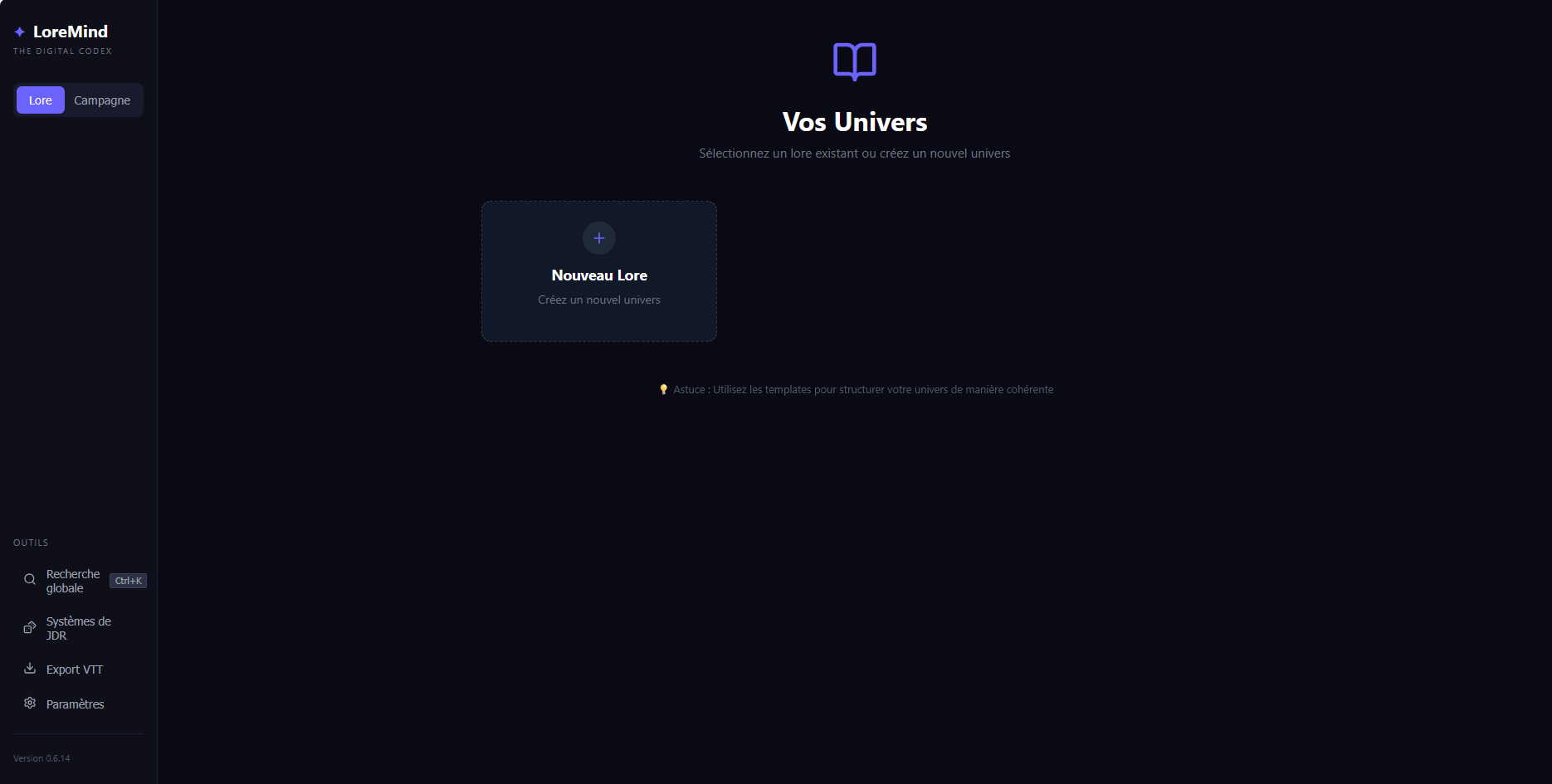
|
||||
|
||||
## Ce que ça fait
|
||||
|
||||
LoreMind regroupe ce qu'un MJ utilise habituellement éparpillé entre plusieurs outils. L'application s'articule autour de trois modules principaux, augmentés par un assistant IA qui exploite tout votre contenu.
|
||||
DM Loremind regroupe ce qu'un MJ utilise habituellement éparpillé entre plusieurs outils. L'application s'articule autour de trois modules principaux, augmentés par un assistant IA qui exploite tout votre contenu.
|
||||
|
||||
### Lore
|
||||
|
||||
Construire votre univers avec une arborescence de pages templatées : lieux, factions, PNJ, événements, organisations... Chaque type de page suit un template configurable, ce qui garantit la cohérence et facilite la navigation dans des univers riches.
|
||||
|
||||
### Game System
|
||||
### Système de JDR
|
||||
|
||||
Stocker les règles de votre système de jeu (D&D, Nimble, créations maison...) et définir les modèles de fiches de personnages associés. Les règles indexées peuvent être injectées dans le contexte de l'IA pour des réponses fidèles à votre système.
|
||||
|
||||
### Campaign
|
||||
### Campagne
|
||||
|
||||
Structurer vos campagnes en Arcs → Chapitres → Scènes avec séparation claire du contenu MJ et du contenu joueurs. Gérer les PJ et PNJ via des fiches dynamiques basées sur les templates du game system retenu.
|
||||
Structurer vos campagnes en Arcs → Chapitres → Scènes avec séparation claire du contenu MJ et du contenu joueurs. Gérer les PJ et PNJ via des fiches dynamiques basées sur les templates du système de JDR retenu.
|
||||
|
||||
### Assistant IA
|
||||
|
||||
Un assistant contextuel qui pioche dans votre Lore, vos règles et vos campagnes pour répondre à vos questions, suggérer du contenu cohérent, ou rebondir sur une situation improvisée en table.
|
||||
|
||||
L'IA s'exécute **en local via [Ollama](https://ollama.com/)** ou via **[1min.ai](https://1min.ai/)**. D'autres moteurs seront supportés à l'avenir.
|
||||
L'IA s'exécute **en local via [Ollama](https://ollama.com/)** — vos données ne quittent jamais votre machine — ou dans le **cloud** avec votre propre clé API via [1min.ai](https://1min.ai/), [Mistral](https://mistral.ai/), [Google AI Studio (Gemini)](https://aistudio.google.com/) ou [OpenRouter](https://openrouter.ai/).
|
||||
|
||||
## Démarrage rapide
|
||||
|
||||
**Bureau (le plus simple)** — récupérez le dernier installeur sur la [page Releases](https://github.com/IGMLcreation/LoreMind/releases) : Windows `.msi` ou Linux `.AppImage`, puis lancez-le. Vos données restent en local.
|
||||
|
||||
**Auto-hébergement Docker** — sous Linux :
|
||||
|
||||
```bash
|
||||
curl -fsSL https://raw.githubusercontent.com/IGMLcreation/LoreMind/main/installers/install.sh | bash
|
||||
```
|
||||
|
||||
Sous Windows, suivez le [guide d'installation](https://loremind-docs.igmlcreation.fr/).
|
||||
|
||||
## Documentation
|
||||
|
||||
@@ -49,20 +60,31 @@ Une instance de démonstration est disponible sur **[loremind-demo.igmlcreation.
|
||||
Quelques limites à connaître :
|
||||
- 10 utilisateurs maximum simultanés (instances isolées)
|
||||
- Session limitée à 20 minutes avant réinitialisation
|
||||
- Partie IA non incluse dans la démo (nécessite Ollama ou 1min.ai côté serveur)
|
||||
- Fonctions IA non incluses dans la démo (elles nécessitent un fournisseur d'IA — Ollama en local ou une clé API cloud — configuré côté serveur)
|
||||
|
||||
## Soutenir le projet
|
||||
|
||||
LoreMind est **et restera gratuit en auto-hébergement**. Le développement avance plus vite avec votre soutien :
|
||||
DM Loremind est **et restera gratuit en auto-hébergement**. Le développement avance plus vite avec votre soutien :
|
||||
|
||||
- **[Patreon](https://www.patreon.com/c/IGMLCreation)** — accès anticipé aux features, vote sur la roadmap, devlogs exclusifs
|
||||
- **Canal bêta** — les nouveautés en avant-première, gratuites pour tous : bascule depuis les Paramètres (Docker) ou pré-version GitHub (bureau)
|
||||
- **[Discord](https://discord.gg/cPpFzCjEzQ)** — annonces, support, retours utilisateurs
|
||||
|
||||
## Politique de signature du code (Code signing policy)
|
||||
|
||||
Signature de code gratuite fournie par [SignPath.io](https://about.signpath.io), certificat de [SignPath Foundation](https://signpath.org).
|
||||
|
||||
- **Signé** : les installeurs Windows (`.msi`) et le lanceur `DM Loremind.exe`, construits par GitHub Actions à partir de ce dépôt.
|
||||
- **Auteurs et relecteurs** : [IGMLcreation](https://github.com/IGMLcreation)
|
||||
- **Approbateurs** : [IGMLcreation](https://github.com/IGMLcreation) — chaque demande de signature est approuvée manuellement.
|
||||
- **Confidentialité** : DM Loremind ne transmet aucune information à d'autres systèmes en réseau, sauf à la demande explicite de la personne qui l'utilise, l'installe ou l'exploite, et sauf la vérification des mises à jour, qui peut être désactivée. Voir la [politique de confidentialité](https://loremind-docs.igmlcreation.fr/docs/confidentialite).
|
||||
|
||||
Politique complète : [Politique de signature du code](https://loremind-docs.igmlcreation.fr/docs/signature-du-code).
|
||||
|
||||
## Licence
|
||||
|
||||
LoreMind est distribué sous licence **[GNU AGPL v3](LICENSE)**.
|
||||
DM Loremind est distribué sous licence **[GNU AGPL v3](LICENSE)**.
|
||||
|
||||
En pratique :
|
||||
- Vous pouvez l'utiliser gratuitement, l'héberger, la modifier, la redistribuer.
|
||||
- Si vous modifiez le code et que vous exposez l'application modifiée sur un réseau (même en SaaS privé), vous devez rendre vos modifications publiques sous la même licence.
|
||||
- Les univers (Lore) et campagnes que vous créez avec LoreMind **vous appartiennent entièrement** — la licence ne couvre que le code de l'application.
|
||||
- Les univers (Lore) et campagnes que vous créez avec DM Loremind **vous appartiennent entièrement** — la licence ne couvre que le code de l'application.
|
||||
|
||||
@@ -1,4 +1,4 @@
|
||||
# LoreMind
|
||||
# DM Loremind
|
||||
|
||||
**English** · [Français](README.fr.md)
|
||||
|
||||
@@ -7,18 +7,17 @@
|
||||
[](LICENSE)
|
||||
[](https://loremind-docs.igmlcreation.fr/en/)
|
||||
[](https://loremind-demo.igmlcreation.fr/)
|
||||
[](https://www.patreon.com/c/IGMLCreation)
|
||||
[](https://discord.gg/cPpFzCjEzQ)
|
||||
|
||||
## See LoreMind in action
|
||||
## See DM Loremind in action
|
||||
|
||||
[](https://www.youtube.com/watch?v=llJkmlotbB8)
|
||||
[](https://www.youtube.com/watch?v=llJkmlotbB8)
|
||||
|
||||

|
||||
|
||||
## What it does
|
||||
|
||||
LoreMind brings together what a game master usually scatters across several tools. The app is built around three core modules, augmented by an AI assistant that draws on all of your content.
|
||||
DM Loremind brings together what a game master usually scatters across several tools. The app is built around three core modules, augmented by an AI assistant that draws on all of your content.
|
||||
|
||||
### Lore
|
||||
|
||||
@@ -36,7 +35,19 @@ Structure your campaigns as Arcs → Chapters → Scenes, with a clear split bet
|
||||
|
||||
A context-aware assistant that pulls from your Lore, rules and campaigns to answer your questions, suggest consistent content, or improvise around an unexpected situation at the table.
|
||||
|
||||
The AI runs **locally via [Ollama](https://ollama.com/)** or via **[1min.ai](https://1min.ai/)**. More engines will be supported in the future.
|
||||
The AI runs **locally via [Ollama](https://ollama.com/)** — your data stays on your machine — or in the **cloud** with your own API key via [1min.ai](https://1min.ai/), [Mistral](https://mistral.ai/), [Google AI Studio (Gemini)](https://aistudio.google.com/) or [OpenRouter](https://openrouter.ai/).
|
||||
|
||||
## Quick start
|
||||
|
||||
**Desktop (easiest)** — grab the latest installer from the [Releases page](https://github.com/IGMLcreation/LoreMind/releases): Windows `.msi` or Linux `.AppImage`, then run it. Your data stays local.
|
||||
|
||||
**Self-host with Docker** — on Linux:
|
||||
|
||||
```bash
|
||||
curl -fsSL https://raw.githubusercontent.com/IGMLcreation/LoreMind/main/installers/install.sh | bash
|
||||
```
|
||||
|
||||
On Windows, follow the [installation guide](https://loremind-docs.igmlcreation.fr/en/).
|
||||
|
||||
## Documentation
|
||||
|
||||
@@ -49,20 +60,31 @@ A demo instance is available at **[loremind-demo.igmlcreation.fr](https://loremi
|
||||
A few limitations to be aware of:
|
||||
- 10 concurrent users maximum (isolated instances)
|
||||
- Sessions limited to 20 minutes before reset
|
||||
- The AI part is not included in the demo (requires Ollama or 1min.ai server-side)
|
||||
- The AI features are not included in the demo (they require an AI provider — local Ollama or a cloud API key — configured server-side)
|
||||
|
||||
## Support the project
|
||||
|
||||
LoreMind is **and will remain free when self-hosted**. Development moves faster with your support:
|
||||
DM Loremind is **and will remain free when self-hosted**. Development moves faster with your support:
|
||||
|
||||
- **[Patreon](https://www.patreon.com/c/IGMLCreation)** — early access to features, roadmap voting, exclusive devlogs
|
||||
- **Beta channel** — new features ahead of time, free for everyone: switch from Settings (Docker) or install a GitHub pre-release (desktop)
|
||||
- **[Discord](https://discord.gg/cPpFzCjEzQ)** — announcements, support, user feedback
|
||||
|
||||
## Code signing policy
|
||||
|
||||
Free code signing provided by [SignPath.io](https://about.signpath.io), certificate by [SignPath Foundation](https://signpath.org).
|
||||
|
||||
- **Signed**: the Windows installers (`.msi`) and the `DM Loremind.exe` launcher, built by GitHub Actions from this repository.
|
||||
- **Committers and reviewers**: [IGMLcreation](https://github.com/IGMLcreation)
|
||||
- **Approvers**: [IGMLcreation](https://github.com/IGMLcreation) — each signing request is approved manually.
|
||||
- **Privacy**: DM Loremind does not transfer any information to other networked systems unless specifically requested by the person using, installing or operating it, except for the update check, which can be turned off. See the [privacy policy](https://loremind-docs.igmlcreation.fr/en/docs/confidentialite).
|
||||
|
||||
Full policy: [Code signing policy](https://loremind-docs.igmlcreation.fr/en/docs/signature-du-code).
|
||||
|
||||
## License
|
||||
|
||||
LoreMind is distributed under the **[GNU AGPL v3](LICENSE)** license.
|
||||
DM Loremind is distributed under the **[GNU AGPL v3](LICENSE)** license.
|
||||
|
||||
In practice:
|
||||
- You can use it for free, host it, modify it, and redistribute it.
|
||||
- If you modify the code and expose the modified app over a network (even as a private SaaS), you must make your changes public under the same license.
|
||||
- The worlds (Lore) and campaigns you create with LoreMind **belong entirely to you** — the license only covers the application's code.
|
||||
- The worlds (Lore) and campaigns you create with DM Loremind **belong entirely to you** — the license only covers the application's code.
|
||||
|
||||
@@ -0,0 +1,15 @@
|
||||
# Configuration de couverture (coverage.py / pytest-cov).
|
||||
# Rapport HTML (équivalent JaCoCo) : pytest --cov=app --cov-report=html → htmlcov/
|
||||
# Plancher anti-régression appliqué en CI : --cov-fail-under=50
|
||||
[run]
|
||||
source = app
|
||||
branch = false
|
||||
|
||||
[report]
|
||||
show_missing = true
|
||||
skip_covered = false
|
||||
# Lignes jamais comptées comme « à couvrir ».
|
||||
exclude_lines =
|
||||
pragma: no cover
|
||||
if __name__ == .__main__.:
|
||||
raise NotImplementedError
|
||||
@@ -2,3 +2,8 @@
|
||||
__pycache__/
|
||||
*.pyc
|
||||
.env
|
||||
|
||||
# Couverture de tests (pytest-cov)
|
||||
htmlcov/
|
||||
.coverage
|
||||
.pytest_cache/
|
||||
|
||||
@@ -6,7 +6,13 @@ from pydantic import BaseModel, Field
|
||||
|
||||
from app.api.deps import get_generate_page_use_case, get_llm_provider
|
||||
from app.application.generate_page import GeneratePageUseCase
|
||||
from app.application.llm_json import load_json_object
|
||||
from app.application.llm_retry import generate_with_retry
|
||||
from app.application.prompts import conversation_title as title_prompts
|
||||
from app.application.prompts import guided_answers as guided_answers_prompts
|
||||
from app.application.prompts import narrative_fields as narrative_fields_prompts
|
||||
from app.application.prompts import scene_drafts as scene_drafts_prompts
|
||||
from app.application.prompts import session_recap as session_recap_prompts
|
||||
from app.core.config import Settings, get_settings
|
||||
from app.core.language import get_user_language
|
||||
from app.domain.models import PageGenerationContext
|
||||
@@ -131,3 +137,236 @@ async def summarize_conversation_title(
|
||||
if not title:
|
||||
title = title_prompts.TITLE_FALLBACK.get(language, title_prompts.TITLE_FALLBACK["fr"])
|
||||
return SummarizeTitleResponseDTO(title=title)
|
||||
|
||||
|
||||
# --- Étoffer une entité narrative (Pilier A : co-MJ propose → l'humain valide) ----------
|
||||
|
||||
|
||||
class NarrativeFieldSpecDTO(BaseModel):
|
||||
"""Un champ autorisé : clé technique + libellé lisible (fourni par le Core)."""
|
||||
|
||||
key: str
|
||||
label: str = Field(default="")
|
||||
|
||||
|
||||
class NarrativeFieldsRequestDTO(BaseModel):
|
||||
"""Contexte envoyé par le Core pour proposer des valeurs de champs (arc/chapitre/scène)."""
|
||||
|
||||
entity_type: str = Field(default="")
|
||||
context: str = Field(default="")
|
||||
instruction: str = Field(default="")
|
||||
# Whitelist (clé + libellé) fournie par le Core, source de vérité.
|
||||
fields: list[NarrativeFieldSpecDTO] = Field(default_factory=list)
|
||||
|
||||
|
||||
class NarrativeFieldsResponseDTO(BaseModel):
|
||||
"""Retour : une valeur proposée par clé (uniquement des clés autorisées, non vides)."""
|
||||
|
||||
fields: dict[str, str]
|
||||
|
||||
|
||||
@router.post("/generate/narrative-fields", response_model=NarrativeFieldsResponseDTO)
|
||||
async def generate_narrative_fields(
|
||||
body: NarrativeFieldsRequestDTO,
|
||||
llm: Annotated[LLMProvider, Depends(get_llm_provider)],
|
||||
language: Annotated[str, Depends(get_user_language)],
|
||||
) -> NarrativeFieldsResponseDTO:
|
||||
"""Propose des valeurs pour ÉTOFFER une entité narrative (patch champ par champ, non appliqué).
|
||||
|
||||
Whitelist stricte : on ne retient que les clés autorisées, non vides. Un objet vide
|
||||
est une réponse VALIDE (le modèle n'a rien de pertinent à proposer — l'entité est
|
||||
peut-être déjà complète) ; seule une sortie non-JSON est une erreur.
|
||||
"""
|
||||
allowed = {f.key for f in body.fields if f.key}
|
||||
prompt = narrative_fields_prompts.narrative_fields_prompt(
|
||||
body.entity_type, body.context, body.instruction,
|
||||
[{"key": f.key, "label": f.label} for f in body.fields], language)
|
||||
try:
|
||||
raw = await generate_with_retry(llm, prompt, output_format="json", temperature=0.7)
|
||||
except LLMProviderError as exc:
|
||||
raise HTTPException(status_code=502, detail=str(exc)) from exc
|
||||
|
||||
parsed, _ = load_json_object(raw)
|
||||
if not isinstance(parsed, dict):
|
||||
raise HTTPException(status_code=502, detail="Le modèle n'a pas renvoyé de champs exploitables.")
|
||||
|
||||
out: dict[str, str] = {}
|
||||
raw_fields = parsed.get("fields")
|
||||
if isinstance(raw_fields, dict):
|
||||
for key, value in raw_fields.items():
|
||||
if key not in allowed:
|
||||
continue
|
||||
if not isinstance(value, (str, int, float)):
|
||||
continue
|
||||
text = str(value).strip()
|
||||
if text:
|
||||
out[str(key)] = text
|
||||
return NarrativeFieldsResponseDTO(fields=out)
|
||||
|
||||
|
||||
# --- Peupler un chapitre en scènes (Pilier A : capacité « create ») ----------
|
||||
|
||||
|
||||
class SceneDraftsRequestDTO(BaseModel):
|
||||
"""Contexte envoyé par le Core pour ébaucher des scènes d'un chapitre."""
|
||||
|
||||
context: str = Field(default="")
|
||||
instruction: str = Field(default="")
|
||||
count: int = Field(default=4)
|
||||
|
||||
|
||||
class SceneDraftDTO(BaseModel):
|
||||
name: str
|
||||
description: str = Field(default="")
|
||||
playerNarration: str = Field(default="")
|
||||
|
||||
|
||||
class SceneDraftsResponseDTO(BaseModel):
|
||||
scenes: list[SceneDraftDTO]
|
||||
|
||||
|
||||
@router.post("/generate/scene-drafts", response_model=SceneDraftsResponseDTO)
|
||||
async def generate_scene_drafts(
|
||||
body: SceneDraftsRequestDTO,
|
||||
llm: Annotated[LLMProvider, Depends(get_llm_provider)],
|
||||
language: Annotated[str, Depends(get_user_language)],
|
||||
) -> SceneDraftsResponseDTO:
|
||||
"""Propose des ébauches de scènes pour un chapitre (non créées). Un titre par scène
|
||||
est obligatoire ; on borne le nombre. Seule une sortie non-JSON est une erreur."""
|
||||
n = max(1, min(8, body.count))
|
||||
prompt = scene_drafts_prompts.scene_drafts_prompt(body.context, body.instruction, n, language)
|
||||
try:
|
||||
raw = await generate_with_retry(llm, prompt, output_format="json", temperature=0.8)
|
||||
except LLMProviderError as exc:
|
||||
raise HTTPException(status_code=502, detail=str(exc)) from exc
|
||||
|
||||
parsed, _ = load_json_object(raw)
|
||||
if not isinstance(parsed, dict):
|
||||
raise HTTPException(status_code=502, detail="Le modèle n'a pas renvoyé de scènes exploitables.")
|
||||
|
||||
scenes: list[SceneDraftDTO] = []
|
||||
for s in (parsed.get("scenes") or [])[:n]:
|
||||
if not isinstance(s, dict):
|
||||
continue
|
||||
name = str(s.get("name") or "").strip()
|
||||
if not name:
|
||||
continue
|
||||
scenes.append(SceneDraftDTO(
|
||||
name=name[:200],
|
||||
description=str(s.get("description") or "").strip(),
|
||||
playerNarration=str(s.get("playerNarration") or "").strip(),
|
||||
))
|
||||
return SceneDraftsResponseDTO(scenes=scenes)
|
||||
|
||||
|
||||
# --- Récap « précédemment… » d'une séance (mode cockpit) ---------------------
|
||||
|
||||
|
||||
class SessionRecapRequestDTO(BaseModel):
|
||||
"""Journal chronologique de la séance précédente + méta courte."""
|
||||
|
||||
transcript: str
|
||||
context: str = Field(default="")
|
||||
|
||||
|
||||
class SessionRecapResponseDTO(BaseModel):
|
||||
recap: str
|
||||
|
||||
|
||||
@router.post("/generate/session-recap", response_model=SessionRecapResponseDTO)
|
||||
async def generate_session_recap(
|
||||
body: SessionRecapRequestDTO,
|
||||
llm: Annotated[LLMProvider, Depends(get_llm_provider)],
|
||||
language: Annotated[str, Depends(get_user_language)],
|
||||
) -> SessionRecapResponseDTO:
|
||||
"""Rédige le récap « Précédemment… » à lire aux joueurs (texte libre, pas de JSON)."""
|
||||
if not body.transcript.strip():
|
||||
raise HTTPException(status_code=422, detail="Journal vide : rien à résumer.")
|
||||
prompt = session_recap_prompts.session_recap_prompt(body.transcript, body.context, language)
|
||||
try:
|
||||
raw = await generate_with_retry(llm, prompt, temperature=0.7)
|
||||
except LLMProviderError as exc:
|
||||
raise HTTPException(status_code=502, detail=str(exc)) from exc
|
||||
recap = raw.strip()
|
||||
if not recap:
|
||||
raise HTTPException(status_code=502, detail="Le modèle n'a renvoyé aucun récit.")
|
||||
return SessionRecapResponseDTO(recap=recap)
|
||||
|
||||
|
||||
# --- Méthodes guidées : proposer des réponses à partir d'une idée (Mentor d'écriture) ----
|
||||
|
||||
|
||||
class GuidedOptionDTO(BaseModel):
|
||||
"""Choix possible d'une question à choix : valeur technique + libellé lisible."""
|
||||
|
||||
value: str
|
||||
label: str = Field(default="")
|
||||
|
||||
|
||||
class GuidedFieldDTO(BaseModel):
|
||||
"""Une question de la méthode guidée (décrite par le front, relayée par le Core)."""
|
||||
|
||||
key: str
|
||||
label: str = Field(default="")
|
||||
hint: str = Field(default="")
|
||||
step: str = Field(default="")
|
||||
options: list[GuidedOptionDTO] = Field(default_factory=list)
|
||||
|
||||
|
||||
class GuidedAnswersRequestDTO(BaseModel):
|
||||
method_name: str = Field(default="")
|
||||
method_principle: str = Field(default="")
|
||||
idea: str = Field(default="")
|
||||
context: str = Field(default="")
|
||||
fields: list[GuidedFieldDTO] = Field(default_factory=list)
|
||||
existing: dict[str, str] = Field(default_factory=dict)
|
||||
|
||||
|
||||
class GuidedAnswersResponseDTO(BaseModel):
|
||||
"""Une réponse proposée par clé (clés demandées uniquement, choix valides, non vides)."""
|
||||
|
||||
answers: dict[str, str]
|
||||
|
||||
|
||||
@router.post("/generate/guided-answers", response_model=GuidedAnswersResponseDTO)
|
||||
async def generate_guided_answers(
|
||||
body: GuidedAnswersRequestDTO,
|
||||
llm: Annotated[LLMProvider, Depends(get_llm_provider)],
|
||||
language: Annotated[str, Depends(get_user_language)],
|
||||
) -> GuidedAnswersResponseDTO:
|
||||
"""Propose des réponses aux questions d'une méthode guidée à partir de l'idée du MJ.
|
||||
|
||||
Rien n'est enregistré : le front remplit les champs vides, le MJ relit et corrige. Une
|
||||
question à choix n'accepte qu'une des valeurs proposées ; le reste est ignoré.
|
||||
"""
|
||||
by_key = {f.key: f for f in body.fields if f.key}
|
||||
prompt = guided_answers_prompts.guided_answers_prompt(
|
||||
body.method_name, body.method_principle, body.idea, body.context,
|
||||
[f.model_dump() for f in body.fields], body.existing, language)
|
||||
try:
|
||||
raw = await generate_with_retry(llm, prompt, output_format="json", temperature=0.8)
|
||||
except LLMProviderError as exc:
|
||||
raise HTTPException(status_code=502, detail=str(exc)) from exc
|
||||
|
||||
parsed, _ = load_json_object(raw)
|
||||
if not isinstance(parsed, dict):
|
||||
raise HTTPException(status_code=502, detail="Le modèle n'a pas renvoyé de réponses exploitables.")
|
||||
return GuidedAnswersResponseDTO(answers=_clean_guided_answers(parsed.get("answers"), by_key))
|
||||
|
||||
|
||||
def _clean_guided_answers(raw: object, by_key: dict[str, GuidedFieldDTO]) -> dict[str, str]:
|
||||
"""Garde les clés demandées, non vides ; une question à choix n'accepte qu'une valeur proposée."""
|
||||
out: dict[str, str] = {}
|
||||
if not isinstance(raw, dict):
|
||||
return out
|
||||
for key, value in raw.items():
|
||||
field = by_key.get(str(key))
|
||||
if field is None or not isinstance(value, (str, int, float)):
|
||||
continue
|
||||
text = str(value).strip()
|
||||
if not text:
|
||||
continue
|
||||
if field.options and text not in {o.value for o in field.options}:
|
||||
continue
|
||||
out[field.key] = text
|
||||
return out
|
||||
|
||||
@@ -36,6 +36,9 @@ class RulesImportResponseDTO(BaseModel):
|
||||
sections: dict[str, str]
|
||||
page_count: int
|
||||
ocr_page_count: int
|
||||
# Règles en deux langues : {code langue → sections} et langue d'origine du livre.
|
||||
sections_by_language: dict[str, dict[str, str]] = {}
|
||||
source_language: str = ""
|
||||
|
||||
|
||||
@router.post("/import/rules", response_model=RulesImportResponseDTO)
|
||||
@@ -70,6 +73,8 @@ async def import_rules(
|
||||
sections=result.sections,
|
||||
page_count=result.page_count,
|
||||
ocr_page_count=result.ocr_page_count,
|
||||
sections_by_language=result.sections_by_language,
|
||||
source_language=result.source_language,
|
||||
)
|
||||
|
||||
|
||||
@@ -115,6 +120,7 @@ async def import_rules_stream(
|
||||
@router.post("/import/campaign/stream")
|
||||
async def import_campaign_stream(
|
||||
use_case: Annotated[ImportCampaignUseCase, Depends(get_import_campaign_use_case)],
|
||||
language: Annotated[str, Depends(get_user_language)],
|
||||
file: UploadFile = File(...),
|
||||
) -> StreamingResponse:
|
||||
"""Import streamé d'un PDF de campagne → arbre arc→chapitre→scène (SSE).
|
||||
@@ -131,7 +137,7 @@ async def import_campaign_stream(
|
||||
yield sse_event("error", {"message": upload_error})
|
||||
return
|
||||
try:
|
||||
async for ev in use_case.stream(content):
|
||||
async for ev in use_case.stream(content, language=language):
|
||||
event_type = ev.pop("type")
|
||||
yield sse_event(event_type, ev)
|
||||
except PdfExtractionError as exc:
|
||||
|
||||
@@ -361,7 +361,7 @@ class ImportCampaignUseCase:
|
||||
# des appels LLM est divisé d'autant. 1 = comportement séquentiel.
|
||||
self._map_concurrency = max(1, map_concurrency)
|
||||
|
||||
async def execute(self, pdf_bytes: bytes) -> CampaignImportResult:
|
||||
async def execute(self, pdf_bytes: bytes, language: str = "fr") -> CampaignImportResult:
|
||||
"""Variante non-streamée : traite tout puis renvoie l'arbre complet."""
|
||||
doc = self._extractor.extract(pdf_bytes)
|
||||
chunks = chunk_text(doc.full_text, self._chunk_target_tokens)
|
||||
@@ -371,7 +371,7 @@ class ImportCampaignUseCase:
|
||||
for start in range(0, total, self._map_concurrency):
|
||||
wave = list(enumerate(chunks))[start:start + self._map_concurrency]
|
||||
results = await asyncio.gather(*(
|
||||
self._map_chunk(c, index=i, total=total, toc_block=toc_block)
|
||||
self._map_chunk(c, index=i, total=total, toc_block=toc_block, language=language)
|
||||
for i, c in wave
|
||||
))
|
||||
for res in results:
|
||||
@@ -386,7 +386,7 @@ class ImportCampaignUseCase:
|
||||
npcs=merger.npcs(),
|
||||
)
|
||||
|
||||
async def stream(self, pdf_bytes: bytes):
|
||||
async def stream(self, pdf_bytes: bytes, language: str = "fr"):
|
||||
"""Variante streamée : yield des évènements d'avancement.
|
||||
|
||||
{"type":"extracting"}, puis {"type":"start", page_count, ocr_page_count,
|
||||
@@ -432,7 +432,7 @@ class ImportCampaignUseCase:
|
||||
for start in range(0, total, self._map_concurrency):
|
||||
wave = list(enumerate(chunks))[start:start + self._map_concurrency]
|
||||
gathered = asyncio.gather(
|
||||
*(self._map_chunk(c, index=i, total=total, toc_block=toc_block)
|
||||
*(self._map_chunk(c, index=i, total=total, toc_block=toc_block, language=language)
|
||||
for i, c in wave),
|
||||
return_exceptions=True,
|
||||
)
|
||||
@@ -553,21 +553,23 @@ class ImportCampaignUseCase:
|
||||
# --- MAP : un morceau → sous-arbre ---------------------------------------
|
||||
|
||||
async def _map_chunk(
|
||||
self, chunk: str, *, index: int, total: int, toc_block: str = ""
|
||||
self, chunk: str, *, index: int, total: int, toc_block: str = "", language: str = "fr"
|
||||
) -> dict:
|
||||
"""Phase MAP d'un morceau → {"arcs": [...], "npcs": [...]}."""
|
||||
return await self._extract_payload(
|
||||
chunk, index=index, total=total, depth=0, toc_block=toc_block)
|
||||
chunk, index=index, total=total, depth=0, toc_block=toc_block, language=language)
|
||||
|
||||
async def _extract_payload(
|
||||
self, text: str, *, index: int, total: int, depth: int, toc_block: str = ""
|
||||
self, text: str, *, index: int, total: int, depth: int, toc_block: str = "",
|
||||
language: str = "fr",
|
||||
) -> dict:
|
||||
"""Extrait l'arborescence + les PNJ d'un texte. Si la SORTIE est tronquée,
|
||||
retraite le texte en DEUX moitiés et concatène — le `_TreeMerger` final
|
||||
dédoublonne par nom (un arc/chapitre coupé entre les moitiés est recollé)."""
|
||||
toc_section = prompts.TOC_BLOCK.format(toc=toc_block) if toc_block else ""
|
||||
prompt = (
|
||||
prompts.MAP_SYSTEM.format(default_arc=prompts.DEFAULT_ARC_NAME)
|
||||
prompts.MAP_SYSTEM.format(default_arc=prompts.default_arc_name(language))
|
||||
+ prompts.language_block(language)
|
||||
+ toc_section
|
||||
+ f"\n\n--- EXTRAIT {index + 1}/{total} ---\n{text}\n\n"
|
||||
"Renvoie maintenant le JSON de l'arborescence."
|
||||
@@ -591,9 +593,9 @@ class ImportCampaignUseCase:
|
||||
f"Le modèle est trop lent sur le morceau {index + 1} : "
|
||||
"re-découpage en 2 moitiés plus digestes…")
|
||||
a = await self._extract_payload(
|
||||
left, index=index, total=total, depth=depth + 1, toc_block=toc_block)
|
||||
left, index=index, total=total, depth=depth + 1, toc_block=toc_block, language=language)
|
||||
b = await self._extract_payload(
|
||||
right, index=index, total=total, depth=depth + 1, toc_block=toc_block)
|
||||
right, index=index, total=total, depth=depth + 1, toc_block=toc_block, language=language)
|
||||
return {"arcs": a["arcs"] + b["arcs"], "npcs": a["npcs"] + b["npcs"]}
|
||||
payload, truncated = self._parse_payload(raw, index=index)
|
||||
|
||||
@@ -607,9 +609,9 @@ class ImportCampaignUseCase:
|
||||
f"Réponse du modèle coupée sur le morceau {index + 1} : "
|
||||
"re-découpage en 2 moitiés plus digestes…")
|
||||
a = await self._extract_payload(
|
||||
left, index=index, total=total, depth=depth + 1, toc_block=toc_block)
|
||||
left, index=index, total=total, depth=depth + 1, toc_block=toc_block, language=language)
|
||||
b = await self._extract_payload(
|
||||
right, index=index, total=total, depth=depth + 1, toc_block=toc_block)
|
||||
right, index=index, total=total, depth=depth + 1, toc_block=toc_block, language=language)
|
||||
return {"arcs": a["arcs"] + b["arcs"], "npcs": a["npcs"] + b["npcs"]}
|
||||
if truncated:
|
||||
logger.warning(
|
||||
|
||||
@@ -26,6 +26,7 @@ from app.application.import_status import (
|
||||
from app.application.llm_json import load_json_object, looks_like_truncated_json
|
||||
from app.application.llm_retry import generate_with_retry
|
||||
from app.application.prompts import import_rules as prompts
|
||||
from app.application.rules_translation import RulesTranslator, detect_language, other_languages, unique_titles
|
||||
from app.application.streaming import with_heartbeat
|
||||
from app.core.language import DEFAULT as _DEFAULT_LANG, language_name
|
||||
|
||||
@@ -90,6 +91,9 @@ _ANCHORS_SCHEMA: dict = {
|
||||
}
|
||||
|
||||
|
||||
# Échantillon de texte utilisé pour détecter la langue du livre (début du PDF).
|
||||
_DETECT_CHARS = 20_000
|
||||
|
||||
class _SectionMerger:
|
||||
"""Fusionne les sections issues des différents morceaux, ordre préservé.
|
||||
|
||||
@@ -250,10 +254,25 @@ class ImportRulesUseCase:
|
||||
merger = _SectionMerger()
|
||||
for i, chunk in enumerate(chunks):
|
||||
merger.add(await self._map_chunk(chunk, index=i, total=len(chunks), language=language))
|
||||
sections = merger.result()
|
||||
source = detect_language(doc.full_text[:_DETECT_CHARS], default=language)
|
||||
by_language = {source: sections}
|
||||
translator = RulesTranslator(self._llm)
|
||||
for target in other_languages(source):
|
||||
try:
|
||||
titles = unique_titles(await translator.translate_titles(list(sections), source, target))
|
||||
by_language[target] = {
|
||||
titles.get(title, title): await translator.translate_content(content, source, target)
|
||||
for title, content in sections.items()
|
||||
}
|
||||
except LLMProviderError as exc:
|
||||
logger.warning("Traduction des règles (%s) impossible : %s", target, exc)
|
||||
return RulesImportResult(
|
||||
sections=merger.result(),
|
||||
sections=sections,
|
||||
page_count=doc.page_count,
|
||||
ocr_page_count=doc.ocr_page_count,
|
||||
sections_by_language=by_language,
|
||||
source_language=source,
|
||||
)
|
||||
|
||||
async def stream(self, pdf_bytes: bytes, language: str = _DEFAULT_LANG):
|
||||
@@ -344,14 +363,57 @@ class ImportRulesUseCase:
|
||||
"de contexte (num_ctx) ou essayez un autre modèle."}
|
||||
return
|
||||
|
||||
# Règles en deux langues : l'extraction est fidèle au livre ; on traduit vers l'autre
|
||||
# langue de l'application. Un échec de traduction n'annule pas l'import.
|
||||
source = detect_language(doc.full_text[:_DETECT_CHARS], default=language)
|
||||
by_language: dict[str, dict[str, str]] = {source: sections}
|
||||
for target in other_languages(source):
|
||||
try:
|
||||
async for ev in self._translate_events(sections, source, target):
|
||||
if ev["type"] == "_translated":
|
||||
by_language[target] = ev["sections"]
|
||||
else:
|
||||
yield ev
|
||||
except LLMProviderError as exc:
|
||||
logger.warning("Traduction des règles (%s) impossible : %s", target, exc)
|
||||
yield {"type": "status",
|
||||
"message": f"Traduction ({language_name(target)}) impossible : {str(exc)[:200]}"}
|
||||
|
||||
yield {
|
||||
"type": "done",
|
||||
"sections": sections,
|
||||
"sections_by_language": by_language,
|
||||
"source_language": source,
|
||||
"page_count": doc.page_count,
|
||||
"ocr_page_count": doc.ocr_page_count,
|
||||
"skipped": skipped,
|
||||
}
|
||||
|
||||
async def _translate_events(self, sections: dict[str, str], source: str, target: str):
|
||||
"""Évènements d'avancement de la traduction ; le dernier est
|
||||
{"type": "_translated", "sections": {...}} (consommé par `stream`, jamais relayé)."""
|
||||
translator = RulesTranslator(self._llm)
|
||||
titles = list(sections)
|
||||
total = len(titles)
|
||||
label = language_name(target)
|
||||
yield {"type": "status", "message": f"Traduction ({label}) des titres…", "current": 0, "total": total}
|
||||
mapping: dict[str, str] = {}
|
||||
async for kind, payload in with_heartbeat(translator.translate_titles(titles, source, target)):
|
||||
if kind == "heartbeat":
|
||||
yield {"type": "heartbeat", "current": 0, "total": total}
|
||||
elif kind == "result":
|
||||
mapping = unique_titles(payload)
|
||||
out: dict[str, str] = {}
|
||||
for i, title in enumerate(titles):
|
||||
yield {"type": "status", "message": f"Traduction ({label}) : {i + 1}/{total} — {title}",
|
||||
"current": i + 1, "total": total}
|
||||
async for kind, payload in with_heartbeat(translator.translate_content(sections[title], source, target)):
|
||||
if kind == "heartbeat":
|
||||
yield {"type": "heartbeat", "current": i + 1, "total": total}
|
||||
elif kind == "result":
|
||||
out[mapping.get(title, title)] = payload
|
||||
yield {"type": "_translated", "sections": out}
|
||||
|
||||
# --- MAP : un morceau → sections -----------------------------------------
|
||||
|
||||
async def _map_chunk(self, chunk: str, *, index: int, total: int,
|
||||
|
||||
@@ -113,5 +113,8 @@ async def generate_with_retry(
|
||||
+ str(exc)[:160]
|
||||
)
|
||||
await asyncio.sleep(wait)
|
||||
# Le message « nouvel essai dans Ns » deviendrait faux : on dit que
|
||||
# l'essai suivant est lancé (il peut durer plusieurs minutes).
|
||||
notify_status(f"Nouvel essai en cours (tentative {attempt + 2}/{_ATTEMPTS})…")
|
||||
assert last_error is not None
|
||||
raise last_error
|
||||
|
||||
@@ -0,0 +1,71 @@
|
||||
"""Prompt des méthodes guidées (Mentor d'écriture) : à partir de l'idée de départ du MJ,
|
||||
proposer des réponses aux questions de la méthode (Donjon en 5 salles, Enquête en nœuds,
|
||||
Plan du méchant…).
|
||||
|
||||
Générique : le front décrit la méthode (nom ; principe suivi du rôle de chaque étape, comme
|
||||
dans l'assistant manuel) et ses questions (clé, libellé,
|
||||
aide, étape, choix possibles) ; ce module ne fait que formuler le prompt. Les réponses
|
||||
déjà écrites par le MJ sont fournies pour rester cohérent et ne jamais être contredites.
|
||||
"""
|
||||
from app.core.language import language_name
|
||||
|
||||
|
||||
def _field_line(field: dict) -> str:
|
||||
key = str(field.get("key") or "").strip()
|
||||
label = str(field.get("label") or key).strip()
|
||||
hint = str(field.get("hint") or "").strip()
|
||||
step = str(field.get("step") or "").strip()
|
||||
line = f'- "{key}"'
|
||||
if step:
|
||||
line += f" [{step}]"
|
||||
line += f" : {label}"
|
||||
if hint:
|
||||
line += f" — {hint}"
|
||||
options = field.get("options") or []
|
||||
if options:
|
||||
values = ", ".join(f'"{o.get("value")}" ({o.get("label")})' for o in options if o.get("value"))
|
||||
line += f" — UNE valeur parmi : {values}"
|
||||
return line
|
||||
|
||||
|
||||
def guided_answers_prompt(method_name: str, method_principle: str, idea: str, context: str,
|
||||
fields: list[dict], existing: dict[str, str], language: str) -> str:
|
||||
"""Construit le prompt. `fields` = [{key, label, hint, step, options}] ; `existing` = réponses du MJ."""
|
||||
fields_list = "\n".join(_field_line(f) for f in fields or [] if f.get("key"))
|
||||
existing_lines = "\n".join(
|
||||
f'- "{k}" : {v.strip()}' for k, v in (existing or {}).items() if isinstance(v, str) and v.strip())
|
||||
existing_block = (
|
||||
"\nCe que le MJ a DÉJÀ écrit (à respecter, ne le contredis jamais) :\n"
|
||||
f"{existing_lines}\n" if existing_lines else ""
|
||||
)
|
||||
context_block = f"\nContexte de la campagne :\n{context.strip()}\n" if context and context.strip() else ""
|
||||
guide = method_principle.strip() if method_principle else ""
|
||||
guide_block = (
|
||||
"\nLa méthode, telle que le MJ la suit à la main (principe, puis rôle de chaque étape) :\n"
|
||||
f"{guide}\n" if guide else ""
|
||||
)
|
||||
return (
|
||||
"Tu es un auteur expérimenté de scénarios de jeu de rôle, qui aide un MJ à écrire son aventure "
|
||||
f"avec la méthode « {method_name.strip() or 'guidée'} ».\n"
|
||||
f"{guide_block}\n"
|
||||
f"Idée de départ du MJ : {idea.strip() or '(aucune : propose une aventure originale)'}\n"
|
||||
f"{context_block}{existing_block}\n"
|
||||
"Questions de la méthode auxquelles tu dois répondre (n'utilise QUE ces clés) :\n"
|
||||
f"{fields_list}\n\n"
|
||||
"Règles IMPÉRATIVES :\n"
|
||||
"- Réponds UNIQUEMENT par un objet JSON valide, sans texte autour.\n"
|
||||
'- Format exact : {"answers": {"cle": "réponse", ...}}\n'
|
||||
"- N'inclus QUE des clés de la liste. Pour une question à choix, renvoie EXACTEMENT une des "
|
||||
"valeurs proposées.\n"
|
||||
"- Pars de l'idée du MJ et développe-la : garde son ton, ses lieux, ses personnages ; n'en change "
|
||||
"pas le sujet.\n"
|
||||
"- Respecte la méthode : chaque réponse remplit le rôle de SON étape, tel que décrit ci-dessus "
|
||||
"(ex. une épreuve qui ne se règle pas par un combat, des pistes qui se recoupent). Ne mélange pas "
|
||||
"les étapes.\n"
|
||||
"- Toutes les réponses forment UNE aventure cohérente, concrète et jouable "
|
||||
"(noms, lieux, motivations précises ; pas de généralités).\n"
|
||||
"- Sois concis : un nom en quelques mots, une description en 2 à 4 phrases.\n"
|
||||
"- Donne toujours aux joueurs de vrais choix et plusieurs façons de progresser.\n"
|
||||
f"- Rédige les réponses en {language_name(language)}.\n"
|
||||
"Renvoie maintenant le JSON."
|
||||
)
|
||||
@@ -1,7 +1,29 @@
|
||||
"""Prompts de l'import de campagne PDF (cf. import_campaign.py)."""
|
||||
from app.core.language import language_name
|
||||
|
||||
# Nom de l'arc unique quand le livre n'est pas découpé en actes/parties.
|
||||
DEFAULT_ARC_NAME = "Aventure principale"
|
||||
DEFAULT_ARC_NAMES = {"fr": DEFAULT_ARC_NAME, "en": "Main adventure"}
|
||||
|
||||
|
||||
def default_arc_name(language: str) -> str:
|
||||
"""Nom de l'arc unique, dans la langue de l'interface."""
|
||||
return DEFAULT_ARC_NAMES.get(language, DEFAULT_ARC_NAME)
|
||||
|
||||
|
||||
def language_block(language: str) -> str:
|
||||
"""Consigne de langue : les textes sont écrits dans la langue de l'interface, quelle que
|
||||
soit celle du livre (traduits fidèlement s'il le faut). Les TITRES et noms propres restent
|
||||
ceux du livre : la fusion des morceaux se fait par nom exact, et un nom ne se traduit pas."""
|
||||
name = language_name(language)
|
||||
return (
|
||||
"\n\nLANGUE DE SORTIE :\n"
|
||||
f"- Rédige TOUS les textes (description, player_narration, gm_notes, salles, PNJ) en {name}, "
|
||||
f"quelle que soit la langue du livre. Si le livre est dans une autre langue, TRADUIS ces textes "
|
||||
"fidèlement, sans les résumer davantage.\n"
|
||||
"- Garde TELS QUELS les noms propres (personnages, lieux, divinités, sorts, objets nommés) "
|
||||
"et les noms d'arcs, de chapitres, de scènes, de salles et de PNJ (titres du livre)."
|
||||
)
|
||||
|
||||
MAP_SYSTEM = """Tu es un assistant qui structure un livre de campagne de jeu de rôle.
|
||||
On te donne un EXTRAIT brut d'un PDF de campagne (texte parfois mal coupé par la mise en page).
|
||||
|
||||
@@ -0,0 +1,50 @@
|
||||
"""Prompt d'étoffage des champs d'une entité narrative (arc / chapitre / scène) — Pilier A.
|
||||
|
||||
Générique : le Core (Java) est la SOURCE DE VÉRITÉ des champs (clé + libellé) et les
|
||||
passe en entrée ; ce module ne fait que formuler le prompt. Le modèle ne renvoie que les
|
||||
clés fournies et OMET celles pour lesquelles il n'a rien de pertinent (pas de remplissage forcé).
|
||||
"""
|
||||
from app.core.language import language_name
|
||||
|
||||
# Étiquette lisible du type d'entité, pour la formulation du prompt.
|
||||
ENTITY_LABEL: dict[str, str] = {
|
||||
"arc": "cet arc narratif",
|
||||
"chapter": "ce chapitre",
|
||||
"scene": "cette scène",
|
||||
}
|
||||
|
||||
|
||||
def narrative_fields_prompt(entity_type: str, entity_context: str, instruction: str,
|
||||
fields: list[dict], language: str) -> str:
|
||||
"""Construit le prompt d'étoffage. `fields` = [{key, label}] (whitelist du Core)."""
|
||||
label = ENTITY_LABEL.get(entity_type or "", "cette entité narrative")
|
||||
lines = []
|
||||
for f in fields or []:
|
||||
key = str(f.get("key") or "").strip()
|
||||
if not key:
|
||||
continue
|
||||
flabel = str(f.get("label") or key).strip()
|
||||
lines.append(f'- "{key}" : {flabel}')
|
||||
fields_list = "\n".join(lines)
|
||||
instruction_block = (
|
||||
f"\nConsigne particulière du MJ : {instruction.strip()}\n"
|
||||
if instruction and instruction.strip() else ""
|
||||
)
|
||||
return (
|
||||
f"Tu es un co-Maître de Jeu. On te donne l'état ACTUEL d'{label} de jeu de rôle. "
|
||||
"Propose des valeurs pour l'ÉTOFFER, cohérentes avec ce qui existe déjà.\n\n"
|
||||
f"{entity_context.strip()}\n"
|
||||
f"{instruction_block}\n"
|
||||
"Champs que tu peux remplir (n'utilise QUE ces clés) :\n"
|
||||
f"{fields_list}\n\n"
|
||||
"Règles IMPÉRATIVES :\n"
|
||||
"- Réponds UNIQUEMENT par un objet JSON valide, sans texte autour.\n"
|
||||
'- Format exact : {"fields": {"cle": "valeur proposée", ...}}\n'
|
||||
"- N'inclus QUE des clés de la liste ci-dessus. N'invente AUCUNE autre clé.\n"
|
||||
"- Si un champ est déjà bien rempli ou si tu n'as rien de pertinent, OMETS-le "
|
||||
"(ne le renvoie pas) plutôt que de le remplir de force.\n"
|
||||
"- Reste cohérent avec le contexte : n'invente pas d'élément qui contredit "
|
||||
"l'entité ou la campagne.\n"
|
||||
f"- Rédige les valeurs en {language_name(language)}.\n"
|
||||
"Renvoie maintenant le JSON."
|
||||
)
|
||||
@@ -0,0 +1,30 @@
|
||||
"""Prompt d'ébauche de scènes pour un chapitre (Pilier A — capacité « create »).
|
||||
|
||||
Le co-MJ propose plusieurs scènes cohérentes pour PEUPLER un chapitre vide (ou en manque).
|
||||
JSON structuré, une liste de scènes ; l'humain révise et ne crée que celles qu'il retient.
|
||||
"""
|
||||
from app.core.language import language_name
|
||||
|
||||
|
||||
def scene_drafts_prompt(context: str, instruction: str, count: int, language: str) -> str:
|
||||
instruction_block = (
|
||||
f"\nConsigne particulière du MJ : {instruction.strip()}\n"
|
||||
if instruction and instruction.strip() else ""
|
||||
)
|
||||
return (
|
||||
f"Tu es un co-Maître de Jeu. Propose {count} SCÈNES de jeu de rôle pour PEUPLER ce "
|
||||
"chapitre, cohérentes entre elles et avec le contexte.\n\n"
|
||||
f"{context.strip()}\n"
|
||||
f"{instruction_block}\n"
|
||||
"Règles IMPÉRATIVES :\n"
|
||||
"- Réponds UNIQUEMENT par un objet JSON valide, sans texte autour.\n"
|
||||
'- Format exact : {"scenes": [{"name": "...", "description": "...", "playerNarration": "..."}]}\n'
|
||||
f"- Propose AU PLUS {count} scènes, distinctes et complémentaires (une progression du chapitre).\n"
|
||||
"- 'name' : titre court et évocateur (OBLIGATOIRE).\n"
|
||||
"- 'description' : un résumé bref (une phrase).\n"
|
||||
"- 'playerNarration' : 2-3 phrases de mise en scène lues aux joueurs.\n"
|
||||
"- Ne DUPLIQUE pas les scènes déjà présentes ; reste cohérent avec le chapitre et la campagne "
|
||||
"(n'invente pas d'élément qui les contredit).\n"
|
||||
f"- Rédige en {language_name(language)}.\n"
|
||||
"Renvoie maintenant le JSON."
|
||||
)
|
||||
@@ -0,0 +1,25 @@
|
||||
"""Prompt du récap « précédemment dans… » (mode séance).
|
||||
|
||||
Le Core envoie le journal chronologique de la séance PRÉCÉDENTE ; le modèle rédige un
|
||||
récapitulatif court, à lire aux joueurs à l'ouverture de la séance suivante. Texte libre
|
||||
(pas de JSON) : c'est de la narration.
|
||||
"""
|
||||
from app.core.language import language_name
|
||||
|
||||
|
||||
def session_recap_prompt(transcript: str, context: str, language: str) -> str:
|
||||
context_block = f"\n{context.strip()}\n" if context and context.strip() else ""
|
||||
return (
|
||||
"Tu es le Maître du Jeu. Voici le journal de la SÉANCE PRÉCÉDENTE de ta table "
|
||||
"(entrées chronologiques : notes, évènements, jets de dés, actions des joueurs).\n"
|
||||
f"{context_block}\n"
|
||||
"Journal :\n"
|
||||
f"{transcript.strip()}\n\n"
|
||||
"Rédige un récapitulatif « Précédemment… » à LIRE AUX JOUEURS pour ouvrir la "
|
||||
"nouvelle séance :\n"
|
||||
"- 4 à 8 phrases, ton narratif et vivant, au passé.\n"
|
||||
"- Uniquement ce qui s'est réellement passé dans le journal — n'invente RIEN, "
|
||||
"ne révèle aucun secret du MJ.\n"
|
||||
"- Termine sur la situation où les joueurs se sont arrêtés (le « cliffhanger »).\n"
|
||||
f"- Rédige en {language_name(language)}. Pas de préambule ni de méta : juste le récit."
|
||||
)
|
||||
@@ -0,0 +1,136 @@
|
||||
"""Règles en deux langues : détection de la langue d'un livre de règles et traduction de
|
||||
ses sections (titre + contenu markdown) vers l'autre langue de l'application.
|
||||
|
||||
L'extraction reste FIDÈLE au livre (langue d'origine) ; la traduction produit la seconde
|
||||
version. Les noms propres (lieux, personnages, divinités, sorts, objets nommés) sont
|
||||
conservés tels quels. Un contenu long est traduit par morceaux coupés aux paragraphes,
|
||||
pour rester sous les limites de sortie des modèles.
|
||||
"""
|
||||
from __future__ import annotations
|
||||
|
||||
import re
|
||||
|
||||
from app.application.llm_json import load_json_object
|
||||
from app.application.llm_retry import generate_with_retry
|
||||
from app.core.language import language_name
|
||||
from app.domain.ports import LLMProvider
|
||||
|
||||
LANGUAGES = ("fr", "en")
|
||||
|
||||
# Taille maximale d'un morceau de contenu envoyé en traduction (caractères).
|
||||
CHUNK_CHARS = 6000
|
||||
|
||||
_FR_WORDS = {"le", "la", "les", "des", "une", "est", "et", "du", "dans", "pour", "que", "qui",
|
||||
"sur", "avec", "vous", "votre", "sont", "pas", "par", "au", "aux", "ce", "cette", "il"}
|
||||
_EN_WORDS = {"the", "and", "of", "to", "is", "in", "you", "your", "for", "with", "that", "are",
|
||||
"on", "as", "be", "this", "it", "an", "by", "or", "can", "if", "each", "when"}
|
||||
|
||||
|
||||
def detect_language(text: str, default: str = "fr") -> str:
|
||||
"""Langue dominante (« fr » ou « en ») par comptage de mots-outils ; `default` si indécis."""
|
||||
words = re.findall(r"[a-zàâçéèêëîïôûùüÿœ']+", (text or "").lower())
|
||||
fr = sum(1 for w in words if w in _FR_WORDS)
|
||||
en = sum(1 for w in words if w in _EN_WORDS)
|
||||
if fr == en:
|
||||
return default if default in LANGUAGES else "fr"
|
||||
return "fr" if fr > en else "en"
|
||||
|
||||
|
||||
def other_languages(source: str) -> list[str]:
|
||||
return [lang for lang in LANGUAGES if lang != source]
|
||||
|
||||
|
||||
def split_markdown(text: str, max_chars: int = CHUNK_CHARS) -> list[str]:
|
||||
"""Coupe un markdown en morceaux ≤ max_chars, aux limites de paragraphes (puis de lignes)."""
|
||||
if len(text) <= max_chars:
|
||||
return [text]
|
||||
chunks: list[str] = []
|
||||
current = ""
|
||||
for para in re.split(r"(\n\s*\n)", text):
|
||||
if len(current) + len(para) <= max_chars:
|
||||
current += para
|
||||
continue
|
||||
if current.strip():
|
||||
chunks.append(current)
|
||||
current = ""
|
||||
while len(para) > max_chars: # paragraphe géant : coupe aux lignes, sinon brutalement
|
||||
cut = para.rfind("\n", 0, max_chars)
|
||||
cut = cut if cut > 0 else max_chars
|
||||
chunks.append(para[:cut])
|
||||
para = para[cut:]
|
||||
current = para
|
||||
if current.strip():
|
||||
chunks.append(current)
|
||||
return chunks
|
||||
|
||||
|
||||
def content_prompt(text: str, source: str, target: str) -> str:
|
||||
return (
|
||||
f"Traduis cet extrait de livre de règles de jeu de rôle de la langue « {language_name(source)} » "
|
||||
f"vers la langue « {language_name(target)} ».\n\n"
|
||||
"Règles IMPÉRATIVES :\n"
|
||||
"- Conserve EXACTEMENT la mise en forme markdown (titres, listes, tableaux, gras).\n"
|
||||
"- Garde TELS QUELS les noms propres : lieux, personnages, divinités, peuples, sorts et "
|
||||
"objets nommés.\n"
|
||||
"- Traduis les termes de jeu de façon cohérente (une même notion = un même mot).\n"
|
||||
"- Ne résume pas, n'ajoute rien, ne commente pas : renvoie UNIQUEMENT la traduction.\n\n"
|
||||
"Extrait :\n"
|
||||
f"{text}"
|
||||
)
|
||||
|
||||
|
||||
def titles_prompt(titles: list[str], source: str, target: str) -> str:
|
||||
listing = "\n".join(f"- {t}" for t in titles)
|
||||
return (
|
||||
f"Traduis ces titres de sections d'un livre de règles de jeu de rôle de la langue "
|
||||
f"« {language_name(source)} » vers la langue « {language_name(target)} ». "
|
||||
"Garde les noms propres tels quels.\n"
|
||||
'Réponds UNIQUEMENT par un objet JSON : {"titles": {"titre d\'origine": "titre traduit", ...}}\n\n'
|
||||
f"{listing}"
|
||||
)
|
||||
|
||||
|
||||
class RulesTranslator:
|
||||
"""Traduit des sections de règles {titre: markdown} d'une langue vers une autre."""
|
||||
|
||||
def __init__(self, llm: LLMProvider) -> None:
|
||||
self._llm = llm
|
||||
|
||||
async def translate_titles(self, titles: list[str], source: str, target: str) -> dict[str, str]:
|
||||
"""{titre d'origine: titre traduit} ; un titre non traduit garde son libellé d'origine."""
|
||||
if not titles:
|
||||
return {}
|
||||
raw = await generate_with_retry(self._llm, titles_prompt(titles, source, target),
|
||||
output_format="json", temperature=0.2)
|
||||
parsed, _ = load_json_object(raw)
|
||||
mapping = parsed.get("titles") if isinstance(parsed, dict) else None
|
||||
out: dict[str, str] = {}
|
||||
for title in titles:
|
||||
value = mapping.get(title) if isinstance(mapping, dict) else None
|
||||
out[title] = str(value).strip() if isinstance(value, str) and value.strip() else title
|
||||
return out
|
||||
|
||||
async def translate_content(self, text: str, source: str, target: str) -> str:
|
||||
"""Traduit un contenu markdown (morceau par morceau s'il est long)."""
|
||||
if not text or not text.strip():
|
||||
return text
|
||||
parts = []
|
||||
for chunk in split_markdown(text):
|
||||
if not chunk.strip():
|
||||
parts.append(chunk)
|
||||
continue
|
||||
translated = await generate_with_retry(self._llm, content_prompt(chunk, source, target),
|
||||
temperature=0.2)
|
||||
parts.append(translated.strip())
|
||||
return "\n\n".join(p for p in parts if p.strip())
|
||||
|
||||
|
||||
def unique_titles(titles: dict[str, str]) -> dict[str, str]:
|
||||
"""Évite deux sections traduites sous le même titre (sinon l'une écraserait l'autre)."""
|
||||
seen: dict[str, int] = {}
|
||||
out: dict[str, str] = {}
|
||||
for original, translated in titles.items():
|
||||
count = seen.get(translated, 0)
|
||||
seen[translated] = count + 1
|
||||
out[original] = translated if count == 0 else f"{translated} ({count + 1})"
|
||||
return out
|
||||
@@ -367,6 +367,10 @@ class RulesImportResult:
|
||||
sections: dict[str, str]
|
||||
page_count: int
|
||||
ocr_page_count: int
|
||||
# Règles en deux langues : {code langue → sections}. La langue d'origine du livre
|
||||
# (`source_language`) contient l'extraction fidèle ; l'autre, sa traduction.
|
||||
sections_by_language: dict[str, dict[str, str]] = field(default_factory=dict)
|
||||
source_language: str = ""
|
||||
|
||||
def to_markdown(self) -> str:
|
||||
"""Assemble les sections en un markdown monolithique (## titre + contenu).
|
||||
|
||||
@@ -0,0 +1,226 @@
|
||||
"""Socle commun aux adapters LLM « OpenAI-compatible » (OpenRouter, Gemini,
|
||||
Mistral) — ils exposent tous `POST {base}/chat/completions` en SSE avec le même
|
||||
schéma de payload et de flux.
|
||||
|
||||
Cette classe de base porte la mécanique partagée (construction du payload, appel
|
||||
HTTP streamé, parsing SSE, garde-fous de timeout au temps écoulé, traduction des
|
||||
erreurs). Chaque adapter concret ne fournit plus que ses spécificités :
|
||||
URL, en-têtes, support du mode JSON natif, messages d'erreur, lecture de la config.
|
||||
|
||||
`generate` one-shot passe lui aussi par le streaming (puis recollage) pour éviter
|
||||
les coupures de passerelle sur les longues générations (cf. Cloudflare 524).
|
||||
"""
|
||||
from __future__ import annotations
|
||||
|
||||
import asyncio
|
||||
import json
|
||||
import logging
|
||||
from typing import AsyncIterator
|
||||
|
||||
import httpx
|
||||
|
||||
from app.domain.models import ChatMessage
|
||||
from app.domain.ports import LLMGenerationTimeout, LLMProviderError
|
||||
|
||||
logger = logging.getLogger(__name__)
|
||||
|
||||
# Délai max pour le PREMIER token de contenu. Un modèle « en file d'attente »
|
||||
# n'envoie que des keep-alive (aucun contenu) → on échoue vite et clairement au
|
||||
# lieu de pendre. Le timeout réseau d'httpx ne suffit pas : des keep-alive font
|
||||
# « arriver des octets » et empêchent son read-timeout de se déclencher.
|
||||
_FIRST_TOKEN_TIMEOUT_SECONDS = 120.0
|
||||
|
||||
|
||||
class BaseOpenAICompatibleAdapter:
|
||||
"""Base des adapters clients d'une API OpenAI-compatible (chat/completions SSE).
|
||||
|
||||
Satisfait par duck typing les ports LLMProvider et LLMChatProvider. Les
|
||||
sous-classes définissent : ``_provider_label``, ``_api_url``,
|
||||
``_supports_json_object`` (mode JSON natif), et surchargent au besoin
|
||||
``_headers`` / ``_error_for_status`` / les messages de timeout.
|
||||
"""
|
||||
|
||||
# Surchargés par les sous-classes.
|
||||
_provider_label: str = "LLM"
|
||||
_api_url: str = ""
|
||||
_supports_json_object: bool = False
|
||||
|
||||
def __init__(self, api_key: str, model: str, timeout: int) -> None:
|
||||
self._api_key = api_key
|
||||
self._model = model
|
||||
self._timeout = timeout
|
||||
|
||||
# --- Spécificités surchargeables ----------------------------------------
|
||||
|
||||
def _headers(self) -> dict[str, str]:
|
||||
return {
|
||||
"Authorization": f"Bearer {self._api_key}",
|
||||
"Content-Type": "application/json",
|
||||
}
|
||||
|
||||
def _first_token_timeout_message(self) -> str:
|
||||
return (
|
||||
f"Erreur {self._provider_label} : aucun contenu produit en "
|
||||
f"{int(_FIRST_TOKEN_TIMEOUT_SECONDS)}s — le modèle est probablement en "
|
||||
"file d'attente / saturé. Réessayez plus tard ou choisissez un autre modèle."
|
||||
)
|
||||
|
||||
def _generation_timeout_message(self) -> str:
|
||||
return (
|
||||
f"Erreur {self._provider_label} : génération non terminée en {self._timeout}s. "
|
||||
"Réduisez la taille des morceaux d'import, augmentez le timeout, ou changez de modèle."
|
||||
)
|
||||
|
||||
def _error_for_status(self, status_code: int, detail: str) -> LLMProviderError:
|
||||
"""Erreur de domaine pour une réponse HTTP >= 400 (détail déjà lu)."""
|
||||
return LLMProviderError(
|
||||
f"Erreur {self._provider_label} (HTTP {status_code})"
|
||||
+ (f" : {detail[:500]}" if detail else "")
|
||||
)
|
||||
|
||||
# --- API publique (ports) -----------------------------------------------
|
||||
|
||||
async def generate(
|
||||
self,
|
||||
prompt: str,
|
||||
*,
|
||||
output_format: str | None = None,
|
||||
temperature: float | None = None,
|
||||
) -> str:
|
||||
"""One-shot via streaming (puis recollage), avec garde-fous au temps écoulé."""
|
||||
return await self._collect_with_timeouts(
|
||||
[ChatMessage(role="user", content=prompt)], temperature, output_format
|
||||
)
|
||||
|
||||
async def stream_chat(
|
||||
self,
|
||||
messages: list[ChatMessage],
|
||||
*,
|
||||
system_prompt: str | None = None,
|
||||
temperature: float | None = None,
|
||||
) -> AsyncIterator[str]:
|
||||
async for token in self._stream(messages, system_prompt, temperature):
|
||||
yield token
|
||||
|
||||
# --- Mécanique partagée -------------------------------------------------
|
||||
|
||||
async def _collect_with_timeouts(
|
||||
self,
|
||||
messages: list[ChatMessage],
|
||||
temperature: float | None,
|
||||
output_format: str | None,
|
||||
) -> str:
|
||||
"""Collecte le stream avec DEUX garde-fous au temps écoulé :
|
||||
- 1er token borné (`_FIRST_TOKEN_TIMEOUT_SECONDS`) : détecte un modèle bloqué
|
||||
en file d'attente (que des keep-alive, aucun contenu) → échec rapide ;
|
||||
- ceiling global (`self._timeout`) : génération qui ne se termine jamais.
|
||||
"""
|
||||
async def _collect() -> str:
|
||||
chunks: list[str] = []
|
||||
agen = self._stream(messages, None, temperature, output_format)
|
||||
try:
|
||||
while True:
|
||||
# Borne SEULEMENT l'attente du 1er token ; ensuite on laisse
|
||||
# générer (le ceiling global couvre le reste).
|
||||
first = _FIRST_TOKEN_TIMEOUT_SECONDS if not chunks else None
|
||||
try:
|
||||
token = await asyncio.wait_for(agen.__anext__(), timeout=first)
|
||||
except StopAsyncIteration:
|
||||
break
|
||||
except asyncio.TimeoutError:
|
||||
raise LLMProviderError(self._first_token_timeout_message())
|
||||
chunks.append(token)
|
||||
finally:
|
||||
await agen.aclose()
|
||||
return "".join(chunks)
|
||||
|
||||
try:
|
||||
return await asyncio.wait_for(_collect(), timeout=self._timeout)
|
||||
except asyncio.TimeoutError as exc:
|
||||
raise LLMGenerationTimeout(self._generation_timeout_message()) from exc
|
||||
|
||||
def _build_body(
|
||||
self,
|
||||
messages: list[ChatMessage],
|
||||
system_prompt: str | None,
|
||||
temperature: float | None,
|
||||
output_format: str | None,
|
||||
) -> dict[str, object]:
|
||||
payload_messages: list[dict[str, str]] = []
|
||||
if system_prompt:
|
||||
payload_messages.append({"role": "system", "content": system_prompt})
|
||||
for m in messages:
|
||||
payload_messages.append({"role": m.role, "content": m.content})
|
||||
|
||||
body: dict[str, object] = {
|
||||
"model": self._model,
|
||||
"messages": payload_messages,
|
||||
"stream": True,
|
||||
}
|
||||
if temperature is not None:
|
||||
body["temperature"] = temperature
|
||||
# Mode JSON natif : supprime les fences ```json et le JSON invalide (retours
|
||||
# à la ligne bruts), principale cause de morceaux d'import ignorés. Un SCHÉMA
|
||||
# (dict) est traduit en json_object — suffisant, les grands modèles cloud
|
||||
# respectent la structure demandée par le prompt. Désactivé pour les
|
||||
# providers/modèles gratuits qui ne le supportent pas (réponse vide).
|
||||
if self._supports_json_object and output_format is not None:
|
||||
body["response_format"] = {"type": "json_object"}
|
||||
return body
|
||||
|
||||
async def _stream(
|
||||
self,
|
||||
messages: list[ChatMessage],
|
||||
system_prompt: str | None,
|
||||
temperature: float | None,
|
||||
output_format: str | None = None,
|
||||
) -> AsyncIterator[str]:
|
||||
body = self._build_body(messages, system_prompt, temperature, output_format)
|
||||
async with httpx.AsyncClient(timeout=self._timeout) as client:
|
||||
try:
|
||||
async with client.stream(
|
||||
"POST", self._api_url, headers=self._headers(), json=body
|
||||
) as response:
|
||||
if response.status_code >= 400:
|
||||
# En streaming le corps n'est pas lu automatiquement : on le
|
||||
# lit pour exposer le détail du provider (le 429 précise le
|
||||
# type de quota, le 401 la clé invalide…), sinon on n'a que
|
||||
# le code HTTP nu et le diagnostic est impossible.
|
||||
detail = (await response.aread()).decode("utf-8", "replace").strip()
|
||||
raise self._error_for_status(response.status_code, detail)
|
||||
async for token in self._parse_sse(response):
|
||||
yield token
|
||||
except httpx.HTTPError as exc:
|
||||
raise LLMProviderError(self._format_http_error(exc)) from exc
|
||||
|
||||
@staticmethod
|
||||
async def _parse_sse(response: httpx.Response) -> AsyncIterator[str]:
|
||||
"""SSE OpenAI : lignes `data: {json}`, fin sur `data: [DONE]`."""
|
||||
async for line in response.aiter_lines():
|
||||
if not line or not line.startswith("data:"):
|
||||
continue # lignes vides ou commentaires keep-alive (`: ...`)
|
||||
data = line[len("data:"):].strip()
|
||||
if data == "[DONE]":
|
||||
return
|
||||
try:
|
||||
obj = json.loads(data)
|
||||
except json.JSONDecodeError:
|
||||
continue
|
||||
choices = obj.get("choices")
|
||||
if not choices:
|
||||
continue
|
||||
delta = choices[0].get("delta") or {}
|
||||
content = delta.get("content")
|
||||
if content:
|
||||
yield content
|
||||
|
||||
def _format_http_error(self, exc: httpx.HTTPError) -> str:
|
||||
"""Message lisible (timeout, quota 429, crédits 402, modèle inconnu…)."""
|
||||
if isinstance(exc, httpx.TimeoutException):
|
||||
return (
|
||||
f"Erreur {self._provider_label} : délai dépassé (timeout {self._timeout}s). "
|
||||
"Le modèle a mis trop de temps — réduis la taille des morceaux d'import ou "
|
||||
"augmente le timeout."
|
||||
)
|
||||
detail = str(exc) or exc.__class__.__name__
|
||||
return f"Erreur {self._provider_label} ({exc.__class__.__name__}) : {detail}"
|
||||
@@ -1,194 +1,66 @@
|
||||
"""Adapter Google Gemini — implémente les ports LLMProvider / LLMChatProvider.
|
||||
|
||||
Gemini expose un endpoint COMPATIBLE OpenAI
|
||||
(POST {base}/openai/chat/completions, SSE), donc cet adapter est un client
|
||||
"OpenAI-compatible" — même structure que les adapters OpenRouter / Mistral.
|
||||
(POST {base}/openai/chat/completions, SSE) : client "OpenAI-compatible" qui hérite
|
||||
de BaseOpenAICompatibleAdapter et ne fournit que ses spécificités (dont un message
|
||||
dédié quand Google refuse la clé en 401/403).
|
||||
|
||||
Tier GRATUIT : clé API sur aistudio.google.com (sans CB). Atout majeur pour
|
||||
l'extraction de PDF : un CONTEXTE de ~1M tokens → un livre entier tient en 1-2
|
||||
appels, donc quasi aucun morceau perdu et peu de requêtes (limites jamais
|
||||
atteintes). Modèle conseillé : `gemini-2.0-flash` (rapide, gros contexte, fidèle).
|
||||
appels. Modèle conseillé : `gemini-2.0-flash` (rapide, gros contexte, fidèle).
|
||||
"""
|
||||
from __future__ import annotations
|
||||
|
||||
import asyncio
|
||||
import json
|
||||
import logging
|
||||
from typing import AsyncIterator
|
||||
|
||||
import httpx
|
||||
|
||||
from app.core.config import Settings
|
||||
from app.domain.models import ChatMessage
|
||||
from app.domain.ports import LLMGenerationTimeout, LLMProviderError
|
||||
|
||||
logger = logging.getLogger(__name__)
|
||||
|
||||
_API_URL = "https://generativelanguage.googleapis.com/v1beta/openai/chat/completions"
|
||||
|
||||
# Délai max pour le PREMIER token de contenu (échec rapide si le modèle ne produit
|
||||
# rien). Gemini répond vite ; 120s est large.
|
||||
_FIRST_TOKEN_TIMEOUT_SECONDS = 120.0
|
||||
from app.domain.ports import LLMProviderError
|
||||
from app.infrastructure.base_openai_adapter import (
|
||||
_FIRST_TOKEN_TIMEOUT_SECONDS,
|
||||
BaseOpenAICompatibleAdapter,
|
||||
)
|
||||
|
||||
|
||||
class GeminiLLMProvider:
|
||||
class GeminiLLMProvider(BaseOpenAICompatibleAdapter):
|
||||
"""Adapter Gemini (OpenAI-compatible) — satisfait LLMProvider et LLMChatProvider."""
|
||||
|
||||
_provider_label = "Gemini"
|
||||
_api_url = "https://generativelanguage.googleapis.com/v1beta/openai/chat/completions"
|
||||
_supports_json_object = True
|
||||
|
||||
def __init__(self, settings: Settings) -> None:
|
||||
if not settings.gemini_api_key:
|
||||
raise LLMProviderError(
|
||||
"Clé API Gemini manquante. Configure-la depuis l'écran Paramètres "
|
||||
"(clé gratuite sur aistudio.google.com)."
|
||||
)
|
||||
self._api_key = settings.gemini_api_key
|
||||
self._model = settings.gemini_model
|
||||
self._timeout = settings.llm_timeout_seconds
|
||||
|
||||
def _headers(self) -> dict[str, str]:
|
||||
return {
|
||||
"Authorization": f"Bearer {self._api_key}",
|
||||
"Content-Type": "application/json",
|
||||
"Accept": "application/json",
|
||||
}
|
||||
|
||||
async def generate(
|
||||
self,
|
||||
prompt: str,
|
||||
*,
|
||||
output_format: str | None = None,
|
||||
temperature: float | None = None,
|
||||
) -> str:
|
||||
"""One-shot via streaming (puis recollage), avec garde-fous au temps écoulé."""
|
||||
return await self._collect_with_timeouts(
|
||||
[ChatMessage(role="user", content=prompt)], temperature, output_format
|
||||
super().__init__(
|
||||
settings.gemini_api_key, settings.gemini_model, settings.llm_timeout_seconds
|
||||
)
|
||||
|
||||
async def _collect_with_timeouts(
|
||||
self,
|
||||
messages: list[ChatMessage],
|
||||
temperature: float | None,
|
||||
output_format: str | None,
|
||||
) -> str:
|
||||
"""Collecte le stream avec deux garde-fous : 1er token borné (échec rapide
|
||||
si rien ne sort) + ceiling global `self._timeout`."""
|
||||
async def _collect() -> str:
|
||||
chunks: list[str] = []
|
||||
agen = self._stream(messages, None, temperature, output_format)
|
||||
try:
|
||||
while True:
|
||||
first = _FIRST_TOKEN_TIMEOUT_SECONDS if not chunks else None
|
||||
try:
|
||||
token = await asyncio.wait_for(agen.__anext__(), timeout=first)
|
||||
except StopAsyncIteration:
|
||||
break
|
||||
except asyncio.TimeoutError:
|
||||
raise LLMProviderError(
|
||||
f"Erreur Gemini : aucun contenu produit en "
|
||||
f"{int(_FIRST_TOKEN_TIMEOUT_SECONDS)}s. Réessayez ou vérifiez "
|
||||
"votre quota gratuit."
|
||||
)
|
||||
chunks.append(token)
|
||||
finally:
|
||||
await agen.aclose()
|
||||
return "".join(chunks)
|
||||
def _headers(self) -> dict[str, str]:
|
||||
return {**super()._headers(), "Accept": "application/json"}
|
||||
|
||||
try:
|
||||
return await asyncio.wait_for(_collect(), timeout=self._timeout)
|
||||
except asyncio.TimeoutError as exc:
|
||||
raise LLMGenerationTimeout(
|
||||
f"Erreur Gemini : génération non terminée en {self._timeout}s. Réduisez la "
|
||||
"taille des morceaux d'import ou augmentez le timeout."
|
||||
) from exc
|
||||
def _first_token_timeout_message(self) -> str:
|
||||
return (
|
||||
f"Erreur Gemini : aucun contenu produit en "
|
||||
f"{int(_FIRST_TOKEN_TIMEOUT_SECONDS)}s. Réessayez ou vérifiez "
|
||||
"votre quota gratuit."
|
||||
)
|
||||
|
||||
async def stream_chat(
|
||||
self,
|
||||
messages: list[ChatMessage],
|
||||
*,
|
||||
system_prompt: str | None = None,
|
||||
temperature: float | None = None,
|
||||
) -> AsyncIterator[str]:
|
||||
async for token in self._stream(messages, system_prompt, temperature):
|
||||
yield token
|
||||
def _generation_timeout_message(self) -> str:
|
||||
return (
|
||||
f"Erreur Gemini : génération non terminée en {self._timeout}s. Réduisez la "
|
||||
"taille des morceaux d'import ou augmentez le timeout."
|
||||
)
|
||||
|
||||
async def _stream(
|
||||
self,
|
||||
messages: list[ChatMessage],
|
||||
system_prompt: str | None,
|
||||
temperature: float | None,
|
||||
output_format: str | None = None,
|
||||
) -> AsyncIterator[str]:
|
||||
payload_messages: list[dict[str, str]] = []
|
||||
if system_prompt:
|
||||
payload_messages.append({"role": "system", "content": system_prompt})
|
||||
for m in messages:
|
||||
payload_messages.append({"role": m.role, "content": m.content})
|
||||
|
||||
body: dict[str, object] = {
|
||||
"model": self._model,
|
||||
"messages": payload_messages,
|
||||
"stream": True,
|
||||
}
|
||||
if temperature is not None:
|
||||
body["temperature"] = temperature
|
||||
# Mode JSON natif (supporté par l'endpoint OpenAI-compatible de Gemini) :
|
||||
# supprime fences ```json et JSON invalide, principale cause de morceaux
|
||||
# ignorés. Un SCHÉMA (dict) est traduit en json_object : suffisant, les
|
||||
# grands modèles cloud respectent la structure demandée par le prompt.
|
||||
if output_format is not None:
|
||||
body["response_format"] = {"type": "json_object"}
|
||||
|
||||
async with httpx.AsyncClient(timeout=self._timeout) as client:
|
||||
try:
|
||||
async with client.stream(
|
||||
"POST", _API_URL, headers=self._headers(), json=body
|
||||
) as response:
|
||||
if response.status_code >= 400:
|
||||
detail = (await response.aread()).decode("utf-8", "replace").strip()
|
||||
# 401/403 = clé rejetée par GOOGLE (pas un problème LoreMind) :
|
||||
# message actionnable plutôt que le JSON brut de l'API.
|
||||
if response.status_code in (401, 403):
|
||||
raise LLMProviderError(
|
||||
"Erreur Gemini : clé API refusée par Google "
|
||||
f"(HTTP {response.status_code}). Vérifiez que la clé vient bien "
|
||||
"de aistudio.google.com (« Get API key ») et qu'elle n'a pas de "
|
||||
"restrictions (API ou adresse IP) dans la Google Cloud Console. "
|
||||
f"Détail : {detail[:300]}"
|
||||
)
|
||||
raise LLMProviderError(
|
||||
f"Erreur Gemini (HTTP {response.status_code})"
|
||||
+ (f" : {detail[:500]}" if detail else "")
|
||||
)
|
||||
async for token in self._parse_sse(response):
|
||||
yield token
|
||||
except httpx.HTTPError as exc:
|
||||
raise LLMProviderError(self._format_http_error(exc)) from exc
|
||||
|
||||
@staticmethod
|
||||
async def _parse_sse(response: httpx.Response) -> AsyncIterator[str]:
|
||||
"""SSE OpenAI : lignes `data: {json}`, fin sur `data: [DONE]`."""
|
||||
async for line in response.aiter_lines():
|
||||
if not line or not line.startswith("data:"):
|
||||
continue
|
||||
data = line[len("data:"):].strip()
|
||||
if data == "[DONE]":
|
||||
return
|
||||
try:
|
||||
obj = json.loads(data)
|
||||
except json.JSONDecodeError:
|
||||
continue
|
||||
choices = obj.get("choices")
|
||||
if not choices:
|
||||
continue
|
||||
delta = choices[0].get("delta") or {}
|
||||
content = delta.get("content")
|
||||
if content:
|
||||
yield content
|
||||
|
||||
def _format_http_error(self, exc: httpx.HTTPError) -> str:
|
||||
if isinstance(exc, httpx.TimeoutException):
|
||||
return (
|
||||
f"Erreur Gemini : délai dépassé (timeout {self._timeout}s). Le modèle a "
|
||||
"mis trop de temps — réduis la taille des morceaux d'import ou augmente le timeout."
|
||||
def _error_for_status(self, status_code: int, detail: str) -> LLMProviderError:
|
||||
# 401/403 = clé rejetée par GOOGLE (pas un problème LoreMind) : message
|
||||
# actionnable plutôt que le JSON brut de l'API.
|
||||
if status_code in (401, 403):
|
||||
return LLMProviderError(
|
||||
"Erreur Gemini : clé API refusée par Google "
|
||||
f"(HTTP {status_code}). Vérifiez que la clé vient bien "
|
||||
"de aistudio.google.com (« Get API key ») et qu'elle n'a pas de "
|
||||
"restrictions (API ou adresse IP) dans la Google Cloud Console. "
|
||||
f"Détail : {detail[:300]}"
|
||||
)
|
||||
detail = str(exc) or exc.__class__.__name__
|
||||
return f"Erreur Gemini ({exc.__class__.__name__}) : {detail}"
|
||||
return super()._error_for_status(status_code, detail)
|
||||
|
||||
@@ -1,195 +1,48 @@
|
||||
"""Adapter Mistral — implémente les ports LLMProvider / LLMChatProvider.
|
||||
|
||||
Mistral (La Plateforme) expose l'API OpenAI standard (POST {base}/chat/completions,
|
||||
SSE), donc cet adapter est un client "OpenAI-compatible" — même structure que
|
||||
l'adapter OpenRouter. Le `generate` one-shot passe par le streaming (puis
|
||||
recollage) avec un timeout au temps écoulé pour ne jamais pendre à l'infini.
|
||||
SSE) : client "OpenAI-compatible" qui hérite de BaseOpenAICompatibleAdapter et ne
|
||||
fournit que ses spécificités.
|
||||
|
||||
Tier GRATUIT : compte sur console.mistral.ai (tier « Experiment »), clé API à
|
||||
coller dans l'écran Paramètres. Modèles conseillés pour l'extraction : un grand
|
||||
contexte fidèle comme `mistral-large-latest` (128k) ou `mistral-small-latest`.
|
||||
|
||||
Mode JSON natif : TOUS les modèles Mistral le supportent (`_supports_json_object`).
|
||||
"""
|
||||
from __future__ import annotations
|
||||
|
||||
import asyncio
|
||||
import json
|
||||
import logging
|
||||
from typing import AsyncIterator
|
||||
|
||||
import httpx
|
||||
|
||||
from app.core.config import Settings
|
||||
from app.domain.models import ChatMessage
|
||||
from app.domain.ports import LLMGenerationTimeout, LLMProviderError
|
||||
|
||||
logger = logging.getLogger(__name__)
|
||||
|
||||
_API_URL = "https://api.mistral.ai/v1/chat/completions"
|
||||
|
||||
# Délai max pour le PREMIER token de contenu (échec rapide si le modèle est en file
|
||||
# d'attente et n'envoie que des keep-alive). Généreux car la file d'un tier gratuit
|
||||
# peut être longue.
|
||||
_FIRST_TOKEN_TIMEOUT_SECONDS = 120.0
|
||||
from app.domain.ports import LLMProviderError
|
||||
from app.infrastructure.base_openai_adapter import (
|
||||
_FIRST_TOKEN_TIMEOUT_SECONDS,
|
||||
BaseOpenAICompatibleAdapter,
|
||||
)
|
||||
|
||||
|
||||
class MistralLLMProvider:
|
||||
class MistralLLMProvider(BaseOpenAICompatibleAdapter):
|
||||
"""Adapter Mistral (OpenAI-compatible) — satisfait LLMProvider et LLMChatProvider."""
|
||||
|
||||
_provider_label = "Mistral"
|
||||
_api_url = "https://api.mistral.ai/v1/chat/completions"
|
||||
_supports_json_object = True
|
||||
|
||||
def __init__(self, settings: Settings) -> None:
|
||||
if not settings.mistral_api_key:
|
||||
raise LLMProviderError(
|
||||
"Clé API Mistral manquante. Configure-la depuis l'écran Paramètres."
|
||||
)
|
||||
self._api_key = settings.mistral_api_key
|
||||
self._model = settings.mistral_model
|
||||
self._timeout = settings.llm_timeout_seconds
|
||||
|
||||
def _headers(self) -> dict[str, str]:
|
||||
return {
|
||||
"Authorization": f"Bearer {self._api_key}",
|
||||
"Content-Type": "application/json",
|
||||
"Accept": "application/json",
|
||||
}
|
||||
|
||||
async def generate(
|
||||
self,
|
||||
prompt: str,
|
||||
*,
|
||||
output_format: str | None = None,
|
||||
temperature: float | None = None,
|
||||
) -> str:
|
||||
"""One-shot via streaming (puis recollage) pour robustesse sur longues sorties.
|
||||
|
||||
Timeout au TEMPS ÉCOULÉ (asyncio) en plus du timeout réseau d'httpx :
|
||||
si le provider envoyait des keep-alive sans contenu, l'appel pendrait à
|
||||
l'infini. Ici on coupe net après `self._timeout` secondes.
|
||||
"""
|
||||
return await self._collect_with_timeouts(
|
||||
[ChatMessage(role="user", content=prompt)], temperature, output_format
|
||||
super().__init__(
|
||||
settings.mistral_api_key, settings.mistral_model, settings.llm_timeout_seconds
|
||||
)
|
||||
|
||||
async def _collect_with_timeouts(
|
||||
self,
|
||||
messages: list[ChatMessage],
|
||||
temperature: float | None,
|
||||
output_format: str | None,
|
||||
) -> str:
|
||||
"""Collecte le stream avec deux garde-fous au temps écoulé : 1er token borné
|
||||
(file d'attente → échec rapide) + ceiling global `self._timeout`."""
|
||||
async def _collect() -> str:
|
||||
chunks: list[str] = []
|
||||
agen = self._stream(messages, None, temperature, output_format)
|
||||
try:
|
||||
while True:
|
||||
first = _FIRST_TOKEN_TIMEOUT_SECONDS if not chunks else None
|
||||
try:
|
||||
token = await asyncio.wait_for(agen.__anext__(), timeout=first)
|
||||
except StopAsyncIteration:
|
||||
break
|
||||
except asyncio.TimeoutError:
|
||||
raise LLMProviderError(
|
||||
f"Erreur Mistral : aucun contenu produit en "
|
||||
f"{int(_FIRST_TOKEN_TIMEOUT_SECONDS)}s — le modèle est probablement "
|
||||
"en file d'attente (tier gratuit, 2 req/min). Réessayez plus tard ou "
|
||||
"choisissez un modèle plus disponible."
|
||||
)
|
||||
chunks.append(token)
|
||||
finally:
|
||||
await agen.aclose()
|
||||
return "".join(chunks)
|
||||
def _headers(self) -> dict[str, str]:
|
||||
return {**super()._headers(), "Accept": "application/json"}
|
||||
|
||||
try:
|
||||
return await asyncio.wait_for(_collect(), timeout=self._timeout)
|
||||
except asyncio.TimeoutError as exc:
|
||||
raise LLMGenerationTimeout(
|
||||
f"Erreur Mistral : génération non terminée en {self._timeout}s. Réduisez la "
|
||||
"taille des morceaux d'import, augmentez le timeout, ou changez de modèle."
|
||||
) from exc
|
||||
|
||||
async def stream_chat(
|
||||
self,
|
||||
messages: list[ChatMessage],
|
||||
*,
|
||||
system_prompt: str | None = None,
|
||||
temperature: float | None = None,
|
||||
) -> AsyncIterator[str]:
|
||||
async for token in self._stream(messages, system_prompt, temperature):
|
||||
yield token
|
||||
|
||||
async def _stream(
|
||||
self,
|
||||
messages: list[ChatMessage],
|
||||
system_prompt: str | None,
|
||||
temperature: float | None,
|
||||
output_format: str | None = None,
|
||||
) -> AsyncIterator[str]:
|
||||
payload_messages: list[dict[str, str]] = []
|
||||
if system_prompt:
|
||||
payload_messages.append({"role": "system", "content": system_prompt})
|
||||
for m in messages:
|
||||
payload_messages.append({"role": m.role, "content": m.content})
|
||||
|
||||
body: dict[str, object] = {
|
||||
"model": self._model,
|
||||
"messages": payload_messages,
|
||||
"stream": True,
|
||||
}
|
||||
if temperature is not None:
|
||||
body["temperature"] = temperature
|
||||
# Mode JSON natif : TOUS les modèles Mistral le supportent → plus de fences
|
||||
# ```json ni de JSON invalide (retours à la ligne bruts dans les chaînes),
|
||||
# principale cause de morceaux d'import ignorés. Un SCHÉMA (dict) est
|
||||
# traduit en json_object : suffisant ici, les grands modèles cloud
|
||||
# respectent la structure demandée par le prompt.
|
||||
if output_format is not None:
|
||||
body["response_format"] = {"type": "json_object"}
|
||||
|
||||
async with httpx.AsyncClient(timeout=self._timeout) as client:
|
||||
try:
|
||||
async with client.stream(
|
||||
"POST", _API_URL, headers=self._headers(), json=body
|
||||
) as response:
|
||||
if response.status_code >= 400:
|
||||
# En streaming le corps n'est pas lu automatiquement : on le
|
||||
# lit pour exposer le détail de Mistral (modèle inconnu, clé
|
||||
# invalide 401, quota 429…), sinon on n'a que le code HTTP nu.
|
||||
detail = (await response.aread()).decode("utf-8", "replace").strip()
|
||||
raise LLMProviderError(
|
||||
f"Erreur Mistral (HTTP {response.status_code})"
|
||||
+ (f" : {detail[:500]}" if detail else "")
|
||||
)
|
||||
async for token in self._parse_sse(response):
|
||||
yield token
|
||||
except httpx.HTTPError as exc:
|
||||
raise LLMProviderError(self._format_http_error(exc)) from exc
|
||||
|
||||
@staticmethod
|
||||
async def _parse_sse(response: httpx.Response) -> AsyncIterator[str]:
|
||||
"""SSE OpenAI : lignes `data: {json}`, fin sur `data: [DONE]`."""
|
||||
async for line in response.aiter_lines():
|
||||
if not line or not line.startswith("data:"):
|
||||
continue # lignes vides ou keep-alive (`: ...`)
|
||||
data = line[len("data:"):].strip()
|
||||
if data == "[DONE]":
|
||||
return
|
||||
try:
|
||||
obj = json.loads(data)
|
||||
except json.JSONDecodeError:
|
||||
continue
|
||||
choices = obj.get("choices")
|
||||
if not choices:
|
||||
continue
|
||||
delta = choices[0].get("delta") or {}
|
||||
content = delta.get("content")
|
||||
if content:
|
||||
yield content
|
||||
|
||||
def _format_http_error(self, exc: httpx.HTTPError) -> str:
|
||||
"""Message lisible (timeout, quota 429, clé invalide 401, modèle inconnu…)."""
|
||||
if isinstance(exc, httpx.TimeoutException):
|
||||
return (
|
||||
f"Erreur Mistral : délai dépassé (timeout {self._timeout}s). Le modèle a "
|
||||
"mis trop de temps — réduis la taille des morceaux d'import ou augmente le timeout."
|
||||
)
|
||||
detail = str(exc) or exc.__class__.__name__
|
||||
return f"Erreur Mistral ({exc.__class__.__name__}) : {detail}"
|
||||
def _first_token_timeout_message(self) -> str:
|
||||
return (
|
||||
f"Erreur Mistral : aucun contenu produit en "
|
||||
f"{int(_FIRST_TOKEN_TIMEOUT_SECONDS)}s — le modèle est probablement "
|
||||
"en file d'attente (tier gratuit, 2 req/min). Réessayez plus tard ou "
|
||||
"choisissez un modèle plus disponible."
|
||||
)
|
||||
|
||||
@@ -1,205 +1,57 @@
|
||||
"""Adapter OpenRouter — implémente les ports LLMProvider / LLMChatProvider.
|
||||
|
||||
OpenRouter expose l'API OpenAI standard (POST {base}/chat/completions, SSE), donc
|
||||
cet adapter est en réalité un client "OpenAI-compatible". Le `generate` one-shot
|
||||
passe lui aussi par le streaming (puis recollage) pour éviter les coupures de
|
||||
passerelle sur les longues générations (cf. 1min.ai / Cloudflare 524).
|
||||
cet adapter est un client "OpenAI-compatible" : il hérite de toute la mécanique de
|
||||
BaseOpenAICompatibleAdapter et ne fournit que ses spécificités (URL, en-têtes
|
||||
d'attribution, messages, lecture de config).
|
||||
|
||||
Modèles GRATUITS : utiliser un id finissant par `:free` (ex.
|
||||
`meta-llama/llama-3.3-70b-instruct:free`) ou le routeur `openrouter/free` (défaut)
|
||||
qui choisit automatiquement un modèle gratuit — aucun crédit consommé.
|
||||
|
||||
NB : on n'impose PAS `response_format=json_object` (`_supports_json_object=False`).
|
||||
Beaucoup de modèles/providers GRATUITS ne le supportent pas et renvoient une
|
||||
réponse VIDE. On laisse le modèle répondre librement ; l'extraction JSON en aval
|
||||
(load_json_object + nettoyage du raisonnement) récupère le JSON dans la prose.
|
||||
"""
|
||||
from __future__ import annotations
|
||||
|
||||
import asyncio
|
||||
import json
|
||||
import logging
|
||||
from typing import AsyncIterator
|
||||
|
||||
import httpx
|
||||
|
||||
from app.core.config import Settings
|
||||
from app.domain.models import ChatMessage
|
||||
|
||||
logger = logging.getLogger(__name__)
|
||||
from app.domain.ports import LLMGenerationTimeout, LLMProviderError
|
||||
|
||||
_API_URL = "https://openrouter.ai/api/v1/chat/completions"
|
||||
|
||||
# Délai max pour le PREMIER token de contenu. Un modèle gratuit "en file d'attente"
|
||||
# n'envoie que des keep-alive (aucun contenu) → on échoue vite et clairement au lieu
|
||||
# de pendre. Généreux (2 min) car la file d'attente d'un tier gratuit peut être longue.
|
||||
_FIRST_TOKEN_TIMEOUT_SECONDS = 120.0
|
||||
from app.domain.ports import LLMProviderError
|
||||
from app.infrastructure.base_openai_adapter import (
|
||||
_FIRST_TOKEN_TIMEOUT_SECONDS,
|
||||
BaseOpenAICompatibleAdapter,
|
||||
)
|
||||
|
||||
|
||||
class OpenRouterLLMProvider:
|
||||
class OpenRouterLLMProvider(BaseOpenAICompatibleAdapter):
|
||||
"""Adapter OpenRouter (OpenAI-compatible) — satisfait LLMProvider et LLMChatProvider."""
|
||||
|
||||
_provider_label = "OpenRouter"
|
||||
_api_url = "https://openrouter.ai/api/v1/chat/completions"
|
||||
_supports_json_object = False
|
||||
|
||||
def __init__(self, settings: Settings) -> None:
|
||||
if not settings.openrouter_api_key:
|
||||
raise LLMProviderError(
|
||||
"Clé API OpenRouter manquante. Configure-la depuis l'écran Paramètres."
|
||||
)
|
||||
self._api_key = settings.openrouter_api_key
|
||||
self._model = settings.openrouter_model
|
||||
self._timeout = settings.llm_timeout_seconds
|
||||
super().__init__(
|
||||
settings.openrouter_api_key, settings.openrouter_model, settings.llm_timeout_seconds
|
||||
)
|
||||
|
||||
def _headers(self) -> dict[str, str]:
|
||||
return {
|
||||
"Authorization": f"Bearer {self._api_key}",
|
||||
"Content-Type": "application/json",
|
||||
**super()._headers(),
|
||||
# Attribution facultative (classement OpenRouter) — sans impact fonctionnel.
|
||||
"HTTP-Referer": "https://loremind.app",
|
||||
"X-Title": "LoreMind",
|
||||
}
|
||||
|
||||
async def generate(
|
||||
self,
|
||||
prompt: str,
|
||||
*,
|
||||
output_format: str | None = None,
|
||||
temperature: float | None = None,
|
||||
) -> str:
|
||||
"""One-shot via streaming (puis recollage) pour robustesse sur longues sorties.
|
||||
|
||||
Timeout au TEMPS ÉCOULÉ (asyncio) en plus du timeout réseau d'httpx : un
|
||||
modèle gratuit saturé/en file d'attente envoie des keep-alive (`: OPENROUTER
|
||||
PROCESSING`) mais AUCUN contenu → httpx ne déclenche jamais son read-timeout
|
||||
(des octets arrivent) et l'appel pendrait à l'infini. Ici on coupe net après
|
||||
`self._timeout` secondes, quoi qu'il arrive.
|
||||
"""
|
||||
return await self._collect_with_timeouts(
|
||||
[ChatMessage(role="user", content=prompt)], temperature, output_format, "OpenRouter"
|
||||
def _first_token_timeout_message(self) -> str:
|
||||
return (
|
||||
f"Erreur OpenRouter : aucun contenu produit en "
|
||||
f"{int(_FIRST_TOKEN_TIMEOUT_SECONDS)}s — le modèle gratuit est "
|
||||
"probablement en file d'attente / saturé. Réessayez plus tard ou "
|
||||
"choisissez un autre modèle (1min.ai, ou payant)."
|
||||
)
|
||||
|
||||
async def _collect_with_timeouts(
|
||||
self,
|
||||
messages: list[ChatMessage],
|
||||
temperature: float | None,
|
||||
output_format: str | None,
|
||||
provider: str,
|
||||
) -> str:
|
||||
"""Collecte le stream avec DEUX garde-fous au temps écoulé :
|
||||
- 1er token borné (`_FIRST_TOKEN_TIMEOUT_SECONDS`) : détecte un modèle bloqué
|
||||
en file d'attente (que des keep-alive, aucun contenu) → échec rapide ;
|
||||
- ceiling global (`self._timeout`) : génération qui ne se termine jamais.
|
||||
Le timeout réseau d'httpx ne suffit pas : des keep-alive font 'arriver des
|
||||
octets' et empêchent son read-timeout de se déclencher.
|
||||
"""
|
||||
async def _collect() -> str:
|
||||
chunks: list[str] = []
|
||||
agen = self._stream(messages, None, temperature, output_format)
|
||||
try:
|
||||
while True:
|
||||
# Borne SEULEMENT l'attente du 1er token (file d'attente) ; ensuite
|
||||
# on laisse générer (le ceiling global couvre le reste).
|
||||
first = _FIRST_TOKEN_TIMEOUT_SECONDS if not chunks else None
|
||||
try:
|
||||
token = await asyncio.wait_for(agen.__anext__(), timeout=first)
|
||||
except StopAsyncIteration:
|
||||
break
|
||||
except asyncio.TimeoutError:
|
||||
raise LLMProviderError(
|
||||
f"Erreur {provider} : aucun contenu produit en "
|
||||
f"{int(_FIRST_TOKEN_TIMEOUT_SECONDS)}s — le modèle gratuit est "
|
||||
"probablement en file d'attente / saturé. Réessayez plus tard ou "
|
||||
"choisissez un autre modèle (1min.ai, ou payant)."
|
||||
)
|
||||
chunks.append(token)
|
||||
finally:
|
||||
await agen.aclose()
|
||||
return "".join(chunks)
|
||||
|
||||
try:
|
||||
return await asyncio.wait_for(_collect(), timeout=self._timeout)
|
||||
except asyncio.TimeoutError as exc:
|
||||
raise LLMGenerationTimeout(
|
||||
f"Erreur {provider} : génération non terminée en {self._timeout}s. Réduisez la "
|
||||
"taille des morceaux d'import, augmentez le timeout, ou changez de modèle."
|
||||
) from exc
|
||||
|
||||
async def stream_chat(
|
||||
self,
|
||||
messages: list[ChatMessage],
|
||||
*,
|
||||
system_prompt: str | None = None,
|
||||
temperature: float | None = None,
|
||||
) -> AsyncIterator[str]:
|
||||
async for token in self._stream(messages, system_prompt, temperature):
|
||||
yield token
|
||||
|
||||
async def _stream(
|
||||
self,
|
||||
messages: list[ChatMessage],
|
||||
system_prompt: str | None,
|
||||
temperature: float | None,
|
||||
output_format: str | None = None,
|
||||
) -> AsyncIterator[str]:
|
||||
payload_messages: list[dict[str, str]] = []
|
||||
if system_prompt:
|
||||
payload_messages.append({"role": "system", "content": system_prompt})
|
||||
for m in messages:
|
||||
payload_messages.append({"role": m.role, "content": m.content})
|
||||
|
||||
body: dict[str, object] = {
|
||||
"model": self._model,
|
||||
"messages": payload_messages,
|
||||
"stream": True,
|
||||
}
|
||||
if temperature is not None:
|
||||
body["temperature"] = temperature
|
||||
# NB : on n'impose PAS `response_format=json_object`. Beaucoup de modèles/
|
||||
# providers GRATUITS ne le supportent pas et renvoient une réponse VIDE.
|
||||
# On laisse le modèle répondre librement ; l'extraction JSON en aval
|
||||
# (load_json_object + nettoyage du raisonnement) récupère le JSON dans la prose.
|
||||
|
||||
async with httpx.AsyncClient(timeout=self._timeout) as client:
|
||||
try:
|
||||
async with client.stream(
|
||||
"POST", _API_URL, headers=self._headers(), json=body
|
||||
) as response:
|
||||
if response.status_code >= 400:
|
||||
# En streaming, le corps n'est pas lu automatiquement : on le
|
||||
# lit pour exposer le détail d'OpenRouter (ex. le 429 précise
|
||||
# "free-models-per-day" vs "per-minute"), sinon on n'a que le
|
||||
# code HTTP nu et le diagnostic est impossible.
|
||||
detail = (await response.aread()).decode("utf-8", "replace").strip()
|
||||
raise LLMProviderError(
|
||||
f"Erreur OpenRouter (HTTP {response.status_code})"
|
||||
+ (f" : {detail[:500]}" if detail else "")
|
||||
)
|
||||
async for token in self._parse_sse(response):
|
||||
yield token
|
||||
except httpx.HTTPError as exc:
|
||||
raise LLMProviderError(self._format_http_error(exc)) from exc
|
||||
|
||||
@staticmethod
|
||||
async def _parse_sse(response: httpx.Response) -> AsyncIterator[str]:
|
||||
"""SSE OpenAI : lignes `data: {json}`, fin sur `data: [DONE]`."""
|
||||
async for line in response.aiter_lines():
|
||||
if not line or not line.startswith("data:"):
|
||||
continue # lignes vides ou commentaires keep-alive (`: ...`)
|
||||
data = line[len("data:"):].strip()
|
||||
if data == "[DONE]":
|
||||
return
|
||||
try:
|
||||
obj = json.loads(data)
|
||||
except json.JSONDecodeError:
|
||||
continue
|
||||
choices = obj.get("choices")
|
||||
if not choices:
|
||||
continue
|
||||
delta = choices[0].get("delta") or {}
|
||||
content = delta.get("content")
|
||||
if content:
|
||||
yield content
|
||||
|
||||
def _format_http_error(self, exc: httpx.HTTPError) -> str:
|
||||
"""Message lisible (timeout, quota 429, crédits 402, modèle inconnu…)."""
|
||||
if isinstance(exc, httpx.TimeoutException):
|
||||
return (
|
||||
f"Erreur OpenRouter : délai dépassé (timeout {self._timeout}s). Le modèle a "
|
||||
"mis trop de temps — réduis la taille des morceaux d'import ou augmente le timeout."
|
||||
)
|
||||
detail = str(exc) or exc.__class__.__name__
|
||||
return f"Erreur OpenRouter ({exc.__class__.__name__}) : {detail}"
|
||||
|
||||
+1
-1
@@ -26,7 +26,7 @@ from app.infrastructure.ollama_model_installer import ensure_ollama_embedding_mo
|
||||
app = FastAPI(
|
||||
title="LoreMind Brain",
|
||||
description="Backend IA pour la génération de contenu narratif.",
|
||||
version="0.15.0",
|
||||
version="1.6.2",
|
||||
)
|
||||
|
||||
logger = logging.getLogger(__name__)
|
||||
|
||||
@@ -0,0 +1,7 @@
|
||||
[pytest]
|
||||
# Tests unitaires du brain. asyncio_mode=auto : les coroutines de test sont
|
||||
# exécutées sans décorateur @pytest.mark.asyncio explicite.
|
||||
asyncio_mode = auto
|
||||
# Ajoute la racine du brain au sys.path pour `import app...` sans installation.
|
||||
pythonpath = .
|
||||
testpaths = tests
|
||||
@@ -0,0 +1,11 @@
|
||||
# Dépendances de TEST uniquement (non embarquées dans l'image / le bundle desktop).
|
||||
# Installer avec : .venv/Scripts/python -m pip install -r requirements-dev.txt
|
||||
-r requirements.txt
|
||||
|
||||
pytest>=8,<9
|
||||
pytest-asyncio>=0.24,<1
|
||||
# Mock du transport httpx (intercepte les appels aux API LLM dans les tests).
|
||||
respx>=0.21,<1
|
||||
# Couverture de tests (équivalent JaCoCo) : `pytest --cov=app --cov-report=html`
|
||||
# → rapport HTML dans htmlcov/. La CI ajoute --cov-fail-under pour le plancher.
|
||||
pytest-cov>=5,<7
|
||||
+19
-1
@@ -16,7 +16,25 @@ ailleurs, sous ~/.loremind/brain, pour y ecrire le dossier data/).
|
||||
import os
|
||||
import sys
|
||||
|
||||
sys.path.insert(0, os.path.dirname(os.path.abspath(__file__)))
|
||||
_HERE = os.path.dirname(os.path.abspath(__file__))
|
||||
sys.path.insert(0, _HERE)
|
||||
|
||||
# OCR : si un Tesseract est bundlé à côté (mode desktop), on y pointe pytesseract
|
||||
# AVANT que l'app n'importe le pdf_extractor (qui détecte la version au chargement).
|
||||
# tessdata (fra+eng) est embarqué dans tesseract/tessdata. Sans ce bloc, l'OCR
|
||||
# reste désactivé en dégradation gracieuse (PDF born-digital OK, scans signalés).
|
||||
# Binaire selon l'OS : tesseract.exe (Windows embeddable) ou tesseract (Linux/Mac).
|
||||
# Si aucun Tesseract n'est bundlé (cas Linux/AppImage par défaut), le bloc est
|
||||
# sauté et pytesseract retombe sur le tesseract SYSTÈME du PATH (ex. apt install
|
||||
# tesseract-ocr) — sinon OCR désactivé en dégradation gracieuse.
|
||||
_TESS = os.path.join(_HERE, "tesseract", "tesseract.exe" if os.name == "nt" else "tesseract")
|
||||
if os.path.exists(_TESS):
|
||||
os.environ.setdefault("TESSDATA_PREFIX", os.path.join(_HERE, "tesseract"))
|
||||
try:
|
||||
import pytesseract
|
||||
pytesseract.pytesseract.tesseract_cmd = _TESS
|
||||
except ImportError:
|
||||
pass
|
||||
|
||||
import uvicorn # noqa: E402
|
||||
|
||||
|
||||
@@ -0,0 +1,72 @@
|
||||
"""Tests du use case de conseils d'adaptation (app.application.adapt_campaign)."""
|
||||
from __future__ import annotations
|
||||
|
||||
import pytest
|
||||
|
||||
from app.application.adapt_campaign import AdaptCampaignUseCase
|
||||
from app.domain.models import ChatMessage, ExtractedDocument, ExtractedPage
|
||||
from app.domain.ports import PdfExtractionError
|
||||
|
||||
|
||||
class FakeExtractor:
|
||||
def __init__(self, doc: ExtractedDocument) -> None:
|
||||
self._doc = doc
|
||||
|
||||
def extract(self, pdf_bytes: bytes) -> ExtractedDocument:
|
||||
return self._doc
|
||||
|
||||
|
||||
class FakeChatLLM:
|
||||
def __init__(self, tokens: list[str]) -> None:
|
||||
self._tokens = tokens
|
||||
self.system_prompt: str | None = None
|
||||
self.messages: list[ChatMessage] | None = None
|
||||
|
||||
async def stream_chat(self, messages, *, system_prompt=None, temperature=None):
|
||||
self.messages = messages
|
||||
self.system_prompt = system_prompt
|
||||
for t in self._tokens:
|
||||
yield t
|
||||
|
||||
|
||||
def _doc(text: str) -> ExtractedDocument:
|
||||
return ExtractedDocument(pages=[ExtractedPage(index=0, text=text, used_ocr=False)])
|
||||
|
||||
|
||||
async def test_stream_yields_tokens_and_builds_context():
|
||||
llm = FakeChatLLM(["con", "seil"])
|
||||
uc = AdaptCampaignUseCase(llm, FakeExtractor(_doc("contenu du pdf")))
|
||||
out = [t async for t in uc.stream(b"x", "mon brief de campagne",
|
||||
[ChatMessage(role="user", content="aide")])]
|
||||
assert out == ["con", "seil"]
|
||||
assert "mon brief de campagne" in llm.system_prompt
|
||||
assert "contenu du pdf" in llm.system_prompt
|
||||
|
||||
|
||||
async def test_stream_empty_pdf_text_raises():
|
||||
uc = AdaptCampaignUseCase(FakeChatLLM([]), FakeExtractor(_doc(" ")))
|
||||
with pytest.raises(PdfExtractionError):
|
||||
[t async for t in uc.stream(b"x", "brief", [])]
|
||||
|
||||
|
||||
async def test_stream_injects_default_request_when_no_messages():
|
||||
llm = FakeChatLLM(["ok"])
|
||||
uc = AdaptCampaignUseCase(llm, FakeExtractor(_doc("texte du pdf")))
|
||||
_ = [t async for t in uc.stream(b"x", "", [])]
|
||||
assert llm.messages[0].role == "user"
|
||||
assert "campagne" in llm.messages[0].content.lower()
|
||||
|
||||
|
||||
def test_fit_pdf_short_text_not_truncated():
|
||||
uc = AdaptCampaignUseCase(None, None, max_input_tokens=10000)
|
||||
text, truncated = uc._fit_pdf_to_budget("court texte", "brief")
|
||||
assert truncated is False
|
||||
assert text == "court texte"
|
||||
|
||||
|
||||
def test_fit_pdf_long_text_is_truncated():
|
||||
uc = AdaptCampaignUseCase(None, None, max_input_tokens=2100)
|
||||
long_text = "mot " * 5000
|
||||
text, truncated = uc._fit_pdf_to_budget(long_text, "")
|
||||
assert truncated is True
|
||||
assert len(text) < len(long_text)
|
||||
@@ -0,0 +1,129 @@
|
||||
"""Tests de la construction du system prompt du chat (app.application.chat).
|
||||
|
||||
Assertions par INCLUSION (présence des données/sections clés) plutôt que sur le
|
||||
texte exact des consignes : robuste aux retouches de formulation, tout en
|
||||
vérifiant que chaque contexte est bien injecté.
|
||||
"""
|
||||
from __future__ import annotations
|
||||
|
||||
from app.application.chat import ChatUseCase
|
||||
from app.domain.models import (
|
||||
ArcSummary,
|
||||
CampaignStructuralContext,
|
||||
ChapterSummary,
|
||||
CharacterSummary,
|
||||
ChatMessage,
|
||||
GameSystemContext,
|
||||
JournalEntrySummary,
|
||||
LoreStructuralContext,
|
||||
NarrativeEntityContext,
|
||||
NpcSummary,
|
||||
PageContext,
|
||||
PageSummary,
|
||||
SceneSummary,
|
||||
SessionContext,
|
||||
)
|
||||
|
||||
|
||||
def _build(**kw) -> str:
|
||||
return ChatUseCase(None).build_system_prompt(**kw)
|
||||
|
||||
|
||||
def _empty_lore() -> LoreStructuralContext:
|
||||
return LoreStructuralContext(lore_name="L", lore_description=None, folders={}, tags=[])
|
||||
|
||||
|
||||
def test_base_prompt_without_context_is_non_empty():
|
||||
assert len(_build()) > 0
|
||||
|
||||
|
||||
def test_lore_block_renders_pages_with_values_tags_and_links():
|
||||
lore = LoreStructuralContext(
|
||||
lore_name="Eldoria", lore_description="un monde sombre",
|
||||
folders={"PNJ": [PageSummary(
|
||||
title="Aragorn", template_name="Personnage",
|
||||
values={"apparence": "grand et noble"}, tags=["héros"],
|
||||
related_page_titles=["Gondor"])]},
|
||||
tags=["dark-fantasy"])
|
||||
p = _build(lore_context=lore)
|
||||
assert "Eldoria" in p
|
||||
assert "un monde sombre" in p
|
||||
assert "Aragorn" in p
|
||||
assert "apparence" in p and "grand et noble" in p
|
||||
assert "héros" in p
|
||||
assert "Gondor" in p
|
||||
|
||||
|
||||
def test_empty_lore_signals_vide():
|
||||
assert "Lore vide" in _build(lore_context=_empty_lore())
|
||||
|
||||
|
||||
def test_page_context_block_lists_fields_and_empty_marker():
|
||||
page = PageContext(title="Aragorn", template_name="Personnage",
|
||||
template_fields=["apparence", "histoire"],
|
||||
values={"apparence": "grand"})
|
||||
p = _build(page_context=page)
|
||||
assert "PAGE EN COURS" in p
|
||||
assert "Aragorn" in p
|
||||
assert "apparence" in p
|
||||
assert "(vide)" in p # 'histoire' sans valeur
|
||||
|
||||
|
||||
def test_campaign_block_with_arc_and_empty_pj_npc_and_no_lore_note():
|
||||
camp = CampaignStructuralContext(
|
||||
campaign_name="La Malédiction", campaign_description="horreur gothique",
|
||||
arcs=[ArcSummary(name="Acte I", description="intro",
|
||||
chapters=[ChapterSummary(name="Ch1", description="",
|
||||
scenes=[SceneSummary(name="Sc1", description="")])])],
|
||||
characters=[], npcs=[])
|
||||
p = _build(campaign_context=camp)
|
||||
assert "CAMPAGNE COURANTE" in p
|
||||
assert "La Malédiction" in p
|
||||
assert "Acte I" in p
|
||||
assert "aucune fiche" in p # pas de PJ
|
||||
assert "aucun univers" in p # pas de lore lié
|
||||
|
||||
|
||||
def test_campaign_with_characters_npcs_and_lore_present_note():
|
||||
camp = CampaignStructuralContext(
|
||||
campaign_name="C", campaign_description=None, arcs=[],
|
||||
characters=[CharacterSummary(name="Tav", snippet="roublarde")],
|
||||
npcs=[NpcSummary(name="Strahd", snippet="vampire de Barovia")])
|
||||
p = _build(campaign_context=camp, lore_context=_empty_lore())
|
||||
assert "Tav" in p and "roublarde" in p
|
||||
assert "Strahd" in p and "vampire de Barovia" in p
|
||||
assert "liée à l'univers" in p
|
||||
|
||||
|
||||
def test_game_system_narrative_and_session_sections_injected():
|
||||
gs = GameSystemContext(system_name="Nimble", system_description=None,
|
||||
sections={"Combat": "règles de combat"})
|
||||
narr = NarrativeEntityContext(entity_type="scene", title="L'auberge du Portail",
|
||||
fields={"ambiance": "tendue"})
|
||||
sess = SessionContext(
|
||||
session_name="Séance 3", active=True, started_at=None,
|
||||
entries=[JournalEntrySummary(type="EVENT", content="Le pont s'effondre", occurred_at=None)],
|
||||
previous_events=[])
|
||||
p = _build(lore_context=_empty_lore(), game_system_context=gs,
|
||||
narrative_entity=narr, session_context=sess)
|
||||
assert "Nimble" in p
|
||||
assert "L'auberge du Portail" in p
|
||||
assert "Séance 3" in p
|
||||
assert "Le pont s'effondre" in p
|
||||
|
||||
|
||||
async def test_stream_passes_built_prompt_to_llm():
|
||||
class FakeChatLLM:
|
||||
def __init__(self) -> None:
|
||||
self.system_prompt = None
|
||||
|
||||
async def stream_chat(self, messages, *, system_prompt=None, temperature=None):
|
||||
self.system_prompt = system_prompt
|
||||
yield "tok"
|
||||
|
||||
llm = FakeChatLLM()
|
||||
out = [t async for t in ChatUseCase(llm).stream(
|
||||
[ChatMessage(role="user", content="salut")],
|
||||
lore_context=LoreStructuralContext("Eldoria", None, {}, []))]
|
||||
assert out == ["tok"]
|
||||
assert "Eldoria" in llm.system_prompt
|
||||
@@ -0,0 +1,72 @@
|
||||
"""Tests du découpage de texte (app.application.chunking).
|
||||
|
||||
Vérifie le découpage par paragraphes vers une cible de tokens, le découpage des
|
||||
paragraphes géants, le recouvrement (overlap), et le split_in_half du repli
|
||||
anti-troncature. tiktoken (cl100k_base) est déterministe → assertions stables.
|
||||
"""
|
||||
from __future__ import annotations
|
||||
|
||||
from app.application.chunking import chunk_text, split_in_half
|
||||
|
||||
|
||||
def test_empty_text_returns_no_chunk():
|
||||
assert chunk_text("") == []
|
||||
assert chunk_text(" \n\n ") == []
|
||||
|
||||
|
||||
def test_short_text_stays_single_chunk():
|
||||
chunks = chunk_text("Paragraphe un.\n\nParagraphe deux.", target_tokens=1000)
|
||||
assert len(chunks) == 1
|
||||
assert "Paragraphe un." in chunks[0]
|
||||
assert "Paragraphe deux." in chunks[0]
|
||||
|
||||
|
||||
def test_splits_into_several_chunks_when_exceeding_target():
|
||||
paras = [f"Paragraphe numero {i} avec un peu de contenu." for i in range(20)]
|
||||
full = "\n\n".join(paras)
|
||||
chunks = chunk_text(full, target_tokens=20)
|
||||
assert len(chunks) > 1
|
||||
# Aucun paragraphe perdu : tous présents quelque part.
|
||||
joined = "\n\n".join(chunks)
|
||||
for p in paras:
|
||||
assert p in joined
|
||||
|
||||
|
||||
def test_oversized_single_paragraph_is_split():
|
||||
# Un seul paragraphe (aucun "\n\n") plus gros que la cible → plusieurs sous-blocs.
|
||||
huge = "mot " * 500
|
||||
chunks = chunk_text(huge, target_tokens=50)
|
||||
assert len(chunks) > 1
|
||||
|
||||
|
||||
def test_overlap_repeats_content_without_losing_paragraphs():
|
||||
paras = [f"Bloc {i} de texte distinct." for i in range(12)]
|
||||
full = "\n\n".join(paras)
|
||||
chunks = chunk_text(full, target_tokens=20, overlap_tokens=10)
|
||||
assert len(chunks) > 1
|
||||
joined = "\n\n".join(chunks)
|
||||
for p in paras:
|
||||
assert p in joined
|
||||
|
||||
|
||||
# --- split_in_half -------------------------------------------------------------
|
||||
|
||||
def test_split_in_half_too_short_returns_empty():
|
||||
assert split_in_half("court") == ("", "")
|
||||
|
||||
|
||||
def test_split_in_half_splits_on_newline_near_middle():
|
||||
text = "A" * 300 + "\n" + "B" * 300
|
||||
left, right = split_in_half(text)
|
||||
assert left and right
|
||||
assert left.startswith("A")
|
||||
assert right.startswith("B")
|
||||
|
||||
|
||||
def test_split_in_half_halves_cover_all_content():
|
||||
text = "\n".join(f"ligne {i} " + "x" * 20 for i in range(40))
|
||||
left, right = split_in_half(text)
|
||||
assert left and right
|
||||
# Le découpage ne perd rien : la concaténation contient début et fin.
|
||||
assert "ligne 0" in left
|
||||
assert "ligne 39" in right
|
||||
@@ -0,0 +1,102 @@
|
||||
"""Tests des adapters d'embeddings (Mistral cloud + Ollama local)."""
|
||||
from __future__ import annotations
|
||||
|
||||
import json
|
||||
|
||||
import httpx
|
||||
import pytest
|
||||
import respx
|
||||
|
||||
from app.application.embeddings import EmbeddingError
|
||||
from app.core.config import Settings
|
||||
from app.infrastructure.mistral_embedding_adapter import MistralEmbeddingProvider
|
||||
from app.infrastructure.ollama_embedding_adapter import OllamaEmbeddingProvider
|
||||
|
||||
_MISTRAL = "https://api.mistral.ai/v1/embeddings"
|
||||
_OLLAMA = "http://ollama:11434/api/embed"
|
||||
|
||||
|
||||
def _settings(**kw) -> Settings:
|
||||
base = dict(_env_file=None, llm_timeout_seconds=30, ollama_base_url="http://ollama:11434")
|
||||
base.update(kw)
|
||||
return Settings(**base)
|
||||
|
||||
|
||||
# --- Mistral -------------------------------------------------------------------
|
||||
|
||||
def test_mistral_missing_key_raises_at_construction():
|
||||
with pytest.raises(EmbeddingError):
|
||||
MistralEmbeddingProvider(_settings(mistral_api_key=""))
|
||||
|
||||
|
||||
async def test_mistral_empty_texts_short_circuits():
|
||||
svc = MistralEmbeddingProvider(_settings(mistral_api_key="k"))
|
||||
assert await svc.embed([]) == []
|
||||
|
||||
|
||||
@respx.mock
|
||||
async def test_mistral_returns_vectors():
|
||||
respx.post(_MISTRAL).mock(return_value=httpx.Response(200, json={
|
||||
"data": [{"embedding": [0.1, 0.2]}, {"embedding": [0.3, 0.4]}]
|
||||
}))
|
||||
svc = MistralEmbeddingProvider(_settings(mistral_api_key="k", mistral_embedding_model="mistral-embed"))
|
||||
vectors = await svc.embed(["texte un", "texte deux"])
|
||||
assert vectors == [[0.1, 0.2], [0.3, 0.4]]
|
||||
|
||||
|
||||
@respx.mock
|
||||
async def test_mistral_http_error_raises():
|
||||
respx.post(_MISTRAL).mock(return_value=httpx.Response(429, text="rate limit"))
|
||||
svc = MistralEmbeddingProvider(_settings(mistral_api_key="k"))
|
||||
with pytest.raises(EmbeddingError) as exc:
|
||||
await svc.embed(["x"])
|
||||
assert "429" in str(exc.value)
|
||||
|
||||
|
||||
@respx.mock
|
||||
async def test_mistral_size_mismatch_raises():
|
||||
respx.post(_MISTRAL).mock(return_value=httpx.Response(200, json={"data": [{"embedding": [0.1]}]}))
|
||||
svc = MistralEmbeddingProvider(_settings(mistral_api_key="k"))
|
||||
with pytest.raises(EmbeddingError):
|
||||
await svc.embed(["a", "b"]) # 2 demandés, 1 reçu
|
||||
|
||||
|
||||
# --- Ollama --------------------------------------------------------------------
|
||||
|
||||
async def test_ollama_empty_texts_short_circuits():
|
||||
svc = OllamaEmbeddingProvider(_settings(ollama_embedding_model="nomic-embed-text"))
|
||||
assert await svc.embed([]) == []
|
||||
|
||||
|
||||
@respx.mock
|
||||
async def test_ollama_returns_vectors():
|
||||
respx.post(_OLLAMA).mock(return_value=httpx.Response(200, json={"embeddings": [[0.1], [0.2]]}))
|
||||
svc = OllamaEmbeddingProvider(_settings(ollama_embedding_model="mxbai-embed-large"))
|
||||
assert await svc.embed(["a", "b"]) == [[0.1], [0.2]]
|
||||
|
||||
|
||||
@respx.mock
|
||||
async def test_ollama_applies_nomic_task_prefix():
|
||||
route = respx.post(_OLLAMA).mock(return_value=httpx.Response(200, json={"embeddings": [[0.0]]}))
|
||||
svc = OllamaEmbeddingProvider(_settings(ollama_embedding_model="nomic-embed-text"))
|
||||
await svc.embed(["question ?"], kind="query")
|
||||
sent = json.loads(route.calls.last.request.content)["input"]
|
||||
assert sent == ["search_query: question ?"]
|
||||
|
||||
|
||||
@respx.mock
|
||||
async def test_ollama_no_prefix_for_non_nomic_model():
|
||||
route = respx.post(_OLLAMA).mock(return_value=httpx.Response(200, json={"embeddings": [[0.0]]}))
|
||||
svc = OllamaEmbeddingProvider(_settings(ollama_embedding_model="mxbai-embed-large"))
|
||||
await svc.embed(["doc"], kind="document")
|
||||
sent = json.loads(route.calls.last.request.content)["input"]
|
||||
assert sent == ["doc"]
|
||||
|
||||
|
||||
@respx.mock
|
||||
async def test_ollama_http_error_mentions_pull_hint():
|
||||
respx.post(_OLLAMA).mock(return_value=httpx.Response(404, text="model not found"))
|
||||
svc = OllamaEmbeddingProvider(_settings(ollama_embedding_model="nomic-embed-text"))
|
||||
with pytest.raises(EmbeddingError) as exc:
|
||||
await svc.embed(["x"])
|
||||
assert "ollama pull" in str(exc.value)
|
||||
@@ -0,0 +1,65 @@
|
||||
"""Tests du use case de génération de page (app.application.generate_page)."""
|
||||
from __future__ import annotations
|
||||
|
||||
import pytest
|
||||
|
||||
from app.application.generate_page import GeneratePageUseCase
|
||||
from app.domain.models import PageGenerationContext
|
||||
from app.domain.ports import LLMProviderError
|
||||
|
||||
_CTX = PageGenerationContext(
|
||||
lore_name="Eldoria",
|
||||
folder_name="PNJ",
|
||||
template_name="Personnage",
|
||||
template_fields=["apparence", "histoire"],
|
||||
page_title="Aragorn",
|
||||
lore_description="un monde sombre",
|
||||
)
|
||||
|
||||
|
||||
def test_build_prompt_includes_context_and_fields():
|
||||
p = GeneratePageUseCase._build_prompt(_CTX, "fr")
|
||||
assert "Eldoria" in p
|
||||
assert "Aragorn" in p
|
||||
assert '"apparence"' in p
|
||||
assert "un monde sombre" in p
|
||||
|
||||
|
||||
def test_build_prompt_omits_lore_description_when_absent():
|
||||
ctx = PageGenerationContext("L", "F", "T", ["a"], "Titre", None)
|
||||
assert "Description de l'univers" not in GeneratePageUseCase._build_prompt(ctx)
|
||||
|
||||
|
||||
def test_parse_values_keeps_only_expected_fields():
|
||||
out = GeneratePageUseCase._parse_values(
|
||||
'{"apparence":"grand","histoire":"longue","extra":"ignoré"}',
|
||||
["apparence", "histoire"])
|
||||
assert out == {"apparence": "grand", "histoire": "longue"}
|
||||
|
||||
|
||||
def test_parse_values_missing_field_becomes_empty_string():
|
||||
out = GeneratePageUseCase._parse_values('{"apparence":"grand"}', ["apparence", "histoire"])
|
||||
assert out == {"apparence": "grand", "histoire": ""}
|
||||
|
||||
|
||||
def test_parse_values_casts_to_str_and_strips():
|
||||
out = GeneratePageUseCase._parse_values('{"n": 42, "s": " x "}', ["n", "s"])
|
||||
assert out == {"n": "42", "s": "x"}
|
||||
|
||||
|
||||
def test_parse_values_bad_json_raises():
|
||||
with pytest.raises(LLMProviderError):
|
||||
GeneratePageUseCase._parse_values("pas du json", ["a"])
|
||||
|
||||
|
||||
def test_parse_values_non_object_raises():
|
||||
with pytest.raises(LLMProviderError):
|
||||
GeneratePageUseCase._parse_values("[1, 2]", ["a"])
|
||||
|
||||
|
||||
async def test_execute_returns_filtered_result():
|
||||
class FakeLLM:
|
||||
async def generate(self, prompt, *, output_format=None, temperature=None):
|
||||
return '{"apparence":"grand","histoire":"épique","parasite":"x"}'
|
||||
result = await GeneratePageUseCase(FakeLLM()).execute(_CTX)
|
||||
assert result.values == {"apparence": "grand", "histoire": "épique"}
|
||||
@@ -0,0 +1,62 @@
|
||||
"""Méthodes guidées : prompt de propositions et nettoyage des réponses du modèle."""
|
||||
from __future__ import annotations
|
||||
|
||||
from app.api.routers.generation import GuidedFieldDTO, GuidedOptionDTO, _clean_guided_answers
|
||||
from app.application.prompts.guided_answers import guided_answers_prompt
|
||||
|
||||
|
||||
def _fields() -> dict[str, GuidedFieldDTO]:
|
||||
return {
|
||||
"title": GuidedFieldDTO(key="title", label="Nom de l'enquête"),
|
||||
"node1.nature": GuidedFieldDTO(key="node1.nature", label="Genre de scène", options=[
|
||||
GuidedOptionDTO(value="location", label="Un lieu"), GuidedOptionDTO(value="npc", label="Une personne")]),
|
||||
}
|
||||
|
||||
|
||||
def test_prompt_contains_idea_questions_choices_existing_answers_and_language():
|
||||
prompt = guided_answers_prompt(
|
||||
"Enquête en nœuds", "Trois pistes qui se recoupent.", "Une tour qui se rallume", "Campagne : Valfroide",
|
||||
[{"key": "title", "label": "Nom de l'enquête", "hint": "Ex. : L'héritage", "step": "Le mystère"},
|
||||
{"key": "node1.nature", "label": "Genre", "options": [{"value": "location", "label": "Un lieu"}]}],
|
||||
{"truth": "Le notaire est coupable", "empty": " "}, "en")
|
||||
|
||||
assert "Une tour qui se rallume" in prompt
|
||||
assert '"title" [Le mystère] : Nom de l\'enquête — Ex. : L\'héritage' in prompt
|
||||
assert 'UNE valeur parmi : "location" (Un lieu)' in prompt
|
||||
assert "Le notaire est coupable" in prompt
|
||||
assert '"empty"' not in prompt, "une réponse vide n'est pas rappelée"
|
||||
assert "Campagne : Valfroide" in prompt
|
||||
assert "anglais" in prompt
|
||||
|
||||
|
||||
def test_prompt_lists_the_method_steps_and_asks_to_follow_them():
|
||||
guide = ("Cinq temps dans un même lieu.\n\n"
|
||||
"- Salle 2 : l'épreuve : ici, l'épée ne suffit pas.\n"
|
||||
"- Salle 3 : le revers : les choses se compliquent.")
|
||||
p = guided_answers_prompt("Donjon en 5 salles", guide, "Une crypte", "", [{"key": "room2.name"}], {}, "fr")
|
||||
assert "telle que le MJ la suit à la main" in p
|
||||
assert "- Salle 2 : l'épreuve : ici, l'épée ne suffit pas." in p
|
||||
assert "rôle de SON étape" in p
|
||||
assert "Idée de départ du MJ : Une crypte" in p
|
||||
|
||||
|
||||
def test_prompt_without_idea_asks_for_an_original_adventure():
|
||||
prompt = guided_answers_prompt("Plan du méchant", "", " ", "", [{"key": "villain", "label": "Adversaire"}], {}, "fr")
|
||||
assert "propose une aventure originale" in prompt
|
||||
assert "français" in prompt
|
||||
|
||||
|
||||
def test_clean_keeps_requested_keys_and_valid_choices_only():
|
||||
out = _clean_guided_answers({
|
||||
"title": " L'héritage empoisonné ",
|
||||
"node1.nature": "npc",
|
||||
"unknown": "ignorée",
|
||||
"empty": "",
|
||||
}, _fields())
|
||||
assert out == {"title": "L'héritage empoisonné", "node1.nature": "npc"}
|
||||
|
||||
|
||||
def test_clean_rejects_an_invalid_choice_and_non_text_values():
|
||||
out = _clean_guided_answers({"node1.nature": "dragon", "title": ["liste"]}, _fields())
|
||||
assert out == {}
|
||||
assert _clean_guided_answers("pas un objet", _fields()) == {}
|
||||
@@ -0,0 +1,95 @@
|
||||
"""Tests des parseurs robustes des use cases d'import (méthodes statiques).
|
||||
|
||||
_parse_payload (campagne), _parse_sections / _parse_anchors (règles) : transforment
|
||||
la réponse brute du LLM en structure exploitable + un drapeau « tronqué » qui
|
||||
déclenche le re-découpage.
|
||||
"""
|
||||
from __future__ import annotations
|
||||
|
||||
from app.application.import_campaign import ImportCampaignUseCase
|
||||
from app.application.import_rules import ImportRulesUseCase
|
||||
|
||||
_parse_payload = ImportCampaignUseCase._parse_payload
|
||||
_parse_sections = ImportRulesUseCase._parse_sections
|
||||
_parse_anchors = ImportRulesUseCase._parse_anchors
|
||||
|
||||
|
||||
# --- campagne : _parse_payload -------------------------------------------------
|
||||
|
||||
def test_parse_payload_valid():
|
||||
payload, truncated = _parse_payload('{"arcs":[{"name":"A"}],"npcs":[{"name":"N"}]}', index=0)
|
||||
assert truncated is False
|
||||
assert payload == {"arcs": [{"name": "A"}], "npcs": [{"name": "N"}]}
|
||||
|
||||
|
||||
def test_parse_payload_truncated_flags_recut():
|
||||
payload, truncated = _parse_payload('{"arcs":[{"name":"A"', index=0)
|
||||
assert truncated is True
|
||||
assert payload == {"arcs": [], "npcs": []}
|
||||
|
||||
|
||||
def test_parse_payload_prose_is_empty_not_truncated():
|
||||
payload, truncated = _parse_payload('juste de la prose sans json', index=0)
|
||||
assert truncated is False
|
||||
assert payload == {"arcs": [], "npcs": []}
|
||||
|
||||
|
||||
def test_parse_payload_recovers_truncated_array():
|
||||
raw = '{"arcs":[{"name":"A"},{"name":"B"},{"name":'
|
||||
payload, truncated = _parse_payload(raw, index=0)
|
||||
assert truncated is True
|
||||
assert payload == {"arcs": [{"name": "A"}, {"name": "B"}], "npcs": []}
|
||||
|
||||
|
||||
def test_parse_payload_coerces_non_list_fields():
|
||||
payload, _ = _parse_payload('{"arcs":"oops","npcs":null}', index=0)
|
||||
assert payload == {"arcs": [], "npcs": []}
|
||||
|
||||
|
||||
# --- règles : _parse_sections --------------------------------------------------
|
||||
|
||||
def test_parse_sections_valid_and_normalized():
|
||||
sections, truncated = _parse_sections('{"sections":{"Combat":"texte"}}', index=0)
|
||||
assert truncated is False
|
||||
assert sections == {"Combat": "texte"}
|
||||
|
||||
|
||||
def test_parse_sections_truncated():
|
||||
sections, truncated = _parse_sections('{"Combat":"texte non termin', index=0)
|
||||
assert truncated is True
|
||||
assert sections == {}
|
||||
|
||||
|
||||
def test_parse_sections_prose_is_empty():
|
||||
sections, truncated = _parse_sections('pas de json ici', index=0)
|
||||
assert truncated is False
|
||||
assert sections == {}
|
||||
|
||||
|
||||
# --- règles (mode segmentation) : _parse_anchors -------------------------------
|
||||
|
||||
def test_parse_anchors_locates_and_splits_text():
|
||||
text = "Préambule.\nLE COMBAT commence ici, brutal.\nLA MAGIE ensuite, subtile."
|
||||
raw = ('{"sections":[{"titre":"Combat","debut":"LE COMBAT commence"},'
|
||||
'{"titre":"Magie","debut":"LA MAGIE ensuite"}]}')
|
||||
sections, truncated = _parse_anchors(raw, text, index=0)
|
||||
assert truncated is False
|
||||
assert "Combat" in sections and "Magie" in sections
|
||||
# La 1re section absorbe le préambule (avant la 1re ancre).
|
||||
assert "Préambule." in sections["Combat"]
|
||||
assert "LE COMBAT commence ici, brutal." in sections["Combat"]
|
||||
assert "LA MAGIE ensuite, subtile." in sections["Magie"]
|
||||
|
||||
|
||||
def test_parse_anchors_unparseable_returns_empty():
|
||||
sections, truncated = _parse_anchors("pas du json", "texte", index=0)
|
||||
assert sections == {}
|
||||
assert truncated is False
|
||||
|
||||
|
||||
def test_parse_anchors_anchor_not_found_is_dropped():
|
||||
text = "Seulement ce paragraphe existe."
|
||||
raw = '{"sections":[{"titre":"Fantôme","debut":"ancre absente du texte"}]}'
|
||||
sections, _ = _parse_anchors(raw, text, index=0)
|
||||
# Aucune ancre localisée → aucune section.
|
||||
assert sections == {}
|
||||
@@ -0,0 +1,30 @@
|
||||
"""Tests du canal de statut d'import (app.application.import_status)."""
|
||||
from __future__ import annotations
|
||||
|
||||
import asyncio
|
||||
|
||||
from app.application import import_status
|
||||
|
||||
|
||||
def test_notify_is_noop_without_queue():
|
||||
# Hors import (aucune queue installée) : ne lève pas, ne fait rien.
|
||||
import_status.notify_status("personne n'écoute") # ne doit pas lever
|
||||
|
||||
|
||||
def test_notify_publishes_when_queue_installed():
|
||||
queue: asyncio.Queue = asyncio.Queue()
|
||||
token = import_status.set_status_queue(queue)
|
||||
try:
|
||||
import_status.notify_status("morceau re-découpé")
|
||||
assert queue.get_nowait() == "morceau re-découpé"
|
||||
finally:
|
||||
import_status.reset_status_queue(token)
|
||||
|
||||
|
||||
def test_reset_restores_noop():
|
||||
queue: asyncio.Queue = asyncio.Queue()
|
||||
token = import_status.set_status_queue(queue)
|
||||
import_status.reset_status_queue(token)
|
||||
# Après reset : plus de queue active → no-op, la queue reste vide.
|
||||
import_status.notify_status("ignoré")
|
||||
assert queue.empty()
|
||||
@@ -0,0 +1,209 @@
|
||||
"""Tests des use cases d'import via FAKES (ports LLM + extracteur PDF).
|
||||
|
||||
Exerce la chaîne map-reduce complète (extraction → chunking → MAP → REDUCE →
|
||||
streaming d'événements) SANS réseau ni vrai PDF. `chunk_text` est monkeypatché
|
||||
pour un découpage déterministe (le chunking est testé à part). `asyncio.sleep`
|
||||
est neutralisé pour que les backoffs de retry n'imposent aucune attente.
|
||||
"""
|
||||
from __future__ import annotations
|
||||
|
||||
import pytest
|
||||
|
||||
from app.application.import_campaign import ImportCampaignUseCase
|
||||
from app.application.import_rules import ImportRulesUseCase
|
||||
from app.domain.models import ExtractedDocument, ExtractedPage
|
||||
from app.domain.ports import LLMProviderError
|
||||
|
||||
|
||||
# --- fakes ---------------------------------------------------------------------
|
||||
|
||||
class FakeExtractor:
|
||||
def __init__(self, doc: ExtractedDocument) -> None:
|
||||
self._doc = doc
|
||||
|
||||
def extract(self, pdf_bytes: bytes) -> ExtractedDocument:
|
||||
return self._doc
|
||||
|
||||
|
||||
class ScriptedLLM:
|
||||
"""Rejoue une réponse par appel (la dernière est répétée si on dépasse)."""
|
||||
|
||||
def __init__(self, responses: list) -> None:
|
||||
self._responses = list(responses)
|
||||
self.calls = 0
|
||||
|
||||
async def generate(self, prompt: str, *, output_format=None, temperature=None) -> str:
|
||||
r = self._responses[min(self.calls, len(self._responses) - 1)]
|
||||
self.calls += 1
|
||||
if isinstance(r, Exception):
|
||||
raise r
|
||||
return r
|
||||
|
||||
|
||||
class ContentLLM:
|
||||
"""Répond selon le CONTENU du prompt (chunk) : (sous-chaîne → réponse/exception)."""
|
||||
|
||||
def __init__(self, rules: list) -> None:
|
||||
self._rules = rules
|
||||
|
||||
async def generate(self, prompt: str, *, output_format=None, temperature=None) -> str:
|
||||
for sub, r in self._rules:
|
||||
if sub in prompt:
|
||||
if isinstance(r, Exception):
|
||||
raise r
|
||||
return r
|
||||
raise AssertionError(f"aucune règle ContentLLM ne matche : {prompt[:60]!r}")
|
||||
|
||||
|
||||
def _doc(text: str = "Texte du PDF.", *, ocr: bool = False) -> ExtractedDocument:
|
||||
return ExtractedDocument(pages=[ExtractedPage(index=0, text=text, used_ocr=ocr)])
|
||||
|
||||
|
||||
@pytest.fixture
|
||||
def no_sleep(monkeypatch):
|
||||
async def _noop(_d):
|
||||
return None
|
||||
monkeypatch.setattr("asyncio.sleep", _noop)
|
||||
|
||||
|
||||
@pytest.fixture
|
||||
def one_chunk(monkeypatch):
|
||||
monkeypatch.setattr("app.application.import_rules.chunk_text", lambda *a, **k: ["chunk"])
|
||||
monkeypatch.setattr("app.application.import_campaign.chunk_text", lambda *a, **k: ["chunk"])
|
||||
|
||||
|
||||
# --- import de règles ----------------------------------------------------------
|
||||
|
||||
async def test_rules_execute_returns_merged_sections(one_chunk):
|
||||
llm = ScriptedLLM(['{"Combat":"## Combat\\nrègles de combat"}'])
|
||||
uc = ImportRulesUseCase(llm, FakeExtractor(_doc(ocr=True)))
|
||||
result = await uc.execute(b"pdf")
|
||||
assert result.sections == {"Combat": "## Combat\nrègles de combat"}
|
||||
assert result.page_count == 1
|
||||
assert result.ocr_page_count == 1
|
||||
|
||||
|
||||
async def test_rules_stream_emits_extracting_start_progress_done(one_chunk):
|
||||
llm = ScriptedLLM(['{"Magie":"sorts"}'])
|
||||
uc = ImportRulesUseCase(llm, FakeExtractor(_doc()))
|
||||
events = [e async for e in uc.stream(b"pdf")]
|
||||
types = [e["type"] for e in events]
|
||||
assert types[0] == "extracting"
|
||||
assert types[1] == "start"
|
||||
assert "progress" in types
|
||||
done = events[-1]
|
||||
assert done["type"] == "done"
|
||||
assert done["sections"] == {"Magie": "sorts"}
|
||||
|
||||
|
||||
async def test_rules_stream_skips_failed_chunk_but_continues(monkeypatch, no_sleep):
|
||||
monkeypatch.setattr("app.application.import_rules.chunk_text",
|
||||
lambda *a, **k: ["AAA premier", "BBB second"])
|
||||
llm = ContentLLM([
|
||||
("Traduis ces titres", '{"titles": {"Magie": "Magic"}}'),
|
||||
("Traduis cet extrait", "spells"),
|
||||
("AAA premier", LLMProviderError("HTTP 503 saturé")),
|
||||
("BBB second", '{"Magie":"sorts"}'),
|
||||
])
|
||||
uc = ImportRulesUseCase(llm, FakeExtractor(_doc()))
|
||||
events = [e async for e in uc.stream(b"pdf")]
|
||||
types = [e["type"] for e in events]
|
||||
assert "chunk_failed" in types
|
||||
done = events[-1]
|
||||
assert done["type"] == "done"
|
||||
assert done["sections"] == {"Magie": "sorts"}
|
||||
assert done["skipped"] == 1
|
||||
# Règles en deux langues : livre en français (« Texte du PDF. ») → traduction anglaise.
|
||||
assert done["source_language"] == "fr"
|
||||
assert done["sections_by_language"] == {"fr": {"Magie": "sorts"}, "en": {"Magic": "spells"}}
|
||||
assert any(e["type"] == "status" and "anglais" in e["message"] for e in events)
|
||||
|
||||
|
||||
async def test_rules_stream_keeps_the_source_language_when_translation_fails(monkeypatch, no_sleep):
|
||||
monkeypatch.setattr("app.application.import_rules.chunk_text", lambda *a, **k: ["The rules of the game"])
|
||||
llm = ContentLLM([
|
||||
("Traduis ces titres", LLMProviderError("HTTP 503 saturé")),
|
||||
("The rules of the game", '{"Combat":"Each round, you roll the dice."}'),
|
||||
])
|
||||
uc = ImportRulesUseCase(llm, FakeExtractor(_doc("The rules of the game are simple and you can play.")))
|
||||
events = [e async for e in uc.stream(b"pdf")]
|
||||
done = events[-1]
|
||||
assert done["type"] == "done"
|
||||
assert done["source_language"] == "en"
|
||||
assert done["sections_by_language"] == {"en": {"Combat": "Each round, you roll the dice."}}
|
||||
assert any(e["type"] == "status" and "impossible" in e["message"] for e in events)
|
||||
|
||||
|
||||
async def test_rules_stream_all_chunks_fail_emits_error(one_chunk, no_sleep):
|
||||
llm = ScriptedLLM([LLMProviderError("HTTP 500 panne")])
|
||||
uc = ImportRulesUseCase(llm, FakeExtractor(_doc()))
|
||||
events = [e async for e in uc.stream(b"pdf")]
|
||||
assert events[-1]["type"] == "error"
|
||||
assert "échoué" in events[-1]["message"]
|
||||
|
||||
|
||||
# --- import de campagne --------------------------------------------------------
|
||||
|
||||
_TREE = ('{"arcs":[{"name":"Acte I","description":"intro",'
|
||||
'"chapters":[{"name":"Ch1","scenes":[{"name":"Sc1"}]}]}],'
|
||||
'"npcs":[{"name":"Gandalf","description":"magicien"}]}')
|
||||
|
||||
|
||||
async def test_campaign_execute_builds_tree_and_npcs(one_chunk):
|
||||
uc = ImportCampaignUseCase(ScriptedLLM([_TREE]), FakeExtractor(_doc()))
|
||||
result = await uc.execute(b"pdf")
|
||||
assert result.counts() == (1, 1, 1)
|
||||
assert result.arcs[0].name == "Acte I"
|
||||
assert result.arcs[0].chapters[0].scenes[0].name == "Sc1"
|
||||
assert [n.name for n in result.npcs] == ["Gandalf"]
|
||||
|
||||
|
||||
async def test_campaign_stream_emits_done_with_serialized_tree(one_chunk):
|
||||
uc = ImportCampaignUseCase(ScriptedLLM([_TREE]), FakeExtractor(_doc()))
|
||||
events = [e async for e in uc.stream(b"pdf")]
|
||||
types = [e["type"] for e in events]
|
||||
assert types[0] == "extracting"
|
||||
assert types[1] == "start"
|
||||
assert "progress" in types
|
||||
done = events[-1]
|
||||
assert done["type"] == "done"
|
||||
assert done["arcs"][0]["name"] == "Acte I"
|
||||
assert done["arcs"][0]["chapters"][0]["scenes"][0]["name"] == "Sc1"
|
||||
assert done["npcs"] == [{"name": "Gandalf", "description": "magicien"}]
|
||||
|
||||
|
||||
async def test_campaign_stream_all_fail_emits_error(one_chunk, no_sleep):
|
||||
uc = ImportCampaignUseCase(ScriptedLLM([LLMProviderError("502")]), FakeExtractor(_doc()))
|
||||
events = [e async for e in uc.stream(b"pdf")]
|
||||
assert events[-1]["type"] == "error"
|
||||
|
||||
|
||||
class _RecordingLLM(ScriptedLLM):
|
||||
"""ScriptedLLM qui garde les prompts reçus."""
|
||||
|
||||
def __init__(self, responses: list) -> None:
|
||||
super().__init__(responses)
|
||||
self.prompts: list[str] = []
|
||||
|
||||
async def generate(self, prompt: str, *, output_format=None, temperature=None) -> str:
|
||||
self.prompts.append(prompt)
|
||||
return await super().generate(prompt, output_format=output_format, temperature=temperature)
|
||||
|
||||
|
||||
async def test_campaign_import_writes_in_the_interface_language_and_keeps_names():
|
||||
llm = _RecordingLLM([_TREE])
|
||||
uc = ImportCampaignUseCase(llm, FakeExtractor(_doc()))
|
||||
events = [e async for e in uc.stream(b"pdf", language="en")]
|
||||
assert events[-1]["type"] == "done"
|
||||
prompt = llm.prompts[0]
|
||||
assert "LANGUE DE SORTIE" in prompt
|
||||
assert "en anglais" in prompt
|
||||
assert "noms propres" in prompt
|
||||
assert '"Main adventure"' in prompt, "arc par défaut dans la langue de l'interface"
|
||||
|
||||
|
||||
async def test_campaign_import_defaults_to_french():
|
||||
llm = _RecordingLLM([_TREE])
|
||||
await ImportCampaignUseCase(llm, FakeExtractor(_doc())).execute(b"pdf")
|
||||
assert "en français" in llm.prompts[0]
|
||||
assert '"Aventure principale"' in llm.prompts[0]
|
||||
@@ -0,0 +1,39 @@
|
||||
"""Tests de la normalisation de langue (app.core.language)."""
|
||||
from __future__ import annotations
|
||||
|
||||
import pytest
|
||||
|
||||
from app.core import language
|
||||
|
||||
|
||||
@pytest.mark.parametrize("raw, expected", [
|
||||
("fr", "fr"),
|
||||
("en", "en"),
|
||||
("EN", "en"),
|
||||
("en-US", "en"),
|
||||
("fr-FR,fr;q=0.9,en;q=0.8", "fr"),
|
||||
("en-GB,en;q=0.9", "en"),
|
||||
("de", "fr"), # non supporté → défaut
|
||||
("", "fr"),
|
||||
(None, "fr"),
|
||||
(" EN-gb ", "en"), # casse + espaces tolérés
|
||||
])
|
||||
def test_normalize(raw, expected):
|
||||
assert language.normalize(raw) == expected
|
||||
|
||||
|
||||
def test_language_name_known_and_fallback():
|
||||
assert language.language_name("fr") == "français"
|
||||
assert language.language_name("en") == "anglais"
|
||||
# Code inconnu → nom de la langue par défaut.
|
||||
assert language.language_name("xx") == "français"
|
||||
|
||||
|
||||
def test_instruction_mentions_target_language():
|
||||
assert "anglais" in language.instruction("en")
|
||||
assert "français" in language.instruction("fr")
|
||||
|
||||
|
||||
def test_get_user_language_uses_normalize():
|
||||
assert language.get_user_language("en-US") == "en"
|
||||
assert language.get_user_language(None) == "fr"
|
||||
@@ -0,0 +1,130 @@
|
||||
"""Tests de la lecture robuste de JSON depuis une réponse LLM (app.application.llm_json).
|
||||
|
||||
Couvre l'extraction du premier objet équilibré (en ignorant les accolades dans
|
||||
les chaînes), la réparation d'un JSON tronqué, la détection « ça ressemble à du
|
||||
JSON coupé », et le strip des blocs de raisonnement <think>…</think>.
|
||||
"""
|
||||
from __future__ import annotations
|
||||
|
||||
from app.application.llm_json import (
|
||||
extract_json_object,
|
||||
load_json_object,
|
||||
looks_like_truncated_json,
|
||||
repair_truncated_json,
|
||||
)
|
||||
|
||||
|
||||
# --- extract_json_object -------------------------------------------------------
|
||||
|
||||
def test_extract_simple_object():
|
||||
assert extract_json_object('{"a": 1}') == '{"a": 1}'
|
||||
|
||||
|
||||
def test_extract_ignores_surrounding_prose_and_fences():
|
||||
raw = 'Voici le JSON :\n```json\n{"a": 1}\n```\nMerci.'
|
||||
assert extract_json_object(raw) == '{"a": 1}'
|
||||
|
||||
|
||||
def test_extract_stops_at_first_balanced_object():
|
||||
assert extract_json_object('{"a": 1} et puis {"b": 2}') == '{"a": 1}'
|
||||
|
||||
|
||||
def test_extract_keeps_nested_object_whole():
|
||||
assert extract_json_object('{"a": {"b": 1}}') == '{"a": {"b": 1}}'
|
||||
|
||||
|
||||
def test_extract_ignores_braces_inside_strings():
|
||||
raw = '{"a": "}{ pas du json "}'
|
||||
assert extract_json_object(raw) == raw
|
||||
|
||||
|
||||
def test_extract_handles_escaped_quote_in_string():
|
||||
raw = '{"a": "x\\"y"}'
|
||||
assert extract_json_object(raw) == raw
|
||||
|
||||
|
||||
def test_extract_returns_none_when_unclosed():
|
||||
assert extract_json_object('{"a": 1') is None
|
||||
|
||||
|
||||
def test_extract_returns_none_without_brace():
|
||||
assert extract_json_object('aucune accolade ici') is None
|
||||
|
||||
|
||||
def test_extract_returns_none_on_empty():
|
||||
assert extract_json_object('') is None
|
||||
|
||||
|
||||
# --- load_json_object ----------------------------------------------------------
|
||||
|
||||
def test_load_valid_object_not_recovered():
|
||||
obj, recovered = load_json_object('{"x": 42}')
|
||||
assert obj == {"x": 42}
|
||||
assert recovered is False
|
||||
|
||||
|
||||
def test_load_tolerates_raw_control_chars_in_strings():
|
||||
# Retour à la ligne BRUT dans une chaîne : invalide en strict, accepté ici.
|
||||
obj, recovered = load_json_object('{"a": "ligne1\nligne2"}')
|
||||
assert obj == {"a": "ligne1\nligne2"}
|
||||
assert recovered is False
|
||||
|
||||
|
||||
def test_load_strips_reasoning_block_before_parsing():
|
||||
raw = '<think>je réfléchis { ] [ }</think>{"ok": true}'
|
||||
obj, recovered = load_json_object(raw)
|
||||
assert obj == {"ok": True}
|
||||
assert recovered is False
|
||||
|
||||
|
||||
def test_load_repairs_truncated_array_and_flags_recovered():
|
||||
raw = '{"items": [{"a": 1}, {"b": 2}, {"c":'
|
||||
obj, recovered = load_json_object(raw)
|
||||
assert obj == {"items": [{"a": 1}, {"b": 2}]}
|
||||
assert recovered is True
|
||||
|
||||
|
||||
def test_load_returns_none_on_garbage():
|
||||
obj, recovered = load_json_object('juste de la prose sans json')
|
||||
assert obj is None
|
||||
assert recovered is False
|
||||
|
||||
|
||||
# --- looks_like_truncated_json -------------------------------------------------
|
||||
|
||||
def test_truncated_detection_no_brace_is_false():
|
||||
assert looks_like_truncated_json('rien') is False
|
||||
|
||||
|
||||
def test_truncated_detection_short_object_start_unbalanced_is_true():
|
||||
# Démarre par '{' et déséquilibré → coupé net, même très court.
|
||||
assert looks_like_truncated_json('{"') is True
|
||||
|
||||
|
||||
def test_truncated_detection_balanced_object_is_false():
|
||||
assert looks_like_truncated_json('{"a": 1}') is False
|
||||
|
||||
|
||||
def test_truncated_detection_short_prose_with_braces_is_false():
|
||||
assert looks_like_truncated_json('texte { incomplet') is False
|
||||
|
||||
|
||||
def test_truncated_detection_long_prose_unbalanced_is_true():
|
||||
raw = 'prose ' * 30 + '{ structure ouverte mais jamais refermée'
|
||||
assert len(raw) >= 100
|
||||
assert looks_like_truncated_json(raw) is True
|
||||
|
||||
|
||||
# --- repair_truncated_json -----------------------------------------------------
|
||||
|
||||
def test_repair_closes_open_containers_after_last_complete_element():
|
||||
repaired = repair_truncated_json('{"items": [{"a": 1}, {"b": 2}, {"c":')
|
||||
assert repaired == '{"items": [{"a": 1}, {"b": 2}]}'
|
||||
|
||||
|
||||
def test_repair_returns_none_when_nothing_complete():
|
||||
assert repair_truncated_json('{"a": "jamais fermé') is None
|
||||
|
||||
|
||||
def test_repair_returns_none_without_brace():
|
||||
assert repair_truncated_json('pas de json') is None
|
||||
@@ -0,0 +1,130 @@
|
||||
"""Tests du retry des appels LLM one-shot (app.application.llm_retry).
|
||||
|
||||
`asyncio.sleep` est neutralisé (et enregistré) pour que les backoffs n'imposent
|
||||
aucune attente réelle tout en vérifiant les durées choisies.
|
||||
"""
|
||||
from __future__ import annotations
|
||||
|
||||
import pytest
|
||||
|
||||
from app.application import llm_retry
|
||||
from app.application.llm_retry import (
|
||||
_is_daily_quota,
|
||||
_is_rate_limit,
|
||||
_suggested_retry_after,
|
||||
generate_with_retry,
|
||||
)
|
||||
from app.domain.ports import LLMGenerationTimeout, LLMProviderError
|
||||
|
||||
|
||||
class FakeLLM:
|
||||
"""LLM factice : rejoue une liste de comportements (exception ou texte)."""
|
||||
|
||||
def __init__(self, behaviors: list) -> None:
|
||||
self._behaviors = list(behaviors)
|
||||
self.calls = 0
|
||||
|
||||
async def generate(self, prompt: str, *, output_format=None, temperature=None) -> str:
|
||||
b = self._behaviors[self.calls]
|
||||
self.calls += 1
|
||||
if isinstance(b, Exception):
|
||||
raise b
|
||||
return b
|
||||
|
||||
|
||||
@pytest.fixture
|
||||
def slept(monkeypatch):
|
||||
"""Neutralise asyncio.sleep et enregistre les durées demandées."""
|
||||
recorded: list[float] = []
|
||||
|
||||
async def fake_sleep(d):
|
||||
recorded.append(d)
|
||||
|
||||
monkeypatch.setattr("asyncio.sleep", fake_sleep)
|
||||
return recorded
|
||||
|
||||
|
||||
# --- helpers de classification -------------------------------------------------
|
||||
|
||||
def test_is_rate_limit():
|
||||
assert _is_rate_limit(LLMProviderError("HTTP 429 Too Many Requests"))
|
||||
assert _is_rate_limit(LLMProviderError("rate limit reached"))
|
||||
assert not _is_rate_limit(LLMProviderError("HTTP 500"))
|
||||
|
||||
|
||||
def test_is_daily_quota():
|
||||
assert _is_daily_quota(LLMProviderError("free-models-per-day limit"))
|
||||
assert _is_daily_quota(LLMProviderError("quota per day exceeded"))
|
||||
assert not _is_daily_quota(LLMProviderError("429 per-minute"))
|
||||
|
||||
|
||||
def test_suggested_retry_after():
|
||||
assert _suggested_retry_after(LLMProviderError('{"retry_after_seconds": 8}')) == 8.0
|
||||
assert _suggested_retry_after(LLMProviderError('Retry-After: 12')) == 12.0
|
||||
assert _suggested_retry_after(LLMProviderError("pas de hint")) is None
|
||||
|
||||
|
||||
# --- generate_with_retry -------------------------------------------------------
|
||||
|
||||
async def test_returns_on_first_success(slept):
|
||||
llm = FakeLLM(["réponse"])
|
||||
assert await generate_with_retry(llm, "p") == "réponse"
|
||||
assert llm.calls == 1
|
||||
assert slept == []
|
||||
|
||||
|
||||
async def test_retries_transient_error_then_succeeds(slept):
|
||||
llm = FakeLLM([LLMProviderError("HTTP 503"), "ok"])
|
||||
assert await generate_with_retry(llm, "p") == "ok"
|
||||
assert llm.calls == 2
|
||||
assert slept == [3.0] # _BASE_DELAY_SECONDS
|
||||
|
||||
|
||||
async def test_timeout_raises_immediately_without_retry(slept):
|
||||
llm = FakeLLM([LLMGenerationTimeout("trop lent")])
|
||||
with pytest.raises(LLMGenerationTimeout):
|
||||
await generate_with_retry(llm, "p")
|
||||
assert llm.calls == 1
|
||||
assert slept == []
|
||||
|
||||
|
||||
async def test_daily_quota_aborts_immediately(slept):
|
||||
llm = FakeLLM([LLMProviderError("free-models-per-day exceeded")])
|
||||
with pytest.raises(LLMProviderError):
|
||||
await generate_with_retry(llm, "p")
|
||||
assert llm.calls == 1
|
||||
assert slept == []
|
||||
|
||||
|
||||
async def test_exhausts_attempts_then_raises_last(slept):
|
||||
llm = FakeLLM([LLMProviderError("503 a"), LLMProviderError("503 b"), LLMProviderError("503 c")])
|
||||
with pytest.raises(LLMProviderError, match="503 c"):
|
||||
await generate_with_retry(llm, "p")
|
||||
assert llm.calls == 3
|
||||
# 2 attentes entre 3 tentatives (backoff exponentiel 3s puis 6s).
|
||||
assert slept == [3.0, 6.0]
|
||||
|
||||
|
||||
async def test_rate_limit_respects_suggested_retry_after(slept):
|
||||
llm = FakeLLM([LLMProviderError('429 {"retry_after_seconds": 8}'), "ok"])
|
||||
assert await generate_with_retry(llm, "p") == "ok"
|
||||
# min(8 + 2, 60) = 10
|
||||
assert slept == [10.0]
|
||||
|
||||
|
||||
async def test_tells_the_ui_when_the_next_attempt_starts(slept):
|
||||
import asyncio
|
||||
|
||||
from app.application.import_status import reset_status_queue, set_status_queue
|
||||
|
||||
queue: asyncio.Queue = asyncio.Queue()
|
||||
token = set_status_queue(queue)
|
||||
try:
|
||||
llm = FakeLLM([LLMProviderError("Erreur Mistral (ReadError) : ReadError"), "ok"])
|
||||
assert await generate_with_retry(llm, "p") == "ok"
|
||||
finally:
|
||||
reset_status_queue(token)
|
||||
messages = [queue.get_nowait() for _ in range(queue.qsize())]
|
||||
assert "nouvel essai dans 3s" in messages[0]
|
||||
# Sans ce second message, « nouvel essai dans 3s » restait affiché pendant tout l'essai suivant.
|
||||
assert messages[1] == "Nouvel essai en cours (tentative 2/3)…"
|
||||
@@ -0,0 +1,52 @@
|
||||
"""Tests de la logique portée par les modèles de domaine (app.domain.models)."""
|
||||
from __future__ import annotations
|
||||
|
||||
from app.domain.models import (
|
||||
ArcProposal,
|
||||
CampaignImportResult,
|
||||
ChapterProposal,
|
||||
ExtractedDocument,
|
||||
ExtractedPage,
|
||||
RulesImportResult,
|
||||
SceneProposal,
|
||||
)
|
||||
|
||||
|
||||
def test_extracted_document_properties():
|
||||
doc = ExtractedDocument(pages=[
|
||||
ExtractedPage(index=0, text="page un", used_ocr=False),
|
||||
ExtractedPage(index=1, text="page deux", used_ocr=True),
|
||||
ExtractedPage(index=2, text=" ", used_ocr=False), # vide → exclue de full_text
|
||||
])
|
||||
assert doc.page_count == 3
|
||||
assert doc.ocr_page_count == 1
|
||||
assert doc.full_text == "page un\n\npage deux"
|
||||
|
||||
|
||||
def test_rules_import_result_to_markdown():
|
||||
result = RulesImportResult(
|
||||
sections={"Combat": "règles de combat", "Magie": "règles de magie"},
|
||||
page_count=10, ocr_page_count=0,
|
||||
)
|
||||
md = result.to_markdown()
|
||||
assert "## Combat\n\nrègles de combat" in md
|
||||
assert "## Magie\n\nrègles de magie" in md
|
||||
assert md.endswith("\n")
|
||||
|
||||
|
||||
def test_campaign_import_result_counts():
|
||||
arcs = [
|
||||
ArcProposal("A1", "", chapters=[
|
||||
ChapterProposal("C1", "", scenes=[SceneProposal("S1", ""), SceneProposal("S2", "")]),
|
||||
ChapterProposal("C2", "", scenes=[SceneProposal("S3", "")]),
|
||||
]),
|
||||
ArcProposal("A2", "", chapters=[]),
|
||||
]
|
||||
result = CampaignImportResult(arcs=arcs, page_count=1, ocr_page_count=0)
|
||||
assert result.counts() == (2, 2, 3)
|
||||
|
||||
|
||||
def test_arc_proposal_defaults():
|
||||
arc = ArcProposal("Acte", "synopsis")
|
||||
assert arc.arc_type == "LINEAR"
|
||||
assert arc.chapters == []
|
||||
@@ -0,0 +1,95 @@
|
||||
"""Tests de caractérisation de l'adapter Ollama (protocole propre : /api/generate
|
||||
one-shot + /api/chat NDJSON streamé)."""
|
||||
from __future__ import annotations
|
||||
|
||||
import json
|
||||
|
||||
import httpx
|
||||
import pytest
|
||||
import respx
|
||||
|
||||
from app.core.config import Settings
|
||||
from app.domain.models import ChatMessage
|
||||
from app.domain.ports import LLMGenerationTimeout, LLMProviderError
|
||||
from app.infrastructure.ollama_adapter import OllamaLLMProvider
|
||||
|
||||
_GEN = "http://ollama:11434/api/generate"
|
||||
_CHAT = "http://ollama:11434/api/chat"
|
||||
|
||||
|
||||
def _svc() -> OllamaLLMProvider:
|
||||
s = Settings(_env_file=None, ollama_base_url="http://ollama:11434",
|
||||
llm_model="gemma", llm_timeout_seconds=30, llm_num_ctx=8192)
|
||||
return OllamaLLMProvider(s)
|
||||
|
||||
|
||||
@respx.mock
|
||||
async def test_generate_returns_response_field():
|
||||
respx.post(_GEN).mock(return_value=httpx.Response(200, json={"response": "texte", "done_reason": "stop"}))
|
||||
assert await _svc().generate("prompt") == "texte"
|
||||
|
||||
|
||||
@respx.mock
|
||||
async def test_generate_payload_always_sends_num_ctx_and_omits_temperature():
|
||||
route = respx.post(_GEN).mock(return_value=httpx.Response(200, json={"response": "x"}))
|
||||
await _svc().generate("p")
|
||||
body = json.loads(route.calls.last.request.content)
|
||||
assert body["model"] == "gemma"
|
||||
assert body["stream"] is False
|
||||
assert body["options"] == {"num_ctx": 8192}
|
||||
assert "format" not in body
|
||||
|
||||
|
||||
@respx.mock
|
||||
async def test_generate_payload_includes_temperature_and_format_when_given():
|
||||
route = respx.post(_GEN).mock(return_value=httpx.Response(200, json={"response": "x"}))
|
||||
await _svc().generate("p", output_format="json", temperature=0.1)
|
||||
body = json.loads(route.calls.last.request.content)
|
||||
assert body["options"]["temperature"] == 0.1
|
||||
assert body["format"] == "json"
|
||||
|
||||
|
||||
@respx.mock
|
||||
async def test_generate_http_error_surfaces_ollama_message():
|
||||
respx.post(_GEN).mock(return_value=httpx.Response(404, json={"error": "model 'x' not found"}))
|
||||
with pytest.raises(LLMProviderError) as exc:
|
||||
await _svc().generate("p")
|
||||
assert "not found" in str(exc.value)
|
||||
assert "404" in str(exc.value)
|
||||
|
||||
|
||||
@respx.mock
|
||||
async def test_generate_read_timeout_is_generation_timeout():
|
||||
respx.post(_GEN).mock(side_effect=httpx.ReadTimeout("trop lent"))
|
||||
with pytest.raises(LLMGenerationTimeout):
|
||||
await _svc().generate("p")
|
||||
|
||||
|
||||
@respx.mock
|
||||
async def test_generate_connect_timeout_is_provider_error():
|
||||
respx.post(_GEN).mock(side_effect=httpx.ConnectTimeout("injoignable"))
|
||||
with pytest.raises(LLMProviderError) as exc:
|
||||
await _svc().generate("p")
|
||||
assert not isinstance(exc.value, LLMGenerationTimeout)
|
||||
|
||||
|
||||
@respx.mock
|
||||
async def test_stream_chat_yields_tokens_until_done():
|
||||
body = (
|
||||
'{"message":{"content":"Bon"},"done":false}\n'
|
||||
'{"message":{"content":"jour"},"done":false}\n'
|
||||
'{"done":true}\n'
|
||||
)
|
||||
respx.post(_CHAT).mock(return_value=httpx.Response(200, text=body))
|
||||
tokens = [t async for t in _svc().stream_chat([ChatMessage(role="user", content="hi")])]
|
||||
assert tokens == ["Bon", "jour"]
|
||||
|
||||
|
||||
@respx.mock
|
||||
async def test_stream_chat_prepends_system_prompt():
|
||||
route = respx.post(_CHAT).mock(return_value=httpx.Response(200, text='{"done":true}\n'))
|
||||
_ = [t async for t in _svc().stream_chat(
|
||||
[ChatMessage(role="user", content="Q")], system_prompt="SYS")]
|
||||
body = json.loads(route.calls.last.request.content)
|
||||
assert body["messages"][0] == {"role": "system", "content": "SYS"}
|
||||
assert body["messages"][-1] == {"role": "user", "content": "Q"}
|
||||
@@ -0,0 +1,110 @@
|
||||
"""Tests de l'adapter 1min.ai (API propriétaire : prompt unique aplati, SSE
|
||||
`event: content`/`data:{content}`)."""
|
||||
from __future__ import annotations
|
||||
|
||||
import httpx
|
||||
import pytest
|
||||
import respx
|
||||
|
||||
from app.core.config import Settings
|
||||
from app.domain.models import ChatMessage
|
||||
from app.domain.ports import LLMProviderError
|
||||
from app.infrastructure.onemin_adapter import OneMinAiLLMProvider
|
||||
|
||||
_URL = "https://api.1min.ai/api/chat-with-ai?isStreaming=true"
|
||||
|
||||
|
||||
def _svc() -> OneMinAiLLMProvider:
|
||||
s = Settings(_env_file=None, onemin_api_key="k", onemin_model="gpt-4o-mini",
|
||||
llm_timeout_seconds=30)
|
||||
return OneMinAiLLMProvider(s)
|
||||
|
||||
|
||||
def _sse(*blocks: str) -> str:
|
||||
return "".join(blocks)
|
||||
|
||||
|
||||
# --- streaming -----------------------------------------------------------------
|
||||
|
||||
@respx.mock
|
||||
async def test_generate_collects_content_chunks():
|
||||
body = _sse(
|
||||
"event: content\ndata: {\"content\": \"Bon\"}\n\n",
|
||||
"event: content\ndata: {\"content\": \"jour\"}\n\n",
|
||||
"event: done\ndata: {}\n\n",
|
||||
)
|
||||
respx.post(_URL).mock(return_value=httpx.Response(200, text=body))
|
||||
assert await _svc().generate("salut") == "Bonjour"
|
||||
|
||||
|
||||
@respx.mock
|
||||
async def test_generate_sends_api_key_header_and_prompt_payload():
|
||||
route = respx.post(_URL).mock(return_value=httpx.Response(
|
||||
200, text="event: done\ndata: {}\n\n"))
|
||||
await _svc().generate("ma question")
|
||||
req = route.calls.last.request
|
||||
assert req.headers["API-KEY"] == "k"
|
||||
import json
|
||||
body = json.loads(req.content)
|
||||
assert body["model"] == "gpt-4o-mini"
|
||||
assert body["promptObject"]["prompt"] == "ma question"
|
||||
|
||||
|
||||
@respx.mock
|
||||
async def test_error_event_raises_provider_error():
|
||||
body = "event: error\ndata: {\"message\": \"quota dépassé\"}\n\n"
|
||||
respx.post(_URL).mock(return_value=httpx.Response(200, text=body))
|
||||
with pytest.raises(LLMProviderError) as exc:
|
||||
await _svc().generate("p")
|
||||
assert "quota dépassé" in str(exc.value)
|
||||
|
||||
|
||||
@respx.mock
|
||||
async def test_http_error_is_translated():
|
||||
respx.post(_URL).mock(return_value=httpx.Response(502, text="bad gateway"))
|
||||
with pytest.raises(LLMProviderError) as exc:
|
||||
await _svc().generate("p")
|
||||
assert "1min.ai" in str(exc.value)
|
||||
|
||||
|
||||
@respx.mock
|
||||
async def test_stream_chat_flattens_and_streams():
|
||||
route = respx.post(_URL).mock(return_value=httpx.Response(
|
||||
200, text="event: content\ndata: {\"content\": \"R\"}\n\nevent: done\ndata: {}\n\n"))
|
||||
tokens = [t async for t in _svc().stream_chat(
|
||||
[ChatMessage(role="user", content="Q")], system_prompt="SYS")]
|
||||
assert tokens == ["R"]
|
||||
import json
|
||||
prompt = json.loads(route.calls.last.request.content)["promptObject"]["prompt"]
|
||||
assert "[SYSTEM]" in prompt and "SYS" in prompt
|
||||
assert "[USER]" in prompt and "Q" in prompt
|
||||
|
||||
|
||||
# --- helpers purs --------------------------------------------------------------
|
||||
|
||||
def test_flatten_messages_structure():
|
||||
out = OneMinAiLLMProvider._flatten_messages(
|
||||
[ChatMessage(role="user", content="Q1"), ChatMessage(role="assistant", content="R1")],
|
||||
"instructions système",
|
||||
)
|
||||
assert "[SYSTEM]\ninstructions système" in out
|
||||
assert "[USER]\nQ1" in out
|
||||
assert "[ASSISTANT]\nR1" in out
|
||||
assert out.rstrip().endswith("[ASSISTANT]")
|
||||
|
||||
|
||||
def test_extract_content_chunk_json_and_fallback():
|
||||
assert OneMinAiLLMProvider._extract_content_chunk('{"content": "x"}') == "x"
|
||||
assert OneMinAiLLMProvider._extract_content_chunk('{"token": "y"}') == "y"
|
||||
# Non-JSON : filet de sécurité, on renvoie le brut.
|
||||
assert OneMinAiLLMProvider._extract_content_chunk("texte brut") == "texte brut"
|
||||
|
||||
|
||||
def test_extract_result_reads_nested_result_object():
|
||||
payload = {"aiRecord": {"aiRecordDetail": {"resultObject": ["partie 1", "partie 2"]}}}
|
||||
assert OneMinAiLLMProvider._extract_result(payload) == "partie 1partie 2"
|
||||
|
||||
|
||||
def test_extract_result_raises_on_unexpected_schema():
|
||||
with pytest.raises(LLMProviderError):
|
||||
OneMinAiLLMProvider._extract_result({"unexpected": True})
|
||||
@@ -0,0 +1,204 @@
|
||||
"""Tests de caractérisation des adapters LLM « OpenAI-compatible »
|
||||
(OpenRouter, Gemini, Mistral).
|
||||
|
||||
But : VERROUILLER le comportement observable AVANT d'extraire une classe de base
|
||||
commune (les trois adapters partageaient ~80 % de code). On couvre via respx
|
||||
(mock du transport httpx) : collecte du stream, payload envoyé, en-têtes, parsing
|
||||
SSE, et traduction des erreurs HTTP — sans aucun appel réseau réel.
|
||||
|
||||
Ces tests doivent rester verts à l'identique après le refactor.
|
||||
"""
|
||||
from __future__ import annotations
|
||||
|
||||
import json
|
||||
|
||||
import httpx
|
||||
import pytest
|
||||
import respx
|
||||
|
||||
from app.core.config import Settings
|
||||
from app.domain.models import ChatMessage
|
||||
from app.domain.ports import LLMProviderError
|
||||
from app.infrastructure.gemini_adapter import GeminiLLMProvider
|
||||
from app.infrastructure.mistral_adapter import MistralLLMProvider
|
||||
from app.infrastructure.openrouter_adapter import OpenRouterLLMProvider
|
||||
|
||||
|
||||
def _settings(**kw) -> Settings:
|
||||
return Settings(_env_file=None, llm_timeout_seconds=30, **kw)
|
||||
|
||||
|
||||
def _sse(*contents: str) -> str:
|
||||
"""Construit un corps SSE OpenAI : une trame `data: {choices:[{delta:{content}}]}`
|
||||
par fragment, terminé par `data: [DONE]`."""
|
||||
lines: list[str] = []
|
||||
for c in contents:
|
||||
lines.append("data: " + json.dumps({"choices": [{"delta": {"content": c}}]}))
|
||||
lines.append("")
|
||||
lines += ["data: [DONE]", ""]
|
||||
return "\n".join(lines)
|
||||
|
||||
|
||||
# (id, classe, url, kwargs settings (clé+modèle), supporte response_format=json_object)
|
||||
CASES = [
|
||||
pytest.param(
|
||||
OpenRouterLLMProvider,
|
||||
"https://openrouter.ai/api/v1/chat/completions",
|
||||
dict(openrouter_api_key="k", openrouter_model="m"),
|
||||
False,
|
||||
"OpenRouter",
|
||||
id="openrouter",
|
||||
),
|
||||
pytest.param(
|
||||
GeminiLLMProvider,
|
||||
"https://generativelanguage.googleapis.com/v1beta/openai/chat/completions",
|
||||
dict(gemini_api_key="k", gemini_model="m"),
|
||||
True,
|
||||
"Gemini",
|
||||
id="gemini",
|
||||
),
|
||||
pytest.param(
|
||||
MistralLLMProvider,
|
||||
"https://api.mistral.ai/v1/chat/completions",
|
||||
dict(mistral_api_key="k", mistral_model="m"),
|
||||
True,
|
||||
"Mistral",
|
||||
id="mistral",
|
||||
),
|
||||
]
|
||||
|
||||
|
||||
@pytest.mark.parametrize("cls, url, skw, supports_json, label", CASES)
|
||||
@respx.mock
|
||||
async def test_generate_collects_full_stream(cls, url, skw, supports_json, label):
|
||||
respx.post(url).mock(return_value=httpx.Response(200, text=_sse("Bonjour", " le", " monde")))
|
||||
svc = cls(_settings(**skw))
|
||||
assert await svc.generate("salut") == "Bonjour le monde"
|
||||
|
||||
|
||||
@pytest.mark.parametrize("cls, url, skw, supports_json, label", CASES)
|
||||
@respx.mock
|
||||
async def test_stream_chat_yields_tokens(cls, url, skw, supports_json, label):
|
||||
respx.post(url).mock(return_value=httpx.Response(200, text=_sse("A", "B", "C")))
|
||||
svc = cls(_settings(**skw))
|
||||
tokens = [t async for t in svc.stream_chat([ChatMessage(role="user", content="hi")])]
|
||||
assert tokens == ["A", "B", "C"]
|
||||
|
||||
|
||||
@pytest.mark.parametrize("cls, url, skw, supports_json, label", CASES)
|
||||
@respx.mock
|
||||
async def test_payload_system_prompt_and_temperature(cls, url, skw, supports_json, label):
|
||||
route = respx.post(url).mock(return_value=httpx.Response(200, text=_sse("x")))
|
||||
svc = cls(_settings(**skw))
|
||||
_ = [t async for t in svc.stream_chat(
|
||||
[ChatMessage(role="user", content="Q")],
|
||||
system_prompt="SYS",
|
||||
temperature=0.5,
|
||||
)]
|
||||
body = json.loads(route.calls.last.request.content)
|
||||
assert body["model"] == "m"
|
||||
assert body["stream"] is True
|
||||
assert body["messages"][0] == {"role": "system", "content": "SYS"}
|
||||
assert body["messages"][-1] == {"role": "user", "content": "Q"}
|
||||
assert body["temperature"] == 0.5
|
||||
|
||||
|
||||
@pytest.mark.parametrize("cls, url, skw, supports_json, label", CASES)
|
||||
@respx.mock
|
||||
async def test_payload_omits_temperature_when_none(cls, url, skw, supports_json, label):
|
||||
route = respx.post(url).mock(return_value=httpx.Response(200, text=_sse("x")))
|
||||
svc = cls(_settings(**skw))
|
||||
await svc.generate("p")
|
||||
body = json.loads(route.calls.last.request.content)
|
||||
assert "temperature" not in body
|
||||
# Sans system_prompt, generate envoie un unique message user.
|
||||
assert body["messages"] == [{"role": "user", "content": "p"}]
|
||||
|
||||
|
||||
@pytest.mark.parametrize("cls, url, skw, supports_json, label", CASES)
|
||||
@respx.mock
|
||||
async def test_response_format_json_only_when_supported(cls, url, skw, supports_json, label):
|
||||
route = respx.post(url).mock(return_value=httpx.Response(200, text=_sse("{}")))
|
||||
svc = cls(_settings(**skw))
|
||||
await svc.generate("p", output_format="json")
|
||||
body = json.loads(route.calls.last.request.content)
|
||||
if supports_json:
|
||||
assert body["response_format"] == {"type": "json_object"}
|
||||
else:
|
||||
assert "response_format" not in body
|
||||
|
||||
|
||||
@pytest.mark.parametrize("cls, url, skw, supports_json, label", CASES)
|
||||
@respx.mock
|
||||
async def test_authorization_header_bearer(cls, url, skw, supports_json, label):
|
||||
route = respx.post(url).mock(return_value=httpx.Response(200, text=_sse("x")))
|
||||
svc = cls(_settings(**skw))
|
||||
await svc.generate("p")
|
||||
assert route.calls.last.request.headers["Authorization"] == "Bearer k"
|
||||
|
||||
|
||||
@respx.mock
|
||||
async def test_openrouter_attribution_headers():
|
||||
route = respx.post("https://openrouter.ai/api/v1/chat/completions").mock(
|
||||
return_value=httpx.Response(200, text=_sse("x")))
|
||||
svc = OpenRouterLLMProvider(_settings(openrouter_api_key="k", openrouter_model="m"))
|
||||
await svc.generate("p")
|
||||
headers = route.calls.last.request.headers
|
||||
assert headers["HTTP-Referer"] == "https://loremind.app"
|
||||
assert headers["X-Title"] == "LoreMind"
|
||||
|
||||
|
||||
@pytest.mark.parametrize("cls, url, skw, supports_json, label", CASES)
|
||||
@respx.mock
|
||||
async def test_http_error_translated_to_provider_error(cls, url, skw, supports_json, label):
|
||||
respx.post(url).mock(return_value=httpx.Response(429, text="quota exceeded"))
|
||||
svc = cls(_settings(**skw))
|
||||
with pytest.raises(LLMProviderError) as exc:
|
||||
await svc.generate("p")
|
||||
msg = str(exc.value)
|
||||
assert label in msg
|
||||
assert "429" in msg
|
||||
assert "quota exceeded" in msg
|
||||
|
||||
|
||||
@respx.mock
|
||||
async def test_gemini_rejected_key_gives_actionable_message():
|
||||
respx.post(
|
||||
"https://generativelanguage.googleapis.com/v1beta/openai/chat/completions"
|
||||
).mock(return_value=httpx.Response(403, text="API key not valid"))
|
||||
svc = GeminiLLMProvider(_settings(gemini_api_key="k", gemini_model="m"))
|
||||
with pytest.raises(LLMProviderError) as exc:
|
||||
await svc.generate("p")
|
||||
assert "refusée par Google" in str(exc.value)
|
||||
|
||||
|
||||
@pytest.mark.parametrize("cls, url, skw, supports_json, label", CASES)
|
||||
@respx.mock
|
||||
async def test_sse_skips_keepalive_and_malformed_lines(cls, url, skw, supports_json, label):
|
||||
body = "\n".join([
|
||||
": OPENROUTER PROCESSING", # commentaire keep-alive
|
||||
"",
|
||||
"data: not-json", # JSON invalide -> ignoré
|
||||
"",
|
||||
"data: " + json.dumps({"choices": []}), # pas de choix -> ignoré
|
||||
"",
|
||||
"data: " + json.dumps({"choices": [{"delta": {}}]}), # delta sans content -> ignoré
|
||||
"",
|
||||
"data: " + json.dumps({"choices": [{"delta": {"content": "OK"}}]}),
|
||||
"",
|
||||
"data: [DONE]",
|
||||
"",
|
||||
])
|
||||
respx.post(url).mock(return_value=httpx.Response(200, text=body))
|
||||
svc = cls(_settings(**skw))
|
||||
assert await svc.generate("p") == "OK"
|
||||
|
||||
|
||||
@pytest.mark.parametrize("cls, skw", [
|
||||
pytest.param(OpenRouterLLMProvider, dict(openrouter_api_key=""), id="openrouter"),
|
||||
pytest.param(GeminiLLMProvider, dict(gemini_api_key=""), id="gemini"),
|
||||
pytest.param(MistralLLMProvider, dict(mistral_api_key=""), id="mistral"),
|
||||
])
|
||||
def test_missing_api_key_raises_at_construction(cls, skw):
|
||||
with pytest.raises(LLMProviderError):
|
||||
cls(_settings(**skw))
|
||||
@@ -0,0 +1,54 @@
|
||||
"""Tests de la réécriture de question autonome (app.application.query_rewrite)."""
|
||||
from __future__ import annotations
|
||||
|
||||
from app.application.query_rewrite import standalone_question
|
||||
from app.domain.models import ChatMessage
|
||||
|
||||
|
||||
class FakeLLM:
|
||||
def __init__(self, response: str | None = None, exc: Exception | None = None) -> None:
|
||||
self.response = response
|
||||
self.exc = exc
|
||||
self.called = False
|
||||
|
||||
async def generate(self, prompt, *, temperature=None, output_format=None) -> str:
|
||||
self.called = True
|
||||
if self.exc:
|
||||
raise self.exc
|
||||
return self.response
|
||||
|
||||
|
||||
async def test_single_turn_returns_last_user_without_calling_llm():
|
||||
llm = FakeLLM()
|
||||
q = await standalone_question(llm, [ChatMessage(role="user", content="Qui est Strahd ?")])
|
||||
assert q == "Qui est Strahd ?"
|
||||
assert llm.called is False
|
||||
|
||||
|
||||
async def test_multi_turn_uses_llm_rewrite_and_strips_quotes():
|
||||
llm = FakeLLM(response='"Quelles sont les faiblesses de Strahd ?"')
|
||||
msgs = [
|
||||
ChatMessage(role="user", content="Qui est Strahd ?"),
|
||||
ChatMessage(role="assistant", content="Un vampire."),
|
||||
ChatMessage(role="user", content="Et ses faiblesses ?"),
|
||||
]
|
||||
assert await standalone_question(llm, msgs) == "Quelles sont les faiblesses de Strahd ?"
|
||||
assert llm.called is True
|
||||
|
||||
|
||||
async def test_llm_failure_falls_back_to_last_user():
|
||||
llm = FakeLLM(exc=RuntimeError("LLM HS"))
|
||||
msgs = [ChatMessage(role="user", content="A"), ChatMessage(role="user", content="B")]
|
||||
assert await standalone_question(llm, msgs) == "B"
|
||||
|
||||
|
||||
async def test_suspiciously_long_rewrite_falls_back():
|
||||
llm = FakeLLM(response="x" * 500)
|
||||
msgs = [ChatMessage(role="user", content="A"), ChatMessage(role="user", content="B")]
|
||||
assert await standalone_question(llm, msgs) == "B"
|
||||
|
||||
|
||||
async def test_empty_messages_returns_empty_string():
|
||||
llm = FakeLLM()
|
||||
assert await standalone_question(llm, []) == ""
|
||||
assert llm.called is False
|
||||
@@ -0,0 +1,60 @@
|
||||
"""Tests du reranking LLM des passages RAG (app.application.rerank)."""
|
||||
from __future__ import annotations
|
||||
|
||||
from app.application.rerank import pool_size, rerank
|
||||
|
||||
|
||||
class FakeLLM:
|
||||
def __init__(self, response: str | None = None, exc: Exception | None = None) -> None:
|
||||
self.response = response
|
||||
self.exc = exc
|
||||
|
||||
async def generate(self, prompt, *, temperature=None, output_format=None) -> str:
|
||||
if self.exc:
|
||||
raise self.exc
|
||||
return self.response
|
||||
|
||||
|
||||
def test_pool_size():
|
||||
assert pool_size(8) == 24 # min(max(24, 8), 24)
|
||||
assert pool_size(4) == 12 # 4 * 3
|
||||
assert pool_size(10) == 24 # plafonné à POOL_MAX
|
||||
assert pool_size(1) == 3
|
||||
|
||||
|
||||
async def test_rerank_skips_when_pool_not_larger_than_top_k():
|
||||
passages = [{"text": "a"}, {"text": "b"}]
|
||||
# len <= top_k → renvoyé tel quel, sans appel LLM.
|
||||
assert await rerank(FakeLLM(exc=AssertionError("ne doit pas être appelé")),
|
||||
"q", passages, top_k=3) == passages
|
||||
|
||||
|
||||
async def test_rerank_reorders_by_llm_scores():
|
||||
passages = [{"text": "a"}, {"text": "b"}, {"text": "c"}]
|
||||
out = await rerank(FakeLLM(response='{"scores":[1, 9, 5]}'), "q", passages, top_k=2)
|
||||
assert [p["text"] for p in out] == ["b", "c"]
|
||||
|
||||
|
||||
async def test_rerank_stable_on_score_ties():
|
||||
passages = [{"text": "a"}, {"text": "b"}, {"text": "c"}]
|
||||
# Notes égales → ordre cosinus d'origine préservé.
|
||||
out = await rerank(FakeLLM(response='{"scores":[5, 5, 5]}'), "q", passages, top_k=2)
|
||||
assert [p["text"] for p in out] == ["a", "b"]
|
||||
|
||||
|
||||
async def test_rerank_llm_failure_falls_back_to_cosine_order():
|
||||
passages = [{"text": "a"}, {"text": "b"}, {"text": "c"}]
|
||||
out = await rerank(FakeLLM(exc=RuntimeError("LLM HS")), "q", passages, top_k=2)
|
||||
assert [p["text"] for p in out] == ["a", "b"]
|
||||
|
||||
|
||||
async def test_rerank_wrong_score_count_falls_back():
|
||||
passages = [{"text": "a"}, {"text": "b"}, {"text": "c"}]
|
||||
out = await rerank(FakeLLM(response='{"scores":[1, 2]}'), "q", passages, top_k=2)
|
||||
assert [p["text"] for p in out] == ["a", "b"]
|
||||
|
||||
|
||||
async def test_rerank_non_numeric_scores_fall_back():
|
||||
passages = [{"text": "a"}, {"text": "b"}, {"text": "c"}]
|
||||
out = await rerank(FakeLLM(response='{"scores":["x","y","z"]}'), "q", passages, top_k=2)
|
||||
assert [p["text"] for p in out] == ["a", "b"]
|
||||
@@ -0,0 +1,60 @@
|
||||
"""Règles en deux langues : détection de la langue, découpe des longs contenus, traduction."""
|
||||
from __future__ import annotations
|
||||
|
||||
from app.application.rules_translation import (
|
||||
RulesTranslator, detect_language, other_languages, split_markdown, unique_titles,
|
||||
)
|
||||
|
||||
|
||||
class EchoLLM:
|
||||
"""Traduit « en majuscules » et garde trace des prompts reçus."""
|
||||
|
||||
def __init__(self, titles_json: str = '{"titles": {}}') -> None:
|
||||
self.prompts: list[str] = []
|
||||
self._titles_json = titles_json
|
||||
|
||||
async def generate(self, prompt: str, *, output_format=None, temperature=None) -> str:
|
||||
self.prompts.append(prompt)
|
||||
if "Traduis ces titres" in prompt:
|
||||
return self._titles_json
|
||||
return prompt.split("Extrait :\n", 1)[1].upper()
|
||||
|
||||
|
||||
def test_detect_language():
|
||||
assert detect_language("Le joueur lance les dés et la partie est terminée pour vous.") == "fr"
|
||||
assert detect_language("The player rolls the dice and the game is over for you.") == "en"
|
||||
assert detect_language("", default="en") == "en"
|
||||
assert other_languages("fr") == ["en"]
|
||||
assert other_languages("en") == ["fr"]
|
||||
|
||||
|
||||
def test_split_markdown_keeps_short_text_and_cuts_at_paragraphs():
|
||||
assert split_markdown("court") == ["court"]
|
||||
text = "\n\n".join(["a" * 40] * 10)
|
||||
chunks = split_markdown(text, max_chars=100)
|
||||
assert all(len(c) <= 100 for c in chunks)
|
||||
assert "".join(chunks).replace("\n", "") == text.replace("\n", "")
|
||||
|
||||
|
||||
def test_split_markdown_cuts_a_giant_paragraph():
|
||||
chunks = split_markdown("x" * 250, max_chars=100)
|
||||
assert [len(c) for c in chunks] == [100, 100, 50]
|
||||
|
||||
|
||||
async def test_translate_content_keeps_names_instruction_and_joins_chunks():
|
||||
llm = EchoLLM()
|
||||
out = await RulesTranslator(llm).translate_content("## Combat\n\nChaque round.", "fr", "en")
|
||||
assert out == "## COMBAT\n\nCHAQUE ROUND."
|
||||
assert "noms propres" in llm.prompts[0]
|
||||
assert "de la langue « français » vers la langue « anglais »" in llm.prompts[0]
|
||||
|
||||
|
||||
async def test_translate_titles_falls_back_to_the_original_title():
|
||||
llm = EchoLLM('{"titles": {"Combat": "Fighting"}}')
|
||||
out = await RulesTranslator(llm).translate_titles(["Combat", "Magie"], "fr", "en")
|
||||
assert out == {"Combat": "Fighting", "Magie": "Magie"}
|
||||
|
||||
|
||||
def test_unique_titles_avoids_collisions():
|
||||
assert unique_titles({"A": "Combat", "B": "Combat", "C": "Magie"}) == {
|
||||
"A": "Combat", "B": "Combat (2)", "C": "Magie"}
|
||||
@@ -0,0 +1,107 @@
|
||||
"""Tests des helpers de l'import de règles (app.application.import_rules) :
|
||||
_SectionMerger, _normalize_sections, _coerce_markdown, _find_anchor, _combine_sections.
|
||||
"""
|
||||
from __future__ import annotations
|
||||
|
||||
from app.application.import_rules import (
|
||||
_SectionMerger,
|
||||
_coerce_markdown,
|
||||
_combine_sections,
|
||||
_find_anchor,
|
||||
_normalize_sections,
|
||||
)
|
||||
|
||||
|
||||
# --- _SectionMerger ------------------------------------------------------------
|
||||
|
||||
def test_section_merger_case_insensitive_and_joins():
|
||||
m = _SectionMerger()
|
||||
touched = m.add({"Combat": "règle A", "combat": "règle B"})
|
||||
assert touched == ["Combat"] # clé canonique = 1re vue
|
||||
res = m.result()
|
||||
assert list(res.keys()) == ["Combat"]
|
||||
assert res["Combat"] == "règle A\n\nrègle B"
|
||||
|
||||
|
||||
def test_section_merger_skips_empty_title_or_content():
|
||||
m = _SectionMerger()
|
||||
touched = m.add({"": "x", "Titre": " ", "Vrai": "contenu"})
|
||||
assert touched == ["Vrai"]
|
||||
assert m.result() == {"Vrai": "contenu"}
|
||||
|
||||
|
||||
def test_section_merger_accumulates_across_chunks():
|
||||
m = _SectionMerger()
|
||||
m.add({"Combat": "p1"})
|
||||
m.add({"Combat": "p2", "Magie": "sorts"})
|
||||
res = m.result()
|
||||
assert res["Combat"] == "p1\n\np2"
|
||||
assert res["Magie"] == "sorts"
|
||||
|
||||
|
||||
# --- _normalize_sections -------------------------------------------------------
|
||||
|
||||
def test_normalize_unwraps_known_envelope():
|
||||
assert _normalize_sections({"sections": {"Combat": "x"}}) == {"Combat": "x"}
|
||||
assert _normalize_sections({"règles": {"A": "y"}}) == {"A": "y"}
|
||||
|
||||
|
||||
def test_normalize_title_content_schema():
|
||||
assert _normalize_sections({"title": "Combat", "content": "texte"}) == {"Combat": "texte"}
|
||||
|
||||
|
||||
def test_normalize_strips_meta_keys():
|
||||
assert _normalize_sections({"Combat": "x", "thought": "bla", "notes": "y"}) == {"Combat": "x"}
|
||||
|
||||
|
||||
def test_normalize_passthrough_plain_sections():
|
||||
assert _normalize_sections({"A": "1", "B": "2"}) == {"A": "1", "B": "2"}
|
||||
|
||||
|
||||
# --- _coerce_markdown ----------------------------------------------------------
|
||||
|
||||
def test_coerce_markdown_string_passthrough():
|
||||
assert _coerce_markdown("texte") == "texte"
|
||||
|
||||
|
||||
def test_coerce_markdown_none_is_empty():
|
||||
assert _coerce_markdown(None) == ""
|
||||
|
||||
|
||||
def test_coerce_markdown_list_joined():
|
||||
assert _coerce_markdown(["a", "b"]) == "a\n\nb"
|
||||
|
||||
|
||||
def test_coerce_markdown_dict_flattened():
|
||||
out = _coerce_markdown({"Sous-titre": "contenu"})
|
||||
assert "Sous-titre" in out
|
||||
assert "contenu" in out
|
||||
|
||||
|
||||
# --- _find_anchor --------------------------------------------------------------
|
||||
|
||||
def test_find_anchor_exact():
|
||||
text = "Chapitre 1. Le héros entre."
|
||||
assert _find_anchor(text, "Le héros entre", 0) == text.index("Le héros entre")
|
||||
|
||||
|
||||
def test_find_anchor_whitespace_flexible():
|
||||
text = "Le héros\nentre dans la taverne."
|
||||
# Espaces multiples / saut de ligne dans le texte source, anchor normalisé.
|
||||
assert _find_anchor(text, "Le héros entre dans la taverne", 0) is not None
|
||||
|
||||
|
||||
def test_find_anchor_case_insensitive():
|
||||
assert _find_anchor("LE DONJON s'ouvre", "le donjon", 0) is not None
|
||||
|
||||
|
||||
def test_find_anchor_not_found():
|
||||
assert _find_anchor("texte quelconque", "introuvable xyz", 0) is None
|
||||
|
||||
|
||||
# --- _combine_sections ---------------------------------------------------------
|
||||
|
||||
def test_combine_sections_case_insensitive_concat():
|
||||
out = _combine_sections({"Combat": "p1"}, {"combat": "p2", "Magie": "sorts"})
|
||||
assert out["Combat"] == "p1\n\np2"
|
||||
assert out["Magie"] == "sorts"
|
||||
@@ -0,0 +1,57 @@
|
||||
"""Tests des overrides runtime persistés (app.core.settings_store).
|
||||
|
||||
Le chemin du fichier est redirigé vers un tmp_path pour isoler chaque test.
|
||||
"""
|
||||
from __future__ import annotations
|
||||
|
||||
import json
|
||||
from pathlib import Path
|
||||
|
||||
import pytest
|
||||
|
||||
from app.core import settings_store
|
||||
|
||||
|
||||
@pytest.fixture(autouse=True)
|
||||
def isolated_store(tmp_path, monkeypatch):
|
||||
monkeypatch.setattr(settings_store, "_OVERRIDES_PATH", tmp_path / "settings.json")
|
||||
return tmp_path / "settings.json"
|
||||
|
||||
|
||||
def test_load_missing_file_returns_empty():
|
||||
assert settings_store.load_overrides() == {}
|
||||
|
||||
|
||||
def test_save_filters_to_allowlist_and_persists(isolated_store):
|
||||
result = settings_store.save_overrides({
|
||||
"llm_model": "gemma3:12b",
|
||||
"internal_shared_secret": "HACK", # hors allow-list → ignoré
|
||||
"champ_inconnu": "x", # hors allow-list → ignoré
|
||||
})
|
||||
assert result == {"llm_model": "gemma3:12b"}
|
||||
on_disk = json.loads(Path(isolated_store).read_text(encoding="utf-8"))
|
||||
assert on_disk == {"llm_model": "gemma3:12b"}
|
||||
|
||||
|
||||
def test_save_merges_with_existing():
|
||||
settings_store.save_overrides({"llm_model": "a"})
|
||||
merged = settings_store.save_overrides({"llm_provider": "ollama"})
|
||||
assert merged == {"llm_model": "a", "llm_provider": "ollama"}
|
||||
|
||||
|
||||
def test_load_ignores_non_allowlisted_keys_on_disk(isolated_store):
|
||||
Path(isolated_store).write_text(
|
||||
json.dumps({"llm_model": "ok", "internal_shared_secret": "leak"}),
|
||||
encoding="utf-8",
|
||||
)
|
||||
assert settings_store.load_overrides() == {"llm_model": "ok"}
|
||||
|
||||
|
||||
def test_load_corrupted_file_returns_empty(isolated_store):
|
||||
Path(isolated_store).write_text("{ pas du json", encoding="utf-8")
|
||||
assert settings_store.load_overrides() == {}
|
||||
|
||||
|
||||
def test_load_non_dict_json_returns_empty(isolated_store):
|
||||
Path(isolated_store).write_text("[1, 2, 3]", encoding="utf-8")
|
||||
assert settings_store.load_overrides() == {}
|
||||
@@ -0,0 +1,48 @@
|
||||
"""Tests des heartbeats SSE (app.application.streaming.with_heartbeat)."""
|
||||
from __future__ import annotations
|
||||
|
||||
import asyncio
|
||||
|
||||
import pytest
|
||||
|
||||
from app.application.streaming import with_heartbeat
|
||||
|
||||
|
||||
async def _collect(agen) -> list[tuple[str, object]]:
|
||||
return [ev async for ev in agen]
|
||||
|
||||
|
||||
async def test_fast_coro_emits_only_result():
|
||||
async def quick() -> int:
|
||||
return 42
|
||||
events = await _collect(with_heartbeat(quick(), interval=0.05))
|
||||
assert events == [("result", 42)]
|
||||
|
||||
|
||||
async def test_slow_coro_emits_heartbeats_then_result():
|
||||
async def slow() -> str:
|
||||
await asyncio.sleep(0.06)
|
||||
return "fini"
|
||||
events = await _collect(with_heartbeat(slow(), interval=0.02))
|
||||
assert ("heartbeat", None) in events
|
||||
assert events[-1] == ("result", "fini")
|
||||
|
||||
|
||||
async def test_relays_status_messages_from_queue():
|
||||
queue: asyncio.Queue = asyncio.Queue()
|
||||
|
||||
async def work() -> str:
|
||||
await asyncio.sleep(0.05)
|
||||
return "ok"
|
||||
|
||||
queue.put_nowait("fournisseur saturé, nouvel essai")
|
||||
events = await _collect(with_heartbeat(work(), interval=0.02, status_queue=queue))
|
||||
assert ("status", "fournisseur saturé, nouvel essai") in events
|
||||
assert events[-1] == ("result", "ok")
|
||||
|
||||
|
||||
async def test_propagates_coro_exception():
|
||||
async def boom() -> None:
|
||||
raise ValueError("échec interne")
|
||||
with pytest.raises(ValueError, match="échec interne"):
|
||||
await _collect(with_heartbeat(boom(), interval=0.05))
|
||||
@@ -0,0 +1,149 @@
|
||||
"""Tests du _TreeMerger de l'import de campagne (app.application.import_campaign).
|
||||
|
||||
Cœur du REDUCE : fusion par nom (insensible à la casse) des sous-arbres
|
||||
arc→chapitre→scène→pièce produits morceau par morceau, + accumulation des PNJ.
|
||||
"""
|
||||
from __future__ import annotations
|
||||
|
||||
from app.application.import_campaign import _TreeMerger
|
||||
|
||||
|
||||
def test_single_chunk_builds_full_tree():
|
||||
m = _TreeMerger()
|
||||
m.add([{
|
||||
"name": "Acte I", "description": "intro",
|
||||
"chapters": [{
|
||||
"name": "Ch1", "description": "d",
|
||||
"scenes": [{
|
||||
"name": "Sc1", "description": "s",
|
||||
"player_narration": "PN", "gm_notes": "GM",
|
||||
"rooms": [{"name": "R1", "description": "rd", "enemies": "gob", "loot": "or"}],
|
||||
}],
|
||||
}],
|
||||
}])
|
||||
arcs = m.result()
|
||||
assert len(arcs) == 1
|
||||
arc = arcs[0]
|
||||
assert arc.name == "Acte I"
|
||||
assert arc.arc_type == "LINEAR"
|
||||
sc = arc.chapters[0].scenes[0]
|
||||
assert sc.player_narration == "PN"
|
||||
assert sc.gm_notes == "GM"
|
||||
room = sc.rooms[0]
|
||||
assert (room.name, room.enemies, room.loot) == ("R1", "gob", "or")
|
||||
|
||||
|
||||
def test_case_insensitive_arc_and_chapter_merge():
|
||||
m = _TreeMerger()
|
||||
m.add([{"name": "Acte I", "chapters": [{"name": "Ch1", "scenes": []}]}])
|
||||
m.add([{"name": "acte i", "chapters": [{"name": "ch1", "scenes": []},
|
||||
{"name": "Ch2", "scenes": []}]}])
|
||||
arcs = m.result()
|
||||
assert len(arcs) == 1
|
||||
assert {c.name for c in arcs[0].chapters} == {"Ch1", "Ch2"}
|
||||
|
||||
|
||||
def test_description_first_non_empty_wins():
|
||||
m = _TreeMerger()
|
||||
m.add([{"name": "A", "description": "", "chapters": []}])
|
||||
m.add([{"name": "A", "description": "vraie", "chapters": []}])
|
||||
m.add([{"name": "A", "description": "autre", "chapters": []}])
|
||||
assert m.result()[0].description == "vraie"
|
||||
|
||||
|
||||
def test_hub_type_wins_if_any_chunk_signals_it():
|
||||
m = _TreeMerger()
|
||||
m.add([{"name": "A", "type": "LINEAR", "chapters": []}])
|
||||
m.add([{"name": "A", "type": "HUB", "chapters": []}])
|
||||
assert m.result()[0].arc_type == "HUB"
|
||||
|
||||
|
||||
def _scene(narr=None, gm=None):
|
||||
s = {"name": "S"}
|
||||
if narr is not None:
|
||||
s["player_narration"] = narr
|
||||
if gm is not None:
|
||||
s["gm_notes"] = gm
|
||||
return {"name": "A", "chapters": [{"name": "C", "scenes": [s]}]}
|
||||
|
||||
|
||||
def test_scene_narration_concatenated_across_chunks():
|
||||
m = _TreeMerger()
|
||||
m.add([_scene(narr="début")])
|
||||
m.add([_scene(narr="suite")])
|
||||
sc = m.result()[0].chapters[0].scenes[0]
|
||||
assert sc.player_narration == "début\n\nsuite"
|
||||
|
||||
|
||||
def test_scene_field_dedups_exact_overlap():
|
||||
m = _TreeMerger()
|
||||
m.add([_scene(gm="texte identique")])
|
||||
m.add([_scene(gm="texte identique")])
|
||||
assert m.result()[0].chapters[0].scenes[0].gm_notes == "texte identique"
|
||||
|
||||
|
||||
def test_scene_field_takes_superset_version():
|
||||
m = _TreeMerger()
|
||||
m.add([_scene(gm="court")])
|
||||
m.add([_scene(gm="court et bien plus long")])
|
||||
assert m.result()[0].chapters[0].scenes[0].gm_notes == "court et bien plus long"
|
||||
|
||||
|
||||
def test_npcs_longest_description_wins():
|
||||
m = _TreeMerger()
|
||||
m.add_npcs([{"name": "Thorin", "description": "court"}])
|
||||
m.add_npcs([{"name": "thorin", "description": "une description bien plus complète"}])
|
||||
npcs = m.npcs()
|
||||
assert len(npcs) == 1
|
||||
assert npcs[0].name == "Thorin"
|
||||
assert npcs[0].description == "une description bien plus complète"
|
||||
|
||||
|
||||
def test_counts():
|
||||
m = _TreeMerger()
|
||||
m.add([{"name": "A", "chapters": [
|
||||
{"name": "C1", "scenes": [{"name": "S1"}, {"name": "S2"}]},
|
||||
{"name": "C2", "scenes": []},
|
||||
]}])
|
||||
assert m.counts() == (1, 2, 2)
|
||||
|
||||
|
||||
def test_blank_names_are_skipped():
|
||||
m = _TreeMerger()
|
||||
m.add([{"name": "", "chapters": []},
|
||||
{"name": " ", "chapters": []},
|
||||
{"name": "OK", "chapters": [{"name": "", "scenes": []}]}])
|
||||
arcs = m.result()
|
||||
assert len(arcs) == 1
|
||||
assert arcs[0].name == "OK"
|
||||
assert arcs[0].chapters == []
|
||||
|
||||
|
||||
def test_merge_chapters_consolidation():
|
||||
m = _TreeMerger()
|
||||
m.add([{"name": "A", "chapters": [
|
||||
{"name": "Intro", "scenes": [{"name": "S1"}]},
|
||||
{"name": "Introduction", "scenes": [{"name": "S2"}]},
|
||||
]}])
|
||||
assert m.merge_chapters("Intro", ["Introduction"]) is True
|
||||
chapters = m.result()[0].chapters
|
||||
assert len(chapters) == 1
|
||||
assert {s.name for s in chapters[0].scenes} == {"S1", "S2"}
|
||||
|
||||
|
||||
def test_merge_chapters_unknown_target_returns_false():
|
||||
m = _TreeMerger()
|
||||
m.add([{"name": "A", "chapters": [{"name": "Intro", "scenes": []}]}])
|
||||
assert m.merge_chapters("Inexistant", ["Intro"]) is False
|
||||
|
||||
|
||||
def test_merge_scenes_consolidation():
|
||||
m = _TreeMerger()
|
||||
m.add([{"name": "A", "chapters": [{"name": "C", "scenes": [
|
||||
{"name": "Combat", "gm_notes": "x"},
|
||||
{"name": "Le combat", "gm_notes": "y"},
|
||||
]}]}])
|
||||
assert m.merge_scenes("C", "Combat", ["Le combat"]) is True
|
||||
scenes = m.result()[0].chapters[0].scenes
|
||||
assert len(scenes) == 1
|
||||
assert scenes[0].name == "Combat"
|
||||
@@ -0,0 +1,119 @@
|
||||
"""Tests du stockage vectoriel fichier + recherche hybride (app.infrastructure.vector_store).
|
||||
|
||||
Le répertoire de stockage est redirigé vers un tmp_path et le cache mémoire est
|
||||
vidé avant chaque test pour une isolation totale.
|
||||
"""
|
||||
from __future__ import annotations
|
||||
|
||||
import pytest
|
||||
|
||||
from app.infrastructure import vector_store
|
||||
|
||||
|
||||
@pytest.fixture(autouse=True)
|
||||
def isolated_store(tmp_path, monkeypatch):
|
||||
monkeypatch.setattr(vector_store, "_STORE_DIR", tmp_path)
|
||||
vector_store._CACHE.clear()
|
||||
yield
|
||||
vector_store._CACHE.clear()
|
||||
|
||||
|
||||
# --- cosinus -------------------------------------------------------------------
|
||||
|
||||
def test_cosine_identical_is_one():
|
||||
assert vector_store._cosine([1.0, 0.0], [2.0, 0.0]) == pytest.approx(1.0)
|
||||
|
||||
|
||||
def test_cosine_orthogonal_is_zero():
|
||||
assert vector_store._cosine([1.0, 0.0], [0.0, 1.0]) == 0.0
|
||||
|
||||
|
||||
def test_cosine_mismatched_or_zero_is_zero():
|
||||
assert vector_store._cosine([1.0], [1.0, 2.0]) == 0.0
|
||||
assert vector_store._cosine([0.0, 0.0], [1.0, 1.0]) == 0.0
|
||||
assert vector_store.cosine_similarity([], [1.0]) == 0.0 # alias public
|
||||
|
||||
|
||||
# --- mots significatifs --------------------------------------------------------
|
||||
|
||||
def test_significant_words_filters_stopwords_and_short():
|
||||
words = vector_store._significant_words("Le dragon DORT dans la caverne avec les gobelins")
|
||||
assert "dragon" in words
|
||||
assert "caverne" in words
|
||||
assert "gobelins" in words
|
||||
assert "les" not in words and "avec" not in words and "la" not in words
|
||||
|
||||
|
||||
# --- save / exists / delete ----------------------------------------------------
|
||||
|
||||
def test_save_then_exists_and_delete():
|
||||
vector_store.save("src1", ["chunk a"], [[1.0, 0.0]])
|
||||
assert vector_store.exists("src1") is True
|
||||
vector_store.delete("src1")
|
||||
assert vector_store.exists("src1") is False
|
||||
|
||||
|
||||
def test_save_rejects_mismatched_lengths():
|
||||
with pytest.raises(ValueError):
|
||||
vector_store.save("s", ["a", "b"], [[1.0]])
|
||||
with pytest.raises(ValueError):
|
||||
vector_store.save("s", ["a"], [[1.0]], pages=[1, 2])
|
||||
|
||||
|
||||
def test_all_chunks_returns_text_and_page():
|
||||
vector_store.save("s", ["t1", "t2"], [[1.0], [2.0]], pages=[3, 7])
|
||||
chunks = vector_store.all_chunks("s")
|
||||
assert chunks == [{"text": "t1", "page": 3}, {"text": "t2", "page": 7}]
|
||||
|
||||
|
||||
# --- recherche -----------------------------------------------------------------
|
||||
|
||||
def test_search_ranks_by_cosine():
|
||||
vector_store.save("s", ["proche", "loin"], [[1.0, 0.0], [0.0, 1.0]])
|
||||
results = vector_store.search(["s"], [1.0, 0.0], top_k=2)
|
||||
assert [r["text"] for r in results] == ["proche", "loin"]
|
||||
assert results[0]["score"] > results[1]["score"]
|
||||
|
||||
|
||||
def test_search_respects_top_k():
|
||||
vector_store.save("s", ["a", "b", "c"], [[1.0], [0.9], [0.8]])
|
||||
assert len(vector_store.search(["s"], [1.0], top_k=2)) == 2
|
||||
|
||||
|
||||
def test_search_min_score_filters_out_weak_matches():
|
||||
vector_store.save("s", ["proche", "orthogonal"], [[1.0, 0.0], [0.0, 1.0]])
|
||||
results = vector_store.search(["s"], [1.0, 0.0], top_k=5, min_score=0.5)
|
||||
assert [r["text"] for r in results] == ["proche"]
|
||||
|
||||
|
||||
def test_search_lexical_bonus_promotes_exact_term_match():
|
||||
# Deux extraits de cosinus IDENTIQUE : le bonus lexical départage celui qui
|
||||
# contient le mot exact de la question.
|
||||
vector_store.save(
|
||||
"s",
|
||||
["Strahd règne sur Barovia", "un texte neutre sans rapport"],
|
||||
[[1.0, 0.0], [1.0, 0.0]],
|
||||
)
|
||||
results = vector_store.search(["s"], [1.0, 0.0], top_k=2, query_text="Strahd")
|
||||
assert results[0]["text"] == "Strahd règne sur Barovia"
|
||||
assert results[0]["score"] > results[1]["score"]
|
||||
|
||||
|
||||
def test_search_includes_source_id_and_page():
|
||||
vector_store.save("livre", ["extrait"], [[1.0]], pages=[42])
|
||||
[res] = vector_store.search(["livre"], [1.0], top_k=1)
|
||||
assert res["source_id"] == "livre"
|
||||
assert res["page"] == 42
|
||||
|
||||
|
||||
# --- résumés (analyse approfondie) ---------------------------------------------
|
||||
|
||||
def test_summaries_roundtrip_keyed_by_batch_tokens():
|
||||
vector_store.save_summaries("s", 1000, [{"summary": "résumé", "vector": [1.0]}])
|
||||
assert vector_store.load_summaries("s", 1000) == [{"summary": "résumé", "vector": [1.0]}]
|
||||
# Taille de lot différente → invalidé (le découpage ne correspondrait plus).
|
||||
assert vector_store.load_summaries("s", 2000) is None
|
||||
|
||||
|
||||
def test_load_summaries_absent_returns_none():
|
||||
assert vector_store.load_summaries("inconnu", 1000) is None
|
||||
+3
@@ -0,0 +1,3 @@
|
||||
wrapperVersion=3.3.4
|
||||
distributionType=only-script
|
||||
distributionUrl=https://repo.maven.apache.org/maven2/org/apache/maven/apache-maven/3.9.9/apache-maven-3.9.9-bin.zip
|
||||
@@ -0,0 +1,295 @@
|
||||
#!/bin/sh
|
||||
# ----------------------------------------------------------------------------
|
||||
# Licensed to the Apache Software Foundation (ASF) under one
|
||||
# or more contributor license agreements. See the NOTICE file
|
||||
# distributed with this work for additional information
|
||||
# regarding copyright ownership. The ASF licenses this file
|
||||
# to you under the Apache License, Version 2.0 (the
|
||||
# "License"); you may not use this file except in compliance
|
||||
# with the License. You may obtain a copy of the License at
|
||||
#
|
||||
# http://www.apache.org/licenses/LICENSE-2.0
|
||||
#
|
||||
# Unless required by applicable law or agreed to in writing,
|
||||
# software distributed under the License is distributed on an
|
||||
# "AS IS" BASIS, WITHOUT WARRANTIES OR CONDITIONS OF ANY
|
||||
# KIND, either express or implied. See the License for the
|
||||
# specific language governing permissions and limitations
|
||||
# under the License.
|
||||
# ----------------------------------------------------------------------------
|
||||
|
||||
# ----------------------------------------------------------------------------
|
||||
# Apache Maven Wrapper startup batch script, version 3.3.4
|
||||
#
|
||||
# Optional ENV vars
|
||||
# -----------------
|
||||
# JAVA_HOME - location of a JDK home dir, required when download maven via java source
|
||||
# MVNW_REPOURL - repo url base for downloading maven distribution
|
||||
# MVNW_USERNAME/MVNW_PASSWORD - user and password for downloading maven
|
||||
# MVNW_VERBOSE - true: enable verbose log; debug: trace the mvnw script; others: silence the output
|
||||
# ----------------------------------------------------------------------------
|
||||
|
||||
set -euf
|
||||
[ "${MVNW_VERBOSE-}" != debug ] || set -x
|
||||
|
||||
# OS specific support.
|
||||
native_path() { printf %s\\n "$1"; }
|
||||
case "$(uname)" in
|
||||
CYGWIN* | MINGW*)
|
||||
[ -z "${JAVA_HOME-}" ] || JAVA_HOME="$(cygpath --unix "$JAVA_HOME")"
|
||||
native_path() { cygpath --path --windows "$1"; }
|
||||
;;
|
||||
esac
|
||||
|
||||
# set JAVACMD and JAVACCMD
|
||||
set_java_home() {
|
||||
# For Cygwin and MinGW, ensure paths are in Unix format before anything is touched
|
||||
if [ -n "${JAVA_HOME-}" ]; then
|
||||
if [ -x "$JAVA_HOME/jre/sh/java" ]; then
|
||||
# IBM's JDK on AIX uses strange locations for the executables
|
||||
JAVACMD="$JAVA_HOME/jre/sh/java"
|
||||
JAVACCMD="$JAVA_HOME/jre/sh/javac"
|
||||
else
|
||||
JAVACMD="$JAVA_HOME/bin/java"
|
||||
JAVACCMD="$JAVA_HOME/bin/javac"
|
||||
|
||||
if [ ! -x "$JAVACMD" ] || [ ! -x "$JAVACCMD" ]; then
|
||||
echo "The JAVA_HOME environment variable is not defined correctly, so mvnw cannot run." >&2
|
||||
echo "JAVA_HOME is set to \"$JAVA_HOME\", but \"\$JAVA_HOME/bin/java\" or \"\$JAVA_HOME/bin/javac\" does not exist." >&2
|
||||
return 1
|
||||
fi
|
||||
fi
|
||||
else
|
||||
JAVACMD="$(
|
||||
'set' +e
|
||||
'unset' -f command 2>/dev/null
|
||||
'command' -v java
|
||||
)" || :
|
||||
JAVACCMD="$(
|
||||
'set' +e
|
||||
'unset' -f command 2>/dev/null
|
||||
'command' -v javac
|
||||
)" || :
|
||||
|
||||
if [ ! -x "${JAVACMD-}" ] || [ ! -x "${JAVACCMD-}" ]; then
|
||||
echo "The java/javac command does not exist in PATH nor is JAVA_HOME set, so mvnw cannot run." >&2
|
||||
return 1
|
||||
fi
|
||||
fi
|
||||
}
|
||||
|
||||
# hash string like Java String::hashCode
|
||||
hash_string() {
|
||||
str="${1:-}" h=0
|
||||
while [ -n "$str" ]; do
|
||||
char="${str%"${str#?}"}"
|
||||
h=$(((h * 31 + $(LC_CTYPE=C printf %d "'$char")) % 4294967296))
|
||||
str="${str#?}"
|
||||
done
|
||||
printf %x\\n $h
|
||||
}
|
||||
|
||||
verbose() { :; }
|
||||
[ "${MVNW_VERBOSE-}" != true ] || verbose() { printf %s\\n "${1-}"; }
|
||||
|
||||
die() {
|
||||
printf %s\\n "$1" >&2
|
||||
exit 1
|
||||
}
|
||||
|
||||
trim() {
|
||||
# MWRAPPER-139:
|
||||
# Trims trailing and leading whitespace, carriage returns, tabs, and linefeeds.
|
||||
# Needed for removing poorly interpreted newline sequences when running in more
|
||||
# exotic environments such as mingw bash on Windows.
|
||||
printf "%s" "${1}" | tr -d '[:space:]'
|
||||
}
|
||||
|
||||
scriptDir="$(dirname "$0")"
|
||||
scriptName="$(basename "$0")"
|
||||
|
||||
# parse distributionUrl and optional distributionSha256Sum, requires .mvn/wrapper/maven-wrapper.properties
|
||||
while IFS="=" read -r key value; do
|
||||
case "${key-}" in
|
||||
distributionUrl) distributionUrl=$(trim "${value-}") ;;
|
||||
distributionSha256Sum) distributionSha256Sum=$(trim "${value-}") ;;
|
||||
esac
|
||||
done <"$scriptDir/.mvn/wrapper/maven-wrapper.properties"
|
||||
[ -n "${distributionUrl-}" ] || die "cannot read distributionUrl property in $scriptDir/.mvn/wrapper/maven-wrapper.properties"
|
||||
|
||||
case "${distributionUrl##*/}" in
|
||||
maven-mvnd-*bin.*)
|
||||
MVN_CMD=mvnd.sh _MVNW_REPO_PATTERN=/maven/mvnd/
|
||||
case "${PROCESSOR_ARCHITECTURE-}${PROCESSOR_ARCHITEW6432-}:$(uname -a)" in
|
||||
*AMD64:CYGWIN* | *AMD64:MINGW*) distributionPlatform=windows-amd64 ;;
|
||||
:Darwin*x86_64) distributionPlatform=darwin-amd64 ;;
|
||||
:Darwin*arm64) distributionPlatform=darwin-aarch64 ;;
|
||||
:Linux*x86_64*) distributionPlatform=linux-amd64 ;;
|
||||
*)
|
||||
echo "Cannot detect native platform for mvnd on $(uname)-$(uname -m), use pure java version" >&2
|
||||
distributionPlatform=linux-amd64
|
||||
;;
|
||||
esac
|
||||
distributionUrl="${distributionUrl%-bin.*}-$distributionPlatform.zip"
|
||||
;;
|
||||
maven-mvnd-*) MVN_CMD=mvnd.sh _MVNW_REPO_PATTERN=/maven/mvnd/ ;;
|
||||
*) MVN_CMD="mvn${scriptName#mvnw}" _MVNW_REPO_PATTERN=/org/apache/maven/ ;;
|
||||
esac
|
||||
|
||||
# apply MVNW_REPOURL and calculate MAVEN_HOME
|
||||
# maven home pattern: ~/.m2/wrapper/dists/{apache-maven-<version>,maven-mvnd-<version>-<platform>}/<hash>
|
||||
[ -z "${MVNW_REPOURL-}" ] || distributionUrl="$MVNW_REPOURL$_MVNW_REPO_PATTERN${distributionUrl#*"$_MVNW_REPO_PATTERN"}"
|
||||
distributionUrlName="${distributionUrl##*/}"
|
||||
distributionUrlNameMain="${distributionUrlName%.*}"
|
||||
distributionUrlNameMain="${distributionUrlNameMain%-bin}"
|
||||
MAVEN_USER_HOME="${MAVEN_USER_HOME:-${HOME}/.m2}"
|
||||
MAVEN_HOME="${MAVEN_USER_HOME}/wrapper/dists/${distributionUrlNameMain-}/$(hash_string "$distributionUrl")"
|
||||
|
||||
exec_maven() {
|
||||
unset MVNW_VERBOSE MVNW_USERNAME MVNW_PASSWORD MVNW_REPOURL || :
|
||||
exec "$MAVEN_HOME/bin/$MVN_CMD" "$@" || die "cannot exec $MAVEN_HOME/bin/$MVN_CMD"
|
||||
}
|
||||
|
||||
if [ -d "$MAVEN_HOME" ]; then
|
||||
verbose "found existing MAVEN_HOME at $MAVEN_HOME"
|
||||
exec_maven "$@"
|
||||
fi
|
||||
|
||||
case "${distributionUrl-}" in
|
||||
*?-bin.zip | *?maven-mvnd-?*-?*.zip) ;;
|
||||
*) die "distributionUrl is not valid, must match *-bin.zip or maven-mvnd-*.zip, but found '${distributionUrl-}'" ;;
|
||||
esac
|
||||
|
||||
# prepare tmp dir
|
||||
if TMP_DOWNLOAD_DIR="$(mktemp -d)" && [ -d "$TMP_DOWNLOAD_DIR" ]; then
|
||||
clean() { rm -rf -- "$TMP_DOWNLOAD_DIR"; }
|
||||
trap clean HUP INT TERM EXIT
|
||||
else
|
||||
die "cannot create temp dir"
|
||||
fi
|
||||
|
||||
mkdir -p -- "${MAVEN_HOME%/*}"
|
||||
|
||||
# Download and Install Apache Maven
|
||||
verbose "Couldn't find MAVEN_HOME, downloading and installing it ..."
|
||||
verbose "Downloading from: $distributionUrl"
|
||||
verbose "Downloading to: $TMP_DOWNLOAD_DIR/$distributionUrlName"
|
||||
|
||||
# select .zip or .tar.gz
|
||||
if ! command -v unzip >/dev/null; then
|
||||
distributionUrl="${distributionUrl%.zip}.tar.gz"
|
||||
distributionUrlName="${distributionUrl##*/}"
|
||||
fi
|
||||
|
||||
# verbose opt
|
||||
__MVNW_QUIET_WGET=--quiet __MVNW_QUIET_CURL=--silent __MVNW_QUIET_UNZIP=-q __MVNW_QUIET_TAR=''
|
||||
[ "${MVNW_VERBOSE-}" != true ] || __MVNW_QUIET_WGET='' __MVNW_QUIET_CURL='' __MVNW_QUIET_UNZIP='' __MVNW_QUIET_TAR=v
|
||||
|
||||
# normalize http auth
|
||||
case "${MVNW_PASSWORD:+has-password}" in
|
||||
'') MVNW_USERNAME='' MVNW_PASSWORD='' ;;
|
||||
has-password) [ -n "${MVNW_USERNAME-}" ] || MVNW_USERNAME='' MVNW_PASSWORD='' ;;
|
||||
esac
|
||||
|
||||
if [ -z "${MVNW_USERNAME-}" ] && command -v wget >/dev/null; then
|
||||
verbose "Found wget ... using wget"
|
||||
wget ${__MVNW_QUIET_WGET:+"$__MVNW_QUIET_WGET"} "$distributionUrl" -O "$TMP_DOWNLOAD_DIR/$distributionUrlName" || die "wget: Failed to fetch $distributionUrl"
|
||||
elif [ -z "${MVNW_USERNAME-}" ] && command -v curl >/dev/null; then
|
||||
verbose "Found curl ... using curl"
|
||||
curl ${__MVNW_QUIET_CURL:+"$__MVNW_QUIET_CURL"} -f -L -o "$TMP_DOWNLOAD_DIR/$distributionUrlName" "$distributionUrl" || die "curl: Failed to fetch $distributionUrl"
|
||||
elif set_java_home; then
|
||||
verbose "Falling back to use Java to download"
|
||||
javaSource="$TMP_DOWNLOAD_DIR/Downloader.java"
|
||||
targetZip="$TMP_DOWNLOAD_DIR/$distributionUrlName"
|
||||
cat >"$javaSource" <<-END
|
||||
public class Downloader extends java.net.Authenticator
|
||||
{
|
||||
protected java.net.PasswordAuthentication getPasswordAuthentication()
|
||||
{
|
||||
return new java.net.PasswordAuthentication( System.getenv( "MVNW_USERNAME" ), System.getenv( "MVNW_PASSWORD" ).toCharArray() );
|
||||
}
|
||||
public static void main( String[] args ) throws Exception
|
||||
{
|
||||
setDefault( new Downloader() );
|
||||
java.nio.file.Files.copy( java.net.URI.create( args[0] ).toURL().openStream(), java.nio.file.Paths.get( args[1] ).toAbsolutePath().normalize() );
|
||||
}
|
||||
}
|
||||
END
|
||||
# For Cygwin/MinGW, switch paths to Windows format before running javac and java
|
||||
verbose " - Compiling Downloader.java ..."
|
||||
"$(native_path "$JAVACCMD")" "$(native_path "$javaSource")" || die "Failed to compile Downloader.java"
|
||||
verbose " - Running Downloader.java ..."
|
||||
"$(native_path "$JAVACMD")" -cp "$(native_path "$TMP_DOWNLOAD_DIR")" Downloader "$distributionUrl" "$(native_path "$targetZip")"
|
||||
fi
|
||||
|
||||
# If specified, validate the SHA-256 sum of the Maven distribution zip file
|
||||
if [ -n "${distributionSha256Sum-}" ]; then
|
||||
distributionSha256Result=false
|
||||
if [ "$MVN_CMD" = mvnd.sh ]; then
|
||||
echo "Checksum validation is not supported for maven-mvnd." >&2
|
||||
echo "Please disable validation by removing 'distributionSha256Sum' from your maven-wrapper.properties." >&2
|
||||
exit 1
|
||||
elif command -v sha256sum >/dev/null; then
|
||||
if echo "$distributionSha256Sum $TMP_DOWNLOAD_DIR/$distributionUrlName" | sha256sum -c - >/dev/null 2>&1; then
|
||||
distributionSha256Result=true
|
||||
fi
|
||||
elif command -v shasum >/dev/null; then
|
||||
if echo "$distributionSha256Sum $TMP_DOWNLOAD_DIR/$distributionUrlName" | shasum -a 256 -c >/dev/null 2>&1; then
|
||||
distributionSha256Result=true
|
||||
fi
|
||||
else
|
||||
echo "Checksum validation was requested but neither 'sha256sum' or 'shasum' are available." >&2
|
||||
echo "Please install either command, or disable validation by removing 'distributionSha256Sum' from your maven-wrapper.properties." >&2
|
||||
exit 1
|
||||
fi
|
||||
if [ $distributionSha256Result = false ]; then
|
||||
echo "Error: Failed to validate Maven distribution SHA-256, your Maven distribution might be compromised." >&2
|
||||
echo "If you updated your Maven version, you need to update the specified distributionSha256Sum property." >&2
|
||||
exit 1
|
||||
fi
|
||||
fi
|
||||
|
||||
# unzip and move
|
||||
if command -v unzip >/dev/null; then
|
||||
unzip ${__MVNW_QUIET_UNZIP:+"$__MVNW_QUIET_UNZIP"} "$TMP_DOWNLOAD_DIR/$distributionUrlName" -d "$TMP_DOWNLOAD_DIR" || die "failed to unzip"
|
||||
else
|
||||
tar xzf${__MVNW_QUIET_TAR:+"$__MVNW_QUIET_TAR"} "$TMP_DOWNLOAD_DIR/$distributionUrlName" -C "$TMP_DOWNLOAD_DIR" || die "failed to untar"
|
||||
fi
|
||||
|
||||
# Find the actual extracted directory name (handles snapshots where filename != directory name)
|
||||
actualDistributionDir=""
|
||||
|
||||
# First try the expected directory name (for regular distributions)
|
||||
if [ -d "$TMP_DOWNLOAD_DIR/$distributionUrlNameMain" ]; then
|
||||
if [ -f "$TMP_DOWNLOAD_DIR/$distributionUrlNameMain/bin/$MVN_CMD" ]; then
|
||||
actualDistributionDir="$distributionUrlNameMain"
|
||||
fi
|
||||
fi
|
||||
|
||||
# If not found, search for any directory with the Maven executable (for snapshots)
|
||||
if [ -z "$actualDistributionDir" ]; then
|
||||
# enable globbing to iterate over items
|
||||
set +f
|
||||
for dir in "$TMP_DOWNLOAD_DIR"/*; do
|
||||
if [ -d "$dir" ]; then
|
||||
if [ -f "$dir/bin/$MVN_CMD" ]; then
|
||||
actualDistributionDir="$(basename "$dir")"
|
||||
break
|
||||
fi
|
||||
fi
|
||||
done
|
||||
set -f
|
||||
fi
|
||||
|
||||
if [ -z "$actualDistributionDir" ]; then
|
||||
verbose "Contents of $TMP_DOWNLOAD_DIR:"
|
||||
verbose "$(ls -la "$TMP_DOWNLOAD_DIR")"
|
||||
die "Could not find Maven distribution directory in extracted archive"
|
||||
fi
|
||||
|
||||
verbose "Found extracted Maven distribution directory: $actualDistributionDir"
|
||||
printf %s\\n "$distributionUrl" >"$TMP_DOWNLOAD_DIR/$actualDistributionDir/mvnw.url"
|
||||
mv -- "$TMP_DOWNLOAD_DIR/$actualDistributionDir" "$MAVEN_HOME" || [ -d "$MAVEN_HOME" ] || die "fail to move MAVEN_HOME"
|
||||
|
||||
clean || :
|
||||
exec_maven "$@"
|
||||
Vendored
+189
@@ -0,0 +1,189 @@
|
||||
<# : batch portion
|
||||
@REM ----------------------------------------------------------------------------
|
||||
@REM Licensed to the Apache Software Foundation (ASF) under one
|
||||
@REM or more contributor license agreements. See the NOTICE file
|
||||
@REM distributed with this work for additional information
|
||||
@REM regarding copyright ownership. The ASF licenses this file
|
||||
@REM to you under the Apache License, Version 2.0 (the
|
||||
@REM "License"); you may not use this file except in compliance
|
||||
@REM with the License. You may obtain a copy of the License at
|
||||
@REM
|
||||
@REM http://www.apache.org/licenses/LICENSE-2.0
|
||||
@REM
|
||||
@REM Unless required by applicable law or agreed to in writing,
|
||||
@REM software distributed under the License is distributed on an
|
||||
@REM "AS IS" BASIS, WITHOUT WARRANTIES OR CONDITIONS OF ANY
|
||||
@REM KIND, either express or implied. See the License for the
|
||||
@REM specific language governing permissions and limitations
|
||||
@REM under the License.
|
||||
@REM ----------------------------------------------------------------------------
|
||||
|
||||
@REM ----------------------------------------------------------------------------
|
||||
@REM Apache Maven Wrapper startup batch script, version 3.3.4
|
||||
@REM
|
||||
@REM Optional ENV vars
|
||||
@REM MVNW_REPOURL - repo url base for downloading maven distribution
|
||||
@REM MVNW_USERNAME/MVNW_PASSWORD - user and password for downloading maven
|
||||
@REM MVNW_VERBOSE - true: enable verbose log; others: silence the output
|
||||
@REM ----------------------------------------------------------------------------
|
||||
|
||||
@IF "%__MVNW_ARG0_NAME__%"=="" (SET __MVNW_ARG0_NAME__=%~nx0)
|
||||
@SET __MVNW_CMD__=
|
||||
@SET __MVNW_ERROR__=
|
||||
@SET __MVNW_PSMODULEP_SAVE=%PSModulePath%
|
||||
@SET PSModulePath=
|
||||
@FOR /F "usebackq tokens=1* delims==" %%A IN (`powershell -noprofile "& {$scriptDir='%~dp0'; $script='%__MVNW_ARG0_NAME__%'; icm -ScriptBlock ([Scriptblock]::Create((Get-Content -Raw '%~f0'))) -NoNewScope}"`) DO @(
|
||||
IF "%%A"=="MVN_CMD" (set __MVNW_CMD__=%%B) ELSE IF "%%B"=="" (echo %%A) ELSE (echo %%A=%%B)
|
||||
)
|
||||
@SET PSModulePath=%__MVNW_PSMODULEP_SAVE%
|
||||
@SET __MVNW_PSMODULEP_SAVE=
|
||||
@SET __MVNW_ARG0_NAME__=
|
||||
@SET MVNW_USERNAME=
|
||||
@SET MVNW_PASSWORD=
|
||||
@IF NOT "%__MVNW_CMD__%"=="" ("%__MVNW_CMD__%" %*)
|
||||
@echo Cannot start maven from wrapper >&2 && exit /b 1
|
||||
@GOTO :EOF
|
||||
: end batch / begin powershell #>
|
||||
|
||||
$ErrorActionPreference = "Stop"
|
||||
if ($env:MVNW_VERBOSE -eq "true") {
|
||||
$VerbosePreference = "Continue"
|
||||
}
|
||||
|
||||
# calculate distributionUrl, requires .mvn/wrapper/maven-wrapper.properties
|
||||
$distributionUrl = (Get-Content -Raw "$scriptDir/.mvn/wrapper/maven-wrapper.properties" | ConvertFrom-StringData).distributionUrl
|
||||
if (!$distributionUrl) {
|
||||
Write-Error "cannot read distributionUrl property in $scriptDir/.mvn/wrapper/maven-wrapper.properties"
|
||||
}
|
||||
|
||||
switch -wildcard -casesensitive ( $($distributionUrl -replace '^.*/','') ) {
|
||||
"maven-mvnd-*" {
|
||||
$USE_MVND = $true
|
||||
$distributionUrl = $distributionUrl -replace '-bin\.[^.]*$',"-windows-amd64.zip"
|
||||
$MVN_CMD = "mvnd.cmd"
|
||||
break
|
||||
}
|
||||
default {
|
||||
$USE_MVND = $false
|
||||
$MVN_CMD = $script -replace '^mvnw','mvn'
|
||||
break
|
||||
}
|
||||
}
|
||||
|
||||
# apply MVNW_REPOURL and calculate MAVEN_HOME
|
||||
# maven home pattern: ~/.m2/wrapper/dists/{apache-maven-<version>,maven-mvnd-<version>-<platform>}/<hash>
|
||||
if ($env:MVNW_REPOURL) {
|
||||
$MVNW_REPO_PATTERN = if ($USE_MVND -eq $False) { "/org/apache/maven/" } else { "/maven/mvnd/" }
|
||||
$distributionUrl = "$env:MVNW_REPOURL$MVNW_REPO_PATTERN$($distributionUrl -replace "^.*$MVNW_REPO_PATTERN",'')"
|
||||
}
|
||||
$distributionUrlName = $distributionUrl -replace '^.*/',''
|
||||
$distributionUrlNameMain = $distributionUrlName -replace '\.[^.]*$','' -replace '-bin$',''
|
||||
|
||||
$MAVEN_M2_PATH = "$HOME/.m2"
|
||||
if ($env:MAVEN_USER_HOME) {
|
||||
$MAVEN_M2_PATH = "$env:MAVEN_USER_HOME"
|
||||
}
|
||||
|
||||
if (-not (Test-Path -Path $MAVEN_M2_PATH)) {
|
||||
New-Item -Path $MAVEN_M2_PATH -ItemType Directory | Out-Null
|
||||
}
|
||||
|
||||
$MAVEN_WRAPPER_DISTS = $null
|
||||
if ((Get-Item $MAVEN_M2_PATH).Target[0] -eq $null) {
|
||||
$MAVEN_WRAPPER_DISTS = "$MAVEN_M2_PATH/wrapper/dists"
|
||||
} else {
|
||||
$MAVEN_WRAPPER_DISTS = (Get-Item $MAVEN_M2_PATH).Target[0] + "/wrapper/dists"
|
||||
}
|
||||
|
||||
$MAVEN_HOME_PARENT = "$MAVEN_WRAPPER_DISTS/$distributionUrlNameMain"
|
||||
$MAVEN_HOME_NAME = ([System.Security.Cryptography.SHA256]::Create().ComputeHash([byte[]][char[]]$distributionUrl) | ForEach-Object {$_.ToString("x2")}) -join ''
|
||||
$MAVEN_HOME = "$MAVEN_HOME_PARENT/$MAVEN_HOME_NAME"
|
||||
|
||||
if (Test-Path -Path "$MAVEN_HOME" -PathType Container) {
|
||||
Write-Verbose "found existing MAVEN_HOME at $MAVEN_HOME"
|
||||
Write-Output "MVN_CMD=$MAVEN_HOME/bin/$MVN_CMD"
|
||||
exit $?
|
||||
}
|
||||
|
||||
if (! $distributionUrlNameMain -or ($distributionUrlName -eq $distributionUrlNameMain)) {
|
||||
Write-Error "distributionUrl is not valid, must end with *-bin.zip, but found $distributionUrl"
|
||||
}
|
||||
|
||||
# prepare tmp dir
|
||||
$TMP_DOWNLOAD_DIR_HOLDER = New-TemporaryFile
|
||||
$TMP_DOWNLOAD_DIR = New-Item -Itemtype Directory -Path "$TMP_DOWNLOAD_DIR_HOLDER.dir"
|
||||
$TMP_DOWNLOAD_DIR_HOLDER.Delete() | Out-Null
|
||||
trap {
|
||||
if ($TMP_DOWNLOAD_DIR.Exists) {
|
||||
try { Remove-Item $TMP_DOWNLOAD_DIR -Recurse -Force | Out-Null }
|
||||
catch { Write-Warning "Cannot remove $TMP_DOWNLOAD_DIR" }
|
||||
}
|
||||
}
|
||||
|
||||
New-Item -Itemtype Directory -Path "$MAVEN_HOME_PARENT" -Force | Out-Null
|
||||
|
||||
# Download and Install Apache Maven
|
||||
Write-Verbose "Couldn't find MAVEN_HOME, downloading and installing it ..."
|
||||
Write-Verbose "Downloading from: $distributionUrl"
|
||||
Write-Verbose "Downloading to: $TMP_DOWNLOAD_DIR/$distributionUrlName"
|
||||
|
||||
$webclient = New-Object System.Net.WebClient
|
||||
if ($env:MVNW_USERNAME -and $env:MVNW_PASSWORD) {
|
||||
$webclient.Credentials = New-Object System.Net.NetworkCredential($env:MVNW_USERNAME, $env:MVNW_PASSWORD)
|
||||
}
|
||||
[Net.ServicePointManager]::SecurityProtocol = [Net.SecurityProtocolType]::Tls12
|
||||
$webclient.DownloadFile($distributionUrl, "$TMP_DOWNLOAD_DIR/$distributionUrlName") | Out-Null
|
||||
|
||||
# If specified, validate the SHA-256 sum of the Maven distribution zip file
|
||||
$distributionSha256Sum = (Get-Content -Raw "$scriptDir/.mvn/wrapper/maven-wrapper.properties" | ConvertFrom-StringData).distributionSha256Sum
|
||||
if ($distributionSha256Sum) {
|
||||
if ($USE_MVND) {
|
||||
Write-Error "Checksum validation is not supported for maven-mvnd. `nPlease disable validation by removing 'distributionSha256Sum' from your maven-wrapper.properties."
|
||||
}
|
||||
Import-Module $PSHOME\Modules\Microsoft.PowerShell.Utility -Function Get-FileHash
|
||||
if ((Get-FileHash "$TMP_DOWNLOAD_DIR/$distributionUrlName" -Algorithm SHA256).Hash.ToLower() -ne $distributionSha256Sum) {
|
||||
Write-Error "Error: Failed to validate Maven distribution SHA-256, your Maven distribution might be compromised. If you updated your Maven version, you need to update the specified distributionSha256Sum property."
|
||||
}
|
||||
}
|
||||
|
||||
# unzip and move
|
||||
Expand-Archive "$TMP_DOWNLOAD_DIR/$distributionUrlName" -DestinationPath "$TMP_DOWNLOAD_DIR" | Out-Null
|
||||
|
||||
# Find the actual extracted directory name (handles snapshots where filename != directory name)
|
||||
$actualDistributionDir = ""
|
||||
|
||||
# First try the expected directory name (for regular distributions)
|
||||
$expectedPath = Join-Path "$TMP_DOWNLOAD_DIR" "$distributionUrlNameMain"
|
||||
$expectedMvnPath = Join-Path "$expectedPath" "bin/$MVN_CMD"
|
||||
if ((Test-Path -Path $expectedPath -PathType Container) -and (Test-Path -Path $expectedMvnPath -PathType Leaf)) {
|
||||
$actualDistributionDir = $distributionUrlNameMain
|
||||
}
|
||||
|
||||
# If not found, search for any directory with the Maven executable (for snapshots)
|
||||
if (!$actualDistributionDir) {
|
||||
Get-ChildItem -Path "$TMP_DOWNLOAD_DIR" -Directory | ForEach-Object {
|
||||
$testPath = Join-Path $_.FullName "bin/$MVN_CMD"
|
||||
if (Test-Path -Path $testPath -PathType Leaf) {
|
||||
$actualDistributionDir = $_.Name
|
||||
}
|
||||
}
|
||||
}
|
||||
|
||||
if (!$actualDistributionDir) {
|
||||
Write-Error "Could not find Maven distribution directory in extracted archive"
|
||||
}
|
||||
|
||||
Write-Verbose "Found extracted Maven distribution directory: $actualDistributionDir"
|
||||
Rename-Item -Path "$TMP_DOWNLOAD_DIR/$actualDistributionDir" -NewName $MAVEN_HOME_NAME | Out-Null
|
||||
try {
|
||||
Move-Item -Path "$TMP_DOWNLOAD_DIR/$MAVEN_HOME_NAME" -Destination $MAVEN_HOME_PARENT | Out-Null
|
||||
} catch {
|
||||
if (! (Test-Path -Path "$MAVEN_HOME" -PathType Container)) {
|
||||
Write-Error "fail to move MAVEN_HOME"
|
||||
}
|
||||
} finally {
|
||||
try { Remove-Item $TMP_DOWNLOAD_DIR -Recurse -Force | Out-Null }
|
||||
catch { Write-Warning "Cannot remove $TMP_DOWNLOAD_DIR" }
|
||||
}
|
||||
|
||||
Write-Output "MVN_CMD=$MAVEN_HOME/bin/$MVN_CMD"
|
||||
+90
-21
@@ -14,7 +14,7 @@
|
||||
|
||||
<groupId>com.loremind</groupId>
|
||||
<artifactId>loremind-core</artifactId>
|
||||
<version>0.15.0</version>
|
||||
<version>1.6.2</version>
|
||||
<name>LoreMind Core</name>
|
||||
<description>Backend Core - Architecture Hexagonale</description>
|
||||
|
||||
@@ -24,6 +24,19 @@
|
||||
>= 3.18 : corrige CVE-2025-48924 (recursion infinie ClassUtils.getClass).
|
||||
Propriete reconnue par le BOM Spring Boot → s'applique partout. -->
|
||||
<commons-lang3.version>3.20.0</commons-lang3.version>
|
||||
<!-- Overrides CVE (detectes par Trivy en CI — job quality.yml) :
|
||||
proprietes reconnues par le BOM Spring Boot, comme ci-dessus. -->
|
||||
<!-- >= 2.21.4 : CVE-2026-54512 / CVE-2026-54513 (execution de code
|
||||
arbitraire via contournement du PolymorphicTypeValidator). -->
|
||||
<jackson-bom.version>2.21.4</jackson-bom.version>
|
||||
<!-- >= 4.1.135 : lot de CVE netty (DoS codec/handler, bypass de
|
||||
verification hostname CVE-2026-50010, DNS CVE-2026-45674/47691). -->
|
||||
<netty.version>4.1.135.Final</netty.version>
|
||||
<!-- >= 10.1.55 : 3 CRITICAL Tomcat (CVE-2026-41293 headers HTTP/2 non
|
||||
valides, CVE-2026-43512 bypass auth digest, CVE-2026-43515). -->
|
||||
<tomcat.version>10.1.55</tomcat.version>
|
||||
<!-- >= 42.7.11 : CVE-2026-42198 (DoS client via SCRAM-SHA-256). -->
|
||||
<postgresql.version>42.7.11</postgresql.version>
|
||||
</properties>
|
||||
|
||||
<dependencies>
|
||||
@@ -124,34 +137,65 @@
|
||||
<version>5.1.0</version>
|
||||
</dependency>
|
||||
|
||||
<!-- Nimbus JOSE+JWT — verification des JWT Ed25519 (EdDSA) emis par le relais
|
||||
Patreon. Supporte nativement les cles Ed25519 via BouncyCastle.
|
||||
>= 10.0.2 : corrige CVE-2025-53864 (DoS par JSON profondement imbrique
|
||||
dans le claim set — surface critique : JWT colle par l'utilisateur). -->
|
||||
<!-- openhtmltopdf — rendu XHTML+CSS -> PDF, 100 % JVM (pas de binaire natif :
|
||||
compatible distribution bureau locale via jpackage). Sert l'export PDF
|
||||
d'une campagne (livret). -->
|
||||
<dependency>
|
||||
<groupId>com.nimbusds</groupId>
|
||||
<artifactId>nimbus-jose-jwt</artifactId>
|
||||
<version>10.9.1</version>
|
||||
<groupId>com.openhtmltopdf</groupId>
|
||||
<artifactId>openhtmltopdf-pdfbox</artifactId>
|
||||
<version>1.0.10</version>
|
||||
</dependency>
|
||||
<!-- TwelveMonkeys imageio-webp — décodeur WebP pur Java pour ImageIO. Sans lui,
|
||||
ImageIO (et donc openhtmltopdf/PDFBox) ne sait pas lire le WebP : les
|
||||
portraits/illustrations WebP seraient absents du PDF. -->
|
||||
<dependency>
|
||||
<groupId>org.bouncycastle</groupId>
|
||||
<artifactId>bcprov-jdk18on</artifactId>
|
||||
<version>1.84</version>
|
||||
</dependency>
|
||||
<!-- Google Tink : runtime requis par com.nimbusds.jose.crypto.Ed25519Verifier
|
||||
(depuis Nimbus 9.x, la verification EdDSA delegue a Tink.subtle.Ed25519Verify).
|
||||
Tink n'est PAS une dependance transitive de nimbus-jose-jwt → il faut
|
||||
l'ajouter explicitement, sinon NoClassDefFoundError au premier verify().
|
||||
>= 1.15 : embarque un protobuf-java corrige (CVE-2024-7254). -->
|
||||
<dependency>
|
||||
<groupId>com.google.crypto.tink</groupId>
|
||||
<artifactId>tink</artifactId>
|
||||
<version>1.21.0</version>
|
||||
<groupId>com.twelvemonkeys.imageio</groupId>
|
||||
<artifactId>imageio-webp</artifactId>
|
||||
<version>3.12.0</version>
|
||||
</dependency>
|
||||
</dependencies>
|
||||
|
||||
<build>
|
||||
<plugins>
|
||||
<!-- Declare EXPLICITEMENT le processor d'annotations Lombok : sinon javac
|
||||
avertit que l'annotation processing implicite (processeur trouve sur le
|
||||
classpath sans etre declare) sera desactivee dans un futur JDK. -->
|
||||
<plugin>
|
||||
<groupId>org.apache.maven.plugins</groupId>
|
||||
<artifactId>maven-compiler-plugin</artifactId>
|
||||
<configuration>
|
||||
<annotationProcessorPaths>
|
||||
<path>
|
||||
<groupId>org.projectlombok</groupId>
|
||||
<artifactId>lombok</artifactId>
|
||||
<version>${lombok.version}</version>
|
||||
</path>
|
||||
</annotationProcessorPaths>
|
||||
</configuration>
|
||||
</plugin>
|
||||
<!-- Expose le chemin du jar mockito-core dans la propriete
|
||||
${org.mockito:mockito-core:jar}, consommee par surefire ci-dessous. -->
|
||||
<plugin>
|
||||
<groupId>org.apache.maven.plugins</groupId>
|
||||
<artifactId>maven-dependency-plugin</artifactId>
|
||||
<executions>
|
||||
<execution>
|
||||
<goals>
|
||||
<goal>properties</goal>
|
||||
</goals>
|
||||
</execution>
|
||||
</executions>
|
||||
</plugin>
|
||||
<!-- Charge Mockito comme un VRAI -javaagent (au lieu de l'auto-attachement
|
||||
dynamique de byte-buddy, qui imprime un avertissement et sera interdit
|
||||
dans un futur JDK). `@{argLine}` preserve l'argLine pose par JaCoCo. -->
|
||||
<plugin>
|
||||
<groupId>org.apache.maven.plugins</groupId>
|
||||
<artifactId>maven-surefire-plugin</artifactId>
|
||||
<configuration>
|
||||
<argLine>@{argLine} -javaagent:${org.mockito:mockito-core:jar} -Xshare:off</argLine>
|
||||
</configuration>
|
||||
</plugin>
|
||||
<plugin>
|
||||
<groupId>org.springframework.boot</groupId>
|
||||
<artifactId>spring-boot-maven-plugin</artifactId>
|
||||
@@ -195,6 +239,31 @@
|
||||
<goal>report</goal>
|
||||
</goals>
|
||||
</execution>
|
||||
<!-- Plancher ANTI-REGRESSION : `mvn test` echoue si la couverture
|
||||
d'instructions du bundle passe sous 60% (mesure actuelle ~68%).
|
||||
A remonter au fil du temps. N'impacte PAS le build Docker
|
||||
(qui passe -DskipTests) : le gating est porte par la CI. -->
|
||||
<execution>
|
||||
<id>check</id>
|
||||
<phase>test</phase>
|
||||
<goals>
|
||||
<goal>check</goal>
|
||||
</goals>
|
||||
<configuration>
|
||||
<rules>
|
||||
<rule>
|
||||
<element>BUNDLE</element>
|
||||
<limits>
|
||||
<limit>
|
||||
<counter>INSTRUCTION</counter>
|
||||
<value>COVEREDRATIO</value>
|
||||
<minimum>0.60</minimum>
|
||||
</limit>
|
||||
</limits>
|
||||
</rule>
|
||||
</rules>
|
||||
</configuration>
|
||||
</execution>
|
||||
</executions>
|
||||
</plugin>
|
||||
</plugins>
|
||||
|
||||
@@ -1,6 +1,7 @@
|
||||
package com.loremind;
|
||||
|
||||
import com.loremind.infrastructure.desktop.DesktopSingleInstance;
|
||||
import com.loremind.infrastructure.desktop.DesktopUserConfig;
|
||||
import org.springframework.boot.SpringApplication;
|
||||
import org.springframework.boot.autoconfigure.SpringBootApplication;
|
||||
import org.springframework.scheduling.annotation.EnableScheduling;
|
||||
@@ -30,6 +31,12 @@ public class LoreMindApplication {
|
||||
// ce qui leverait HeadlessException — on le desactive ici. En mode
|
||||
// serveur/Docker, on reste en headless (defaut), aucun impact.
|
||||
app.setHeadless(false);
|
||||
// Config utilisateur editable (~/.loremind/loremind.properties) : creee
|
||||
// au 1er lancement (port + identifiants admin). Puis resolution du port :
|
||||
// celui configure s'il est libre, sinon un port libre (evite l'echec de
|
||||
// demarrage si 8080 est deja pris). Publie server.port + ~/.loremind/.port.
|
||||
DesktopUserConfig.ensureExists();
|
||||
DesktopUserConfig.resolveAndPublishPort();
|
||||
}
|
||||
app.run(args);
|
||||
}
|
||||
|
||||
@@ -1,9 +1,13 @@
|
||||
package com.loremind.application.campaigncontext;
|
||||
|
||||
import com.loremind.domain.campaigncontext.Arc;
|
||||
import com.loremind.domain.campaigncontext.Chapter;
|
||||
import com.loremind.domain.campaigncontext.structure.Arc;
|
||||
import com.loremind.domain.campaigncontext.structure.Chapter;
|
||||
import com.loremind.domain.campaigncontext.generation.FieldProposal;
|
||||
import com.loremind.domain.campaigncontext.quest.Quest;
|
||||
import com.loremind.domain.shared.ReorderSupport;
|
||||
import com.loremind.domain.campaigncontext.ports.ArcRepository;
|
||||
import com.loremind.domain.campaigncontext.ports.ChapterRepository;
|
||||
import com.loremind.domain.campaigncontext.ports.QuestRepository;
|
||||
import com.loremind.domain.campaigncontext.ports.SceneRepository;
|
||||
import org.springframework.beans.BeanUtils;
|
||||
import org.springframework.stereotype.Service;
|
||||
@@ -23,13 +27,16 @@ public class ArcService {
|
||||
private final ArcRepository arcRepository;
|
||||
private final ChapterRepository chapterRepository;
|
||||
private final SceneRepository sceneRepository;
|
||||
private final QuestRepository questRepository;
|
||||
|
||||
public ArcService(ArcRepository arcRepository,
|
||||
ChapterRepository chapterRepository,
|
||||
SceneRepository sceneRepository) {
|
||||
SceneRepository sceneRepository,
|
||||
QuestRepository questRepository) {
|
||||
this.arcRepository = arcRepository;
|
||||
this.chapterRepository = chapterRepository;
|
||||
this.sceneRepository = sceneRepository;
|
||||
this.questRepository = questRepository;
|
||||
}
|
||||
|
||||
/** Compte des entités qui seront supprimées en cascade avec l'arc. */
|
||||
@@ -86,6 +93,37 @@ public class ArcService {
|
||||
return arcRepository.save(arc);
|
||||
}
|
||||
|
||||
/**
|
||||
* Patch CIBLÉ champ-par-champ d'un arc (Pilier A — co-création). Applique UNIQUEMENT
|
||||
* les {@link FieldProposal} reçus ; les autres champs restent INTACTS (contraste voulu
|
||||
* avec {@link #updateArc} qui écrase tout via BeanUtils).
|
||||
*/
|
||||
@Transactional
|
||||
public Arc patchArc(String id, List<FieldProposal> fields) {
|
||||
Arc arc = arcRepository.findById(id)
|
||||
.orElseThrow(() -> new IllegalArgumentException("Arc non trouvé avec l'ID: " + id));
|
||||
if (fields != null) {
|
||||
for (FieldProposal f : fields) {
|
||||
if (f == null || f.key() == null) continue;
|
||||
applyField(arc, f.key(), f.proposedValue());
|
||||
}
|
||||
}
|
||||
return arcRepository.save(arc);
|
||||
}
|
||||
|
||||
/** Whitelist STRICTE des champs étoffables d'un arc ; clé inconnue ignorée. */
|
||||
private void applyField(Arc arc, String key, String value) {
|
||||
switch (key) {
|
||||
case "description" -> arc.setDescription(value);
|
||||
case "themes" -> arc.setThemes(value);
|
||||
case "stakes" -> arc.setStakes(value);
|
||||
case "rewards" -> arc.setRewards(value);
|
||||
case "resolution" -> arc.setResolution(value);
|
||||
case "gmNotes" -> arc.setGmNotes(value);
|
||||
default -> { /* clé inconnue → ignorée (garde-fou anti-écrasement) */ }
|
||||
}
|
||||
}
|
||||
|
||||
/**
|
||||
* Calcule l'impact d'une suppression en cascade : chapitres + scènes
|
||||
* qui disparaîtront avec l'arc.
|
||||
@@ -111,10 +149,28 @@ public class ArcService {
|
||||
}
|
||||
chapterRepository.deleteById(chapter.getId());
|
||||
}
|
||||
// Détache les quêtes rattachées (arc HUB) : elles deviennent TRANSVERSES plutôt
|
||||
// que fantômes (arcId pointant un arc disparu). Weak ref, pas de FK cascade.
|
||||
for (Quest quest : questRepository.findByArcId(id)) {
|
||||
quest.setArcId(null);
|
||||
questRepository.save(quest);
|
||||
}
|
||||
arcRepository.deleteById(id);
|
||||
}
|
||||
|
||||
public boolean arcExists(String id) {
|
||||
return arcRepository.existsById(id);
|
||||
}
|
||||
|
||||
/**
|
||||
* Réordonne les arcs d'une campagne : {@code order} = position dans la liste fournie.
|
||||
* Les ids inconnus sont ignorés. Transactionnel.
|
||||
*/
|
||||
@Transactional
|
||||
public void reorderArcs(List<String> orderedIds) {
|
||||
ReorderSupport.reorder(orderedIds,
|
||||
arcRepository::findById,
|
||||
Arc::setOrder,
|
||||
arcRepository::save);
|
||||
}
|
||||
}
|
||||
|
||||
+38
-24
@@ -41,6 +41,16 @@ public class CampaignBriefBuilder {
|
||||
sb.append("# Campagne : ").append(cc.campaignName()).append("\n");
|
||||
if (notBlank(cc.campaignDescription())) sb.append(cc.campaignDescription()).append("\n");
|
||||
|
||||
appendStructure(sb, cc);
|
||||
appendNpcs(sb, cc);
|
||||
|
||||
if (campaign.isLinkedToLore()) {
|
||||
loreContextBuilder.buildOptional(campaign.getLoreId()).ifPresent(lore -> appendLore(sb, lore));
|
||||
}
|
||||
return sb.toString();
|
||||
}
|
||||
|
||||
private void appendStructure(StringBuilder sb, CampaignStructuralContext cc) {
|
||||
sb.append("\n## Structure (arcs → chapitres → scènes)\n");
|
||||
sb.append("_Un arc HUB contient des chapitres parallèles appelés « quêtes » ; ")
|
||||
.append("un arc LINEAR contient des chapitres en séquence._\n");
|
||||
@@ -48,34 +58,38 @@ public class CampaignBriefBuilder {
|
||||
sb.append("_(aucun arc pour le moment)_\n");
|
||||
}
|
||||
for (ArcSummary arc : cc.arcs()) {
|
||||
sb.append(arc.hub() ? "### Arc HUB (à quêtes) : " : "### Arc : ").append(arc.name());
|
||||
if (notBlank(arc.description())) sb.append(" — ").append(arc.description());
|
||||
appendArc(sb, arc);
|
||||
}
|
||||
}
|
||||
|
||||
private void appendArc(StringBuilder sb, ArcSummary arc) {
|
||||
sb.append(arc.hub() ? "### Arc HUB (à quêtes) : " : "### Arc : ").append(arc.name());
|
||||
if (notBlank(arc.description())) sb.append(" — ").append(arc.description());
|
||||
sb.append("\n");
|
||||
for (ChapterSummary ch : arc.chapters()) {
|
||||
appendChapter(sb, arc.hub(), ch);
|
||||
}
|
||||
}
|
||||
|
||||
private void appendChapter(StringBuilder sb, boolean hub, ChapterSummary ch) {
|
||||
sb.append(hub ? "- Quête : " : "- Chapitre : ").append(ch.name());
|
||||
if (notBlank(ch.description())) sb.append(" — ").append(ch.description());
|
||||
sb.append("\n");
|
||||
for (SceneSummary sc : ch.scenes()) {
|
||||
sb.append(" - Scène : ").append(sc.name());
|
||||
if (notBlank(sc.description())) sb.append(" — ").append(sc.description());
|
||||
sb.append("\n");
|
||||
for (ChapterSummary ch : arc.chapters()) {
|
||||
sb.append(arc.hub() ? "- Quête : " : "- Chapitre : ").append(ch.name());
|
||||
if (notBlank(ch.description())) sb.append(" — ").append(ch.description());
|
||||
sb.append("\n");
|
||||
for (SceneSummary sc : ch.scenes()) {
|
||||
sb.append(" - Scène : ").append(sc.name());
|
||||
if (notBlank(sc.description())) sb.append(" — ").append(sc.description());
|
||||
sb.append("\n");
|
||||
}
|
||||
}
|
||||
}
|
||||
}
|
||||
|
||||
if (!cc.npcs().isEmpty()) {
|
||||
sb.append("\n## PNJ existants\n");
|
||||
for (NpcSummary n : cc.npcs()) {
|
||||
sb.append("- ").append(n.name());
|
||||
if (notBlank(n.snippet())) sb.append(" : ").append(n.snippet());
|
||||
sb.append("\n");
|
||||
}
|
||||
private void appendNpcs(StringBuilder sb, CampaignStructuralContext cc) {
|
||||
if (cc.npcs().isEmpty()) return;
|
||||
sb.append("\n## PNJ existants\n");
|
||||
for (NpcSummary n : cc.npcs()) {
|
||||
sb.append("- ").append(n.name());
|
||||
if (notBlank(n.snippet())) sb.append(" : ").append(n.snippet());
|
||||
sb.append("\n");
|
||||
}
|
||||
|
||||
if (campaign.isLinkedToLore()) {
|
||||
loreContextBuilder.buildOptional(campaign.getLoreId()).ifPresent(lore -> appendLore(sb, lore));
|
||||
}
|
||||
return sb.toString();
|
||||
}
|
||||
|
||||
private void appendLore(StringBuilder sb, LoreStructuralContext lore) {
|
||||
|
||||
+20
@@ -0,0 +1,20 @@
|
||||
package com.loremind.application.campaigncontext;
|
||||
|
||||
import com.loremind.domain.campaigncontext.CampaignContentHit;
|
||||
import com.loremind.domain.campaigncontext.ports.CampaignContentSearchRepository;
|
||||
import org.springframework.stereotype.Service;
|
||||
import java.util.List;
|
||||
|
||||
@Service
|
||||
public class CampaignContentSearchService {
|
||||
private final CampaignContentSearchRepository repository;
|
||||
|
||||
public CampaignContentSearchService(CampaignContentSearchRepository repository) {
|
||||
this.repository = repository;
|
||||
}
|
||||
|
||||
public List<CampaignContentHit> search(String query) {
|
||||
String value = query == null ? "" : query.strip();
|
||||
return value.length() < 2 ? List.of() : repository.searchByName(value);
|
||||
}
|
||||
}
|
||||
+40
@@ -0,0 +1,40 @@
|
||||
package com.loremind.application.campaigncontext;
|
||||
|
||||
import com.loremind.domain.campaigncontext.Campaign;
|
||||
import com.loremind.domain.campaigncontext.ports.CampaignRepository;
|
||||
import com.loremind.domain.gamesystemcontext.ports.GameSystemRepository;
|
||||
import org.springframework.stereotype.Component;
|
||||
|
||||
/**
|
||||
* Formateur de contexte campagne pour les prompts IA.
|
||||
* Centralise la construction du bloc "nom + description + système de jeu".
|
||||
*/
|
||||
@Component
|
||||
public class CampaignContextFormatter {
|
||||
|
||||
private final CampaignRepository campaignRepository;
|
||||
private final GameSystemRepository gameSystemRepository;
|
||||
|
||||
public CampaignContextFormatter(CampaignRepository campaignRepository,
|
||||
GameSystemRepository gameSystemRepository) {
|
||||
this.campaignRepository = campaignRepository;
|
||||
this.gameSystemRepository = gameSystemRepository;
|
||||
}
|
||||
|
||||
/** Contexte compact : nom de campagne + description + système de jeu. */
|
||||
public String format(String campaignId) {
|
||||
if (campaignId == null) return "";
|
||||
Campaign campaign = campaignRepository.findById(campaignId).orElse(null);
|
||||
if (campaign == null) return "";
|
||||
StringBuilder sb = new StringBuilder();
|
||||
sb.append("Campagne : ").append(campaign.getName());
|
||||
if (campaign.getDescription() != null && !campaign.getDescription().isBlank()) {
|
||||
sb.append(" — ").append(campaign.getDescription().trim());
|
||||
}
|
||||
if (campaign.getGameSystemId() != null && !campaign.getGameSystemId().isBlank()) {
|
||||
gameSystemRepository.findById(campaign.getGameSystemId())
|
||||
.ifPresent(gs -> sb.append("\nSystème de jeu : ").append(gs.getName()));
|
||||
}
|
||||
return sb.toString();
|
||||
}
|
||||
}
|
||||
+91
-61
@@ -1,17 +1,17 @@
|
||||
package com.loremind.application.campaigncontext;
|
||||
|
||||
import com.loremind.domain.campaigncontext.Arc;
|
||||
import com.loremind.domain.campaigncontext.ArcType;
|
||||
import com.loremind.domain.campaigncontext.CampaignImportProgress;
|
||||
import com.loremind.domain.campaigncontext.CampaignImportProposal;
|
||||
import com.loremind.domain.campaigncontext.CampaignImportProposal.ArcProposal;
|
||||
import com.loremind.domain.campaigncontext.CampaignImportProposal.ChapterProposal;
|
||||
import com.loremind.domain.campaigncontext.CampaignImportProposal.NpcProposal;
|
||||
import com.loremind.domain.campaigncontext.CampaignImportProposal.RoomProposal;
|
||||
import com.loremind.domain.campaigncontext.CampaignImportProposal.SceneProposal;
|
||||
import com.loremind.domain.campaigncontext.Chapter;
|
||||
import com.loremind.domain.campaigncontext.Room;
|
||||
import com.loremind.domain.campaigncontext.Scene;
|
||||
import com.loremind.domain.campaigncontext.structure.Arc;
|
||||
import com.loremind.domain.campaigncontext.structure.ArcType;
|
||||
import com.loremind.domain.campaigncontext.generation.CampaignImportProgress;
|
||||
import com.loremind.domain.campaigncontext.generation.CampaignImportProposal;
|
||||
import com.loremind.domain.campaigncontext.generation.CampaignImportProposal.ArcProposal;
|
||||
import com.loremind.domain.campaigncontext.generation.CampaignImportProposal.ChapterProposal;
|
||||
import com.loremind.domain.campaigncontext.generation.CampaignImportProposal.NpcProposal;
|
||||
import com.loremind.domain.campaigncontext.generation.CampaignImportProposal.RoomProposal;
|
||||
import com.loremind.domain.campaigncontext.generation.CampaignImportProposal.SceneProposal;
|
||||
import com.loremind.domain.campaigncontext.structure.Chapter;
|
||||
import com.loremind.domain.campaigncontext.structure.Room;
|
||||
import com.loremind.domain.campaigncontext.structure.Scene;
|
||||
import com.loremind.domain.campaigncontext.ports.CampaignPdfImporter;
|
||||
import org.springframework.stereotype.Service;
|
||||
import org.springframework.transaction.annotation.Transactional;
|
||||
@@ -83,66 +83,95 @@ public class CampaignImportService {
|
||||
throw new IllegalArgumentException("Campagne introuvable : " + campaignId);
|
||||
}
|
||||
|
||||
int arcsCreated = 0, chaptersCreated = 0, scenesCreated = 0;
|
||||
int arcsCreated = 0;
|
||||
int chaptersCreated = 0;
|
||||
int scenesCreated = 0;
|
||||
|
||||
// Les nouveaux nœuds sont ordonnés APRÈS les frères existants (déjà comptés
|
||||
// via leur existingId dans l'arbre fusionné venu de la revue).
|
||||
int arcOrder = countExisting(proposal.arcs(), ArcProposal::existingId);
|
||||
for (ArcProposal arcP : proposal.arcs()) {
|
||||
if (isBlank(arcP.name())) continue;
|
||||
String arcId;
|
||||
if (!isBlank(arcP.existingId())) {
|
||||
arcId = arcP.existingId(); // arc déjà présent → on s'y rattache
|
||||
} else {
|
||||
arcOrder++;
|
||||
Arc arc = arcService.createArc(Arc.builder()
|
||||
.name(arcP.name().trim())
|
||||
.description(nullIfBlank(arcP.description()))
|
||||
.campaignId(campaignId)
|
||||
.order(arcOrder)
|
||||
.type(parseArcType(arcP.type()))
|
||||
.build());
|
||||
arcId = arc.getId();
|
||||
arcsCreated++;
|
||||
}
|
||||
|
||||
int chapterOrder = countExisting(arcP.chapters(), ChapterProposal::existingId);
|
||||
for (ChapterProposal chapP : safe(arcP.chapters())) {
|
||||
if (isBlank(chapP.name())) continue;
|
||||
String chapId;
|
||||
if (!isBlank(chapP.existingId())) {
|
||||
chapId = chapP.existingId();
|
||||
} else {
|
||||
chapterOrder++;
|
||||
Chapter chapter = chapterService.createChapter(
|
||||
chapP.name().trim(), nullIfBlank(chapP.description()), arcId, chapterOrder);
|
||||
chapId = chapter.getId();
|
||||
chaptersCreated++;
|
||||
}
|
||||
|
||||
int sceneOrder = countExisting(chapP.scenes(), SceneProposal::existingId);
|
||||
for (SceneProposal sceneP : safe(chapP.scenes())) {
|
||||
if (isBlank(sceneP.name())) continue;
|
||||
if (!isBlank(sceneP.existingId())) continue; // scène déjà présente
|
||||
sceneOrder++;
|
||||
sceneService.createScene(Scene.builder()
|
||||
.name(sceneP.name().trim())
|
||||
.description(nullIfBlank(sceneP.description()))
|
||||
.playerNarration(nullIfBlank(sceneP.playerNarration()))
|
||||
.gmSecretNotes(nullIfBlank(sceneP.gmNotes()))
|
||||
.chapterId(chapId)
|
||||
.order(sceneOrder)
|
||||
.rooms(toRooms(sceneP.rooms()))
|
||||
.build());
|
||||
scenesCreated++;
|
||||
}
|
||||
}
|
||||
ArcOutcome outcome = applyArc(campaignId, arcP, arcOrder);
|
||||
arcOrder = outcome.nextOrder();
|
||||
arcsCreated += outcome.arcsCreated();
|
||||
chaptersCreated += outcome.chaptersCreated();
|
||||
scenesCreated += outcome.scenesCreated();
|
||||
}
|
||||
|
||||
int npcsCreated = createNpcs(campaignId, proposal.npcs());
|
||||
return new ApplyResult(arcsCreated, chaptersCreated, scenesCreated, npcsCreated);
|
||||
}
|
||||
|
||||
/** Ordre d'arc suivant + compteurs créés (arc et, en cascade, ses chapitres/scènes). */
|
||||
private record ArcOutcome(int nextOrder, int arcsCreated, int chaptersCreated, int scenesCreated) {}
|
||||
|
||||
private ArcOutcome applyArc(String campaignId, ArcProposal arcP, int arcOrder) {
|
||||
String arcId;
|
||||
int arcsCreated = 0;
|
||||
if (!isBlank(arcP.existingId())) {
|
||||
arcId = arcP.existingId(); // arc déjà présent → on s'y rattache
|
||||
} else {
|
||||
arcOrder++;
|
||||
Arc arc = arcService.createArc(Arc.builder()
|
||||
.name(arcP.name().trim())
|
||||
.description(nullIfBlank(arcP.description()))
|
||||
.campaignId(campaignId)
|
||||
.order(arcOrder)
|
||||
.type(parseArcType(arcP.type()))
|
||||
.build());
|
||||
arcId = arc.getId();
|
||||
arcsCreated = 1;
|
||||
}
|
||||
|
||||
int chapterOrder = countExisting(arcP.chapters(), ChapterProposal::existingId);
|
||||
int chaptersCreated = 0;
|
||||
int scenesCreated = 0;
|
||||
for (ChapterProposal chapP : safe(arcP.chapters())) {
|
||||
if (isBlank(chapP.name())) continue;
|
||||
ChapterOutcome outcome = applyChapter(arcId, chapP, chapterOrder);
|
||||
chapterOrder = outcome.nextOrder();
|
||||
chaptersCreated += outcome.chaptersCreated();
|
||||
scenesCreated += outcome.scenesCreated();
|
||||
}
|
||||
return new ArcOutcome(arcOrder, arcsCreated, chaptersCreated, scenesCreated);
|
||||
}
|
||||
|
||||
/** Ordre de chapitre suivant + compteurs créés (chapitre et, en cascade, ses scènes). */
|
||||
private record ChapterOutcome(int nextOrder, int chaptersCreated, int scenesCreated) {}
|
||||
|
||||
private ChapterOutcome applyChapter(String arcId, ChapterProposal chapP, int chapterOrder) {
|
||||
String chapId;
|
||||
int chaptersCreated = 0;
|
||||
if (!isBlank(chapP.existingId())) {
|
||||
chapId = chapP.existingId();
|
||||
} else {
|
||||
chapterOrder++;
|
||||
Chapter chapter = chapterService.createChapter(
|
||||
chapP.name().trim(), nullIfBlank(chapP.description()), arcId, chapterOrder);
|
||||
chapId = chapter.getId();
|
||||
chaptersCreated = 1;
|
||||
}
|
||||
|
||||
int sceneOrder = countExisting(chapP.scenes(), SceneProposal::existingId);
|
||||
int scenesCreated = 0;
|
||||
for (SceneProposal sceneP : safe(chapP.scenes())) {
|
||||
if (isBlank(sceneP.name()) || !isBlank(sceneP.existingId())) continue; // vide ou déjà présente
|
||||
sceneOrder++;
|
||||
sceneService.createScene(Scene.builder()
|
||||
.name(sceneP.name().trim())
|
||||
.description(nullIfBlank(sceneP.description()))
|
||||
.playerNarration(nullIfBlank(sceneP.playerNarration()))
|
||||
.gmSecretNotes(nullIfBlank(sceneP.gmNotes()))
|
||||
.chapterId(chapId)
|
||||
.order(sceneOrder)
|
||||
.rooms(toRooms(sceneP.rooms()))
|
||||
.build());
|
||||
scenesCreated++;
|
||||
}
|
||||
return new ChapterOutcome(chapterOrder, chaptersCreated, scenesCreated);
|
||||
}
|
||||
|
||||
/**
|
||||
* Crée les PNJ proposés (description → values["Description"], même convention
|
||||
* que les cartes d'action des ateliers). Les PNJ portant un nom déjà présent
|
||||
@@ -182,7 +211,8 @@ public class CampaignImportService {
|
||||
|
||||
/** "HUB" (insensible à la casse) → {@link ArcType#HUB} ; tout le reste → LINEAR. */
|
||||
private static ArcType parseArcType(String type) {
|
||||
return "HUB".equalsIgnoreCase(type == null ? "" : type.trim()) ? ArcType.HUB : ArcType.LINEAR;
|
||||
String normalized = type == null ? "" : type.trim();
|
||||
return "HUB".equalsIgnoreCase(normalized) ? ArcType.HUB : ArcType.LINEAR;
|
||||
}
|
||||
|
||||
/** Convertit les pièces proposées en {@link Room} (ID généré, ordre = index). */
|
||||
|
||||
+23
@@ -0,0 +1,23 @@
|
||||
package com.loremind.application.campaigncontext;
|
||||
|
||||
import com.loremind.domain.campaigncontext.readiness.ReadinessStatus;
|
||||
|
||||
import java.util.List;
|
||||
import java.util.Map;
|
||||
|
||||
/**
|
||||
* Bilan de préparation d'une campagne (read-model, Pilier B « guidage »).
|
||||
*
|
||||
* @param campaignId campagne évaluée
|
||||
* @param overallStatus statut agrégé (DRAFT si ≥1 gap bloquant, PLAYABLE si ≥1
|
||||
* recommandé sans bloquant, POLISHED sinon)
|
||||
* @param counts nombre de gaps par sévérité ({@code "BLOCKING"|"RECOMMENDED"|"OPTIONAL"})
|
||||
* @param gaps liste des manques, triés par gravité décroissante
|
||||
*/
|
||||
public record CampaignReadinessAssessment(
|
||||
String campaignId,
|
||||
ReadinessStatus overallStatus,
|
||||
Map<String, Integer> counts,
|
||||
List<ReadinessGap> gaps
|
||||
) {
|
||||
}
|
||||
+352
@@ -0,0 +1,352 @@
|
||||
package com.loremind.application.campaigncontext;
|
||||
|
||||
import com.loremind.domain.campaigncontext.structure.Arc;
|
||||
import com.loremind.domain.campaigncontext.structure.ArcType;
|
||||
import com.loremind.domain.campaigncontext.Campaign;
|
||||
import com.loremind.domain.campaigncontext.structure.Chapter;
|
||||
import com.loremind.domain.campaigncontext.bestiary.Enemy;
|
||||
import com.loremind.domain.campaigncontext.quest.NodeType;
|
||||
import com.loremind.domain.campaigncontext.quest.Prerequisite;
|
||||
import com.loremind.domain.campaigncontext.quest.Quest;
|
||||
import com.loremind.domain.campaigncontext.readiness.ReadinessEntityType;
|
||||
import com.loremind.domain.campaigncontext.readiness.ReadinessSeverity;
|
||||
import com.loremind.domain.campaigncontext.readiness.ReadinessStatus;
|
||||
import com.loremind.domain.campaigncontext.structure.Room;
|
||||
import com.loremind.domain.campaigncontext.structure.Scene;
|
||||
import com.loremind.domain.campaigncontext.structure.SceneBranch;
|
||||
import com.loremind.domain.campaigncontext.ports.ArcRepository;
|
||||
import com.loremind.domain.campaigncontext.ports.CampaignRepository;
|
||||
import com.loremind.domain.campaigncontext.ports.ChapterRepository;
|
||||
import com.loremind.domain.campaigncontext.ports.EnemyRepository;
|
||||
import com.loremind.domain.campaigncontext.ports.QuestRepository;
|
||||
import com.loremind.domain.campaigncontext.ports.SceneRepository;
|
||||
import org.springframework.stereotype.Service;
|
||||
|
||||
import java.util.ArrayList;
|
||||
import java.util.Comparator;
|
||||
import java.util.HashSet;
|
||||
import java.util.LinkedHashMap;
|
||||
import java.util.List;
|
||||
import java.util.Map;
|
||||
import java.util.Objects;
|
||||
import java.util.Set;
|
||||
import java.util.stream.Collectors;
|
||||
|
||||
/**
|
||||
* Service applicatif du Pilier B (« guidage / readiness ») : calcule à la volée
|
||||
* l'état de préparation d'une campagne et la liste des manques (« gaps ») à combler,
|
||||
* chacun cliquable vers l'éditeur concerné côté front.
|
||||
*
|
||||
* <p><b>Déterministe, sans IA, sans persistance</b> (aucune colonne readiness — recalcul
|
||||
* à chaque appel, comme le statut de quête). <b>Orthogonalité stricte</b> : n'injecte
|
||||
* AUCUN repository du Play Context ; le readiness ne dépend jamais d'un Playthrough,
|
||||
* d'un flag ou d'une progression. Purement indicatif : aucune sévérité ne bloque une action.</p>
|
||||
*
|
||||
* <p>Chargement en une passe façon {@code CampaignStructuralContextBuilder} : arcs →
|
||||
* chapitres (par arc) → scènes (par chapitre), + quêtes et bestiaire de la campagne
|
||||
* chargés une seule fois, indexés par id pour résoudre les références faibles sans N+1.</p>
|
||||
*
|
||||
* <p>Périmètre MVP : le noyau BLOQUANT (vides, branches/portes cassées, quête sans nœud
|
||||
* ou à nœud mort, prérequis cassé) + le trio « combat » RECOMMANDÉ (combat annoncé sans
|
||||
* ennemi, réf d'ennemi cassée en scène et en pièce). Les règles narratives/ambiance et
|
||||
* les orphelins (état que l'UI empêche) sont hors MVP.</p>
|
||||
*/
|
||||
@Service
|
||||
public class CampaignReadinessService {
|
||||
|
||||
private static final String SCENE_FALLBACK_NAME = "Scène";
|
||||
|
||||
private final CampaignRepository campaignRepository;
|
||||
private final ArcRepository arcRepository;
|
||||
private final ChapterRepository chapterRepository;
|
||||
private final SceneRepository sceneRepository;
|
||||
private final QuestRepository questRepository;
|
||||
private final EnemyRepository enemyRepository;
|
||||
|
||||
public CampaignReadinessService(CampaignRepository campaignRepository,
|
||||
ArcRepository arcRepository,
|
||||
ChapterRepository chapterRepository,
|
||||
SceneRepository sceneRepository,
|
||||
QuestRepository questRepository,
|
||||
EnemyRepository enemyRepository) {
|
||||
this.campaignRepository = campaignRepository;
|
||||
this.arcRepository = arcRepository;
|
||||
this.chapterRepository = chapterRepository;
|
||||
this.sceneRepository = sceneRepository;
|
||||
this.questRepository = questRepository;
|
||||
this.enemyRepository = enemyRepository;
|
||||
}
|
||||
|
||||
/** Évalue la préparation d'une campagne (arbre + quêtes) et agrège son statut. */
|
||||
public CampaignReadinessAssessment assess(String campaignId) {
|
||||
List<ReadinessGap> gaps = new ArrayList<>();
|
||||
|
||||
String campaignName = campaignRepository.findById(campaignId)
|
||||
.map(Campaign::getName).orElse(null);
|
||||
|
||||
// Bestiaire de la campagne, indexé pour résoudre les weak refs sans N+1.
|
||||
// On écarte les ids vides/blancs : ils ne doivent jamais « résoudre » une référence.
|
||||
Set<String> enemyIds = enemyRepository.findByCampaignId(campaignId).stream()
|
||||
.map(Enemy::getId).filter(id -> !isBlank(id)).collect(Collectors.toSet());
|
||||
|
||||
List<Quest> quests = questRepository.findByCampaignId(campaignId);
|
||||
// Arcs HUB « portés » par ≥1 quête rattachée : ne comptent PAS comme vides
|
||||
// (un arc HUB contient des quêtes, un arc LINÉAIRE des chapitres).
|
||||
Set<String> arcsWithQuests = quests.stream()
|
||||
.map(Quest::getArcId).filter(id -> id != null && !id.isBlank())
|
||||
.collect(Collectors.toSet());
|
||||
|
||||
List<Arc> arcs = new ArrayList<>(arcRepository.findByCampaignId(campaignId));
|
||||
arcs.sort(Comparator.comparingInt(Arc::getOrder));
|
||||
|
||||
// Index global chapitres / scènes (cibles possibles des nœuds de quête).
|
||||
Set<String> allChapterIds = new HashSet<>();
|
||||
Set<String> allSceneIds = new HashSet<>();
|
||||
int totalScenes = 0;
|
||||
for (Arc arc : arcs) {
|
||||
ArcScan scan = checkArc(arc, arcsWithQuests, enemyIds, gaps);
|
||||
allChapterIds.addAll(scan.chapterIds());
|
||||
allSceneIds.addAll(scan.sceneIds());
|
||||
totalScenes += scan.sceneCount();
|
||||
}
|
||||
|
||||
// Campagne vide : ni scène jouable, ni quête porteuse de contenu (couvre le mode plat).
|
||||
if (totalScenes == 0 && !anyQuestHasNodes(quests)) {
|
||||
gaps.add(new ReadinessGap(ReadinessEntityType.CAMPAIGN, campaignId, campaignName,
|
||||
"CAMP-001-NO-CONTENT",
|
||||
"Campagne vide : ajoutez un arc avec une scène, ou créez une quête, pour commencer à jouer.",
|
||||
ReadinessSeverity.BLOCKING, null, null));
|
||||
}
|
||||
|
||||
Set<String> questIds = quests.stream()
|
||||
.map(Quest::getId).filter(Objects::nonNull).collect(Collectors.toSet());
|
||||
for (Quest quest : quests) {
|
||||
checkQuest(quest, allChapterIds, allSceneIds, questIds, gaps);
|
||||
}
|
||||
|
||||
return aggregate(campaignId, gaps);
|
||||
}
|
||||
|
||||
/** Résultat du scan d'un arc : chapitres/scènes indexés (cibles des nœuds de quête) + total scènes. */
|
||||
private record ArcScan(Set<String> chapterIds, Set<String> sceneIds, int sceneCount) {}
|
||||
|
||||
private ArcScan checkArc(Arc arc, Set<String> arcsWithQuests, Set<String> enemyIds, List<ReadinessGap> gaps) {
|
||||
List<Chapter> chapters = chapterRepository.findByArcId(arc.getId());
|
||||
// Arc SYSTEM (conteneurs des quêtes libres) : jamais « vide » — c'est de la
|
||||
// plomberie invisible. Ses chapitres restent analysés (CHAP-001 des conteneurs).
|
||||
boolean hubCoveredByQuest = arc.getType() == ArcType.HUB && arcsWithQuests.contains(arc.getId());
|
||||
if (chapters.isEmpty() && !hubCoveredByQuest && arc.getType() != ArcType.SYSTEM) {
|
||||
gaps.add(emptyArcGap(arc));
|
||||
}
|
||||
|
||||
Set<String> chapterIds = new HashSet<>();
|
||||
Set<String> sceneIds = new HashSet<>();
|
||||
int sceneCount = 0;
|
||||
for (Chapter chapter : chapters) {
|
||||
chapterIds.add(chapter.getId());
|
||||
List<Scene> scenes = sceneRepository.findByChapterId(chapter.getId());
|
||||
if (scenes.isEmpty()) {
|
||||
gaps.add(new ReadinessGap(ReadinessEntityType.CHAPTER, chapter.getId(),
|
||||
labelOr(chapter.getName(), "Chapitre"), "CHAP-001-NO-SCENE",
|
||||
"Chapitre vide : ajoutez au moins une scène pour pouvoir le jouer.",
|
||||
ReadinessSeverity.BLOCKING, arc.getId(), chapter.getId()));
|
||||
}
|
||||
Set<String> chapterSceneIds = scenes.stream()
|
||||
.map(Scene::getId).filter(Objects::nonNull).collect(Collectors.toSet());
|
||||
sceneCount += scenes.size();
|
||||
for (Scene scene : scenes) {
|
||||
sceneIds.add(scene.getId());
|
||||
checkScene(scene, arc.getId(), chapter.getId(), chapterSceneIds, enemyIds, gaps);
|
||||
}
|
||||
}
|
||||
return new ArcScan(chapterIds, sceneIds, sceneCount);
|
||||
}
|
||||
|
||||
private ReadinessGap emptyArcGap(Arc arc) {
|
||||
String msg = arc.getType() == ArcType.HUB
|
||||
? "Arc vide : ajoutez une quête (ou un chapitre), ou supprimez-le."
|
||||
: "Arc vide : ajoutez un chapitre, ou supprimez-le.";
|
||||
return new ReadinessGap(ReadinessEntityType.ARC, arc.getId(), labelOr(arc.getName(), "Arc"),
|
||||
"ARC-001-EMPTY", msg, ReadinessSeverity.BLOCKING, arc.getId(), null);
|
||||
}
|
||||
|
||||
private static boolean anyQuestHasNodes(List<Quest> quests) {
|
||||
return quests.stream().anyMatch(q -> q.getNodes() != null && !q.getNodes().isEmpty());
|
||||
}
|
||||
|
||||
private void checkScene(Scene scene, String arcId, String chapterId,
|
||||
Set<String> chapterSceneIds, Set<String> enemyIds, List<ReadinessGap> gaps) {
|
||||
checkSceneName(scene, arcId, chapterId, gaps);
|
||||
checkSceneBranches(scene, arcId, chapterId, chapterSceneIds, gaps);
|
||||
checkSceneCombat(scene, arcId, chapterId, enemyIds, gaps);
|
||||
checkSceneEnemyRefs(scene, arcId, chapterId, enemyIds, gaps);
|
||||
checkSceneRooms(scene, arcId, chapterId, enemyIds, gaps);
|
||||
}
|
||||
|
||||
/** SCENE-001 — scène sans titre. */
|
||||
private void checkSceneName(Scene scene, String arcId, String chapterId, List<ReadinessGap> gaps) {
|
||||
if (isBlank(scene.getName())) {
|
||||
gaps.add(sceneGap(scene, arcId, chapterId, "SCENE-001-NO-NAME",
|
||||
"Scène sans titre : donnez-lui un nom pour l'identifier et la jouer.",
|
||||
ReadinessSeverity.BLOCKING));
|
||||
}
|
||||
}
|
||||
|
||||
/** SCENE-010 — branche de sortie cassée (vide / hors chapitre / auto-référence). */
|
||||
private void checkSceneBranches(Scene scene, String arcId, String chapterId,
|
||||
Set<String> chapterSceneIds, List<ReadinessGap> gaps) {
|
||||
List<SceneBranch> branches = scene.getBranches();
|
||||
if (branches == null) return;
|
||||
boolean invalid = branches.stream().anyMatch(b ->
|
||||
isBlank(b.targetSceneId())
|
||||
|| b.targetSceneId().equals(scene.getId())
|
||||
|| !chapterSceneIds.contains(b.targetSceneId()));
|
||||
if (invalid) {
|
||||
gaps.add(sceneGap(scene, arcId, chapterId, "SCENE-010-BRANCH-INVALID",
|
||||
"Branche cassée : une sortie de « " + labelOr(scene.getName(), SCENE_FALLBACK_NAME)
|
||||
+ " » pointe dans le vide, hors du chapitre, ou sur elle-même.",
|
||||
ReadinessSeverity.BLOCKING));
|
||||
}
|
||||
}
|
||||
|
||||
/** SCENE-011 — combat annoncé sans adversaire (règle produit clé). */
|
||||
private void checkSceneCombat(Scene scene, String arcId, String chapterId,
|
||||
Set<String> enemyIds, List<ReadinessGap> gaps) {
|
||||
if (isBlank(scene.getCombatDifficulty())) return;
|
||||
boolean hasEnemyText = !isBlank(scene.getEnemies());
|
||||
boolean hasResolvedEnemy = scene.getEnemyIds() != null
|
||||
&& scene.getEnemyIds().stream().anyMatch(id -> !isBlank(id) && enemyIds.contains(id));
|
||||
if (!hasEnemyText && !hasResolvedEnemy) {
|
||||
gaps.add(sceneGap(scene, arcId, chapterId, "SCENE-011-COMBAT-NO-ENEMY",
|
||||
"Combat annoncé sans adversaire : ajoutez une fiche du bestiaire ou décrivez les ennemis.",
|
||||
ReadinessSeverity.RECOMMENDED));
|
||||
}
|
||||
}
|
||||
|
||||
/** SCENE-012 — référence d'ennemi cassée (fiche supprimée). */
|
||||
private void checkSceneEnemyRefs(Scene scene, String arcId, String chapterId,
|
||||
Set<String> enemyIds, List<ReadinessGap> gaps) {
|
||||
if (scene.getEnemyIds() == null) return;
|
||||
boolean broken = scene.getEnemyIds().stream().anyMatch(id -> !isBlank(id) && !enemyIds.contains(id));
|
||||
if (broken) {
|
||||
gaps.add(sceneGap(scene, arcId, chapterId, "SCENE-012-ENEMY-REF-BROKEN",
|
||||
"Ennemi introuvable : « " + labelOr(scene.getName(), SCENE_FALLBACK_NAME)
|
||||
+ " » référence une fiche du bestiaire supprimée. Retirez la référence ou recréez la fiche.",
|
||||
ReadinessSeverity.RECOMMENDED));
|
||||
}
|
||||
}
|
||||
|
||||
/** SCENE-041 / SCENE-042 — pièces explorables : portes cassées + ennemis fantômes. */
|
||||
private void checkSceneRooms(Scene scene, String arcId, String chapterId,
|
||||
Set<String> enemyIds, List<ReadinessGap> gaps) {
|
||||
List<Room> rooms = scene.getRooms();
|
||||
if (rooms == null || rooms.isEmpty()) return;
|
||||
String name = labelOr(scene.getName(), SCENE_FALLBACK_NAME);
|
||||
Set<String> roomIds = rooms.stream()
|
||||
.map(Room::getId).filter(Objects::nonNull).collect(Collectors.toSet());
|
||||
|
||||
if (rooms.stream().anyMatch(room -> hasInvalidBranch(room, roomIds))) {
|
||||
gaps.add(sceneGap(scene, arcId, chapterId, "SCENE-041-ROOMBRANCH-INVALID",
|
||||
"Porte cassée : dans « " + name
|
||||
+ " », une sortie de pièce pointe hors de la scène ou dans le vide.",
|
||||
ReadinessSeverity.BLOCKING));
|
||||
}
|
||||
if (rooms.stream().anyMatch(room -> hasBrokenEnemyRef(room, enemyIds))) {
|
||||
gaps.add(sceneGap(scene, arcId, chapterId, "SCENE-042-ROOM-ENEMY-BROKEN",
|
||||
"Ennemi introuvable dans une pièce de « " + name
|
||||
+ " » : la référence pointe vers une fiche supprimée.",
|
||||
ReadinessSeverity.RECOMMENDED));
|
||||
}
|
||||
}
|
||||
|
||||
private static boolean hasInvalidBranch(Room room, Set<String> roomIds) {
|
||||
if (room.getBranches() == null) return false;
|
||||
return room.getBranches().stream().anyMatch(rb ->
|
||||
isBlank(rb.targetRoomId())
|
||||
|| rb.targetRoomId().equals(room.getId())
|
||||
|| !roomIds.contains(rb.targetRoomId()));
|
||||
}
|
||||
|
||||
private static boolean hasBrokenEnemyRef(Room room, Set<String> enemyIds) {
|
||||
if (room.getEnemyIds() == null) return false;
|
||||
return room.getEnemyIds().stream().anyMatch(id -> !isBlank(id) && !enemyIds.contains(id));
|
||||
}
|
||||
|
||||
private void checkQuest(Quest quest, Set<String> allChapterIds, Set<String> allSceneIds,
|
||||
Set<String> questIds, List<ReadinessGap> gaps) {
|
||||
String name = labelOr(quest.getName(), "Quête");
|
||||
|
||||
// QUEST-001 — quête sans nœud ; sinon QUEST-010 — nœud pointant dans le vide.
|
||||
if (quest.getNodes() == null || quest.getNodes().isEmpty()) {
|
||||
gaps.add(questGap(quest, "QUEST-001-NO-NODES",
|
||||
"Quête sans contenu : ajoutez au moins un chapitre ou une scène à « " + name + " »."));
|
||||
} else if (quest.getNodes().stream().anyMatch(n ->
|
||||
n.nodeType() == null
|
||||
|| isBlank(n.nodeId())
|
||||
|| (n.nodeType() == NodeType.CHAPTER && !allChapterIds.contains(n.nodeId()))
|
||||
|| (n.nodeType() == NodeType.SCENE && !allSceneIds.contains(n.nodeId())))) {
|
||||
gaps.add(questGap(quest, "QUEST-010-NODE-REF-BROKEN",
|
||||
"Nœud de quête cassé : dans « " + name
|
||||
+ " », un chapitre ou une scène référencé n'existe plus."));
|
||||
}
|
||||
|
||||
// CAMP-010 — prérequis QuestCompleted pointant une quête disparue.
|
||||
if (quest.getPrerequisites() != null && quest.getPrerequisites().stream()
|
||||
.filter(p -> p instanceof Prerequisite.QuestCompleted)
|
||||
.map(p -> ((Prerequisite.QuestCompleted) p).questId())
|
||||
.anyMatch(qid -> isBlank(qid) || !questIds.contains(qid))) {
|
||||
gaps.add(questGap(quest, "CAMP-010-DANGLING-QUEST-PREREQ",
|
||||
"Prérequis cassé : « " + name
|
||||
+ " » dépend d'une quête qui n'existe plus. Corrigez la condition de déblocage."));
|
||||
}
|
||||
}
|
||||
|
||||
private CampaignReadinessAssessment aggregate(String campaignId, List<ReadinessGap> gaps) {
|
||||
Map<String, Integer> counts = new LinkedHashMap<>();
|
||||
counts.put(ReadinessSeverity.BLOCKING.name(), 0);
|
||||
counts.put(ReadinessSeverity.RECOMMENDED.name(), 0);
|
||||
counts.put(ReadinessSeverity.OPTIONAL.name(), 0);
|
||||
for (ReadinessGap g : gaps) {
|
||||
counts.merge(g.severity().name(), 1, Integer::sum);
|
||||
}
|
||||
|
||||
ReadinessStatus status;
|
||||
if (counts.get(ReadinessSeverity.BLOCKING.name()) > 0) {
|
||||
status = ReadinessStatus.DRAFT;
|
||||
} else if (counts.get(ReadinessSeverity.RECOMMENDED.name()) > 0) {
|
||||
status = ReadinessStatus.PLAYABLE;
|
||||
} else {
|
||||
status = ReadinessStatus.POLISHED;
|
||||
}
|
||||
|
||||
gaps.sort(Comparator.comparingInt(g -> severityRank(g.severity())));
|
||||
return new CampaignReadinessAssessment(campaignId, status, counts, gaps);
|
||||
}
|
||||
|
||||
private ReadinessGap sceneGap(Scene scene, String arcId, String chapterId,
|
||||
String ruleId, String message, ReadinessSeverity severity) {
|
||||
return new ReadinessGap(ReadinessEntityType.SCENE, scene.getId(),
|
||||
labelOr(scene.getName(), SCENE_FALLBACK_NAME), ruleId, message, severity, arcId, chapterId);
|
||||
}
|
||||
|
||||
private ReadinessGap questGap(Quest quest, String ruleId, String message) {
|
||||
return new ReadinessGap(ReadinessEntityType.QUEST, quest.getId(),
|
||||
labelOr(quest.getName(), "Quête"), ruleId, message, ReadinessSeverity.BLOCKING, null, null);
|
||||
}
|
||||
|
||||
private static int severityRank(ReadinessSeverity severity) {
|
||||
return switch (severity) {
|
||||
case BLOCKING -> 0;
|
||||
case RECOMMENDED -> 1;
|
||||
case OPTIONAL -> 2;
|
||||
};
|
||||
}
|
||||
|
||||
private static boolean isBlank(String s) {
|
||||
return s == null || s.isBlank();
|
||||
}
|
||||
|
||||
private static String labelOr(String value, String fallback) {
|
||||
return isBlank(value) ? fallback : value;
|
||||
}
|
||||
}
|
||||
+16
-20
@@ -1,10 +1,8 @@
|
||||
package com.loremind.application.campaigncontext;
|
||||
|
||||
import com.loremind.domain.campaigncontext.Arc;
|
||||
import com.loremind.domain.campaigncontext.Chapter;
|
||||
import com.loremind.domain.campaigncontext.Prerequisite;
|
||||
import com.loremind.domain.campaigncontext.ports.ArcRepository;
|
||||
import com.loremind.domain.campaigncontext.ports.ChapterRepository;
|
||||
import com.loremind.domain.campaigncontext.quest.Prerequisite;
|
||||
import com.loremind.domain.campaigncontext.quest.Quest;
|
||||
import com.loremind.domain.campaigncontext.ports.QuestRepository;
|
||||
import org.springframework.stereotype.Service;
|
||||
|
||||
import java.util.List;
|
||||
@@ -12,35 +10,33 @@ import java.util.TreeSet;
|
||||
|
||||
/**
|
||||
* Service applicatif : énumère les noms de faits ({@link Prerequisite.FlagSet})
|
||||
* référencés par les chapitres d'une Campagne.
|
||||
* référencés par les quêtes d'une Campagne.
|
||||
*
|
||||
* <p>Modèle "déclaration implicite" : il n'existe pas de table de faits déclarés
|
||||
* globalement. Un fait existe dès qu'au moins une quête le référence dans ses
|
||||
* prérequis. Ce service expose la liste dédupliquée pour les UIs (toggle dans
|
||||
* la Partie, autocomplete dans l'éditeur de prérequis).</p>
|
||||
* la Partie, autocomplete dans l'éditeur de prérequis de quête).</p>
|
||||
*
|
||||
* <p>Niveau 1 : lit désormais les quêtes (entité de première classe), plus les
|
||||
* chapitres HUB.</p>
|
||||
*/
|
||||
@Service
|
||||
public class CampaignReferencedFlagsService {
|
||||
|
||||
private final ArcRepository arcRepository;
|
||||
private final ChapterRepository chapterRepository;
|
||||
private final QuestRepository questRepository;
|
||||
|
||||
public CampaignReferencedFlagsService(ArcRepository arcRepository,
|
||||
ChapterRepository chapterRepository) {
|
||||
this.arcRepository = arcRepository;
|
||||
this.chapterRepository = chapterRepository;
|
||||
public CampaignReferencedFlagsService(QuestRepository questRepository) {
|
||||
this.questRepository = questRepository;
|
||||
}
|
||||
|
||||
/** Retourne la liste triée alphabétiquement des noms de faits référencés. */
|
||||
public List<String> listForCampaign(String campaignId) {
|
||||
TreeSet<String> unique = new TreeSet<>();
|
||||
for (Arc arc : arcRepository.findByCampaignId(campaignId)) {
|
||||
for (Chapter chapter : chapterRepository.findByArcId(arc.getId())) {
|
||||
if (chapter.getPrerequisites() == null) continue;
|
||||
for (Prerequisite p : chapter.getPrerequisites()) {
|
||||
if (p instanceof Prerequisite.FlagSet f && f.flagName() != null && !f.flagName().isBlank()) {
|
||||
unique.add(f.flagName());
|
||||
}
|
||||
for (Quest quest : questRepository.findByCampaignId(campaignId)) {
|
||||
if (quest.getPrerequisites() == null) continue;
|
||||
for (Prerequisite p : quest.getPrerequisites()) {
|
||||
if (p instanceof Prerequisite.FlagSet f && f.flagName() != null && !f.flagName().isBlank()) {
|
||||
unique.add(f.flagName());
|
||||
}
|
||||
}
|
||||
}
|
||||
|
||||
@@ -1,9 +1,10 @@
|
||||
package com.loremind.application.campaigncontext;
|
||||
|
||||
import com.loremind.application.playcontext.PlaythroughService;
|
||||
import com.loremind.domain.campaigncontext.Arc;
|
||||
import com.loremind.domain.campaigncontext.structure.Arc;
|
||||
import com.loremind.domain.campaigncontext.Campaign;
|
||||
import com.loremind.domain.campaigncontext.Chapter;
|
||||
import com.loremind.domain.campaigncontext.CampaignPublication;
|
||||
import com.loremind.domain.campaigncontext.structure.Chapter;
|
||||
import com.loremind.domain.campaigncontext.ports.ArcRepository;
|
||||
import com.loremind.domain.campaigncontext.ports.CampaignRepository;
|
||||
import com.loremind.domain.campaigncontext.ports.ChapterRepository;
|
||||
@@ -48,7 +49,7 @@ public class CampaignService {
|
||||
this.playthroughService = playthroughService;
|
||||
}
|
||||
|
||||
public record CampaignData(String name, String description, String loreId, String gameSystemId) {}
|
||||
public record CampaignData(String name, String description, String loreId, String gameSystemId, int playerCount) {}
|
||||
|
||||
public record DeletionImpact(int arcs, int chapters, int scenes, int playthroughs) {}
|
||||
|
||||
@@ -59,6 +60,7 @@ public class CampaignService {
|
||||
.loreId(normalizeId(data.loreId()))
|
||||
.gameSystemId(normalizeId(data.gameSystemId()))
|
||||
.arcsCount(0)
|
||||
.playerCount(data.playerCount())
|
||||
.build();
|
||||
Campaign saved = campaignRepository.save(campaign);
|
||||
|
||||
@@ -87,9 +89,43 @@ public class CampaignService {
|
||||
campaign.setDescription(data.description());
|
||||
campaign.setLoreId(normalizeId(data.loreId()));
|
||||
campaign.setGameSystemId(normalizeId(data.gameSystemId()));
|
||||
campaign.setPlayerCount(data.playerCount());
|
||||
return campaignRepository.save(campaign);
|
||||
}
|
||||
|
||||
/**
|
||||
* Sauvegarde les positions du graphe de campagne (JSON opaque, état de
|
||||
* présentation possédé par le front). Null/vide = retour à la disposition
|
||||
* automatique. Taille bornée : ce champ ne doit pas devenir un fourre-tout.
|
||||
*/
|
||||
public void updateGraphPositions(String id, String positionsJson) {
|
||||
Campaign campaign = campaignRepository.findById(id)
|
||||
.orElseThrow(() -> new IllegalArgumentException("Campaign non trouvé avec l'ID: " + id));
|
||||
String value = (positionsJson == null || positionsJson.isBlank()) ? null : positionsJson;
|
||||
if (value != null && value.length() > 200_000) {
|
||||
throw new IllegalArgumentException("Positions de graphe trop volumineuses");
|
||||
}
|
||||
campaign.setGraphPositions(value);
|
||||
campaignRepository.save(campaign);
|
||||
}
|
||||
|
||||
/** Fiche « Publication » de la campagne (vide si jamais renseignée). */
|
||||
public CampaignPublication getPublication(String id) {
|
||||
Campaign campaign = campaignRepository.findById(id)
|
||||
.orElseThrow(() -> new IllegalArgumentException("Campaign non trouvé avec l'ID: " + id));
|
||||
return campaign.getPublication() != null ? campaign.getPublication() : CampaignPublication.empty();
|
||||
}
|
||||
|
||||
/** Remplace la fiche « Publication » (nettoyée : blancs → vide, longueurs bornées). */
|
||||
public CampaignPublication updatePublication(String id, CampaignPublication publication) {
|
||||
Campaign campaign = campaignRepository.findById(id)
|
||||
.orElseThrow(() -> new IllegalArgumentException("Campaign non trouvé avec l'ID: " + id));
|
||||
CampaignPublication clean = publication != null ? publication.normalized() : CampaignPublication.empty();
|
||||
campaign.setPublication(clean.hasContent() ? clean : null);
|
||||
campaignRepository.save(campaign);
|
||||
return clean;
|
||||
}
|
||||
|
||||
private String normalizeId(String id) {
|
||||
return (id == null || id.isBlank()) ? null : id;
|
||||
}
|
||||
|
||||
@@ -1,6 +1,8 @@
|
||||
package com.loremind.application.campaigncontext;
|
||||
|
||||
import com.loremind.domain.campaigncontext.Chapter;
|
||||
import com.loremind.domain.campaigncontext.structure.Chapter;
|
||||
import com.loremind.domain.campaigncontext.generation.FieldProposal;
|
||||
import com.loremind.domain.shared.ReorderSupport;
|
||||
import com.loremind.domain.campaigncontext.ports.ChapterRepository;
|
||||
import com.loremind.domain.campaigncontext.ports.SceneRepository;
|
||||
import org.springframework.beans.BeanUtils;
|
||||
@@ -80,6 +82,35 @@ public class ChapterService {
|
||||
return chapterRepository.save(chapter);
|
||||
}
|
||||
|
||||
/**
|
||||
* Patch CIBLÉ champ-par-champ d'un chapitre (Pilier A — co-création). Applique
|
||||
* UNIQUEMENT les {@link FieldProposal} reçus ; les autres champs restent INTACTS
|
||||
* (contraste voulu avec {@link #updateChapter} qui écrase tout via BeanUtils).
|
||||
*/
|
||||
@Transactional
|
||||
public Chapter patchChapter(String id, List<FieldProposal> fields) {
|
||||
Chapter chapter = chapterRepository.findById(id)
|
||||
.orElseThrow(() -> new IllegalArgumentException("Chapter non trouvé avec l'ID: " + id));
|
||||
if (fields != null) {
|
||||
for (FieldProposal f : fields) {
|
||||
if (f == null || f.key() == null) continue;
|
||||
applyField(chapter, f.key(), f.proposedValue());
|
||||
}
|
||||
}
|
||||
return chapterRepository.save(chapter);
|
||||
}
|
||||
|
||||
/** Whitelist STRICTE des champs étoffables d'un chapitre ; clé inconnue ignorée. */
|
||||
private void applyField(Chapter chapter, String key, String value) {
|
||||
switch (key) {
|
||||
case "description" -> chapter.setDescription(value);
|
||||
case "gmNotes" -> chapter.setGmNotes(value);
|
||||
case "playerObjectives" -> chapter.setPlayerObjectives(value);
|
||||
case "narrativeStakes" -> chapter.setNarrativeStakes(value);
|
||||
default -> { /* clé inconnue → ignorée (garde-fou anti-écrasement) */ }
|
||||
}
|
||||
}
|
||||
|
||||
/** Compte des scènes qui tomberont avec le chapitre. */
|
||||
public DeletionImpact getDeletionImpact(String id) {
|
||||
return new DeletionImpact(sceneRepository.findByChapterId(id).size());
|
||||
@@ -97,4 +128,19 @@ public class ChapterService {
|
||||
public boolean chapterExists(String id) {
|
||||
return chapterRepository.existsById(id);
|
||||
}
|
||||
|
||||
/**
|
||||
* Réordonne (et déplace) les chapitres d'un arc : {@code order} = position. Si
|
||||
* {@code arcId} est fourni, on réaffecte le chapitre à cet arc. Transactionnel.
|
||||
*/
|
||||
@Transactional
|
||||
public void reorderChapters(String arcId, List<String> orderedIds) {
|
||||
ReorderSupport.reorder(orderedIds,
|
||||
chapterRepository::findById,
|
||||
(chapter, i) -> {
|
||||
if (arcId != null && !arcId.isBlank()) chapter.setArcId(arcId);
|
||||
chapter.setOrder(i);
|
||||
},
|
||||
chapterRepository::save);
|
||||
}
|
||||
}
|
||||
|
||||
-104
@@ -1,104 +0,0 @@
|
||||
package com.loremind.application.campaigncontext;
|
||||
|
||||
import com.loremind.domain.campaigncontext.Chapter;
|
||||
import com.loremind.domain.campaigncontext.PrerequisiteEvaluator;
|
||||
import com.loremind.domain.campaigncontext.ProgressionStatus;
|
||||
import com.loremind.domain.campaigncontext.QuestStatus;
|
||||
import com.loremind.domain.playcontext.QuestProgression;
|
||||
import com.loremind.domain.playcontext.ports.PlaythroughFlagRepository;
|
||||
import com.loremind.domain.playcontext.ports.PlaythroughRepository;
|
||||
import com.loremind.domain.playcontext.ports.QuestProgressionRepository;
|
||||
import com.loremind.domain.playcontext.ports.SessionRepository;
|
||||
import com.loremind.infrastructure.web.dto.campaigncontext.ChapterDTO;
|
||||
import org.springframework.stereotype.Service;
|
||||
|
||||
import java.util.Collections;
|
||||
import java.util.HashMap;
|
||||
import java.util.List;
|
||||
import java.util.Map;
|
||||
import java.util.Set;
|
||||
import java.util.stream.Collectors;
|
||||
|
||||
/**
|
||||
* Service applicatif : enrichit des ChapterDTO avec leur {@link QuestStatus} effectif,
|
||||
* relatif à un Playthrough donné.
|
||||
*
|
||||
* <p>Depuis l'introduction de Playthrough : la progression et les flags vivent au niveau
|
||||
* de la Partie, plus de la Campagne. L'enrichissement nécessite donc un playthroughId.</p>
|
||||
*/
|
||||
@Service
|
||||
public class ChapterStatusEnricher {
|
||||
|
||||
private final PlaythroughRepository playthroughRepository;
|
||||
private final QuestProgressionRepository progressionRepository;
|
||||
private final PlaythroughFlagRepository flagRepository;
|
||||
private final SessionRepository sessionRepository;
|
||||
private final PrerequisiteEvaluator evaluator = new PrerequisiteEvaluator();
|
||||
|
||||
public ChapterStatusEnricher(PlaythroughRepository playthroughRepository,
|
||||
QuestProgressionRepository progressionRepository,
|
||||
PlaythroughFlagRepository flagRepository,
|
||||
SessionRepository sessionRepository) {
|
||||
this.playthroughRepository = playthroughRepository;
|
||||
this.progressionRepository = progressionRepository;
|
||||
this.flagRepository = flagRepository;
|
||||
this.sessionRepository = sessionRepository;
|
||||
}
|
||||
|
||||
/** Contexte d'évaluation + map chapterId -> ProgressionStatus pour ce Playthrough. */
|
||||
public record PlaythroughEvalSnapshot(
|
||||
PrerequisiteEvaluator.EvaluationContext ctx,
|
||||
Map<String, ProgressionStatus> progressionByChapterId
|
||||
) {}
|
||||
|
||||
/** Construit le snapshot d'évaluation pour un Playthrough. */
|
||||
public PlaythroughEvalSnapshot buildSnapshot(String playthroughId) {
|
||||
if (playthroughId == null || playthroughRepository.findById(playthroughId).isEmpty()) {
|
||||
return new PlaythroughEvalSnapshot(
|
||||
new PrerequisiteEvaluator.EvaluationContext(Collections.emptySet(), 0, Collections.emptyMap()),
|
||||
Collections.emptyMap()
|
||||
);
|
||||
}
|
||||
Map<String, Boolean> flags = flagRepository.findByPlaythroughId(playthroughId);
|
||||
Set<String> completedQuestIds = progressionRepository.findCompletedChapterIdsByPlaythroughId(playthroughId);
|
||||
int sessionCount = sessionRepository.findByPlaythroughId(playthroughId).size();
|
||||
|
||||
Map<String, ProgressionStatus> progressionMap = new HashMap<>();
|
||||
for (QuestProgression qp : progressionRepository.findByPlaythroughId(playthroughId)) {
|
||||
progressionMap.put(qp.getChapterId(), qp.getStatus());
|
||||
}
|
||||
|
||||
return new PlaythroughEvalSnapshot(
|
||||
new PrerequisiteEvaluator.EvaluationContext(completedQuestIds, sessionCount, flags),
|
||||
progressionMap
|
||||
);
|
||||
}
|
||||
|
||||
/** Calcule le statut effectif d'un seul chapitre relatif à un Playthrough. */
|
||||
public QuestStatus computeFor(Chapter chapter, String playthroughId) {
|
||||
PlaythroughEvalSnapshot snap = buildSnapshot(playthroughId);
|
||||
ProgressionStatus progression = snap.progressionByChapterId()
|
||||
.getOrDefault(chapter.getId(), ProgressionStatus.NOT_STARTED);
|
||||
return evaluator.computeStatus(progression, chapter.getPrerequisites(), snap.ctx());
|
||||
}
|
||||
|
||||
/**
|
||||
* Injecte le {@code effectiveStatus} et le {@code progressionStatus} dans une liste de DTOs.
|
||||
* Un seul build du snapshot pour toute la liste (optimal pour les vues qui listent un arc).
|
||||
*/
|
||||
public void enrich(List<ChapterDTO> dtos, List<Chapter> domain, String playthroughId) {
|
||||
if (dtos == null || dtos.isEmpty()) return;
|
||||
PlaythroughEvalSnapshot snap = buildSnapshot(playthroughId);
|
||||
Map<String, Chapter> byId = domain.stream()
|
||||
.collect(Collectors.toMap(Chapter::getId, c -> c));
|
||||
for (ChapterDTO dto : dtos) {
|
||||
Chapter c = byId.get(dto.getId());
|
||||
if (c == null) continue;
|
||||
ProgressionStatus progression = snap.progressionByChapterId()
|
||||
.getOrDefault(c.getId(), ProgressionStatus.NOT_STARTED);
|
||||
QuestStatus status = evaluator.computeStatus(progression, c.getPrerequisites(), snap.ctx());
|
||||
dto.setProgressionStatus(progression.name());
|
||||
dto.setEffectiveStatus(status.name());
|
||||
}
|
||||
}
|
||||
}
|
||||
@@ -1,6 +1,6 @@
|
||||
package com.loremind.application.campaigncontext;
|
||||
|
||||
import com.loremind.domain.campaigncontext.Character;
|
||||
import com.loremind.domain.campaigncontext.bestiary.Character;
|
||||
import com.loremind.domain.campaigncontext.ports.CharacterRepository;
|
||||
import org.springframework.stereotype.Service;
|
||||
|
||||
@@ -41,9 +41,9 @@ public class CharacterService {
|
||||
.name(data.name())
|
||||
.portraitImageId(data.portraitImageId())
|
||||
.headerImageId(data.headerImageId())
|
||||
.values(data.values() != null ? new HashMap<>(data.values()) : new HashMap<>())
|
||||
.imageValues(data.imageValues() != null ? new HashMap<>(data.imageValues()) : new HashMap<>())
|
||||
.keyValueValues(data.keyValueValues() != null ? new HashMap<>(data.keyValueValues()) : new HashMap<>())
|
||||
.values(copyStringMap(data.values()))
|
||||
.imageValues(copyStringListMap(data.imageValues()))
|
||||
.keyValueValues(copyStringMapMap(data.keyValueValues()))
|
||||
.playthroughId(data.playthroughId())
|
||||
.order(order)
|
||||
.build();
|
||||
@@ -64,9 +64,9 @@ public class CharacterService {
|
||||
existing.setName(data.name());
|
||||
existing.setPortraitImageId(data.portraitImageId());
|
||||
existing.setHeaderImageId(data.headerImageId());
|
||||
existing.setValues(data.values() != null ? new HashMap<>(data.values()) : new HashMap<>());
|
||||
existing.setImageValues(data.imageValues() != null ? new HashMap<>(data.imageValues()) : new HashMap<>());
|
||||
existing.setKeyValueValues(data.keyValueValues() != null ? new HashMap<>(data.keyValueValues()) : new HashMap<>());
|
||||
existing.setValues(copyStringMap(data.values()));
|
||||
existing.setImageValues(copyStringListMap(data.imageValues()));
|
||||
existing.setKeyValueValues(copyStringMapMap(data.keyValueValues()));
|
||||
if (data.order() != null) {
|
||||
existing.setOrder(data.order());
|
||||
}
|
||||
@@ -89,4 +89,16 @@ public class CharacterService {
|
||||
.max()
|
||||
.orElse(-1) + 1;
|
||||
}
|
||||
|
||||
private static Map<String, String> copyStringMap(Map<String, String> map) {
|
||||
return map != null ? new HashMap<>(map) : new HashMap<>();
|
||||
}
|
||||
|
||||
private static Map<String, List<String>> copyStringListMap(Map<String, List<String>> map) {
|
||||
return map != null ? new HashMap<>(map) : new HashMap<>();
|
||||
}
|
||||
|
||||
private static Map<String, Map<String, String>> copyStringMapMap(Map<String, Map<String, String>> map) {
|
||||
return map != null ? new HashMap<>(map) : new HashMap<>();
|
||||
}
|
||||
}
|
||||
|
||||
@@ -1,13 +1,16 @@
|
||||
package com.loremind.application.campaigncontext;
|
||||
|
||||
import com.loremind.domain.campaigncontext.Enemy;
|
||||
import com.loremind.domain.campaigncontext.bestiary.Enemy;
|
||||
import com.loremind.domain.shared.ReorderSupport;
|
||||
import com.loremind.domain.campaigncontext.ports.EnemyRepository;
|
||||
import com.loremind.domain.images.Image;
|
||||
import com.loremind.application.images.ImageService;
|
||||
import org.slf4j.Logger;
|
||||
import org.slf4j.LoggerFactory;
|
||||
import org.springframework.stereotype.Service;
|
||||
|
||||
import java.util.HashMap;
|
||||
import java.util.List;
|
||||
import java.util.Map;
|
||||
import java.util.Optional;
|
||||
import java.io.ByteArrayInputStream;
|
||||
import java.util.*;
|
||||
|
||||
/**
|
||||
* Service d'application pour les fiches d'ennemis (bestiaire de campagne).
|
||||
@@ -16,10 +19,14 @@ import java.util.Optional;
|
||||
@Service
|
||||
public class EnemyService {
|
||||
|
||||
private final EnemyRepository enemyRepository;
|
||||
private static final Logger log = LoggerFactory.getLogger(EnemyService.class);
|
||||
|
||||
public EnemyService(EnemyRepository enemyRepository) {
|
||||
private final EnemyRepository enemyRepository;
|
||||
private final ImageService imageService;
|
||||
|
||||
public EnemyService(EnemyRepository enemyRepository, ImageService imageService) {
|
||||
this.enemyRepository = enemyRepository;
|
||||
this.imageService = imageService;
|
||||
}
|
||||
|
||||
public record EnemyData(
|
||||
@@ -37,18 +44,10 @@ public class EnemyService {
|
||||
|
||||
public Enemy createEnemy(EnemyData data) {
|
||||
int order = data.order() != null ? data.order() : nextOrderFor(data.campaignId());
|
||||
Enemy enemy = Enemy.builder()
|
||||
.name(data.name())
|
||||
.level(normalize(data.level()))
|
||||
.folder(normalize(data.folder()))
|
||||
.portraitImageId(data.portraitImageId())
|
||||
.headerImageId(data.headerImageId())
|
||||
.values(data.values() != null ? new HashMap<>(data.values()) : new HashMap<>())
|
||||
.imageValues(data.imageValues() != null ? new HashMap<>(data.imageValues()) : new HashMap<>())
|
||||
.keyValueValues(data.keyValueValues() != null ? new HashMap<>(data.keyValueValues()) : new HashMap<>())
|
||||
.campaignId(data.campaignId())
|
||||
.order(order)
|
||||
.build();
|
||||
Enemy enemy = Enemy.builder().build();
|
||||
applyCommonEnemyFields(enemy, data);
|
||||
enemy.setCampaignId(data.campaignId());
|
||||
enemy.setOrder(order);
|
||||
return enemyRepository.save(enemy);
|
||||
}
|
||||
|
||||
@@ -63,17 +62,11 @@ public class EnemyService {
|
||||
public Enemy updateEnemy(String id, EnemyData data) {
|
||||
Enemy existing = enemyRepository.findById(id)
|
||||
.orElseThrow(() -> new IllegalArgumentException("Enemy non trouvé avec l'ID: " + id));
|
||||
existing.setName(data.name());
|
||||
existing.setLevel(normalize(data.level()));
|
||||
existing.setFolder(normalize(data.folder()));
|
||||
existing.setPortraitImageId(data.portraitImageId());
|
||||
existing.setHeaderImageId(data.headerImageId());
|
||||
existing.setValues(data.values() != null ? new HashMap<>(data.values()) : new HashMap<>());
|
||||
existing.setImageValues(data.imageValues() != null ? new HashMap<>(data.imageValues()) : new HashMap<>());
|
||||
existing.setKeyValueValues(data.keyValueValues() != null ? new HashMap<>(data.keyValueValues()) : new HashMap<>());
|
||||
applyCommonEnemyFields(existing, data);
|
||||
if (data.order() != null) {
|
||||
existing.setOrder(data.order());
|
||||
}
|
||||
// campaignId immuable après création.
|
||||
return enemyRepository.save(existing);
|
||||
}
|
||||
|
||||
@@ -81,6 +74,139 @@ public class EnemyService {
|
||||
enemyRepository.deleteById(id);
|
||||
}
|
||||
|
||||
/**
|
||||
* Réordonne (et reclasse) les ennemis d'un dossier : {@code order} = position, et
|
||||
* le dossier de chaque ennemi est posé à {@code folder} (glisser-déposer).
|
||||
*/
|
||||
@org.springframework.transaction.annotation.Transactional
|
||||
public void reorderEnemies(String folder, List<String> orderedIds) {
|
||||
String f = normalize(folder);
|
||||
ReorderSupport.reorder(orderedIds,
|
||||
enemyRepository::findById,
|
||||
(enemy, i) -> { enemy.setFolder(f); enemy.setOrder(i); },
|
||||
enemyRepository::save);
|
||||
}
|
||||
|
||||
// --- Import de monstres depuis un compendium Foundry -------------------
|
||||
|
||||
/**
|
||||
* Un monstre du catalogue Foundry : nom + référence + snapshot de stats + dossier
|
||||
* + vignette du portrait (data URL base64, optionnelle).
|
||||
*/
|
||||
public record MonsterImport(String name, String foundryRef, Map<String, String> stats,
|
||||
String folder, String imgData) {}
|
||||
|
||||
/**
|
||||
* Dossier LoreMind d'un monstre importé : on conserve l'arborescence Foundry
|
||||
* sous un dossier racine « Foundry » ("Foundry/Briarban", "Foundry" si aucun).
|
||||
*/
|
||||
private static String foundryFolder(String path) {
|
||||
String p = path == null ? "" : path.trim();
|
||||
return p.isEmpty() ? "Foundry" : "Foundry/" + p;
|
||||
}
|
||||
|
||||
/**
|
||||
* Décode une vignette de portrait (data URL base64 "data:image/webp;base64,…")
|
||||
* et l'enregistre comme image LoreMind. Renvoie l'id de l'image, ou null si
|
||||
* absente/illisible (l'import ne doit jamais échouer à cause d'un portrait).
|
||||
*/
|
||||
private String storePortrait(String dataUrl, String name) {
|
||||
if (dataUrl == null || !dataUrl.startsWith("data:")) return null;
|
||||
int comma = dataUrl.indexOf(',');
|
||||
if (comma < 0) return null;
|
||||
String header = dataUrl.substring(5, comma); // "image/webp;base64"
|
||||
String contentType = header.split(";")[0].toLowerCase();
|
||||
byte[] bytes;
|
||||
try {
|
||||
bytes = Base64.getDecoder().decode(dataUrl.substring(comma + 1));
|
||||
} catch (IllegalArgumentException e) {
|
||||
return null;
|
||||
}
|
||||
if (bytes.length == 0) return null;
|
||||
String ext = pickExtension(contentType);
|
||||
// Type MIME canonique dérivé de l'extension : un data URL "image/jpg" (non
|
||||
// standard) serait rejeté par ImageService (qui n'accepte que "image/jpeg").
|
||||
String mimeType = "jpg".equals(ext) ? "image/jpeg" : "image/" + ext;
|
||||
String filename = (name == null || name.isBlank() ? "monstre" : name.replaceAll("[^a-zA-Z0-9._-]", "_")) + "." + ext;
|
||||
try {
|
||||
Image img = imageService.upload(filename, mimeType,
|
||||
new ByteArrayInputStream(bytes), bytes.length);
|
||||
return img.getId();
|
||||
} catch (RuntimeException e) {
|
||||
log.warn("Portrait de monstre ignoré (\"{}\") : {}", name, e.getMessage());
|
||||
return null;
|
||||
}
|
||||
}
|
||||
|
||||
/** Extension déduite du content-type ; "webp" par défaut si non reconnu. */
|
||||
private static String pickExtension(String contentType) {
|
||||
if (contentType.contains("png")) return "png";
|
||||
if (contentType.contains("jpeg") || contentType.contains("jpg")) return "jpg";
|
||||
if (contentType.contains("gif")) return "gif";
|
||||
return "webp";
|
||||
}
|
||||
|
||||
public record MonsterImportResult(int created, int updated) {}
|
||||
|
||||
/**
|
||||
* Importe (upsert) des monstres Foundry dans le bestiaire d'une campagne.
|
||||
* Dédup par {@code foundryRef} : un monstre déjà importé est mis à jour (nom),
|
||||
* jamais dupliqué. Fiche minimale (nom + référence) ; les stats restent côté
|
||||
* Foundry et sont ré-instanciées à l'export.
|
||||
*/
|
||||
public MonsterImportResult importFoundryMonsters(String campaignId, List<MonsterImport> monsters) {
|
||||
List<Enemy> existing = enemyRepository.findByCampaignId(campaignId);
|
||||
Map<String, Enemy> byRef = new HashMap<>();
|
||||
for (Enemy e : existing) {
|
||||
if (e.getFoundryRef() != null) byRef.put(e.getFoundryRef(), e);
|
||||
}
|
||||
int order = existing.stream().mapToInt(Enemy::getOrder).max().orElse(-1) + 1;
|
||||
|
||||
int created = 0;
|
||||
int updated = 0;
|
||||
for (MonsterImport m : monsters) {
|
||||
if (isBlank(m.foundryRef()) || isBlank(m.name())) continue;
|
||||
Map<String, String> stats = m.stats() != null ? new HashMap<>(m.stats()) : new HashMap<>();
|
||||
Enemy ex = byRef.get(m.foundryRef());
|
||||
if (ex != null) {
|
||||
updateMonster(ex, m, stats);
|
||||
updated++;
|
||||
} else {
|
||||
byRef.put(m.foundryRef(), createMonster(campaignId, m, stats, order++));
|
||||
created++;
|
||||
}
|
||||
}
|
||||
return new MonsterImportResult(created, updated);
|
||||
}
|
||||
|
||||
/** Met à jour un monstre déjà importé : nom, snapshot de stats, dossier, portrait manquant. */
|
||||
private void updateMonster(Enemy ex, MonsterImport m, Map<String, String> stats) {
|
||||
ex.setName(m.name());
|
||||
ex.setFoundryStats(stats); // rafraîchit le snapshot
|
||||
ex.setFolder(foundryFolder(m.folder())); // ré-aligne sur l'arborescence Foundry
|
||||
// Portrait : seulement s'il manque (pas de ré-upload à chaque import).
|
||||
if (ex.getPortraitImageId() == null) {
|
||||
String portrait = storePortrait(m.imgData(), m.name());
|
||||
if (portrait != null) ex.setPortraitImageId(portrait);
|
||||
}
|
||||
enemyRepository.save(ex);
|
||||
}
|
||||
|
||||
private Enemy createMonster(String campaignId, MonsterImport m, Map<String, String> stats, int order) {
|
||||
return enemyRepository.save(Enemy.builder()
|
||||
.name(m.name())
|
||||
.foundryRef(m.foundryRef())
|
||||
.foundryStats(stats)
|
||||
.folder(foundryFolder(m.folder()))
|
||||
.portraitImageId(storePortrait(m.imgData(), m.name()))
|
||||
.campaignId(campaignId)
|
||||
.order(order)
|
||||
.values(new HashMap<>())
|
||||
.imageValues(new HashMap<>())
|
||||
.keyValueValues(new HashMap<>())
|
||||
.build());
|
||||
}
|
||||
|
||||
public List<Enemy> searchEnemies(String query) {
|
||||
if (query == null || query.isBlank()) return List.of();
|
||||
return enemyRepository.searchByName(query.trim());
|
||||
@@ -93,10 +219,37 @@ public class EnemyService {
|
||||
return trimmed.isEmpty() ? null : trimmed;
|
||||
}
|
||||
|
||||
private static boolean isBlank(String s) {
|
||||
return s == null || s.isBlank();
|
||||
}
|
||||
|
||||
private int nextOrderFor(String campaignId) {
|
||||
return enemyRepository.findByCampaignId(campaignId).stream()
|
||||
.mapToInt(Enemy::getOrder)
|
||||
.max()
|
||||
.orElse(-1) + 1;
|
||||
}
|
||||
|
||||
private static Map<String, String> copyStringMap(Map<String, String> map) {
|
||||
return map != null ? new HashMap<>(map) : new HashMap<>();
|
||||
}
|
||||
|
||||
private static Map<String, List<String>> copyStringListMap(Map<String, List<String>> map) {
|
||||
return map != null ? new HashMap<>(map) : new HashMap<>();
|
||||
}
|
||||
|
||||
private static Map<String, Map<String, String>> copyStringMapMap(Map<String, Map<String, String>> map) {
|
||||
return map != null ? new HashMap<>(map) : new HashMap<>();
|
||||
}
|
||||
|
||||
private static void applyCommonEnemyFields(Enemy enemy, EnemyData data) {
|
||||
enemy.setName(data.name());
|
||||
enemy.setLevel(normalize(data.level()));
|
||||
enemy.setFolder(normalize(data.folder()));
|
||||
enemy.setPortraitImageId(data.portraitImageId());
|
||||
enemy.setHeaderImageId(data.headerImageId());
|
||||
enemy.setValues(copyStringMap(data.values()));
|
||||
enemy.setImageValues(copyStringListMap(data.imageValues()));
|
||||
enemy.setKeyValueValues(copyStringMapMap(data.keyValueValues()));
|
||||
}
|
||||
}
|
||||
|
||||
@@ -0,0 +1,86 @@
|
||||
package com.loremind.application.campaigncontext;
|
||||
|
||||
import com.loremind.domain.campaigncontext.ports.GuidedMethodAssistant;
|
||||
import com.loremind.domain.campaigncontext.ports.GuidedMethodAssistant.Choice;
|
||||
import com.loremind.domain.campaigncontext.ports.GuidedMethodAssistant.Question;
|
||||
import org.springframework.stereotype.Service;
|
||||
|
||||
import java.util.LinkedHashMap;
|
||||
import java.util.List;
|
||||
import java.util.Map;
|
||||
import java.util.Objects;
|
||||
import java.util.Set;
|
||||
import java.util.stream.Collectors;
|
||||
|
||||
/**
|
||||
* IA des méthodes guidées (Mentor d'écriture) : propose des réponses aux questions d'une
|
||||
* méthode à partir de l'idée de départ du MJ et de la campagne. Rien n'est enregistré : le
|
||||
* front remplit les champs vides et le MJ relit, corrige ou relance.
|
||||
*
|
||||
* <p>Garde-fous : nombre de questions et longueur des textes bornés (le prompt reste
|
||||
* raisonnable) ; en retour, seules les clés demandées sont gardées, et une question à choix
|
||||
* n'accepte qu'une des valeurs proposées.</p>
|
||||
*/
|
||||
@Service
|
||||
public class GuidedAssistService {
|
||||
|
||||
static final int MAX_QUESTIONS = 80;
|
||||
static final int MAX_TEXT = 4_000;
|
||||
|
||||
private final GuidedMethodAssistant assistant;
|
||||
private final CampaignContextFormatter contextFormatter;
|
||||
|
||||
public GuidedAssistService(GuidedMethodAssistant assistant, CampaignContextFormatter contextFormatter) {
|
||||
this.assistant = assistant;
|
||||
this.contextFormatter = contextFormatter;
|
||||
}
|
||||
|
||||
/** Demande à proposer des réponses. @throws IllegalArgumentException aucune question valide */
|
||||
public Map<String, String> suggest(String campaignId, String methodName, String principle, String idea,
|
||||
List<Question> questions, Map<String, String> existing) {
|
||||
List<Question> valid = questions == null ? List.of() : questions.stream()
|
||||
.filter(Objects::nonNull)
|
||||
.filter(q -> q.key() != null && !q.key().isBlank())
|
||||
.limit(MAX_QUESTIONS)
|
||||
.toList();
|
||||
if (valid.isEmpty()) {
|
||||
throw new IllegalArgumentException("Aucune question à laquelle répondre.");
|
||||
}
|
||||
Map<String, String> answers = assistant.answer(cap(methodName), cap(principle), cap(idea),
|
||||
contextFormatter.format(campaignId), valid, capAll(existing));
|
||||
return keepValid(answers, valid);
|
||||
}
|
||||
|
||||
/** Clés demandées uniquement, valeurs non vides ; choix limités aux valeurs proposées. */
|
||||
static Map<String, String> keepValid(Map<String, String> answers, List<Question> questions) {
|
||||
Map<String, String> out = new LinkedHashMap<>();
|
||||
if (answers == null) return out;
|
||||
Map<String, Question> byKey = questions.stream()
|
||||
.collect(Collectors.toMap(Question::key, q -> q, (a, b) -> a, LinkedHashMap::new));
|
||||
for (Map.Entry<String, String> e : answers.entrySet()) {
|
||||
Question q = byKey.get(e.getKey());
|
||||
String value = e.getValue() == null ? "" : e.getValue().trim();
|
||||
if (q == null || value.isEmpty()) continue;
|
||||
if (q.options() != null && !q.options().isEmpty()) {
|
||||
Set<String> allowed = q.options().stream().map(Choice::value).collect(Collectors.toSet());
|
||||
if (!allowed.contains(value)) continue;
|
||||
}
|
||||
out.put(q.key(), cap(value));
|
||||
}
|
||||
return out;
|
||||
}
|
||||
|
||||
private static Map<String, String> capAll(Map<String, String> existing) {
|
||||
Map<String, String> out = new LinkedHashMap<>();
|
||||
if (existing == null) return out;
|
||||
existing.forEach((k, v) -> {
|
||||
if (k != null && v != null && !v.isBlank()) out.put(k, cap(v.trim()));
|
||||
});
|
||||
return out;
|
||||
}
|
||||
|
||||
private static String cap(String s) {
|
||||
if (s == null) return "";
|
||||
return s.length() > MAX_TEXT ? s.substring(0, MAX_TEXT) : s;
|
||||
}
|
||||
}
|
||||
@@ -0,0 +1,89 @@
|
||||
package com.loremind.application.campaigncontext;
|
||||
|
||||
import com.loremind.domain.campaigncontext.structure.LinkType;
|
||||
import com.loremind.domain.campaigncontext.structure.SceneType;
|
||||
|
||||
import java.util.List;
|
||||
|
||||
/**
|
||||
* Squelette d'aventure produit par une méthode guidée (Mentor d'écriture, phase M3 —
|
||||
* voir docs/conception-mentor-ecriture.md) : un chapitre et ses scènes, rédigés par le MJ
|
||||
* question par question. Générique : chaque méthode (Donjon en 5 salles, puis M5) construit
|
||||
* ce même squelette côté front ; le Core se contente de le persister d'un bloc.
|
||||
*
|
||||
* <p>Placement : soit {@code arcId} (arc LINÉAIRE existant de la campagne, le chapitre
|
||||
* est ajouté à la suite), soit {@code newArcName} (nouvel arc linéaire créé à la suite).
|
||||
* Exactement l'un des deux.</p>
|
||||
*
|
||||
* @param arcId arc existant où ajouter le chapitre, ou {@code null}
|
||||
* @param newArcName nom du nouvel arc à créer, ou {@code null}
|
||||
* @param chapter le chapitre (nom obligatoire)
|
||||
* @param scenes les scènes, dans l'ordre (au moins une avec un nom)
|
||||
* @param linkSequentially relier chaque scène à la suivante par une sortie
|
||||
* @param linkLabel libellé de ces sorties (rédigé dans la langue du MJ par le front)
|
||||
* @param links liens explicites entre scènes (indices dans {@code scenes}), ou {@code null} :
|
||||
* une enquête en nœuds relie ses pistes en réseau, pas en chaîne
|
||||
* @param clock horloge à créer dans chaque partie de la campagne (plan du méchant), ou {@code null}
|
||||
*/
|
||||
public record GuidedSkeleton(
|
||||
String arcId,
|
||||
String newArcName,
|
||||
ChapterSpec chapter,
|
||||
List<SceneSpec> scenes,
|
||||
boolean linkSequentially,
|
||||
String linkLabel,
|
||||
List<LinkSpec> links,
|
||||
ClockSpec clock
|
||||
) {
|
||||
|
||||
/** Squelette sans liens explicites ni horloge (Donjon en 5 salles). */
|
||||
public GuidedSkeleton(String arcId, String newArcName, ChapterSpec chapter, List<SceneSpec> scenes,
|
||||
boolean linkSequentially, String linkLabel) {
|
||||
this(arcId, newArcName, chapter, scenes, linkSequentially, linkLabel, null, null);
|
||||
}
|
||||
|
||||
/** @param gmNotes notes réservées au MJ (vérité cachée d'une enquête, plan complet du méchant) */
|
||||
public record ChapterSpec(String name, String description, String playerObjectives, String narrativeStakes,
|
||||
String gmNotes) {
|
||||
public ChapterSpec(String name, String description, String playerObjectives, String narrativeStakes) {
|
||||
this(name, description, playerObjectives, narrativeStakes, null);
|
||||
}
|
||||
}
|
||||
|
||||
/**
|
||||
* Lien d'une scène vers une autre, par position dans {@code scenes}.
|
||||
*
|
||||
* @param from index de la scène de départ
|
||||
* @param to index de la scène d'arrivée
|
||||
* @param label libellé du lien (langue du MJ)
|
||||
* @param kind nature du lien (sortie, piste, indice) ; {@code null} = sortie
|
||||
*/
|
||||
public record LinkSpec(int from, int to, String label, LinkType kind) {
|
||||
}
|
||||
|
||||
/**
|
||||
* Horloge de progression à créer dans chaque partie (Playthrough) de la campagne.
|
||||
*
|
||||
* @param name nom de l'horloge
|
||||
* @param description ce qui arrive quand elle est pleine
|
||||
* @param segments nombre de segments (une étape du plan = un segment)
|
||||
*/
|
||||
public record ClockSpec(String name, String description, int segments) {
|
||||
}
|
||||
|
||||
public record SceneSpec(
|
||||
String name, String description, SceneType type, String location,
|
||||
String choicesConsequences, String gmSecretNotes, String enemies) {
|
||||
}
|
||||
|
||||
/**
|
||||
* Ce qui a été créé, pour que le front ouvre directement le chapitre.
|
||||
*
|
||||
* @param clocks nombre d'horloges créées (une par partie de la campagne)
|
||||
*/
|
||||
public record Result(String arcId, String chapterId, List<String> sceneIds, int clocks) {
|
||||
public Result(String arcId, String chapterId, List<String> sceneIds) {
|
||||
this(arcId, chapterId, sceneIds, 0);
|
||||
}
|
||||
}
|
||||
}
|
||||
+217
@@ -0,0 +1,217 @@
|
||||
package com.loremind.application.campaigncontext;
|
||||
|
||||
import com.loremind.domain.campaigncontext.ports.ArcRepository;
|
||||
import com.loremind.domain.campaigncontext.ports.ChapterRepository;
|
||||
import com.loremind.domain.campaigncontext.ports.SceneRepository;
|
||||
import com.loremind.domain.campaigncontext.structure.Arc;
|
||||
import com.loremind.domain.campaigncontext.structure.ArcType;
|
||||
import com.loremind.domain.campaigncontext.structure.Chapter;
|
||||
import com.loremind.domain.campaigncontext.structure.LinkType;
|
||||
import com.loremind.domain.campaigncontext.structure.Scene;
|
||||
import com.loremind.domain.campaigncontext.structure.SceneBranch;
|
||||
import com.loremind.domain.campaigncontext.structure.SceneType;
|
||||
import com.loremind.application.playcontext.ClockService;
|
||||
import com.loremind.domain.playcontext.ClockTrigger;
|
||||
import com.loremind.domain.playcontext.Playthrough;
|
||||
import com.loremind.domain.playcontext.ports.PlaythroughRepository;
|
||||
import org.springframework.stereotype.Service;
|
||||
import org.springframework.transaction.annotation.Transactional;
|
||||
|
||||
import java.util.ArrayList;
|
||||
import java.util.List;
|
||||
import java.util.Objects;
|
||||
|
||||
/**
|
||||
* Persiste d'un bloc le squelette d'une méthode guidée (Mentor d'écriture, phase M3) :
|
||||
* arc (existant ou nouveau) → chapitre → scènes typées, éventuellement reliées en chaîne.
|
||||
*
|
||||
* <p>Ne fait qu'ajouter : rien d'existant n'est modifié, à part l'ordre naturel (le nouvel
|
||||
* arc et le nouveau chapitre se placent à la suite). Transactionnel : tout ou rien.</p>
|
||||
*/
|
||||
@Service
|
||||
public class GuidedSkeletonService {
|
||||
|
||||
private final ArcRepository arcRepository;
|
||||
private final ChapterRepository chapterRepository;
|
||||
private final SceneRepository sceneRepository;
|
||||
private final ArcService arcService;
|
||||
private final ChapterService chapterService;
|
||||
private final SceneService sceneService;
|
||||
private final PlaythroughRepository playthroughRepository;
|
||||
private final ClockService clockService;
|
||||
|
||||
public GuidedSkeletonService(ArcRepository arcRepository,
|
||||
ChapterRepository chapterRepository,
|
||||
SceneRepository sceneRepository,
|
||||
ArcService arcService,
|
||||
ChapterService chapterService,
|
||||
SceneService sceneService,
|
||||
PlaythroughRepository playthroughRepository,
|
||||
ClockService clockService) {
|
||||
this.arcRepository = arcRepository;
|
||||
this.chapterRepository = chapterRepository;
|
||||
this.sceneRepository = sceneRepository;
|
||||
this.arcService = arcService;
|
||||
this.chapterService = chapterService;
|
||||
this.sceneService = sceneService;
|
||||
this.playthroughRepository = playthroughRepository;
|
||||
this.clockService = clockService;
|
||||
}
|
||||
|
||||
/**
|
||||
* @throws IllegalArgumentException squelette invalide (placement ambigu, chapitre ou scènes sans nom,
|
||||
* arc d'une autre campagne ou non linéaire)
|
||||
*/
|
||||
@Transactional
|
||||
public GuidedSkeleton.Result create(String campaignId, GuidedSkeleton skeleton) {
|
||||
validate(skeleton);
|
||||
String arcId = resolveArc(campaignId, skeleton);
|
||||
Chapter chapter = createChapter(arcId, skeleton.chapter());
|
||||
|
||||
// Une scène sans nom est ignorée ; byIndex garde la position d'origine pour les liens.
|
||||
List<Scene> scenes = new ArrayList<>();
|
||||
List<Scene> byIndex = new ArrayList<>();
|
||||
int order = 0;
|
||||
for (GuidedSkeleton.SceneSpec spec : skeleton.scenes()) {
|
||||
if (spec == null || isBlank(spec.name())) {
|
||||
byIndex.add(null);
|
||||
continue;
|
||||
}
|
||||
Scene created = sceneService.createScene(Scene.builder()
|
||||
.name(spec.name().trim())
|
||||
.description(blankToNull(spec.description()))
|
||||
.type(Objects.requireNonNullElse(spec.type(), SceneType.GENERIC))
|
||||
.location(blankToNull(spec.location()))
|
||||
.choicesConsequences(blankToNull(spec.choicesConsequences()))
|
||||
.gmSecretNotes(blankToNull(spec.gmSecretNotes()))
|
||||
.enemies(blankToNull(spec.enemies()))
|
||||
.chapterId(chapter.getId())
|
||||
.order(order++)
|
||||
.build());
|
||||
scenes.add(created);
|
||||
byIndex.add(created);
|
||||
}
|
||||
|
||||
if (skeleton.linkSequentially()) {
|
||||
linkInChain(scenes, isBlank(skeleton.linkLabel()) ? "→" : skeleton.linkLabel().trim());
|
||||
}
|
||||
if (skeleton.links() != null && !skeleton.links().isEmpty()) {
|
||||
linkExplicitly(byIndex, skeleton.links());
|
||||
}
|
||||
int clocks = createClocks(campaignId, skeleton.clock());
|
||||
|
||||
return new GuidedSkeleton.Result(arcId, chapter.getId(), scenes.stream().map(Scene::getId).toList(), clocks);
|
||||
}
|
||||
|
||||
/**
|
||||
* Liens explicites (réseau d'une enquête) : ajoutés aux sorties existantes. Un lien vers
|
||||
* ou depuis une scène ignorée (sans nom), hors limites ou en boucle sur soi est écarté.
|
||||
*/
|
||||
private void linkExplicitly(List<Scene> byIndex, List<GuidedSkeleton.LinkSpec> links) {
|
||||
java.util.Map<String, Scene> touched = new java.util.LinkedHashMap<>();
|
||||
for (GuidedSkeleton.LinkSpec link : links) {
|
||||
if (link == null || link.from() == link.to()) continue;
|
||||
Scene from = at(byIndex, link.from());
|
||||
Scene to = at(byIndex, link.to());
|
||||
if (from == null || to == null) continue;
|
||||
List<SceneBranch> branches = from.getBranches() == null ? new ArrayList<>() : new ArrayList<>(from.getBranches());
|
||||
String label = isBlank(link.label()) ? to.getName() : link.label().trim();
|
||||
branches.add(new SceneBranch(label, to.getId(), null,
|
||||
Objects.requireNonNullElse(link.kind(), LinkType.EXIT)));
|
||||
from.setBranches(branches);
|
||||
touched.put(from.getId(), from);
|
||||
}
|
||||
touched.values().forEach(sceneRepository::save);
|
||||
}
|
||||
|
||||
private static Scene at(List<Scene> byIndex, int index) {
|
||||
return index >= 0 && index < byIndex.size() ? byIndex.get(index) : null;
|
||||
}
|
||||
|
||||
/**
|
||||
* Horloge du plan (méthode « Plan du méchant ») : créée dans chaque partie de la campagne,
|
||||
* car une horloge est de l'état de partie. Aucune partie : rien n'est créé (le MJ la
|
||||
* créera quand il lancera une partie).
|
||||
*/
|
||||
private int createClocks(String campaignId, GuidedSkeleton.ClockSpec clock) {
|
||||
if (clock == null || isBlank(clock.name())) return 0;
|
||||
int count = 0;
|
||||
for (Playthrough p : playthroughRepository.findByCampaignId(campaignId)) {
|
||||
clockService.create(p.getId(), clock.name().trim(), blankToNull(clock.description()),
|
||||
clock.segments(), ClockTrigger.NONE, null, null);
|
||||
count++;
|
||||
}
|
||||
return count;
|
||||
}
|
||||
|
||||
private static void validate(GuidedSkeleton skeleton) {
|
||||
if (skeleton == null) {
|
||||
throw new IllegalArgumentException("Squelette manquant.");
|
||||
}
|
||||
boolean hasArc = !isBlank(skeleton.arcId());
|
||||
boolean hasNewArc = !isBlank(skeleton.newArcName());
|
||||
if (hasArc == hasNewArc) {
|
||||
throw new IllegalArgumentException("Indiquer soit un arc existant, soit le nom d'un nouvel arc.");
|
||||
}
|
||||
if (skeleton.chapter() == null || isBlank(skeleton.chapter().name())) {
|
||||
throw new IllegalArgumentException("Le chapitre doit avoir un nom.");
|
||||
}
|
||||
if (skeleton.scenes() == null || skeleton.scenes().stream().noneMatch(s -> s != null && !isBlank(s.name()))) {
|
||||
throw new IllegalArgumentException("Il faut au moins une scène nommée.");
|
||||
}
|
||||
}
|
||||
|
||||
/** Arc existant (vérifié : même campagne, linéaire) ou nouvel arc linéaire placé à la suite. */
|
||||
private String resolveArc(String campaignId, GuidedSkeleton skeleton) {
|
||||
List<Arc> arcs = arcRepository.findByCampaignId(campaignId);
|
||||
if (!isBlank(skeleton.arcId())) {
|
||||
Arc arc = arcs.stream().filter(a -> skeleton.arcId().equals(a.getId())).findFirst()
|
||||
.orElseThrow(() -> new IllegalArgumentException("Arc introuvable dans cette campagne."));
|
||||
if (arc.getType() != ArcType.LINEAR) {
|
||||
throw new IllegalArgumentException("Une méthode guidée s'ajoute à un arc linéaire.");
|
||||
}
|
||||
return arc.getId();
|
||||
}
|
||||
// L'arc SYSTEM (« Quêtes libres », ordre 9999) reste en dernier : on ne le compte pas.
|
||||
int nextOrder = arcs.stream().filter(a -> a.getType() != ArcType.SYSTEM)
|
||||
.mapToInt(Arc::getOrder).max().orElse(-1) + 1;
|
||||
return arcService.createArc(Arc.builder()
|
||||
.name(skeleton.newArcName().trim())
|
||||
.campaignId(campaignId)
|
||||
.type(ArcType.LINEAR)
|
||||
.order(nextOrder)
|
||||
.build()).getId();
|
||||
}
|
||||
|
||||
private Chapter createChapter(String arcId, GuidedSkeleton.ChapterSpec spec) {
|
||||
int nextOrder = chapterRepository.findByArcId(arcId).stream()
|
||||
.mapToInt(Chapter::getOrder).max().orElse(-1) + 1;
|
||||
return chapterService.createChapter(Chapter.builder()
|
||||
.name(spec.name().trim())
|
||||
.description(blankToNull(spec.description()))
|
||||
.playerObjectives(blankToNull(spec.playerObjectives()))
|
||||
.narrativeStakes(blankToNull(spec.narrativeStakes()))
|
||||
.gmNotes(blankToNull(spec.gmNotes()))
|
||||
.arcId(arcId)
|
||||
.order(nextOrder)
|
||||
.build());
|
||||
}
|
||||
|
||||
/** Chaque scène reçoit une sortie vers la suivante (la dernière n'en a pas). */
|
||||
private void linkInChain(List<Scene> scenes, String label) {
|
||||
for (int i = 0; i < scenes.size() - 1; i++) {
|
||||
Scene scene = scenes.get(i);
|
||||
scene.setBranches(new ArrayList<>(List.of(
|
||||
new SceneBranch(label, scenes.get(i + 1).getId(), null, LinkType.EXIT))));
|
||||
sceneRepository.save(scene);
|
||||
}
|
||||
}
|
||||
|
||||
private static boolean isBlank(String s) {
|
||||
return s == null || s.isBlank();
|
||||
}
|
||||
|
||||
private static String blankToNull(String s) {
|
||||
return isBlank(s) ? null : s.trim();
|
||||
}
|
||||
}
|
||||
+7
-28
@@ -1,12 +1,9 @@
|
||||
package com.loremind.application.campaigncontext;
|
||||
|
||||
import com.loremind.domain.campaigncontext.Campaign;
|
||||
import com.loremind.domain.campaigncontext.CatalogItem;
|
||||
import com.loremind.domain.campaigncontext.ItemCatalog;
|
||||
import com.loremind.domain.campaigncontext.ports.CampaignRepository;
|
||||
import com.loremind.domain.campaigncontext.itemcatalog.CatalogItem;
|
||||
import com.loremind.domain.campaigncontext.itemcatalog.ItemCatalog;
|
||||
import com.loremind.domain.campaigncontext.ports.ItemCatalogGenerator;
|
||||
import com.loremind.domain.campaigncontext.ports.ItemCatalogRepository;
|
||||
import com.loremind.domain.gamesystemcontext.ports.GameSystemRepository;
|
||||
import org.springframework.stereotype.Service;
|
||||
|
||||
import java.util.ArrayList;
|
||||
@@ -21,18 +18,15 @@ public class ItemCatalogService {
|
||||
|
||||
private final ItemCatalogRepository repository;
|
||||
private final ItemCatalogGenerator generator;
|
||||
private final CampaignRepository campaignRepository;
|
||||
private final GameSystemRepository gameSystemRepository;
|
||||
private final CampaignContextFormatter campaignContextFormatter;
|
||||
|
||||
public ItemCatalogService(
|
||||
ItemCatalogRepository repository,
|
||||
ItemCatalogGenerator generator,
|
||||
CampaignRepository campaignRepository,
|
||||
GameSystemRepository gameSystemRepository) {
|
||||
CampaignContextFormatter campaignContextFormatter) {
|
||||
this.repository = repository;
|
||||
this.generator = generator;
|
||||
this.campaignRepository = campaignRepository;
|
||||
this.gameSystemRepository = gameSystemRepository;
|
||||
this.campaignContextFormatter = campaignContextFormatter;
|
||||
}
|
||||
|
||||
public record CatalogData(
|
||||
@@ -89,7 +83,8 @@ public class ItemCatalogService {
|
||||
|
||||
/** Génère une PROPOSITION de catalogue (non persistée) via l'IA, contextualisée campagne. */
|
||||
public ItemCatalog generateProposal(String campaignId, String description) {
|
||||
ItemCatalogGenerator.GeneratedCatalog g = generator.generate(description, buildContext(campaignId));
|
||||
ItemCatalogGenerator.GeneratedCatalog g = generator.generate(
|
||||
description, campaignContextFormatter.format(campaignId));
|
||||
return ItemCatalog.builder()
|
||||
.name(g.name())
|
||||
.description(g.description())
|
||||
@@ -102,22 +97,6 @@ public class ItemCatalogService {
|
||||
return items != null ? new ArrayList<>(items) : new ArrayList<>();
|
||||
}
|
||||
|
||||
private String buildContext(String campaignId) {
|
||||
if (campaignId == null) return "";
|
||||
Campaign campaign = campaignRepository.findById(campaignId).orElse(null);
|
||||
if (campaign == null) return "";
|
||||
StringBuilder sb = new StringBuilder();
|
||||
sb.append("Campagne : ").append(campaign.getName());
|
||||
if (campaign.getDescription() != null && !campaign.getDescription().isBlank()) {
|
||||
sb.append(" — ").append(campaign.getDescription().trim());
|
||||
}
|
||||
if (campaign.getGameSystemId() != null && !campaign.getGameSystemId().isBlank()) {
|
||||
gameSystemRepository.findById(campaign.getGameSystemId())
|
||||
.ifPresent(gs -> sb.append("\nSystème de jeu : ").append(gs.getName()));
|
||||
}
|
||||
return sb.toString();
|
||||
}
|
||||
|
||||
private int nextOrderFor(String campaignId) {
|
||||
return repository.findByCampaignId(campaignId).stream()
|
||||
.mapToInt(ItemCatalog::getOrder)
|
||||
|
||||
@@ -1,9 +1,9 @@
|
||||
package com.loremind.application.campaigncontext;
|
||||
|
||||
import com.loremind.domain.campaigncontext.Campaign;
|
||||
import com.loremind.domain.campaigncontext.Notebook;
|
||||
import com.loremind.domain.campaigncontext.NotebookMessage;
|
||||
import com.loremind.domain.campaigncontext.NotebookSource;
|
||||
import com.loremind.domain.campaigncontext.notebook.Notebook;
|
||||
import com.loremind.domain.campaigncontext.notebook.NotebookMessage;
|
||||
import com.loremind.domain.campaigncontext.notebook.NotebookSource;
|
||||
import com.loremind.domain.campaigncontext.ports.CampaignRepository;
|
||||
import com.loremind.domain.campaigncontext.ports.NotebookIndexer;
|
||||
import com.loremind.domain.campaigncontext.ports.NotebookRepository;
|
||||
|
||||
@@ -1,16 +1,12 @@
|
||||
package com.loremind.application.campaigncontext;
|
||||
|
||||
import com.loremind.domain.campaigncontext.Campaign;
|
||||
import com.loremind.domain.campaigncontext.Npc;
|
||||
import com.loremind.domain.campaigncontext.ports.CampaignRepository;
|
||||
import com.loremind.domain.campaigncontext.bestiary.Npc;
|
||||
import com.loremind.domain.campaigncontext.bestiary.NpcStory;
|
||||
import com.loremind.domain.shared.ReorderSupport;
|
||||
import com.loremind.domain.campaigncontext.ports.NpcRepository;
|
||||
import org.springframework.stereotype.Service;
|
||||
|
||||
import java.util.ArrayList;
|
||||
import java.util.HashMap;
|
||||
import java.util.List;
|
||||
import java.util.Map;
|
||||
import java.util.Optional;
|
||||
import java.util.*;
|
||||
|
||||
/**
|
||||
* Service d'application pour les fiches de PNJ (campagne).
|
||||
@@ -19,11 +15,9 @@ import java.util.Optional;
|
||||
public class NpcService {
|
||||
|
||||
private final NpcRepository npcRepository;
|
||||
private final CampaignRepository campaignRepository;
|
||||
|
||||
public NpcService(NpcRepository npcRepository, CampaignRepository campaignRepository) {
|
||||
public NpcService(NpcRepository npcRepository) {
|
||||
this.npcRepository = npcRepository;
|
||||
this.campaignRepository = campaignRepository;
|
||||
}
|
||||
|
||||
public record NpcData(
|
||||
@@ -36,8 +30,17 @@ public class NpcService {
|
||||
String campaignId,
|
||||
List<String> relatedPageIds,
|
||||
String folder,
|
||||
Integer order
|
||||
) {}
|
||||
Integer order,
|
||||
/** Rôle dans l'histoire ; null = inchangé (mise à jour) / non renseigné (création). */
|
||||
NpcStory story
|
||||
) {
|
||||
public NpcData(String name, String portraitImageId, String headerImageId, Map<String, String> values,
|
||||
Map<String, List<String>> imageValues, Map<String, Map<String, String>> keyValueValues,
|
||||
String campaignId, List<String> relatedPageIds, String folder, Integer order) {
|
||||
this(name, portraitImageId, headerImageId, values, imageValues, keyValueValues, campaignId,
|
||||
relatedPageIds, folder, order, null);
|
||||
}
|
||||
}
|
||||
|
||||
public Npc createNpc(NpcData data) {
|
||||
int order = data.order() != null
|
||||
@@ -54,6 +57,7 @@ public class NpcService {
|
||||
.relatedPageIds(data.relatedPageIds() != null ? new ArrayList<>(data.relatedPageIds()) : new ArrayList<>())
|
||||
.folder(normalizeFolder(data.folder()))
|
||||
.order(order)
|
||||
.story(cleanStory(data.story()))
|
||||
.build();
|
||||
return npcRepository.save(npc);
|
||||
}
|
||||
@@ -66,21 +70,6 @@ public class NpcService {
|
||||
return npcRepository.findByCampaignId(campaignId);
|
||||
}
|
||||
|
||||
/**
|
||||
* PNJ de TOUTES les campagnes liées au Lore donné (via {@code campaign.loreId}).
|
||||
* Sert au graphe du Lore : relier les PNJ aux pages qu'ils référencent.
|
||||
* Volume faible (usage mono-utilisateur) → filtrage en mémoire assumé.
|
||||
*/
|
||||
public List<Npc> getNpcsByLoreId(String loreId) {
|
||||
List<Npc> out = new ArrayList<>();
|
||||
for (Campaign campaign : campaignRepository.findAll()) {
|
||||
if (campaign.isLinkedToLore() && campaign.getLoreId().equals(loreId)) {
|
||||
out.addAll(npcRepository.findByCampaignId(campaign.getId()));
|
||||
}
|
||||
}
|
||||
return out;
|
||||
}
|
||||
|
||||
public Npc updateNpc(String id, NpcData data) {
|
||||
Npc existing = npcRepository.findById(id)
|
||||
.orElseThrow(() -> new IllegalArgumentException("Npc non trouvé avec l'ID: " + id));
|
||||
@@ -92,16 +81,39 @@ public class NpcService {
|
||||
existing.setKeyValueValues(data.keyValueValues() != null ? new HashMap<>(data.keyValueValues()) : new HashMap<>());
|
||||
existing.setRelatedPageIds(data.relatedPageIds() != null ? new ArrayList<>(data.relatedPageIds()) : new ArrayList<>());
|
||||
existing.setFolder(normalizeFolder(data.folder()));
|
||||
if (data.story() != null) {
|
||||
existing.setStory(cleanStory(data.story()));
|
||||
}
|
||||
if (data.order() != null) {
|
||||
existing.setOrder(data.order());
|
||||
}
|
||||
return npcRepository.save(existing);
|
||||
}
|
||||
|
||||
/** Fiche nettoyée, ou null si elle est vide (rien à stocker). */
|
||||
private static NpcStory cleanStory(NpcStory story) {
|
||||
if (story == null) return null;
|
||||
NpcStory clean = story.normalized();
|
||||
return clean.hasContent() ? clean : null;
|
||||
}
|
||||
|
||||
public void deleteNpc(String id) {
|
||||
npcRepository.deleteById(id);
|
||||
}
|
||||
|
||||
/**
|
||||
* Réordonne (et reclasse) les PNJ d'un dossier : {@code order} = position, et le
|
||||
* dossier de chaque PNJ est posé à {@code folder} (déplacement par glisser-déposer).
|
||||
*/
|
||||
@org.springframework.transaction.annotation.Transactional
|
||||
public void reorderNpcs(String folder, List<String> orderedIds) {
|
||||
String f = normalizeFolder(folder);
|
||||
ReorderSupport.reorder(orderedIds,
|
||||
npcRepository::findById,
|
||||
(npc, i) -> { npc.setFolder(f); npc.setOrder(i); },
|
||||
npcRepository::save);
|
||||
}
|
||||
|
||||
public List<Npc> searchNpcs(String query) {
|
||||
if (query == null || query.isBlank()) return List.of();
|
||||
return npcRepository.searchByName(query.trim());
|
||||
|
||||
@@ -0,0 +1,243 @@
|
||||
package com.loremind.application.campaigncontext;
|
||||
|
||||
import com.loremind.domain.campaigncontext.structure.Arc;
|
||||
import com.loremind.domain.campaigncontext.structure.ArcType;
|
||||
import com.loremind.domain.campaigncontext.structure.Chapter;
|
||||
import com.loremind.domain.campaigncontext.quest.NodeType;
|
||||
import com.loremind.domain.campaigncontext.quest.Quest;
|
||||
import com.loremind.domain.campaigncontext.quest.QuestNodeRef;
|
||||
import com.loremind.domain.campaigncontext.ports.ArcRepository;
|
||||
import com.loremind.domain.campaigncontext.ports.ChapterRepository;
|
||||
import com.loremind.domain.campaigncontext.ports.QuestRepository;
|
||||
import com.loremind.domain.campaigncontext.ports.SceneRepository;
|
||||
import com.loremind.domain.playcontext.ports.QuestProgressionRepository;
|
||||
import com.loremind.domain.shared.ReorderSupport;
|
||||
import org.springframework.beans.BeanUtils;
|
||||
import org.springframework.stereotype.Service;
|
||||
import org.springframework.transaction.annotation.Transactional;
|
||||
|
||||
import java.util.ArrayList;
|
||||
import java.util.List;
|
||||
import java.util.Objects;
|
||||
import java.util.Optional;
|
||||
|
||||
/**
|
||||
* Service d'application pour le contexte Quest (Niveau 1).
|
||||
* Orchestre la logique métier via le Port {@code QuestRepository}.
|
||||
*/
|
||||
@Service
|
||||
public class QuestService {
|
||||
|
||||
/** Nom de l'arc technique hébergeant les conteneurs des quêtes libres (invisible). */
|
||||
static final String SYSTEM_ARC_NAME = "Quêtes libres";
|
||||
|
||||
private final QuestRepository questRepository;
|
||||
private final QuestProgressionRepository progressionRepository;
|
||||
private final ChapterRepository chapterRepository;
|
||||
private final SceneRepository sceneRepository;
|
||||
private final ArcRepository arcRepository;
|
||||
|
||||
public QuestService(QuestRepository questRepository,
|
||||
QuestProgressionRepository progressionRepository,
|
||||
ChapterRepository chapterRepository,
|
||||
SceneRepository sceneRepository,
|
||||
ArcRepository arcRepository) {
|
||||
this.questRepository = questRepository;
|
||||
this.progressionRepository = progressionRepository;
|
||||
this.chapterRepository = chapterRepository;
|
||||
this.sceneRepository = sceneRepository;
|
||||
this.arcRepository = arcRepository;
|
||||
}
|
||||
|
||||
/**
|
||||
* Création à partir d'une Quest complète. L'id est forcé à null (généré par la DB).
|
||||
*
|
||||
* <p>TOUTE quête créée sans nœud reçoit son CONTENEUR de scènes (chapitre jumeau,
|
||||
* même nom, masqué dans l'arbre par la fusion quête/jumeau) : une quête est un espace
|
||||
* jouable où le MJ crée ses scènes à la volée — qu'elle vive dans un arc HUB (le
|
||||
* conteneur y est rangé) ou LIBRE (le conteneur va dans l'arc technique {@code SYSTEM}
|
||||
* de la campagne, invisible et non exporté). Lier des nœuds existants à la création
|
||||
* (quête « transversale ») court-circuite le provisioning.</p>
|
||||
*/
|
||||
@Transactional
|
||||
public Quest createQuest(Quest input) {
|
||||
input.setId(null);
|
||||
if (nullSafeNodes(input.getNodes()).isEmpty()) {
|
||||
provisionContainer(input);
|
||||
}
|
||||
return questRepository.save(input);
|
||||
}
|
||||
|
||||
/**
|
||||
* Provisionne le conteneur de scènes d'une quête sans nœud et le référence
|
||||
* (mutation de {@code quest.nodes} — la sauvegarde reste à la charge de l'appelant).
|
||||
*/
|
||||
private void provisionContainer(Quest quest) {
|
||||
String containerArcId = quest.getArcId() != null && !quest.getArcId().isBlank()
|
||||
? quest.getArcId()
|
||||
: systemArcIdFor(quest.getCampaignId());
|
||||
int order = chapterRepository.findByArcId(containerArcId).stream()
|
||||
.mapToInt(Chapter::getOrder).max().orElse(-1) + 1;
|
||||
Chapter container = chapterRepository.save(Chapter.builder()
|
||||
.name(quest.getName())
|
||||
.description("") // le narratif vit sur la quête, pas sur le conteneur
|
||||
.arcId(containerArcId)
|
||||
.order(order)
|
||||
.build());
|
||||
quest.setNodes(new ArrayList<>(List.of(
|
||||
new QuestNodeRef(NodeType.CHAPTER, container.getId(), 0))));
|
||||
}
|
||||
|
||||
/** Arc technique (SYSTEM) de la campagne — créé au premier besoin. */
|
||||
private String systemArcIdFor(String campaignId) {
|
||||
return arcRepository.findByCampaignId(campaignId).stream()
|
||||
.filter(a -> a.getType() == ArcType.SYSTEM)
|
||||
.map(Arc::getId)
|
||||
.findFirst()
|
||||
.orElseGet(() -> arcRepository.save(Arc.builder()
|
||||
.name(SYSTEM_ARC_NAME)
|
||||
.description("")
|
||||
.campaignId(campaignId)
|
||||
.type(ArcType.SYSTEM)
|
||||
.order(9999)
|
||||
.build()).getId());
|
||||
}
|
||||
|
||||
/** Le chapitre est-il un CONTENEUR de cette quête (jumeau hub ou hébergé en arc SYSTEM) ? */
|
||||
private boolean isContainerOf(Quest quest, Chapter chapter) {
|
||||
if (Objects.equals(quest.getArcId(), chapter.getArcId())) return true;
|
||||
return inSystemArc(chapter);
|
||||
}
|
||||
|
||||
/** Le chapitre vit-il dans l'arc technique SYSTEM (masqué partout dans l'appli) ? */
|
||||
private boolean inSystemArc(Chapter chapter) {
|
||||
return chapter.getArcId() != null && arcRepository.findById(chapter.getArcId())
|
||||
.map(a -> a.getType() == ArcType.SYSTEM)
|
||||
.orElse(false);
|
||||
}
|
||||
|
||||
public Optional<Quest> getQuestById(String id) {
|
||||
return questRepository.findById(id);
|
||||
}
|
||||
|
||||
public List<Quest> getQuestsByCampaignId(String campaignId) {
|
||||
return questRepository.findByCampaignId(campaignId);
|
||||
}
|
||||
|
||||
/** Met à jour une Quest (Parameter Object pattern, comme ChapterService). */
|
||||
@Transactional
|
||||
public Quest updateQuest(String id, Quest updated) {
|
||||
Optional<Quest> existing = questRepository.findById(id);
|
||||
if (existing.isEmpty()) {
|
||||
throw new IllegalArgumentException("Quest non trouvée avec l'ID: " + id);
|
||||
}
|
||||
Quest quest = existing.get();
|
||||
String oldName = quest.getName();
|
||||
BeanUtils.copyProperties(updated, quest, "id");
|
||||
Quest saved = questRepository.save(quest);
|
||||
// Le conteneur jumeau porte le même nom que la quête (fusion dans l'arbre) :
|
||||
// il suit le renommage, sinon le guidage citerait encore l'ancien nom.
|
||||
// Vaut pour les quêtes de hub COMME pour les quêtes libres (conteneur en arc SYSTEM).
|
||||
if (oldName != null && !oldName.equals(saved.getName())) {
|
||||
for (QuestNodeRef node : nullSafeNodes(saved.getNodes())) {
|
||||
if (node.nodeType() != NodeType.CHAPTER) continue;
|
||||
chapterRepository.findById(node.nodeId()).ifPresent(ch -> {
|
||||
if (oldName.equals(ch.getName()) && isContainerOf(saved, ch)) {
|
||||
ch.setName(saved.getName());
|
||||
chapterRepository.save(ch);
|
||||
}
|
||||
});
|
||||
}
|
||||
}
|
||||
// Auto-réparation : une quête historique restée sans nœud (créée avant le
|
||||
// provisioning systématique) reçoit son espace de scènes à la première sauvegarde.
|
||||
if (nullSafeNodes(saved.getNodes()).isEmpty()) {
|
||||
provisionContainer(saved);
|
||||
return questRepository.save(saved);
|
||||
}
|
||||
return saved;
|
||||
}
|
||||
|
||||
/**
|
||||
* Supprime la quête et, en cascade, ses {@code QuestProgression} dans toutes les Parties.
|
||||
*
|
||||
* <p>Nettoyage du CONTENEUR (chapitre jumeau, jamais un chapitre simplement LIÉ —
|
||||
* isContainerOf exclut les liens transversaux) :
|
||||
* <ul>
|
||||
* <li>jumeau de HUB non vide : GARDÉ — il redevient un chapitre visible de l'arc,
|
||||
* aucune perte de contenu ;</li>
|
||||
* <li>conteneur d'arc SYSTEM (quête libre) : supprimé AVEC ses scènes — une fois la
|
||||
* quête partie il est invisible partout dans l'appli et pourrirait en fantôme
|
||||
* (réapparitions dans les exports). L'impact est annoncé au préalable par
|
||||
* {@link #getDeletionImpact} (dialogue de confirmation côté front) ;</li>
|
||||
* <li>conteneur encore référencé par une autre quête : jamais touché.</li>
|
||||
* </ul></p>
|
||||
*
|
||||
* <p>Limite connue (nettoyage prévu Phase 5) : les {@code Prerequisite.QuestCompleted}
|
||||
* d'autres quêtes qui pointaient celle-ci restent pendants, sans être signalés ni
|
||||
* nettoyés. Échec sûr aujourd'hui : un prérequis vers une quête supprimée n'est jamais
|
||||
* satisfait → la quête dépendante reste LOCKED (pas de corruption).</p>
|
||||
*/
|
||||
@Transactional
|
||||
public void deleteQuest(String id) {
|
||||
Quest quest = questRepository.findById(id).orElse(null);
|
||||
progressionRepository.deleteByQuestId(id);
|
||||
questRepository.deleteById(id);
|
||||
if (quest == null) return;
|
||||
List<Quest> remaining = questRepository.findByCampaignId(quest.getCampaignId());
|
||||
for (QuestNodeRef node : nullSafeNodes(quest.getNodes())) {
|
||||
if (node.nodeType() != NodeType.CHAPTER) continue;
|
||||
chapterRepository.findById(node.nodeId()).ifPresent(ch -> {
|
||||
boolean container = isContainerOf(quest, ch);
|
||||
boolean referencedElsewhere = remaining.stream()
|
||||
.anyMatch(q -> nullSafeNodes(q.getNodes()).stream()
|
||||
.anyMatch(n -> n.nodeType() == NodeType.CHAPTER
|
||||
&& ch.getId().equals(n.nodeId())));
|
||||
if (!container || referencedElsewhere) return;
|
||||
var scenes = sceneRepository.findByChapterId(ch.getId());
|
||||
if (!scenes.isEmpty() && !inSystemArc(ch)) return; // jumeau de hub : reste visible
|
||||
for (var scene : scenes) sceneRepository.deleteById(scene.getId());
|
||||
chapterRepository.deleteById(ch.getId());
|
||||
});
|
||||
}
|
||||
}
|
||||
|
||||
/** Scènes qui tomberont avec la quête (conteneurs d'arc SYSTEM exclusifs à cette quête). */
|
||||
public record DeletionImpact(int scenes) {}
|
||||
|
||||
public DeletionImpact getDeletionImpact(String questId) {
|
||||
Quest quest = questRepository.findById(questId).orElse(null);
|
||||
if (quest == null) return new DeletionImpact(0);
|
||||
List<Quest> others = questRepository.findByCampaignId(quest.getCampaignId()).stream()
|
||||
.filter(q -> !questId.equals(q.getId()))
|
||||
.toList();
|
||||
int scenes = 0;
|
||||
for (QuestNodeRef node : nullSafeNodes(quest.getNodes())) {
|
||||
if (node.nodeType() != NodeType.CHAPTER) continue;
|
||||
Chapter ch = chapterRepository.findById(node.nodeId()).orElse(null);
|
||||
if (ch == null || !isContainerOf(quest, ch) || !inSystemArc(ch)) continue;
|
||||
boolean referencedElsewhere = others.stream()
|
||||
.anyMatch(q -> nullSafeNodes(q.getNodes()).stream()
|
||||
.anyMatch(n -> n.nodeType() == NodeType.CHAPTER
|
||||
&& ch.getId().equals(n.nodeId())));
|
||||
if (!referencedElsewhere) scenes += sceneRepository.findByChapterId(ch.getId()).size();
|
||||
}
|
||||
return new DeletionImpact(scenes);
|
||||
}
|
||||
|
||||
private static List<QuestNodeRef> nullSafeNodes(List<QuestNodeRef> nodes) {
|
||||
return nodes != null ? nodes : List.of();
|
||||
}
|
||||
|
||||
/** Réordonne les quêtes d'une campagne : {@code order} = position. Transactionnel. */
|
||||
@Transactional
|
||||
public void reorderQuests(String campaignId, List<String> orderedIds) {
|
||||
ReorderSupport.reorder(orderedIds,
|
||||
questRepository::findById,
|
||||
(quest, i) -> {
|
||||
if (campaignId != null && !campaignId.isBlank()) quest.setCampaignId(campaignId);
|
||||
quest.setOrder(i);
|
||||
},
|
||||
questRepository::save);
|
||||
}
|
||||
}
|
||||
@@ -0,0 +1,122 @@
|
||||
package com.loremind.application.campaigncontext;
|
||||
|
||||
import com.loremind.domain.campaigncontext.quest.PrerequisiteEvaluator;
|
||||
import com.loremind.domain.campaigncontext.quest.ProgressionStatus;
|
||||
import com.loremind.domain.campaigncontext.quest.Quest;
|
||||
import com.loremind.domain.campaigncontext.quest.QuestStatus;
|
||||
import com.loremind.domain.playcontext.QuestProgression;
|
||||
import com.loremind.domain.playcontext.ports.PlaythroughFlagRepository;
|
||||
import com.loremind.domain.playcontext.ports.PlaythroughRepository;
|
||||
import com.loremind.domain.playcontext.ports.QuestProgressionRepository;
|
||||
import com.loremind.domain.playcontext.ports.SessionRepository;
|
||||
import com.loremind.infrastructure.web.dto.campaigncontext.QuestDTO;
|
||||
import org.springframework.stereotype.Service;
|
||||
|
||||
import java.util.Collections;
|
||||
import java.util.HashMap;
|
||||
import java.util.List;
|
||||
import java.util.Map;
|
||||
import java.util.Set;
|
||||
import java.util.stream.Collectors;
|
||||
|
||||
/**
|
||||
* Service applicatif : enrichit des {@link QuestDTO} avec leur {@link QuestStatus}
|
||||
* effectif, relatif à un Playthrough donné.
|
||||
*
|
||||
* <p>Depuis l'introduction de Playthrough, la progression et les flags vivent au niveau
|
||||
* de la Partie. L'enrichissement nécessite donc un playthroughId ; sans lui (ou s'il est
|
||||
* inconnu), le snapshot est vide et tout est NOT_STARTED / AVAILABLE.</p>
|
||||
*/
|
||||
@Service
|
||||
public class QuestStatusEnricher {
|
||||
|
||||
private final PlaythroughRepository playthroughRepository;
|
||||
private final QuestProgressionRepository progressionRepository;
|
||||
private final PlaythroughFlagRepository flagRepository;
|
||||
private final SessionRepository sessionRepository;
|
||||
private final PrerequisiteEvaluator evaluator = new PrerequisiteEvaluator();
|
||||
|
||||
public QuestStatusEnricher(PlaythroughRepository playthroughRepository,
|
||||
QuestProgressionRepository progressionRepository,
|
||||
PlaythroughFlagRepository flagRepository,
|
||||
SessionRepository sessionRepository) {
|
||||
this.playthroughRepository = playthroughRepository;
|
||||
this.progressionRepository = progressionRepository;
|
||||
this.flagRepository = flagRepository;
|
||||
this.sessionRepository = sessionRepository;
|
||||
}
|
||||
|
||||
/** Contexte d'évaluation + map questId -> ProgressionStatus pour ce Playthrough. */
|
||||
public record PlaythroughEvalSnapshot(
|
||||
PrerequisiteEvaluator.EvaluationContext ctx,
|
||||
Map<String, ProgressionStatus> progressionByQuestId
|
||||
) {}
|
||||
|
||||
/** Construit le snapshot d'évaluation pour un Playthrough (court-circuit si null / inconnu). */
|
||||
public PlaythroughEvalSnapshot buildSnapshot(String playthroughId) {
|
||||
if (playthroughId == null || playthroughRepository.findById(playthroughId).isEmpty()) {
|
||||
return new PlaythroughEvalSnapshot(
|
||||
new PrerequisiteEvaluator.EvaluationContext(Collections.emptySet(), 0, Collections.emptyMap()),
|
||||
Collections.emptyMap()
|
||||
);
|
||||
}
|
||||
Map<String, Boolean> flags = flagRepository.findByPlaythroughId(playthroughId);
|
||||
Set<String> completedQuestIds = progressionRepository.findCompletedQuestIdsByPlaythroughId(playthroughId);
|
||||
int sessionCount = sessionRepository.findByPlaythroughId(playthroughId).size();
|
||||
|
||||
Map<String, ProgressionStatus> progressionMap = new HashMap<>();
|
||||
for (QuestProgression qp : progressionRepository.findByPlaythroughId(playthroughId)) {
|
||||
progressionMap.put(qp.getQuestId(), qp.getStatus());
|
||||
}
|
||||
|
||||
return new PlaythroughEvalSnapshot(
|
||||
new PrerequisiteEvaluator.EvaluationContext(completedQuestIds, sessionCount, flags),
|
||||
progressionMap
|
||||
);
|
||||
}
|
||||
|
||||
/** Calcule le statut effectif d'une seule quête relatif à un Playthrough. */
|
||||
public QuestStatus computeFor(Quest quest, String playthroughId) {
|
||||
PlaythroughEvalSnapshot snap = buildSnapshot(playthroughId);
|
||||
ProgressionStatus progression = snap.progressionByQuestId()
|
||||
.getOrDefault(quest.getId(), ProgressionStatus.NOT_STARTED);
|
||||
return evaluator.computeStatus(progression, quest.getPrerequisites(), snap.ctx());
|
||||
}
|
||||
|
||||
/**
|
||||
* Statut effectif de PLUSIEURS quêtes avec un seul build du snapshot (contrairement
|
||||
* à {@link #computeFor} qui reconstruit le snapshot à chaque appel). Utilisé par les
|
||||
* read-models qui balaient toutes les quêtes d'une campagne (préparation de séance).
|
||||
*/
|
||||
public Map<String, QuestStatus> computeAll(List<Quest> quests, String playthroughId) {
|
||||
PlaythroughEvalSnapshot snap = buildSnapshot(playthroughId);
|
||||
Map<String, QuestStatus> out = new HashMap<>();
|
||||
for (Quest q : quests) {
|
||||
if (q == null || q.getId() == null) continue;
|
||||
ProgressionStatus progression = snap.progressionByQuestId()
|
||||
.getOrDefault(q.getId(), ProgressionStatus.NOT_STARTED);
|
||||
out.put(q.getId(), evaluator.computeStatus(progression, q.getPrerequisites(), snap.ctx()));
|
||||
}
|
||||
return out;
|
||||
}
|
||||
|
||||
/**
|
||||
* Injecte {@code progressionStatus} + {@code effectiveStatus} dans une liste de DTOs.
|
||||
* Un seul build du snapshot pour toute la liste.
|
||||
*/
|
||||
public void enrich(List<QuestDTO> dtos, List<Quest> domain, String playthroughId) {
|
||||
if (dtos == null || dtos.isEmpty()) return;
|
||||
PlaythroughEvalSnapshot snap = buildSnapshot(playthroughId);
|
||||
Map<String, Quest> byId = domain.stream()
|
||||
.collect(Collectors.toMap(Quest::getId, q -> q));
|
||||
for (QuestDTO dto : dtos) {
|
||||
Quest q = byId.get(dto.getId());
|
||||
if (q == null) continue;
|
||||
ProgressionStatus progression = snap.progressionByQuestId()
|
||||
.getOrDefault(q.getId(), ProgressionStatus.NOT_STARTED);
|
||||
QuestStatus status = evaluator.computeStatus(progression, q.getPrerequisites(), snap.ctx());
|
||||
dto.setProgressionStatus(progression.name());
|
||||
dto.setEffectiveStatus(status.name());
|
||||
}
|
||||
}
|
||||
}
|
||||
+18
-30
@@ -1,12 +1,10 @@
|
||||
package com.loremind.application.campaigncontext;
|
||||
|
||||
import com.loremind.domain.campaigncontext.Campaign;
|
||||
import com.loremind.domain.campaigncontext.RandomTable;
|
||||
import com.loremind.domain.campaigncontext.RandomTableEntry;
|
||||
import com.loremind.domain.campaigncontext.ports.CampaignRepository;
|
||||
import com.loremind.domain.campaigncontext.randomtable.RandomTable;
|
||||
import com.loremind.domain.shared.ReorderSupport;
|
||||
import com.loremind.domain.campaigncontext.randomtable.RandomTableEntry;
|
||||
import com.loremind.domain.campaigncontext.ports.RandomTableGenerator;
|
||||
import com.loremind.domain.campaigncontext.ports.RandomTableRepository;
|
||||
import com.loremind.domain.gamesystemcontext.ports.GameSystemRepository;
|
||||
import org.springframework.stereotype.Service;
|
||||
|
||||
import java.util.ArrayList;
|
||||
@@ -21,18 +19,15 @@ public class RandomTableService {
|
||||
|
||||
private final RandomTableRepository repository;
|
||||
private final RandomTableGenerator generator;
|
||||
private final CampaignRepository campaignRepository;
|
||||
private final GameSystemRepository gameSystemRepository;
|
||||
private final CampaignContextFormatter campaignContextFormatter;
|
||||
|
||||
public RandomTableService(
|
||||
RandomTableRepository repository,
|
||||
RandomTableGenerator generator,
|
||||
CampaignRepository campaignRepository,
|
||||
GameSystemRepository gameSystemRepository) {
|
||||
CampaignContextFormatter campaignContextFormatter) {
|
||||
this.repository = repository;
|
||||
this.generator = generator;
|
||||
this.campaignRepository = campaignRepository;
|
||||
this.gameSystemRepository = gameSystemRepository;
|
||||
this.campaignContextFormatter = campaignContextFormatter;
|
||||
}
|
||||
|
||||
public record TableData(
|
||||
@@ -85,6 +80,15 @@ public class RandomTableService {
|
||||
repository.deleteById(id);
|
||||
}
|
||||
|
||||
/** Réordonne les tables aléatoires d'une campagne : {@code order} = position. */
|
||||
@org.springframework.transaction.annotation.Transactional
|
||||
public void reorderTables(List<String> orderedIds) {
|
||||
ReorderSupport.reorder(orderedIds,
|
||||
repository::findById,
|
||||
RandomTable::setOrder,
|
||||
repository::save);
|
||||
}
|
||||
|
||||
public List<RandomTable> searchTables(String query) {
|
||||
if (query == null || query.isBlank()) return List.of();
|
||||
return repository.searchByName(query.trim());
|
||||
@@ -93,7 +97,8 @@ public class RandomTableService {
|
||||
/** Génère une PROPOSITION de table (non persistée) via l'IA, contextualisée campagne. */
|
||||
public RandomTable generateProposal(String campaignId, String description, String diceFormula) {
|
||||
String formula = (diceFormula == null || diceFormula.isBlank()) ? "1d20" : diceFormula;
|
||||
RandomTableGenerator.GeneratedTable g = generator.generate(description, formula, buildContext(campaignId));
|
||||
RandomTableGenerator.GeneratedTable g = generator.generate(
|
||||
description, formula, campaignContextFormatter.format(campaignId));
|
||||
return RandomTable.builder()
|
||||
.name(g.name())
|
||||
.description(g.description())
|
||||
@@ -105,24 +110,7 @@ public class RandomTableService {
|
||||
|
||||
/** Brode un court récit IA sur un résultat tiré (pour la partie). */
|
||||
public String improviseRoll(String campaignId, String tableName, String resultLabel, String resultDetail) {
|
||||
return generator.improvise(tableName, resultLabel, resultDetail, buildContext(campaignId));
|
||||
}
|
||||
|
||||
/** Contexte libre (nom de campagne + description + système) pour orienter l'IA. */
|
||||
private String buildContext(String campaignId) {
|
||||
if (campaignId == null) return "";
|
||||
Campaign campaign = campaignRepository.findById(campaignId).orElse(null);
|
||||
if (campaign == null) return "";
|
||||
StringBuilder sb = new StringBuilder();
|
||||
sb.append("Campagne : ").append(campaign.getName());
|
||||
if (campaign.getDescription() != null && !campaign.getDescription().isBlank()) {
|
||||
sb.append(" — ").append(campaign.getDescription().trim());
|
||||
}
|
||||
if (campaign.getGameSystemId() != null && !campaign.getGameSystemId().isBlank()) {
|
||||
gameSystemRepository.findById(campaign.getGameSystemId())
|
||||
.ifPresent(gs -> sb.append("\nSystème de jeu : ").append(gs.getName()));
|
||||
}
|
||||
return sb.toString();
|
||||
return generator.improvise(tableName, resultLabel, resultDetail, campaignContextFormatter.format(campaignId));
|
||||
}
|
||||
|
||||
private static List<RandomTableEntry> copyEntries(List<RandomTableEntry> entries) {
|
||||
|
||||
@@ -0,0 +1,34 @@
|
||||
package com.loremind.application.campaigncontext;
|
||||
|
||||
import com.loremind.domain.campaigncontext.readiness.ReadinessEntityType;
|
||||
import com.loremind.domain.campaigncontext.readiness.ReadinessSeverity;
|
||||
|
||||
/**
|
||||
* Un manque de préparation détecté sur une entité de scénario (read-model, Pilier B).
|
||||
*
|
||||
* <p>Le message est déjà rédigé (orienté action, bienveillant) côté back ; le front
|
||||
* l'affiche tel quel. {@code arcId}/{@code chapterId} sont le CONTEXTE de navigation
|
||||
* (nullable selon l'entité) : le front construit le lien profond vers l'éditeur à
|
||||
* partir de {@code entityType}, {@code entityId} et de ces ancêtres — aucune route
|
||||
* Angular n'est codée côté back.</p>
|
||||
*
|
||||
* @param entityType type de l'entité concernée
|
||||
* @param entityId id de l'entité concernée
|
||||
* @param entityName libellé lisible de l'entité (peut être {@code null} si sans nom)
|
||||
* @param ruleId identifiant stable de la règle (ex. {@code SCENE-011-COMBAT-NO-ENEMY})
|
||||
* @param message message utilisateur prêt à afficher
|
||||
* @param severity gravité du manque
|
||||
* @param arcId arc parent (navigation), ou {@code null}
|
||||
* @param chapterId chapitre parent (navigation), ou {@code null}
|
||||
*/
|
||||
public record ReadinessGap(
|
||||
ReadinessEntityType entityType,
|
||||
String entityId,
|
||||
String entityName,
|
||||
String ruleId,
|
||||
String message,
|
||||
ReadinessSeverity severity,
|
||||
String arcId,
|
||||
String chapterId
|
||||
) {
|
||||
}
|
||||
@@ -1,10 +1,14 @@
|
||||
package com.loremind.application.campaigncontext;
|
||||
|
||||
import com.loremind.domain.campaigncontext.Scene;
|
||||
import com.loremind.domain.campaigncontext.SceneBranch;
|
||||
import com.loremind.domain.campaigncontext.generation.FieldProposal;
|
||||
import com.loremind.domain.campaigncontext.structure.Scene;
|
||||
import com.loremind.domain.campaigncontext.generation.SceneDraft;
|
||||
import com.loremind.domain.shared.ReorderSupport;
|
||||
import com.loremind.domain.campaigncontext.structure.SceneBranch;
|
||||
import com.loremind.domain.campaigncontext.ports.SceneRepository;
|
||||
import org.springframework.beans.BeanUtils;
|
||||
import org.springframework.stereotype.Service;
|
||||
import org.springframework.transaction.annotation.Transactional;
|
||||
|
||||
import java.util.ArrayList;
|
||||
import java.util.List;
|
||||
@@ -84,7 +88,98 @@ public class SceneService {
|
||||
return sceneRepository.save(scene);
|
||||
}
|
||||
|
||||
/**
|
||||
* Patch CIBLÉ champ-par-champ d'une scène (Pilier A — co-création). Applique
|
||||
* UNIQUEMENT les {@link FieldProposal} reçus (valeurs acceptées par l'utilisateur) sur
|
||||
* les champs correspondants ; tous les autres champs restent INTACTS.
|
||||
*
|
||||
* <p>Contraste volontaire avec {@link #updateScene} : ce dernier fait un
|
||||
* {@code BeanUtils.copyProperties} qui écrase MÊME avec des null — inadapté ici où l'on
|
||||
* ne veut toucher que les champs proposés. Les branches ne sont pas modifiées (pas de
|
||||
* revalidation du graphe nécessaire).</p>
|
||||
*/
|
||||
@Transactional
|
||||
public Scene patchScene(String id, List<FieldProposal> fields) {
|
||||
Scene scene = sceneRepository.findById(id)
|
||||
.orElseThrow(() -> new IllegalArgumentException("Scene non trouvée avec l'ID: " + id));
|
||||
if (fields != null) {
|
||||
for (FieldProposal f : fields) {
|
||||
if (f == null || f.key() == null) continue;
|
||||
applyField(scene, f.key(), f.proposedValue());
|
||||
}
|
||||
}
|
||||
return sceneRepository.save(scene);
|
||||
}
|
||||
|
||||
/**
|
||||
* Applique une valeur sur le champ nommé. Whitelist STRICTE alignée sur
|
||||
* {@code NarrativeEntityContextBuilder.fromScene()} : toute clé inconnue est ignorée
|
||||
* (jamais d'écrasement hors de la liste connue).
|
||||
*/
|
||||
private void applyField(Scene scene, String key, String value) {
|
||||
switch (key) {
|
||||
case "description" -> scene.setDescription(value);
|
||||
case "location" -> scene.setLocation(value);
|
||||
case "timing" -> scene.setTiming(value);
|
||||
case "atmosphere" -> scene.setAtmosphere(value);
|
||||
case "playerNarration" -> scene.setPlayerNarration(value);
|
||||
case "choicesConsequences" -> scene.setChoicesConsequences(value);
|
||||
case "combatDifficulty" -> scene.setCombatDifficulty(value);
|
||||
case "tactics" -> scene.setTactics(value);
|
||||
case "purpose" -> scene.setPurpose(value);
|
||||
case "enemies" -> scene.setEnemies(value);
|
||||
case "gmSecretNotes" -> scene.setGmSecretNotes(value);
|
||||
default -> { /* clé inconnue → ignorée (garde-fou anti-écrasement) */ }
|
||||
}
|
||||
}
|
||||
|
||||
/**
|
||||
* Crée en bloc des scènes à partir d'ébauches IA acceptées (Pilier A — capacité
|
||||
* « create »). Les scènes sont AJOUTÉES à la fin du chapitre (ordre = suite des scènes
|
||||
* existantes). Les ébauches sans titre sont ignorées. Transactionnel.
|
||||
*/
|
||||
@Transactional
|
||||
public List<Scene> createDraftScenes(String chapterId, List<SceneDraft> drafts) {
|
||||
if (drafts == null || drafts.isEmpty()) return List.of();
|
||||
int order = sceneRepository.findByChapterId(chapterId).stream()
|
||||
.mapToInt(Scene::getOrder).max().orElse(-1) + 1;
|
||||
List<Scene> created = new ArrayList<>();
|
||||
for (SceneDraft d : drafts) {
|
||||
if (d == null || d.name() == null || d.name().isBlank()) continue;
|
||||
Scene scene = Scene.builder()
|
||||
.name(d.name().trim())
|
||||
.description(d.description())
|
||||
.playerNarration(d.playerNarration())
|
||||
.chapterId(chapterId)
|
||||
.order(order++)
|
||||
.build();
|
||||
created.add(createScene(scene)); // createScene(Scene) force id=null + rooms
|
||||
}
|
||||
return created;
|
||||
}
|
||||
|
||||
/**
|
||||
* Supprime la scène ET nettoie les branches des scènes sœurs qui pointaient vers elle
|
||||
* (sinon elles deviennent des références mortes : invisibles dans le graphe — qui filtre
|
||||
* les cibles inexistantes — mais signalées « branche cassée » par le guidage, ce qui est
|
||||
* incompréhensible pour l'utilisateur). Les branches étant intra-chapitre, le nettoyage
|
||||
* se limite aux sœurs du même chapitre. Transactionnel : atomique.
|
||||
*/
|
||||
@Transactional
|
||||
public void deleteScene(String id) {
|
||||
sceneRepository.findById(id).ifPresent(scene -> {
|
||||
for (Scene sibling : sceneRepository.findByChapterId(scene.getChapterId())) {
|
||||
List<SceneBranch> branches = sibling.getBranches();
|
||||
if (id.equals(sibling.getId()) || branches == null || branches.isEmpty()) continue;
|
||||
List<SceneBranch> kept = branches.stream()
|
||||
.filter(b -> !id.equals(b.targetSceneId()))
|
||||
.toList();
|
||||
if (kept.size() != branches.size()) {
|
||||
sibling.setBranches(kept);
|
||||
sceneRepository.save(sibling);
|
||||
}
|
||||
}
|
||||
});
|
||||
sceneRepository.deleteById(id);
|
||||
}
|
||||
|
||||
@@ -92,6 +187,25 @@ public class SceneService {
|
||||
return sceneRepository.existsById(id);
|
||||
}
|
||||
|
||||
/**
|
||||
* Réordonne les scènes d'un chapitre : {@code order} = position. Si {@code chapterId}
|
||||
* diffère (scène déplacée vers un autre chapitre), on réaffecte le chapitre et on
|
||||
* vide ses branches (elles ne valent que dans le chapitre d'origine). Transactionnel.
|
||||
*/
|
||||
@Transactional
|
||||
public void reorderScenes(String chapterId, List<String> orderedIds) {
|
||||
ReorderSupport.reorder(orderedIds,
|
||||
sceneRepository::findById,
|
||||
(scene, i) -> {
|
||||
if (chapterId != null && !chapterId.isBlank() && !chapterId.equals(scene.getChapterId())) {
|
||||
scene.setChapterId(chapterId);
|
||||
scene.setBranches(new ArrayList<>());
|
||||
}
|
||||
scene.setOrder(i);
|
||||
},
|
||||
sceneRepository::save);
|
||||
}
|
||||
|
||||
/**
|
||||
* Vérifie les invariants du graphe narratif :
|
||||
* 1. Pas d'auto-référence (scène qui pointe sur elle-même).
|
||||
|
||||
@@ -0,0 +1,35 @@
|
||||
package com.loremind.application.campaigncontext;
|
||||
|
||||
import com.loremind.domain.campaigncontext.readiness.ReadinessEntityType;
|
||||
import com.loremind.domain.campaigncontext.writingreview.WritingRemarkCategory;
|
||||
|
||||
import java.util.Map;
|
||||
|
||||
/**
|
||||
* Une remarque de relecture d'éditeur (Mentor d'écriture, phase M2) : un conseil
|
||||
* d'auteur sur la QUALITÉ de l'écriture, pas sur la complétude (ça, c'est le readiness).
|
||||
*
|
||||
* <p>Contrairement à {@link ReadinessGap}, le back ne rédige pas le texte : il
|
||||
* renvoie la règle et ses paramètres, et le front compose observation / pourquoi /
|
||||
* question depuis l'i18n ({@code writingReview.rules.<ruleId>}), en fr comme en en.</p>
|
||||
*
|
||||
* @param entityType type de l'entité concernée (réutilise celui du readiness pour les liens profonds)
|
||||
* @param entityId id de l'entité concernée
|
||||
* @param entityName libellé lisible de l'entité
|
||||
* @param ruleId identifiant stable de la règle (ex. {@code WRITE-002-FAKE-CHOICE})
|
||||
* @param category famille de la remarque (regroupement à l'affichage)
|
||||
* @param params valeurs à injecter dans le texte i18n (ex. {@code count}, {@code phrase})
|
||||
* @param arcId arc parent (navigation), ou {@code null}
|
||||
* @param chapterId chapitre parent (navigation), ou {@code null}
|
||||
*/
|
||||
public record WritingRemark(
|
||||
ReadinessEntityType entityType,
|
||||
String entityId,
|
||||
String entityName,
|
||||
String ruleId,
|
||||
WritingRemarkCategory category,
|
||||
Map<String, String> params,
|
||||
String arcId,
|
||||
String chapterId
|
||||
) {
|
||||
}
|
||||
@@ -0,0 +1,12 @@
|
||||
package com.loremind.application.campaigncontext;
|
||||
|
||||
import java.util.List;
|
||||
|
||||
/**
|
||||
* Relecture d'éditeur d'une campagne (Mentor d'écriture, phase M2).
|
||||
*
|
||||
* @param campaignId campagne relue
|
||||
* @param remarks remarques dans l'ordre de l'arbre (campagne, puis arc par arc)
|
||||
*/
|
||||
public record WritingReviewReport(String campaignId, List<WritingRemark> remarks) {
|
||||
}
|
||||
+539
@@ -0,0 +1,539 @@
|
||||
package com.loremind.application.campaigncontext;
|
||||
|
||||
import com.loremind.domain.campaigncontext.Campaign;
|
||||
import com.loremind.domain.campaigncontext.ports.ArcRepository;
|
||||
import com.loremind.domain.campaigncontext.ports.CampaignRepository;
|
||||
import com.loremind.domain.campaigncontext.ports.ChapterRepository;
|
||||
import com.loremind.domain.campaigncontext.bestiary.Npc;
|
||||
import com.loremind.domain.campaigncontext.bestiary.NpcStory;
|
||||
import com.loremind.domain.campaigncontext.ports.NpcRepository;
|
||||
import com.loremind.domain.campaigncontext.ports.QuestRepository;
|
||||
import com.loremind.domain.campaigncontext.ports.SceneRepository;
|
||||
import com.loremind.domain.campaigncontext.quest.Quest;
|
||||
import com.loremind.domain.campaigncontext.readiness.ReadinessEntityType;
|
||||
import com.loremind.domain.campaigncontext.structure.Arc;
|
||||
import com.loremind.domain.campaigncontext.structure.ArcType;
|
||||
import com.loremind.domain.campaigncontext.structure.Chapter;
|
||||
import com.loremind.domain.campaigncontext.structure.Room;
|
||||
import com.loremind.domain.campaigncontext.structure.RoomBranch;
|
||||
import com.loremind.domain.campaigncontext.structure.Scene;
|
||||
import com.loremind.domain.campaigncontext.structure.SceneBranch;
|
||||
import com.loremind.domain.campaigncontext.structure.SceneType;
|
||||
import com.loremind.domain.campaigncontext.writingreview.WritingRemarkCategory;
|
||||
import org.springframework.stereotype.Service;
|
||||
|
||||
import java.util.ArrayDeque;
|
||||
import java.util.ArrayList;
|
||||
import java.util.Comparator;
|
||||
import java.util.Deque;
|
||||
import java.util.HashMap;
|
||||
import java.util.HashSet;
|
||||
import java.util.LinkedHashSet;
|
||||
import java.util.List;
|
||||
import java.util.Map;
|
||||
import java.util.Objects;
|
||||
import java.util.Set;
|
||||
import java.util.regex.Matcher;
|
||||
import java.util.regex.Pattern;
|
||||
import java.util.stream.Collectors;
|
||||
|
||||
/**
|
||||
* Relecture d'éditeur (Mentor d'écriture, phase M2 — voir docs/conception-mentor-ecriture.md) :
|
||||
* conseils d'auteur sur la QUALITÉ de l'écriture (vrais choix, rythme, enjeux, narration),
|
||||
* là où le readiness ({@link CampaignReadinessService}) ne juge que la complétude.
|
||||
*
|
||||
* <p><b>Déterministe, sans IA, sans persistance</b> ; même chargement en une passe que le
|
||||
* readiness (arcs → chapitres → scènes). Purement indicatif : une remarque est un conseil,
|
||||
* jamais un blocage. Le texte est composé côté front à partir de {@code ruleId} + {@code params}.</p>
|
||||
*
|
||||
* <p>L'arc SYSTEM (« Quêtes libres ») est de la plomberie invisible : ses chapitres-conteneurs
|
||||
* ne reçoivent pas de remarque de niveau chapitre, mais leurs scènes sont relues comme les autres.</p>
|
||||
*/
|
||||
@Service
|
||||
public class WritingReviewService {
|
||||
|
||||
/** WRITE-001 : à partir de combien de scènes un chapitre sans aucun choix devient un couloir. */
|
||||
static final int CORRIDOR_MIN_SCENES = 3;
|
||||
/** WRITE-003 : nombre minimal de scènes menant à une révélation (règle des 3 indices). */
|
||||
static final int REVELATION_MIN_INCOMING = 3;
|
||||
/** WRITE-011 / 012 / 014 : un chapitre « qui utilise le graphe » a au moins ce nombre de scènes reliées. */
|
||||
static final int LINKED_MIN_SCENES = 2;
|
||||
/** WRITE-012 : taille minimale d'un chapitre pour juger un passage obligé. */
|
||||
static final int CHOKEPOINT_MIN_SCENES = 4;
|
||||
/** WRITE-013 : nombre minimal de pièces pour juger la forme d'un donjon. */
|
||||
static final int DUNGEON_MIN_ROOMS = 4;
|
||||
/** WRITE-014 : taille minimale d'une enquête pour attendre une scène de relance. */
|
||||
static final int PROACTIVE_MIN_SCENES = 3;
|
||||
/** WRITE-004 : longueur d'une suite de scènes du même genre jugée monotone. */
|
||||
static final int MONOTONOUS_RUN = 3;
|
||||
/** WRITE-006 : au-delà, la narration dépasse ~1 min de lecture à voix haute (~900 car./min). */
|
||||
static final int LONG_NARRATION_CHARS = 1200;
|
||||
/** WRITE-010 : nombre minimal de scènes pour juger la part de scènes non typées. */
|
||||
static final int UNTYPED_MIN_SCENES = 5;
|
||||
/** WRITE-010 : part de scènes « génériques » au-delà de laquelle on conseille de typer. */
|
||||
static final double UNTYPED_RATIO = 0.7;
|
||||
|
||||
/** Genre « combat » pour WRITE-004 (les autres genres = nom du {@link SceneType}). */
|
||||
static final String KIND_COMBAT = "COMBAT";
|
||||
|
||||
/**
|
||||
* WRITE-007 : la narration décide à la place des personnages (action ou émotion imposée).
|
||||
* Volontairement restreint aux tournures sans ambiguïté, pour éviter les faux positifs.
|
||||
*/
|
||||
private static final Pattern NARRATION_DECIDES = Pattern.compile(
|
||||
"\\b(vous (?:décidez|choisissez|ressentez|avez (?:très |si )?peur"
|
||||
+ "|êtes (?:terrifié|effrayé|terrorisé|paniqué|soulagé|ému)e?s?"
|
||||
+ "|entrez|vous précipitez|dégainez|attaquez|fuyez)"
|
||||
+ "|you (?:decide|choose|feel (?:afraid|scared|uneasy|relieved|guilty)"
|
||||
+ "|are (?:afraid|scared|terrified|relieved|panicking)"
|
||||
+ "|enter|rush|draw your|attack|flee))\\b",
|
||||
Pattern.CASE_INSENSITIVE | Pattern.UNICODE_CASE | Pattern.UNICODE_CHARACTER_CLASS);
|
||||
|
||||
private final CampaignRepository campaignRepository;
|
||||
private final ArcRepository arcRepository;
|
||||
private final ChapterRepository chapterRepository;
|
||||
private final SceneRepository sceneRepository;
|
||||
private final QuestRepository questRepository;
|
||||
private final NpcRepository npcRepository;
|
||||
|
||||
public WritingReviewService(CampaignRepository campaignRepository,
|
||||
ArcRepository arcRepository,
|
||||
ChapterRepository chapterRepository,
|
||||
SceneRepository sceneRepository,
|
||||
QuestRepository questRepository,
|
||||
NpcRepository npcRepository) {
|
||||
this.campaignRepository = campaignRepository;
|
||||
this.arcRepository = arcRepository;
|
||||
this.chapterRepository = chapterRepository;
|
||||
this.sceneRepository = sceneRepository;
|
||||
this.questRepository = questRepository;
|
||||
this.npcRepository = npcRepository;
|
||||
}
|
||||
|
||||
/** Relit toute la campagne et renvoie les remarques dans l'ordre de l'arbre. */
|
||||
public WritingReviewReport review(String campaignId) {
|
||||
List<WritingRemark> campaignRemarks = new ArrayList<>();
|
||||
List<WritingRemark> treeRemarks = new ArrayList<>();
|
||||
|
||||
Set<String> arcsWithQuests = questRepository.findByCampaignId(campaignId).stream()
|
||||
.map(Quest::getArcId).filter(id -> !isBlank(id)).collect(Collectors.toSet());
|
||||
|
||||
List<Arc> arcs = new ArrayList<>(arcRepository.findByCampaignId(campaignId));
|
||||
arcs.sort(Comparator.comparingInt(Arc::getOrder));
|
||||
|
||||
int totalScenes = 0;
|
||||
int genericScenes = 0;
|
||||
for (Arc arc : arcs) {
|
||||
List<Chapter> chapters = new ArrayList<>(chapterRepository.findByArcId(arc.getId()));
|
||||
chapters.sort(Comparator.comparingInt(Chapter::getOrder));
|
||||
boolean visibleArc = arc.getType() != ArcType.SYSTEM;
|
||||
|
||||
// WRITE-017 — une seule accroche : les personnages n'ont qu'une raison de s'en mêler.
|
||||
if (visibleArc && countLines(arc.getHooks()) == 1) {
|
||||
treeRemarks.add(arcRemark(arc, "WRITE-017-SINGLE-HOOK", WritingRemarkCategory.AGENCY, Map.of()));
|
||||
}
|
||||
|
||||
// WRITE-005 (arc) : seulement sur un arc qui a déjà du contenu.
|
||||
if (visibleArc && isBlank(arc.getStakes())
|
||||
&& (!chapters.isEmpty() || arcsWithQuests.contains(arc.getId()))) {
|
||||
treeRemarks.add(arcRemark(arc, "WRITE-005-NO-STAKES", WritingRemarkCategory.STAKES, Map.of()));
|
||||
}
|
||||
|
||||
List<Scene> lastChapterScenes = List.of();
|
||||
for (Chapter chapter : chapters) {
|
||||
List<Scene> scenes = new ArrayList<>(sceneRepository.findByChapterId(chapter.getId()));
|
||||
scenes.sort(Comparator.comparingInt(Scene::getOrder));
|
||||
totalScenes += scenes.size();
|
||||
genericScenes += (int) scenes.stream().filter(s -> typeOf(s) == SceneType.GENERIC).count();
|
||||
|
||||
if (visibleArc) {
|
||||
reviewChapter(arc, chapter, scenes, treeRemarks);
|
||||
}
|
||||
for (Scene scene : scenes) {
|
||||
reviewScene(arc, chapter, scene, scenes, treeRemarks);
|
||||
}
|
||||
reviewGraph(arc, chapter, scenes, treeRemarks);
|
||||
if (!scenes.isEmpty()) {
|
||||
lastChapterScenes = scenes;
|
||||
}
|
||||
}
|
||||
|
||||
if (arc.getType() == ArcType.LINEAR && !lastChapterScenes.isEmpty()) {
|
||||
checkSingleEnding(arc, lastChapterScenes, treeRemarks);
|
||||
}
|
||||
}
|
||||
|
||||
// WRITE-010 — trop de scènes non typées pour juger le rythme.
|
||||
if (totalScenes >= UNTYPED_MIN_SCENES && (double) genericScenes / totalScenes > UNTYPED_RATIO) {
|
||||
String campaignName = campaignRepository.findById(campaignId).map(Campaign::getName).orElse(null);
|
||||
int pct = (int) Math.round(100.0 * genericScenes / totalScenes);
|
||||
campaignRemarks.add(new WritingRemark(ReadinessEntityType.CAMPAIGN, campaignId, campaignName,
|
||||
"WRITE-010-UNTYPED-SCENES", WritingRemarkCategory.PACING,
|
||||
Map.of("percent", String.valueOf(pct), "count", String.valueOf(genericScenes)),
|
||||
null, null));
|
||||
}
|
||||
|
||||
List<WritingRemark> remarks = new ArrayList<>(campaignRemarks);
|
||||
remarks.addAll(treeRemarks);
|
||||
remarks.addAll(reviewNpcs(campaignId));
|
||||
return new WritingReviewReport(campaignId, remarks);
|
||||
}
|
||||
|
||||
// --- Niveau chapitre ---------------------------------------------------------------
|
||||
|
||||
private void reviewChapter(Arc arc, Chapter chapter, List<Scene> scenes, List<WritingRemark> out) {
|
||||
if (scenes.isEmpty()) return; // Chapitre vide : c'est l'affaire du readiness (CHAP-001).
|
||||
|
||||
// WRITE-001 — couloir : plusieurs scènes, aucune sortie ni aucun choix décrit.
|
||||
boolean anyBranch = scenes.stream().anyMatch(WritingReviewService::hasBranches);
|
||||
boolean anyChoice = scenes.stream().anyMatch(s -> !isBlank(s.getChoicesConsequences()));
|
||||
if (scenes.size() >= CORRIDOR_MIN_SCENES && !anyBranch && !anyChoice) {
|
||||
out.add(chapterRemark(arc, chapter, "WRITE-001-CORRIDOR", WritingRemarkCategory.AGENCY,
|
||||
Map.of("count", String.valueOf(scenes.size()))));
|
||||
}
|
||||
|
||||
// WRITE-004 — rythme monotone : N scènes d'affilée du même genre.
|
||||
MonotonousRun run = findMonotonousRun(scenes);
|
||||
if (run != null) {
|
||||
out.add(chapterRemark(arc, chapter, "WRITE-004-MONOTONOUS-PACING", WritingRemarkCategory.PACING,
|
||||
Map.of("count", String.valueOf(run.length()), "kind", run.kind())));
|
||||
}
|
||||
|
||||
// WRITE-005 (chapitre) — aucun enjeu narratif écrit.
|
||||
if (isBlank(chapter.getNarrativeStakes())) {
|
||||
out.add(chapterRemark(arc, chapter, "WRITE-005-NO-STAKES", WritingRemarkCategory.STAKES, Map.of()));
|
||||
}
|
||||
|
||||
// WRITE-014 — enquête sans relance : des révélations, mais aucun événement que le MJ
|
||||
// peut déclencher si les joueurs tournent en rond.
|
||||
boolean investigation = scenes.stream().anyMatch(s -> typeOf(s) == SceneType.REVELATION);
|
||||
boolean proactive = scenes.stream().anyMatch(s -> typeOf(s) == SceneType.EVENT);
|
||||
if (investigation && !proactive && scenes.size() >= PROACTIVE_MIN_SCENES && usesLinks(scenes)) {
|
||||
out.add(chapterRemark(arc, chapter, "WRITE-014-NO-PROACTIVE", WritingRemarkCategory.PACING, Map.of()));
|
||||
}
|
||||
}
|
||||
|
||||
private record MonotonousRun(String kind, int length) {}
|
||||
|
||||
/** Première suite d'au moins {@link #MONOTONOUS_RUN} scènes consécutives du même genre, sinon null. */
|
||||
private static MonotonousRun findMonotonousRun(List<Scene> scenes) {
|
||||
String currentKind = null;
|
||||
int length = 0;
|
||||
MonotonousRun found = null;
|
||||
for (Scene scene : scenes) {
|
||||
String kind = pacingKind(scene);
|
||||
if (kind != null && kind.equals(currentKind)) {
|
||||
length++;
|
||||
} else {
|
||||
if (found != null) return found;
|
||||
currentKind = kind;
|
||||
length = kind == null ? 0 : 1;
|
||||
}
|
||||
if (length >= MONOTONOUS_RUN) {
|
||||
found = new MonotonousRun(currentKind, length);
|
||||
}
|
||||
}
|
||||
return found;
|
||||
}
|
||||
|
||||
/** Genre d'une scène pour le rythme : COMBAT, sinon son type s'il est renseigné, sinon null. */
|
||||
private static String pacingKind(Scene scene) {
|
||||
if (isCombat(scene)) return KIND_COMBAT;
|
||||
SceneType type = typeOf(scene);
|
||||
return type == SceneType.GENERIC ? null : type.name();
|
||||
}
|
||||
|
||||
// --- Niveau scène -------------------------------------------------------------------
|
||||
|
||||
private void reviewScene(Arc arc, Chapter chapter, Scene scene, List<Scene> chapterScenes,
|
||||
List<WritingRemark> out) {
|
||||
checkFakeChoice(arc, chapter, scene, chapterScenes, out);
|
||||
checkSingleClue(arc, chapter, scene, chapterScenes, out);
|
||||
checkNarration(arc, chapter, scene, out);
|
||||
checkCombatPurpose(arc, chapter, scene, out);
|
||||
checkLinearDungeon(arc, chapter, scene, out);
|
||||
}
|
||||
|
||||
/**
|
||||
* WRITE-013 — donjon en couloir : des pièces reliées entre elles, mais sans aucune boucle
|
||||
* (graphe des liens = arbre). Les joueurs ne choisissent pas leur route et ne peuvent ni
|
||||
* contourner un obstacle ni revenir par un autre chemin. Muet si les pièces ne sont pas reliées.
|
||||
*/
|
||||
private void checkLinearDungeon(Arc arc, Chapter chapter, Scene scene, List<WritingRemark> out) {
|
||||
List<Room> rooms = scene.getRooms();
|
||||
if (rooms == null || rooms.size() < DUNGEON_MIN_ROOMS) return;
|
||||
Set<String> ids = rooms.stream().map(Room::getId).filter(id -> !isBlank(id)).collect(Collectors.toSet());
|
||||
// Arêtes non orientées distinctes (A→B et B→A = un seul passage).
|
||||
Set<String> edges = new HashSet<>();
|
||||
for (Room r : rooms) {
|
||||
if (r.getBranches() == null) continue;
|
||||
for (RoomBranch b : r.getBranches()) {
|
||||
String to = b.targetRoomId();
|
||||
if (isBlank(r.getId()) || !ids.contains(to) || r.getId().equals(to)) continue;
|
||||
edges.add(r.getId().compareTo(to) < 0 ? r.getId() + "|" + to : to + "|" + r.getId());
|
||||
}
|
||||
}
|
||||
if (edges.isEmpty()) return;
|
||||
int components = countComponents(ids, edges);
|
||||
int loops = edges.size() - ids.size() + components;
|
||||
if (loops == 0 && components == 1) {
|
||||
out.add(sceneRemark(arc, chapter, scene, "WRITE-013-LINEAR-DUNGEON", WritingRemarkCategory.AGENCY,
|
||||
Map.of("rooms", String.valueOf(ids.size()))));
|
||||
}
|
||||
}
|
||||
|
||||
private static int countComponents(Set<String> nodes, Set<String> edges) {
|
||||
Map<String, Set<String>> adj = new HashMap<>();
|
||||
for (String n : nodes) adj.put(n, new HashSet<>());
|
||||
for (String e : edges) {
|
||||
String[] ab = e.split("\\|", 2);
|
||||
adj.get(ab[0]).add(ab[1]);
|
||||
adj.get(ab[1]).add(ab[0]);
|
||||
}
|
||||
Set<String> seen = new HashSet<>();
|
||||
int components = 0;
|
||||
for (String start : nodes) {
|
||||
if (!seen.add(start)) continue;
|
||||
components++;
|
||||
Deque<String> stack = new ArrayDeque<>(List.of(start));
|
||||
while (!stack.isEmpty()) {
|
||||
for (String next : adj.get(stack.pop())) {
|
||||
if (seen.add(next)) stack.push(next);
|
||||
}
|
||||
}
|
||||
}
|
||||
return components;
|
||||
}
|
||||
|
||||
// --- Graphe du chapitre -------------------------------------------------------------
|
||||
|
||||
/**
|
||||
* Règles sur la forme du graphe des scènes d'un chapitre, seulement s'il utilise des liens
|
||||
* (sans aucun lien, c'est WRITE-001 qui parle) : WRITE-011 scène isolée, WRITE-012 passage
|
||||
* obligé. Les liens sont internes au chapitre (règle de SceneService).
|
||||
*/
|
||||
private void reviewGraph(Arc arc, Chapter chapter, List<Scene> scenes, List<WritingRemark> out) {
|
||||
if (!usesLinks(scenes)) return;
|
||||
Map<String, Set<String>> next = successors(scenes);
|
||||
Set<String> withIncoming = next.values().stream().flatMap(Set::stream).collect(Collectors.toSet());
|
||||
|
||||
// WRITE-011 — scène isolée : ni lien entrant ni lien sortant (hors scène d'ouverture).
|
||||
for (int i = 1; i < scenes.size(); i++) {
|
||||
Scene s = scenes.get(i);
|
||||
if (next.get(s.getId()).isEmpty() && !withIncoming.contains(s.getId())) {
|
||||
out.add(sceneRemark(arc, chapter, s, "WRITE-011-ISOLATED-SCENE", WritingRemarkCategory.PACING, Map.of()));
|
||||
}
|
||||
}
|
||||
|
||||
checkChokepoint(arc, chapter, scenes, next, out);
|
||||
}
|
||||
|
||||
/**
|
||||
* WRITE-012 — passage obligé : depuis la scène d'ouverture, tous les chemins vers les
|
||||
* fins du chapitre traversent une même scène. Si les joueurs y échouent ou passent à côté,
|
||||
* tout s'arrête. Une seule remarque par chapitre (le premier passage obligé).
|
||||
*/
|
||||
private void checkChokepoint(Arc arc, Chapter chapter, List<Scene> scenes, Map<String, Set<String>> next,
|
||||
List<WritingRemark> out) {
|
||||
if (scenes.size() < CHOKEPOINT_MIN_SCENES) return;
|
||||
String entry = scenes.get(0).getId();
|
||||
if (next.get(entry).isEmpty()) return;
|
||||
Set<String> reachable = reach(entry, next, null);
|
||||
Set<String> ends = reachable.stream().filter(id -> next.get(id).isEmpty()).collect(Collectors.toSet());
|
||||
if (ends.isEmpty()) return; // Boucle sans fin : rien à juger.
|
||||
|
||||
List<Scene> chokepoints = new ArrayList<>();
|
||||
for (Scene s : scenes) {
|
||||
String id = s.getId();
|
||||
if (id.equals(entry) || ends.contains(id) || !reachable.contains(id)) continue;
|
||||
Set<String> without = reach(entry, next, id);
|
||||
if (ends.stream().noneMatch(without::contains)) chokepoints.add(s);
|
||||
}
|
||||
if (chokepoints.isEmpty()) return;
|
||||
out.add(sceneRemark(arc, chapter, chokepoints.get(0), "WRITE-012-CHOKEPOINT", WritingRemarkCategory.AGENCY,
|
||||
Map.of("count", String.valueOf(chokepoints.size()))));
|
||||
}
|
||||
|
||||
/** Successeurs de chaque scène du chapitre (liens vers des scènes du même chapitre seulement). */
|
||||
private static Map<String, Set<String>> successors(List<Scene> scenes) {
|
||||
Set<String> ids = scenes.stream().map(Scene::getId).collect(Collectors.toSet());
|
||||
Map<String, Set<String>> next = new HashMap<>();
|
||||
for (Scene s : scenes) {
|
||||
Set<String> targets = new LinkedHashSet<>();
|
||||
if (s.getBranches() != null) {
|
||||
for (SceneBranch b : s.getBranches()) {
|
||||
String to = b.targetSceneId();
|
||||
if (ids.contains(to) && !to.equals(s.getId())) targets.add(to);
|
||||
}
|
||||
}
|
||||
next.put(s.getId(), targets);
|
||||
}
|
||||
return next;
|
||||
}
|
||||
|
||||
/** Scènes atteignables depuis {@code from} en suivant les liens, sans passer par {@code removed}. */
|
||||
private static Set<String> reach(String from, Map<String, Set<String>> next, String removed) {
|
||||
Set<String> seen = new HashSet<>();
|
||||
Deque<String> stack = new ArrayDeque<>(List.of(from));
|
||||
seen.add(from);
|
||||
while (!stack.isEmpty()) {
|
||||
for (String n : next.getOrDefault(stack.pop(), Set.of())) {
|
||||
if (!n.equals(removed) && seen.add(n)) stack.push(n);
|
||||
}
|
||||
}
|
||||
return seen;
|
||||
}
|
||||
|
||||
/** Le chapitre utilise le graphe : au moins {@link #LINKED_MIN_SCENES} scènes portent des liens. */
|
||||
private static boolean usesLinks(List<Scene> scenes) {
|
||||
return scenes.stream().filter(WritingReviewService::hasBranches).count() >= LINKED_MIN_SCENES;
|
||||
}
|
||||
|
||||
/** WRITE-002 — faux carrefour : plusieurs sorties qui mènent toutes au même endroit. */
|
||||
private void checkFakeChoice(Arc arc, Chapter chapter, Scene scene, List<Scene> chapterScenes,
|
||||
List<WritingRemark> out) {
|
||||
List<SceneBranch> branches = scene.getBranches();
|
||||
if (branches == null || branches.size() < 2) return;
|
||||
Set<String> targets = branches.stream().map(SceneBranch::targetSceneId).collect(Collectors.toSet());
|
||||
if (targets.size() != 1) return;
|
||||
String target = targets.iterator().next();
|
||||
if (isBlank(target)) return; // Branche cassée : c'est l'affaire du readiness (SCENE-010).
|
||||
String targetName = chapterScenes.stream()
|
||||
.filter(s -> target.equals(s.getId())).map(Scene::getName)
|
||||
.filter(n -> !isBlank(n)).findFirst().orElse("?");
|
||||
out.add(sceneRemark(arc, chapter, scene, "WRITE-002-FAKE-CHOICE", WritingRemarkCategory.AGENCY,
|
||||
Map.of("count", String.valueOf(branches.size()), "target", targetName)));
|
||||
}
|
||||
|
||||
/**
|
||||
* WRITE-003 — révélation à chemin unique (règle des 3 indices). Seulement dans un
|
||||
* chapitre qui utilise des liens : sans aucun lien, c'est WRITE-001 qui parle.
|
||||
*/
|
||||
private void checkSingleClue(Arc arc, Chapter chapter, Scene scene, List<Scene> chapterScenes,
|
||||
List<WritingRemark> out) {
|
||||
if (typeOf(scene) != SceneType.REVELATION || isBlank(scene.getId())) return;
|
||||
if (chapterScenes.stream().noneMatch(WritingReviewService::hasBranches)) return;
|
||||
List<Scene> sources = chapterScenes.stream()
|
||||
.filter(s -> !scene.getId().equals(s.getId()) && s.getBranches() != null)
|
||||
.filter(s -> s.getBranches().stream().anyMatch(b -> scene.getId().equals(b.targetSceneId())))
|
||||
.toList();
|
||||
if (sources.size() < REVELATION_MIN_INCOMING) {
|
||||
out.add(sceneRemark(arc, chapter, scene, "WRITE-003-SINGLE-CLUE", WritingRemarkCategory.AGENCY,
|
||||
Map.of("incoming", String.valueOf(sources.size()))));
|
||||
return;
|
||||
}
|
||||
// WRITE-015 — assez de chemins, mais tous du même genre (que des interrogatoires…) :
|
||||
// un groupe qui n'aime pas ce genre de scène passe à côté de tous les indices.
|
||||
Set<SceneType> kinds = sources.stream().map(WritingReviewService::typeOf).collect(Collectors.toSet());
|
||||
if (kinds.size() == 1 && !kinds.contains(SceneType.GENERIC)) {
|
||||
out.add(sceneRemark(arc, chapter, scene, "WRITE-015-SAME-SOURCE-CLUES", WritingRemarkCategory.AGENCY,
|
||||
Map.of("kind", kinds.iterator().next().name(), "count", String.valueOf(sources.size()))));
|
||||
}
|
||||
}
|
||||
|
||||
/** WRITE-006 — narration trop longue ; WRITE-007 — narration qui décide à la place des PJ. */
|
||||
private void checkNarration(Arc arc, Chapter chapter, Scene scene, List<WritingRemark> out) {
|
||||
String narration = scene.getPlayerNarration();
|
||||
if (isBlank(narration)) return;
|
||||
int length = narration.strip().length();
|
||||
if (length > LONG_NARRATION_CHARS) {
|
||||
out.add(sceneRemark(arc, chapter, scene, "WRITE-006-LONG-NARRATION", WritingRemarkCategory.NARRATION,
|
||||
Map.of("chars", String.valueOf(length))));
|
||||
}
|
||||
Matcher m = NARRATION_DECIDES.matcher(narration);
|
||||
if (m.find()) {
|
||||
out.add(sceneRemark(arc, chapter, scene, "WRITE-007-NARRATION-DECIDES", WritingRemarkCategory.NARRATION,
|
||||
Map.of("phrase", m.group(1))));
|
||||
}
|
||||
}
|
||||
|
||||
/** WRITE-008 — combat sans but : ni choix décrits, ni notes sur les motivations des ennemis. */
|
||||
private void checkCombatPurpose(Arc arc, Chapter chapter, Scene scene, List<WritingRemark> out) {
|
||||
if (isCombat(scene) && isBlank(scene.getChoicesConsequences()) && isBlank(scene.getGmSecretNotes())
|
||||
&& isBlank(scene.getTactics())) {
|
||||
out.add(sceneRemark(arc, chapter, scene, "WRITE-008-COMBAT-NO-PURPOSE", WritingRemarkCategory.STAKES,
|
||||
Map.of()));
|
||||
}
|
||||
}
|
||||
|
||||
// --- Niveau arc -----------------------------------------------------------------------
|
||||
|
||||
/** WRITE-009 — fin unique : la dernière scène de l'arc ne prévoit ni sortie ni alternative. */
|
||||
private void checkSingleEnding(Arc arc, List<Scene> lastChapterScenes, List<WritingRemark> out) {
|
||||
Scene finale = lastChapterScenes.get(lastChapterScenes.size() - 1);
|
||||
if (!hasBranches(finale) && isBlank(finale.getChoicesConsequences())) {
|
||||
out.add(new WritingRemark(ReadinessEntityType.SCENE, finale.getId(), labelOr(finale.getName(), "Scène"),
|
||||
"WRITE-009-SINGLE-ENDING", WritingRemarkCategory.AGENCY,
|
||||
Map.of("arc", labelOr(arc.getName(), "Arc")), arc.getId(), finale.getChapterId()));
|
||||
}
|
||||
}
|
||||
|
||||
// --- PNJ ----------------------------------------------------------------------------------
|
||||
|
||||
/**
|
||||
* WRITE-016 — opposant ou allié sans motivation : un PNJ qui pèse sur l'intrigue doit
|
||||
* vouloir quelque chose, sinon le MJ ne sait pas comment le faire réagir. Les figurants
|
||||
* et les PNJ sans rôle précisé ne sont pas jugés (pas de bruit sur les seconds rôles).
|
||||
*/
|
||||
private List<WritingRemark> reviewNpcs(String campaignId) {
|
||||
List<WritingRemark> out = new ArrayList<>();
|
||||
for (Npc npc : npcRepository.findByCampaignId(campaignId)) {
|
||||
NpcStory story = npc.getStory();
|
||||
if (story != null && story.drivesThePlot() && story.normalized().motivation() == null) {
|
||||
out.add(new WritingRemark(ReadinessEntityType.NPC, npc.getId(), labelOr(npc.getName(), "PNJ"),
|
||||
"WRITE-016-NPC-NO-MOTIVATION", WritingRemarkCategory.STAKES,
|
||||
Map.of("role", story.normalized().role()), null, null));
|
||||
}
|
||||
}
|
||||
return out;
|
||||
}
|
||||
|
||||
// --- Helpers ----------------------------------------------------------------------------
|
||||
|
||||
/** Nombre de lignes non vides (une accroche par ligne, puces « - » comprises). */
|
||||
private static int countLines(String text) {
|
||||
if (isBlank(text)) return 0;
|
||||
return (int) text.lines().filter(l -> !l.isBlank()).count();
|
||||
}
|
||||
|
||||
private static boolean isCombat(Scene scene) {
|
||||
return typeOf(scene) == SceneType.ENCOUNTER
|
||||
|| !isBlank(scene.getCombatDifficulty())
|
||||
|| !isBlank(scene.getEnemies())
|
||||
|| (scene.getEnemyIds() != null && scene.getEnemyIds().stream().anyMatch(id -> !isBlank(id)));
|
||||
}
|
||||
|
||||
private static boolean hasBranches(Scene scene) {
|
||||
return scene.getBranches() != null && !scene.getBranches().isEmpty();
|
||||
}
|
||||
|
||||
private static SceneType typeOf(Scene scene) {
|
||||
return Objects.requireNonNullElse(scene.getType(), SceneType.GENERIC);
|
||||
}
|
||||
|
||||
private static WritingRemark sceneRemark(Arc arc, Chapter chapter, Scene scene, String ruleId,
|
||||
WritingRemarkCategory category, Map<String, String> params) {
|
||||
return new WritingRemark(ReadinessEntityType.SCENE, scene.getId(), labelOr(scene.getName(), "Scène"),
|
||||
ruleId, category, params, arc.getId(), chapter.getId());
|
||||
}
|
||||
|
||||
private static WritingRemark chapterRemark(Arc arc, Chapter chapter, String ruleId,
|
||||
WritingRemarkCategory category, Map<String, String> params) {
|
||||
return new WritingRemark(ReadinessEntityType.CHAPTER, chapter.getId(), labelOr(chapter.getName(), "Chapitre"),
|
||||
ruleId, category, params, arc.getId(), chapter.getId());
|
||||
}
|
||||
|
||||
private static WritingRemark arcRemark(Arc arc, String ruleId, WritingRemarkCategory category,
|
||||
Map<String, String> params) {
|
||||
return new WritingRemark(ReadinessEntityType.ARC, arc.getId(), labelOr(arc.getName(), "Arc"),
|
||||
ruleId, category, params, arc.getId(), null);
|
||||
}
|
||||
|
||||
private static boolean isBlank(String s) {
|
||||
return s == null || s.isBlank();
|
||||
}
|
||||
|
||||
private static String labelOr(String value, String fallback) {
|
||||
return isBlank(value) ? fallback : value;
|
||||
}
|
||||
}
|
||||
+1
-1
@@ -1,4 +1,4 @@
|
||||
package com.loremind.application.licensing;
|
||||
package com.loremind.application.channel;
|
||||
|
||||
import com.fasterxml.jackson.annotation.JsonInclude;
|
||||
import com.fasterxml.jackson.databind.ObjectMapper;
|
||||
-2
@@ -11,11 +11,9 @@ import java.util.Optional;
|
||||
|
||||
/**
|
||||
* Service d'application du contexte Conversation.
|
||||
*
|
||||
* Regroupe les cas d'usage CRUD + append message + rename. Un seul
|
||||
* service suffit — le contexte est simple et les operations fortement
|
||||
* liees (meme aggregat).
|
||||
*
|
||||
* Regles metier :
|
||||
* - exactement un ancrage parent (loreId XOR campaignId) ;
|
||||
* - entityType et entityId vont ensemble (tous deux null = niveau racine,
|
||||
|
||||
@@ -0,0 +1,119 @@
|
||||
package com.loremind.application.files;
|
||||
|
||||
import com.loremind.domain.files.StoredFile;
|
||||
import com.loremind.domain.files.ports.FileStorage;
|
||||
import com.loremind.domain.files.ports.StoredFileRepository;
|
||||
import org.springframework.stereotype.Service;
|
||||
|
||||
import java.io.InputStream;
|
||||
import java.time.LocalDateTime;
|
||||
import java.time.ZoneId;
|
||||
import java.util.Optional;
|
||||
import java.util.Set;
|
||||
|
||||
/**
|
||||
* Service d'application pour les fichiers generiques (port {@link FileStorage}
|
||||
* + {@link StoredFileRepository}). Pendant de
|
||||
* {@link com.loremind.application.images.ImageService}, mais SANS la contrainte
|
||||
* "image" : accepte aussi video et sidecars JSON (battlemaps Universal VTT).
|
||||
* <p>
|
||||
* Validation MIME volontairement permissive : l'appli est mono-utilisateur
|
||||
* (bureau / self-hosted), le risque "upload piege" est faible, et les outils de
|
||||
* cartes (Dungeon Alchemist...) servent parfois le sidecar {@code .dd2vtt} sans
|
||||
* type MIME fiable.
|
||||
*/
|
||||
@Service
|
||||
public class StoredFileService {
|
||||
|
||||
private static final String DEFAULT_CONTENT_TYPE = "application/octet-stream";
|
||||
|
||||
/** Types MIME explicitement autorises (en plus de tout {@code image/*} et {@code video/*}). */
|
||||
private static final Set<String> ALLOWED_EXACT_MIME = Set.of(
|
||||
"application/json",
|
||||
DEFAULT_CONTENT_TYPE,
|
||||
"text/plain"
|
||||
);
|
||||
|
||||
/** Coherent avec spring.servlet.multipart.max-file-size (application.properties). */
|
||||
private static final long MAX_SIZE_BYTES = 128L * 1024 * 1024; // 128 Mo
|
||||
|
||||
private final StoredFileRepository repository;
|
||||
private final FileStorage storage;
|
||||
|
||||
public StoredFileService(StoredFileRepository repository, FileStorage storage) {
|
||||
this.repository = repository;
|
||||
this.storage = storage;
|
||||
}
|
||||
|
||||
/**
|
||||
* Use case upload : valide -> envoie le binaire -> persiste les metadonnees.
|
||||
* En cas d'echec DB apres ecriture du binaire, compense (supprime l'orphelin).
|
||||
*/
|
||||
public StoredFile upload(String filename, String contentType, InputStream data, long sizeBytes) {
|
||||
String resolvedType = resolveContentType(contentType);
|
||||
validateUpload(filename, resolvedType, sizeBytes);
|
||||
|
||||
String storageKey = storage.upload(filename, resolvedType, data, sizeBytes);
|
||||
|
||||
try {
|
||||
StoredFile file = StoredFile.builder()
|
||||
.filename(filename)
|
||||
.contentType(resolvedType)
|
||||
.sizeBytes(sizeBytes)
|
||||
.storageKey(storageKey)
|
||||
.uploadedAt(LocalDateTime.now(ZoneId.systemDefault()))
|
||||
.build();
|
||||
return repository.save(file);
|
||||
} catch (RuntimeException ex) {
|
||||
storage.delete(storageKey);
|
||||
throw ex;
|
||||
}
|
||||
}
|
||||
|
||||
public Optional<StoredFile> getById(String id) {
|
||||
return repository.findById(id);
|
||||
}
|
||||
|
||||
public Optional<InputStream> downloadById(String id) {
|
||||
return repository.findById(id)
|
||||
.map(f -> storage.download(f.getStorageKey()));
|
||||
}
|
||||
|
||||
public void deleteById(String id) {
|
||||
repository.findById(id).ifPresent(f -> {
|
||||
storage.delete(f.getStorageKey());
|
||||
repository.deleteById(id);
|
||||
});
|
||||
}
|
||||
|
||||
// --- Validation --------------------------------------------------------
|
||||
|
||||
private String resolveContentType(String contentType) {
|
||||
if (contentType == null || contentType.isBlank()) {
|
||||
return DEFAULT_CONTENT_TYPE;
|
||||
}
|
||||
return contentType.toLowerCase();
|
||||
}
|
||||
|
||||
private void validateUpload(String filename, String contentType, long sizeBytes) {
|
||||
if (filename == null || filename.isBlank()) {
|
||||
throw new IllegalArgumentException("Le nom du fichier est requis.");
|
||||
}
|
||||
if (!isAllowedMime(contentType)) {
|
||||
throw new IllegalArgumentException("Type de fichier non supporte : " + contentType);
|
||||
}
|
||||
if (sizeBytes <= 0) {
|
||||
throw new IllegalArgumentException("Le fichier est vide.");
|
||||
}
|
||||
if (sizeBytes > MAX_SIZE_BYTES) {
|
||||
throw new IllegalArgumentException(
|
||||
"Fichier trop volumineux (max " + (MAX_SIZE_BYTES / 1024 / 1024) + " Mo).");
|
||||
}
|
||||
}
|
||||
|
||||
private boolean isAllowedMime(String contentType) {
|
||||
return contentType.startsWith("image/")
|
||||
|| contentType.startsWith("video/")
|
||||
|| ALLOWED_EXACT_MIME.contains(contentType);
|
||||
}
|
||||
}
|
||||
+13
-4
@@ -1,6 +1,7 @@
|
||||
package com.loremind.application.gamesystemcontext;
|
||||
|
||||
import com.loremind.domain.gamesystemcontext.GameSystem;
|
||||
import com.loremind.domain.shared.ports.CurrentLanguage;
|
||||
import com.loremind.domain.gamesystemcontext.GenerationIntent;
|
||||
import com.loremind.domain.gamesystemcontext.ports.GameSystemRepository;
|
||||
import com.loremind.domain.generationcontext.GameSystemContext;
|
||||
@@ -27,13 +28,20 @@ import java.util.regex.Pattern;
|
||||
@Service
|
||||
public class GameSystemContextBuilder {
|
||||
|
||||
/** Matche "## Titre" en début de ligne (multiline). Capture le titre en groupe 1. */
|
||||
private static final Pattern H2_HEADER = Pattern.compile("(?m)^##\\s+(.+?)\\s*$");
|
||||
/**
|
||||
* Matche "## Titre" en début de ligne (multiline). Capture le titre en groupe 1.
|
||||
* Le titre est forcé à commencer par un caractère non-blanc ({@code \S.*}) : la
|
||||
* frontière entre les espaces de tête et le titre devient non ambiguë (classes de
|
||||
* caractères disjointes), ce qui élimine tout risque de backtracking polynomial.
|
||||
*/
|
||||
private static final Pattern H2_HEADER = Pattern.compile("(?m)^##\\s+(\\S.*)$");
|
||||
|
||||
private final GameSystemRepository gameSystemRepository;
|
||||
private final CurrentLanguage currentLanguage;
|
||||
|
||||
public GameSystemContextBuilder(GameSystemRepository gameSystemRepository) {
|
||||
public GameSystemContextBuilder(GameSystemRepository gameSystemRepository, CurrentLanguage currentLanguage) {
|
||||
this.gameSystemRepository = gameSystemRepository;
|
||||
this.currentLanguage = currentLanguage;
|
||||
}
|
||||
|
||||
public Optional<GameSystemContext> buildOptional(String gameSystemId, GenerationIntent intent) {
|
||||
@@ -43,7 +51,8 @@ public class GameSystemContextBuilder {
|
||||
}
|
||||
|
||||
private GameSystemContext build(GameSystem gs, GenerationIntent intent) {
|
||||
Map<String, String> allSections = parseH2Sections(gs.getRulesMarkdown());
|
||||
// Règles dans la langue de l'interface (repli sur l'autre version si celle-ci est vide).
|
||||
Map<String, String> allSections = parseH2Sections(gs.rulesFor(currentLanguage.get()));
|
||||
Map<String, String> filtered = filterByIntent(allSections, intent);
|
||||
return new GameSystemContext(gs.getName(), gs.getDescription(), filtered);
|
||||
}
|
||||
|
||||
+45
-4
@@ -4,11 +4,15 @@ import com.loremind.domain.gamesystemcontext.GameSystem;
|
||||
import com.loremind.domain.gamesystemcontext.RulesImportResult;
|
||||
import com.loremind.domain.gamesystemcontext.ports.GameSystemRepository;
|
||||
import com.loremind.domain.gamesystemcontext.ports.RulesPdfImporter;
|
||||
import com.loremind.domain.shared.template.FieldType;
|
||||
import com.loremind.domain.shared.template.TemplateField;
|
||||
import org.springframework.stereotype.Service;
|
||||
|
||||
import java.util.ArrayList;
|
||||
import java.util.HashSet;
|
||||
import java.util.List;
|
||||
import java.util.Optional;
|
||||
import java.util.Set;
|
||||
|
||||
@Service
|
||||
public class GameSystemService {
|
||||
@@ -55,9 +59,11 @@ public class GameSystemService {
|
||||
String name,
|
||||
String description,
|
||||
String rulesMarkdown,
|
||||
String rulesMarkdownEn,
|
||||
List<TemplateField> characterTemplate,
|
||||
List<TemplateField> npcTemplate,
|
||||
List<TemplateField> enemyTemplate,
|
||||
String foundryActorType,
|
||||
String author,
|
||||
boolean isPublic
|
||||
) {}
|
||||
@@ -67,6 +73,8 @@ public class GameSystemService {
|
||||
.name(data.name())
|
||||
.description(data.description())
|
||||
.rulesMarkdown(data.rulesMarkdown())
|
||||
.rulesMarkdownEn(data.rulesMarkdownEn())
|
||||
.foundryActorType(normalize(data.foundryActorType()))
|
||||
.author(normalize(data.author()))
|
||||
.isPublic(data.isPublic())
|
||||
.build();
|
||||
@@ -90,20 +98,53 @@ public class GameSystemService {
|
||||
existing.setName(data.name());
|
||||
existing.setDescription(data.description());
|
||||
existing.setRulesMarkdown(data.rulesMarkdown());
|
||||
existing.setRulesMarkdownEn(data.rulesMarkdownEn());
|
||||
existing.replaceCharacterTemplate(data.characterTemplate());
|
||||
existing.replaceNpcTemplate(data.npcTemplate());
|
||||
existing.replaceEnemyTemplate(data.enemyTemplate());
|
||||
existing.setFoundryActorType(normalize(data.foundryActorType()));
|
||||
existing.setAuthor(normalize(data.author()));
|
||||
existing.setPublic(data.isPublic());
|
||||
return gameSystemRepository.save(existing);
|
||||
}
|
||||
|
||||
public void deleteGameSystem(String id) {
|
||||
gameSystemRepository.deleteById(id);
|
||||
/** Un champ scalaire d'une structure d'acteur Foundry importée. */
|
||||
public record FoundryStructField(String path, String label, String type) {}
|
||||
|
||||
/**
|
||||
* Remplace le template ENNEMI par une structure importée d'un système Foundry :
|
||||
* chaque champ devient un TemplateField mappé à son chemin Foundry. Pose aussi le
|
||||
* type d'acteur. L'utilisateur élague/renomme ensuite dans l'éditeur de template.
|
||||
*/
|
||||
public GameSystem importFoundryStructure(String id, String actorType, List<FoundryStructField> fields) {
|
||||
GameSystem gs = gameSystemRepository.findById(id)
|
||||
.orElseThrow(() -> new IllegalArgumentException("GameSystem non trouvé avec l'ID: " + id));
|
||||
|
||||
List<TemplateField> template = new ArrayList<>();
|
||||
Set<String> usedNames = new HashSet<>();
|
||||
for (FoundryStructField f : fields != null ? fields : List.<FoundryStructField>of()) {
|
||||
TemplateField field = toTemplateField(f, usedNames);
|
||||
if (field != null) template.add(field);
|
||||
}
|
||||
gs.replaceEnemyTemplate(template);
|
||||
gs.setFoundryActorType(normalize(actorType));
|
||||
return gameSystemRepository.save(gs);
|
||||
}
|
||||
|
||||
public boolean gameSystemExists(String id) {
|
||||
return gameSystemRepository.existsById(id);
|
||||
/** Convertit un champ Foundry en TemplateField, ou null si son chemin est vide ou son nom déjà pris. */
|
||||
private static TemplateField toTemplateField(FoundryStructField f, Set<String> usedNames) {
|
||||
if (f.path() == null || f.path().isBlank()) return null;
|
||||
String label = (f.label() != null && !f.label().isBlank()) ? f.label().trim() : f.path();
|
||||
// Nom unique : libellé si libre, sinon le chemin (toujours unique).
|
||||
String name = usedNames.contains(label.toLowerCase()) ? f.path() : label;
|
||||
if (usedNames.contains(name.toLowerCase())) return null;
|
||||
usedNames.add(name.toLowerCase());
|
||||
FieldType type = "number".equalsIgnoreCase(f.type()) ? FieldType.NUMBER : FieldType.TEXT;
|
||||
return new TemplateField(name, type, null, null, f.path());
|
||||
}
|
||||
|
||||
public void deleteGameSystem(String id) {
|
||||
gameSystemRepository.deleteById(id);
|
||||
}
|
||||
|
||||
public List<GameSystem> searchGameSystems(String query) {
|
||||
|
||||
+41
-32
@@ -1,12 +1,12 @@
|
||||
package com.loremind.application.generationcontext;
|
||||
|
||||
import com.loremind.domain.campaigncontext.Arc;
|
||||
import com.loremind.domain.campaigncontext.ArcType;
|
||||
import com.loremind.domain.campaigncontext.structure.Arc;
|
||||
import com.loremind.domain.campaigncontext.structure.ArcType;
|
||||
import com.loremind.domain.campaigncontext.Campaign;
|
||||
import com.loremind.domain.campaigncontext.Chapter;
|
||||
import com.loremind.domain.campaigncontext.Character;
|
||||
import com.loremind.domain.campaigncontext.Npc;
|
||||
import com.loremind.domain.campaigncontext.Scene;
|
||||
import com.loremind.domain.campaigncontext.structure.Chapter;
|
||||
import com.loremind.domain.campaigncontext.bestiary.Character;
|
||||
import com.loremind.domain.campaigncontext.bestiary.Npc;
|
||||
import com.loremind.domain.campaigncontext.structure.Scene;
|
||||
import com.loremind.domain.campaigncontext.ports.ArcRepository;
|
||||
import com.loremind.domain.campaigncontext.ports.CampaignRepository;
|
||||
import com.loremind.domain.campaigncontext.ports.ChapterRepository;
|
||||
@@ -93,26 +93,26 @@ public class CampaignStructuralContextBuilder {
|
||||
// les enemyIds des pièces sans N+1 sur le repo.
|
||||
Map<String, String> enemyLabelById = enemyRepository.findByCampaignId(campaignId).stream()
|
||||
.collect(Collectors.toMap(
|
||||
com.loremind.domain.campaigncontext.Enemy::getId,
|
||||
com.loremind.domain.campaigncontext.bestiary.Enemy::getId,
|
||||
CampaignStructuralContextBuilder::enemyLabel,
|
||||
(a, b) -> a));
|
||||
|
||||
List<ArcSummary> arcs = arcRepository.findByCampaignId(campaignId).stream()
|
||||
.sorted(Comparator.comparingInt(Arc::getOrder))
|
||||
.map(arc -> toArcSummary(arc, enemyLabelById))
|
||||
.collect(Collectors.toList());
|
||||
.toList();
|
||||
|
||||
List<CharacterSummary> characters = (playthroughId == null || playthroughId.isBlank())
|
||||
? List.of()
|
||||
: characterRepository.findByPlaythroughId(playthroughId).stream()
|
||||
.sorted(Comparator.comparingInt(Character::getOrder))
|
||||
.map(this::toCharacterSummary)
|
||||
.collect(Collectors.toList());
|
||||
.toList();
|
||||
|
||||
List<NpcSummary> npcs = npcRepository.findByCampaignId(campaignId).stream()
|
||||
.sorted(Comparator.comparingInt(Npc::getOrder))
|
||||
.map(this::toNpcSummary)
|
||||
.collect(Collectors.toList());
|
||||
.toList();
|
||||
|
||||
return new CampaignStructuralContext(
|
||||
campaign.getName(),
|
||||
@@ -140,27 +140,36 @@ public class CampaignStructuralContextBuilder {
|
||||
* Snippet pour le resume IA : 1re ligne signifiante de la 1re valeur non vide
|
||||
* du template (refonte 2026-04-30 — remplace l'ancien parsing markdown).
|
||||
*/
|
||||
private static String extractSnippet(java.util.Map<String, String> values) {
|
||||
private static String extractSnippet(Map<String, String> values) {
|
||||
if (values == null || values.isEmpty()) return "";
|
||||
for (String value : values.values()) {
|
||||
if (value == null || value.isBlank()) continue;
|
||||
String firstLine = value.lines()
|
||||
.map(String::strip)
|
||||
.filter(l -> !l.isEmpty() && !l.startsWith("#"))
|
||||
.findFirst()
|
||||
.orElse("");
|
||||
if (firstLine.isEmpty()) continue;
|
||||
if (firstLine.length() <= CHARACTER_SNIPPET_MAX_LEN) return firstLine;
|
||||
return firstLine.substring(0, CHARACTER_SNIPPET_MAX_LEN - 1).stripTrailing() + "…";
|
||||
}
|
||||
return "";
|
||||
return values.values().stream()
|
||||
.filter(v -> v != null && !v.isBlank())
|
||||
.map(CampaignStructuralContextBuilder::firstMeaningfulLine)
|
||||
.filter(l -> !l.isEmpty())
|
||||
.findFirst()
|
||||
.map(CampaignStructuralContextBuilder::truncateSnippet)
|
||||
.orElse("");
|
||||
}
|
||||
|
||||
/** 1re ligne non vide et non-titre ("# ...") d'une valeur de template, ou "" si aucune. */
|
||||
private static String firstMeaningfulLine(String value) {
|
||||
return value.lines()
|
||||
.map(String::strip)
|
||||
.filter(l -> !l.isEmpty() && !l.startsWith("#"))
|
||||
.findFirst()
|
||||
.orElse("");
|
||||
}
|
||||
|
||||
private static String truncateSnippet(String firstLine) {
|
||||
if (firstLine.length() <= CHARACTER_SNIPPET_MAX_LEN) return firstLine;
|
||||
return firstLine.substring(0, CHARACTER_SNIPPET_MAX_LEN - 1).stripTrailing() + "…";
|
||||
}
|
||||
|
||||
private ArcSummary toArcSummary(Arc arc, Map<String, String> enemyLabelById) {
|
||||
List<ChapterSummary> chapters = chapterRepository.findByArcId(arc.getId()).stream()
|
||||
.sorted(Comparator.comparingInt(Chapter::getOrder))
|
||||
.map(chapter -> toChapterSummary(chapter, enemyLabelById))
|
||||
.collect(Collectors.toList());
|
||||
.toList();
|
||||
return new ArcSummary(
|
||||
arc.getName(),
|
||||
arc.getDescription(),
|
||||
@@ -181,7 +190,7 @@ public class CampaignStructuralContextBuilder {
|
||||
|
||||
List<SceneSummary> summaries = scenes.stream()
|
||||
.map(s -> toSceneSummary(s, nameById, enemyLabelById))
|
||||
.collect(Collectors.toList());
|
||||
.toList();
|
||||
|
||||
return new ChapterSummary(
|
||||
chapter.getName(),
|
||||
@@ -199,7 +208,7 @@ public class CampaignStructuralContextBuilder {
|
||||
b.label(),
|
||||
nameById.getOrDefault(b.targetSceneId(), "(scène inconnue)"),
|
||||
b.condition()))
|
||||
.collect(Collectors.toList());
|
||||
.toList();
|
||||
|
||||
List<RoomSummary> rooms = toRoomSummaries(scene, enemyLabelById);
|
||||
|
||||
@@ -221,8 +230,8 @@ public class CampaignStructuralContextBuilder {
|
||||
if (scene.getRooms() == null || scene.getRooms().isEmpty()) return List.of();
|
||||
Map<String, String> nameById = scene.getRooms().stream()
|
||||
.collect(Collectors.toMap(
|
||||
com.loremind.domain.campaigncontext.Room::getId,
|
||||
com.loremind.domain.campaigncontext.Room::getName,
|
||||
com.loremind.domain.campaigncontext.structure.Room::getId,
|
||||
com.loremind.domain.campaigncontext.structure.Room::getName,
|
||||
(a, b) -> a));
|
||||
return scene.getRooms().stream()
|
||||
.map(r -> {
|
||||
@@ -233,12 +242,12 @@ public class CampaignStructuralContextBuilder {
|
||||
b.label(),
|
||||
nameById.getOrDefault(b.targetRoomId(), "(pièce inconnue)"),
|
||||
b.condition()))
|
||||
.collect(Collectors.toList());
|
||||
.toList();
|
||||
return new RoomSummary(
|
||||
r.getName(), r.getFloor(), r.getDescription(),
|
||||
roomEnemiesText(r, enemyLabelById), hints);
|
||||
})
|
||||
.collect(Collectors.toList());
|
||||
.toList();
|
||||
}
|
||||
|
||||
/**
|
||||
@@ -247,7 +256,7 @@ public class CampaignStructuralContextBuilder {
|
||||
* libre. L'un ou l'autre peut être vide.
|
||||
*/
|
||||
private static String roomEnemiesText(
|
||||
com.loremind.domain.campaigncontext.Room room, Map<String, String> enemyLabelById) {
|
||||
com.loremind.domain.campaigncontext.structure.Room room, Map<String, String> enemyLabelById) {
|
||||
String linked = room.getEnemyIds() == null ? "" : room.getEnemyIds().stream()
|
||||
.map(enemyLabelById::get)
|
||||
.filter(l -> l != null && !l.isBlank())
|
||||
@@ -259,7 +268,7 @@ public class CampaignStructuralContextBuilder {
|
||||
}
|
||||
|
||||
/** Libellé court d'une fiche du bestiaire : « Nom (niveau) » ou « Nom ». */
|
||||
private static String enemyLabel(com.loremind.domain.campaigncontext.Enemy enemy) {
|
||||
private static String enemyLabel(com.loremind.domain.campaigncontext.bestiary.Enemy enemy) {
|
||||
String level = enemy.getLevel() == null ? "" : enemy.getLevel().strip();
|
||||
return level.isEmpty() ? enemy.getName() : enemy.getName() + " (" + level + ")";
|
||||
}
|
||||
|
||||
@@ -0,0 +1,94 @@
|
||||
package com.loremind.application.generationcontext;
|
||||
|
||||
import com.loremind.application.campaigncontext.CampaignContextFormatter;
|
||||
import com.loremind.domain.campaigncontext.structure.Chapter;
|
||||
import com.loremind.domain.campaigncontext.structure.Scene;
|
||||
import com.loremind.domain.campaigncontext.generation.SceneDraft;
|
||||
import com.loremind.domain.campaigncontext.generation.SceneDraftProposal;
|
||||
import com.loremind.domain.campaigncontext.ports.ChapterRepository;
|
||||
import com.loremind.domain.campaigncontext.ports.SceneDraftAssistant;
|
||||
import com.loremind.domain.campaigncontext.ports.SceneRepository;
|
||||
import org.springframework.stereotype.Service;
|
||||
|
||||
import java.util.List;
|
||||
import java.util.stream.Collectors;
|
||||
|
||||
/**
|
||||
* Use case (Pilier A — capacité « create ») : produit une PROPOSITION d'ébauches de scènes
|
||||
* pour un chapitre (non persistée). Répond directement à la « page blanche » / au manque
|
||||
* de guidage « Chapitre vide » (Pilier B).
|
||||
*
|
||||
* <p>Contexte compact : le chapitre (objectifs/enjeux) + les scènes DÉJÀ présentes (pour
|
||||
* éviter les doublons) + méta campagne. Zéro écriture — la création est un second appel.</p>
|
||||
*/
|
||||
@Service
|
||||
public class DraftScenesUseCase {
|
||||
|
||||
private static final int MIN_COUNT = 1;
|
||||
private static final int MAX_COUNT = 8;
|
||||
|
||||
private final ChapterRepository chapterRepository;
|
||||
private final SceneRepository sceneRepository;
|
||||
private final CampaignContextFormatter campaignContextFormatter;
|
||||
private final SceneDraftAssistant assistant;
|
||||
|
||||
public DraftScenesUseCase(ChapterRepository chapterRepository,
|
||||
SceneRepository sceneRepository,
|
||||
CampaignContextFormatter campaignContextFormatter,
|
||||
SceneDraftAssistant assistant) {
|
||||
this.chapterRepository = chapterRepository;
|
||||
this.sceneRepository = sceneRepository;
|
||||
this.campaignContextFormatter = campaignContextFormatter;
|
||||
this.assistant = assistant;
|
||||
}
|
||||
|
||||
public SceneDraftProposal execute(String chapterId, String campaignId, String instruction, int count) {
|
||||
Chapter chapter = chapterRepository.findById(chapterId)
|
||||
.orElseThrow(() -> new IllegalArgumentException("Chapitre non trouvé: " + chapterId));
|
||||
int n = Math.max(MIN_COUNT, Math.min(MAX_COUNT, count));
|
||||
|
||||
String context = buildContext(chapter, campaignId);
|
||||
List<SceneDraft> drafts = assistant.draftScenes(context, instruction, n).stream()
|
||||
.filter(d -> d != null && d.name() != null && !d.name().isBlank())
|
||||
.limit(n)
|
||||
.toList();
|
||||
return new SceneDraftProposal(chapterId, drafts);
|
||||
}
|
||||
|
||||
private String buildContext(Chapter chapter, String campaignId) {
|
||||
StringBuilder sb = new StringBuilder();
|
||||
sb.append("Chapitre : ").append(blankToLabel(chapter.getName())).append("\n");
|
||||
appendIf(sb, "Synopsis", chapter.getDescription());
|
||||
appendIf(sb, "Objectifs des joueurs", chapter.getPlayerObjectives());
|
||||
appendIf(sb, "Enjeux narratifs", chapter.getNarrativeStakes());
|
||||
|
||||
List<Scene> existing = sceneRepository.findByChapterId(chapter.getId());
|
||||
if (!existing.isEmpty()) {
|
||||
String names = existing.stream()
|
||||
.map(Scene::getName)
|
||||
.filter(nm -> nm != null && !nm.isBlank())
|
||||
.collect(Collectors.joining(" ; "));
|
||||
if (!names.isEmpty()) {
|
||||
sb.append("Scènes DÉJÀ présentes (ne pas dupliquer) : ").append(names).append("\n");
|
||||
}
|
||||
}
|
||||
|
||||
if (campaignId != null && !campaignId.isBlank()) {
|
||||
String campaignBlock = campaignContextFormatter.format(campaignId);
|
||||
if (!campaignBlock.isBlank()) {
|
||||
sb.append(campaignBlock).append("\n");
|
||||
}
|
||||
}
|
||||
return sb.toString();
|
||||
}
|
||||
|
||||
private static void appendIf(StringBuilder sb, String label, String value) {
|
||||
if (value != null && !value.isBlank()) {
|
||||
sb.append(label).append(" : ").append(value.trim()).append("\n");
|
||||
}
|
||||
}
|
||||
|
||||
private static String blankToLabel(String value) {
|
||||
return value == null || value.isBlank() ? "(sans titre)" : value;
|
||||
}
|
||||
}
|
||||
+5
-6
@@ -30,6 +30,8 @@ import java.util.Map;
|
||||
@Service
|
||||
public class GeneratePageValuesUseCase {
|
||||
|
||||
private static final String FOR_PAGE = ") pour la page ";
|
||||
|
||||
private final PageRepository pageRepository;
|
||||
private final TemplateRepository templateRepository;
|
||||
private final LoreRepository loreRepository;
|
||||
@@ -96,22 +98,19 @@ public class GeneratePageValuesUseCase {
|
||||
}
|
||||
return templateRepository.findById(templateId)
|
||||
.orElseThrow(() -> new IllegalStateException(
|
||||
"Template introuvable (id=" + templateId
|
||||
+ ") pour la page " + pageId));
|
||||
"Template introuvable (id=" + templateId + FOR_PAGE + pageId));
|
||||
}
|
||||
|
||||
private Lore loadLore(String loreId, String pageId) {
|
||||
return loreRepository.findById(loreId)
|
||||
.orElseThrow(() -> new IllegalStateException(
|
||||
"Lore introuvable (id=" + loreId
|
||||
+ ") pour la page " + pageId));
|
||||
"Lore introuvable (id=" + loreId + FOR_PAGE + pageId));
|
||||
}
|
||||
|
||||
private LoreNode loadFolder(String nodeId, String pageId) {
|
||||
return loreNodeRepository.findById(nodeId)
|
||||
.orElseThrow(() -> new IllegalStateException(
|
||||
"Dossier parent introuvable (id=" + nodeId
|
||||
+ ") pour la page " + pageId));
|
||||
"Dossier parent introuvable (id=" + nodeId + FOR_PAGE + pageId));
|
||||
}
|
||||
|
||||
private void requireNonEmptyFields(Template template) {
|
||||
|
||||
+3
-3
@@ -110,7 +110,7 @@ public class LoreStructuralContextBuilder {
|
||||
return allPages.stream()
|
||||
.filter(p -> nodeId.equals(p.getNodeId()))
|
||||
.map(p -> toPageSummary(p, templateNameById, pageTitleById))
|
||||
.collect(Collectors.toList());
|
||||
.toList();
|
||||
}
|
||||
|
||||
private PageSummary toPageSummary(
|
||||
@@ -160,7 +160,7 @@ public class LoreStructuralContextBuilder {
|
||||
return relatedIds.stream()
|
||||
.map(pageTitleById::get)
|
||||
.filter(title -> title != null && !title.isBlank())
|
||||
.collect(Collectors.toList());
|
||||
.toList();
|
||||
}
|
||||
|
||||
private List<String> extractUniqueTags(List<Page> pages) {
|
||||
@@ -168,6 +168,6 @@ public class LoreStructuralContextBuilder {
|
||||
.filter(p -> p.getTags() != null)
|
||||
.flatMap(p -> p.getTags().stream())
|
||||
.distinct()
|
||||
.collect(Collectors.toList());
|
||||
.toList();
|
||||
}
|
||||
}
|
||||
|
||||
+108
@@ -0,0 +1,108 @@
|
||||
package com.loremind.application.generationcontext;
|
||||
|
||||
import com.loremind.application.campaigncontext.CampaignContextFormatter;
|
||||
import com.loremind.domain.campaigncontext.generation.EntityFieldPatchProposal;
|
||||
import com.loremind.domain.campaigncontext.generation.FieldProposal;
|
||||
import com.loremind.domain.campaigncontext.ports.NarrativeFieldAssistant;
|
||||
import org.springframework.stereotype.Service;
|
||||
|
||||
import java.util.ArrayList;
|
||||
import java.util.List;
|
||||
import java.util.Map;
|
||||
import java.util.Set;
|
||||
import java.util.stream.Collectors;
|
||||
|
||||
/**
|
||||
* Use case (Pilier A — co-création) : produit une PROPOSITION d'étoffage des champs d'une
|
||||
* entité narrative (arc / chapitre / scène), non persistée. Générique par {@code entityType}
|
||||
* grâce à {@link NarrativeFieldCatalog} (source de vérité des champs) : la même mécanique
|
||||
* couvre les trois types, seul le catalogue de champs change.
|
||||
*
|
||||
* <p>Contexte volontairement COMPACT (entité + méta campagne). Zéro écriture — l'application
|
||||
* est un second appel explicite (human-in-the-loop).</p>
|
||||
*/
|
||||
@Service
|
||||
public class NarrativeAssistFieldsUseCase {
|
||||
|
||||
private final NarrativeFieldCatalog catalog;
|
||||
private final CampaignContextFormatter campaignContextFormatter;
|
||||
private final NarrativeFieldAssistant assistant;
|
||||
|
||||
public NarrativeAssistFieldsUseCase(
|
||||
NarrativeFieldCatalog catalog,
|
||||
CampaignContextFormatter campaignContextFormatter,
|
||||
NarrativeFieldAssistant assistant) {
|
||||
this.catalog = catalog;
|
||||
this.campaignContextFormatter = campaignContextFormatter;
|
||||
this.assistant = assistant;
|
||||
}
|
||||
|
||||
public EntityFieldPatchProposal execute(String entityType, String entityId, String campaignId, String instruction) {
|
||||
NarrativeFieldCatalog.Snapshot snap = catalog.read(entityType, entityId);
|
||||
|
||||
List<NarrativeFieldAssistant.FieldSpec> specs = snap.defs().stream()
|
||||
.map(d -> new NarrativeFieldAssistant.FieldSpec(d.key(), d.label()))
|
||||
.toList();
|
||||
Set<String> allowed = snap.defs().stream()
|
||||
.map(NarrativeFieldCatalog.FieldDef::key).collect(Collectors.toSet());
|
||||
|
||||
String context = buildContext(campaignId, snap);
|
||||
List<NarrativeFieldAssistant.ProposedField> proposed =
|
||||
assistant.assist(snap.entityType(), context, instruction, specs);
|
||||
|
||||
List<FieldProposal> fields = new ArrayList<>();
|
||||
for (NarrativeFieldAssistant.ProposedField pf : proposed) {
|
||||
FieldProposal proposal = toFieldProposal(pf, allowed, snap);
|
||||
if (proposal != null) fields.add(proposal);
|
||||
}
|
||||
return new EntityFieldPatchProposal(snap.entityType(), entityId, "patch", fields);
|
||||
}
|
||||
|
||||
/** Convertit un champ proposé par l'IA en FieldProposal, ou null si sa clé n'est pas autorisée ou sa valeur vide. */
|
||||
private static FieldProposal toFieldProposal(
|
||||
NarrativeFieldAssistant.ProposedField pf, Set<String> allowed, NarrativeFieldCatalog.Snapshot snap) {
|
||||
if (pf.key() == null || !allowed.contains(pf.key())) return null;
|
||||
if (pf.value() == null || pf.value().isBlank()) return null;
|
||||
String current = snap.current().getOrDefault(pf.key(), "");
|
||||
return new FieldProposal(pf.key(), current, pf.value());
|
||||
}
|
||||
|
||||
/** Contexte compact : type + titre + valeurs actuelles non vides + méta campagne. */
|
||||
private String buildContext(String campaignId, NarrativeFieldCatalog.Snapshot snap) {
|
||||
StringBuilder sb = new StringBuilder();
|
||||
sb.append(entityLabel(snap.entityType())).append(" : ")
|
||||
.append(blankToLabel(snap.title())).append("\n");
|
||||
sb.append("État actuel des champs :\n");
|
||||
boolean any = false;
|
||||
for (Map.Entry<String, String> e : snap.current().entrySet()) {
|
||||
String v = e.getValue();
|
||||
if (v != null && !v.isBlank()) {
|
||||
sb.append("- ").append(e.getKey()).append(" : ").append(v.trim()).append("\n");
|
||||
any = true;
|
||||
}
|
||||
}
|
||||
if (!any) {
|
||||
sb.append("- (tous les champs sont vides — à créer de zéro)\n");
|
||||
}
|
||||
if (campaignId != null && !campaignId.isBlank()) {
|
||||
String campaignBlock = campaignContextFormatter.format(campaignId);
|
||||
if (!campaignBlock.isBlank()) {
|
||||
sb.append(campaignBlock).append("\n");
|
||||
}
|
||||
}
|
||||
return sb.toString();
|
||||
}
|
||||
|
||||
private static String entityLabel(String entityType) {
|
||||
return switch (entityType == null ? "" : entityType) {
|
||||
case "arc" -> "Arc";
|
||||
case "chapter" -> "Chapitre";
|
||||
case "scene" -> "Scène";
|
||||
default -> "Entité";
|
||||
};
|
||||
}
|
||||
|
||||
private static String blankToLabel(String value) {
|
||||
return value == null || value.isBlank() ? "(sans titre)" : value;
|
||||
}
|
||||
}
|
||||
+12
-9
@@ -1,10 +1,10 @@
|
||||
package com.loremind.application.generationcontext;
|
||||
|
||||
import com.loremind.domain.campaigncontext.Arc;
|
||||
import com.loremind.domain.campaigncontext.Chapter;
|
||||
import com.loremind.domain.campaigncontext.Character;
|
||||
import com.loremind.domain.campaigncontext.Npc;
|
||||
import com.loremind.domain.campaigncontext.Scene;
|
||||
import com.loremind.domain.campaigncontext.structure.Arc;
|
||||
import com.loremind.domain.campaigncontext.structure.Chapter;
|
||||
import com.loremind.domain.campaigncontext.bestiary.Character;
|
||||
import com.loremind.domain.campaigncontext.bestiary.Npc;
|
||||
import com.loremind.domain.campaigncontext.structure.Scene;
|
||||
import com.loremind.domain.campaigncontext.ports.ArcRepository;
|
||||
import com.loremind.domain.campaigncontext.ports.ChapterRepository;
|
||||
import com.loremind.domain.campaigncontext.ports.CharacterRepository;
|
||||
@@ -28,6 +28,9 @@ import java.util.Map;
|
||||
@Component
|
||||
public class NarrativeEntityContextBuilder {
|
||||
|
||||
/** Longueur max d'une valeur de stat dans le résumé d'ennemi lié (contexte focus compact). */
|
||||
private static final int STAT_VALUE_MAX_LEN = 100;
|
||||
|
||||
private final ArcRepository arcRepository;
|
||||
private final ChapterRepository chapterRepository;
|
||||
private final SceneRepository sceneRepository;
|
||||
@@ -144,14 +147,14 @@ public class NarrativeEntityContextBuilder {
|
||||
StringBuilder sb = new StringBuilder();
|
||||
for (String enemyId : s.getEnemyIds()) {
|
||||
enemyRepository.findById(enemyId).ifPresent(e -> {
|
||||
if (sb.length() > 0) sb.append("\n");
|
||||
if (!sb.isEmpty()) sb.append("\n");
|
||||
sb.append("- ").append(e.getName());
|
||||
if (e.getLevel() != null && !e.getLevel().isBlank()) {
|
||||
sb.append(" (").append(e.getLevel().trim()).append(")");
|
||||
}
|
||||
String stats = e.getValues().entrySet().stream()
|
||||
.filter(en -> en.getValue() != null && !en.getValue().isBlank())
|
||||
.map(en -> en.getKey() + ": " + truncate(en.getValue().trim(), 100))
|
||||
.map(en -> en.getKey() + ": " + truncate(en.getValue().trim()))
|
||||
.collect(java.util.stream.Collectors.joining(" ; "));
|
||||
if (!stats.isEmpty()) sb.append(" — ").append(stats);
|
||||
});
|
||||
@@ -159,8 +162,8 @@ public class NarrativeEntityContextBuilder {
|
||||
return sb.toString();
|
||||
}
|
||||
|
||||
private static String truncate(String value, int maxLen) {
|
||||
return value.length() <= maxLen ? value : value.substring(0, maxLen - 1).stripTrailing() + "…";
|
||||
private static String truncate(String value) {
|
||||
return value.length() <= STAT_VALUE_MAX_LEN ? value : value.substring(0, STAT_VALUE_MAX_LEN - 1).stripTrailing() + "…";
|
||||
}
|
||||
|
||||
private NarrativeEntityContext fromCharacter(Character c) {
|
||||
|
||||
+129
@@ -0,0 +1,129 @@
|
||||
package com.loremind.application.generationcontext;
|
||||
|
||||
import com.loremind.domain.campaigncontext.structure.Arc;
|
||||
import com.loremind.domain.campaigncontext.structure.Chapter;
|
||||
import com.loremind.domain.campaigncontext.structure.Scene;
|
||||
import com.loremind.domain.campaigncontext.ports.ArcRepository;
|
||||
import com.loremind.domain.campaigncontext.ports.ChapterRepository;
|
||||
import com.loremind.domain.campaigncontext.ports.SceneRepository;
|
||||
import org.springframework.stereotype.Component;
|
||||
|
||||
import java.util.LinkedHashMap;
|
||||
import java.util.List;
|
||||
|
||||
/**
|
||||
* Catalogue des champs ÉTOFFABLES par l'IA (Pilier A), par type d'entité narrative.
|
||||
* SOURCE DE VÉRITÉ unique côté génération : ordre + clés + libellés + valeurs actuelles.
|
||||
*
|
||||
* <p>Les clés correspondent aux setters des services (patch) et aux contrôles de
|
||||
* formulaire côté front. Le champ {@code name}/{@code type} n'est jamais étoffable
|
||||
* (identité / enum). La liaison clé → setter reste dans chaque service (persistance).</p>
|
||||
*/
|
||||
@Component
|
||||
public class NarrativeFieldCatalog {
|
||||
|
||||
/** Définition d'un champ : clé technique + libellé (guide le prompt du Brain). */
|
||||
public record FieldDef(String key, String label) {}
|
||||
|
||||
/** Instantané d'une entité pour l'étoffage : titre + valeurs actuelles + champs. */
|
||||
public record Snapshot(String entityType, String title,
|
||||
LinkedHashMap<String, String> current, List<FieldDef> defs) {}
|
||||
|
||||
private static final String FIELD_DESCRIPTION = "description";
|
||||
private static final String FIELD_GM_NOTES = "gmNotes";
|
||||
|
||||
private static final List<FieldDef> ARC_DEFS = List.of(
|
||||
new FieldDef(FIELD_DESCRIPTION, "description / synopsis de l'arc"),
|
||||
new FieldDef("themes", "thèmes explorés"),
|
||||
new FieldDef("stakes", "enjeux globaux pour les personnages"),
|
||||
new FieldDef("rewards", "récompenses et progression"),
|
||||
new FieldDef("resolution", "dénouement prévu"),
|
||||
new FieldDef(FIELD_GM_NOTES, "notes privées du MJ"));
|
||||
|
||||
private static final List<FieldDef> CHAPTER_DEFS = List.of(
|
||||
new FieldDef(FIELD_DESCRIPTION, "synopsis du chapitre"),
|
||||
new FieldDef("playerObjectives", "objectifs des joueurs"),
|
||||
new FieldDef("narrativeStakes", "enjeux narratifs dramatiques"),
|
||||
new FieldDef(FIELD_GM_NOTES, "notes privées du MJ"));
|
||||
|
||||
private static final List<FieldDef> SCENE_DEFS = List.of(
|
||||
new FieldDef(FIELD_DESCRIPTION, "description courte de la scène"),
|
||||
new FieldDef("location", "lieu où se déroule la scène"),
|
||||
new FieldDef("timing", "moment / temporalité"),
|
||||
new FieldDef("atmosphere", "ambiance (sons, odeurs, émotions, lumière)"),
|
||||
new FieldDef("playerNarration", "texte de mise en scène lu aux joueurs"),
|
||||
new FieldDef("choicesConsequences", "choix offerts aux joueurs et leurs conséquences"),
|
||||
new FieldDef("combatDifficulty", "difficulté de combat estimée"),
|
||||
new FieldDef("enemies", "ennemis / créatures présentes (texte libre)"),
|
||||
new FieldDef("gmSecretNotes", "notes secrètes du MJ (cachées des joueurs)"));
|
||||
|
||||
private final ArcRepository arcRepository;
|
||||
private final ChapterRepository chapterRepository;
|
||||
private final SceneRepository sceneRepository;
|
||||
|
||||
public NarrativeFieldCatalog(ArcRepository arcRepository,
|
||||
ChapterRepository chapterRepository,
|
||||
SceneRepository sceneRepository) {
|
||||
this.arcRepository = arcRepository;
|
||||
this.chapterRepository = chapterRepository;
|
||||
this.sceneRepository = sceneRepository;
|
||||
}
|
||||
|
||||
/** Charge l'entité et son instantané d'étoffage. @throws IllegalArgumentException si type/entité inconnu. */
|
||||
public Snapshot read(String entityType, String entityId) {
|
||||
return switch (normalize(entityType)) {
|
||||
case "arc" -> arcSnapshot(entityId);
|
||||
case "chapter" -> chapterSnapshot(entityId);
|
||||
case "scene" -> sceneSnapshot(entityId);
|
||||
default -> throw new IllegalArgumentException("Type d'entité narrative inconnu: " + entityType);
|
||||
};
|
||||
}
|
||||
|
||||
private Snapshot arcSnapshot(String id) {
|
||||
Arc a = arcRepository.findById(id)
|
||||
.orElseThrow(() -> new IllegalArgumentException("Arc non trouvé: " + id));
|
||||
LinkedHashMap<String, String> cur = new LinkedHashMap<>();
|
||||
cur.put(FIELD_DESCRIPTION, nz(a.getDescription()));
|
||||
cur.put("themes", nz(a.getThemes()));
|
||||
cur.put("stakes", nz(a.getStakes()));
|
||||
cur.put("rewards", nz(a.getRewards()));
|
||||
cur.put("resolution", nz(a.getResolution()));
|
||||
cur.put(FIELD_GM_NOTES, nz(a.getGmNotes()));
|
||||
return new Snapshot("arc", a.getName(), cur, ARC_DEFS);
|
||||
}
|
||||
|
||||
private Snapshot chapterSnapshot(String id) {
|
||||
Chapter c = chapterRepository.findById(id)
|
||||
.orElseThrow(() -> new IllegalArgumentException("Chapitre non trouvé: " + id));
|
||||
LinkedHashMap<String, String> cur = new LinkedHashMap<>();
|
||||
cur.put(FIELD_DESCRIPTION, nz(c.getDescription()));
|
||||
cur.put("playerObjectives", nz(c.getPlayerObjectives()));
|
||||
cur.put("narrativeStakes", nz(c.getNarrativeStakes()));
|
||||
cur.put(FIELD_GM_NOTES, nz(c.getGmNotes()));
|
||||
return new Snapshot("chapter", c.getName(), cur, CHAPTER_DEFS);
|
||||
}
|
||||
|
||||
private Snapshot sceneSnapshot(String id) {
|
||||
Scene s = sceneRepository.findById(id)
|
||||
.orElseThrow(() -> new IllegalArgumentException("Scène non trouvée: " + id));
|
||||
LinkedHashMap<String, String> cur = new LinkedHashMap<>();
|
||||
cur.put(FIELD_DESCRIPTION, nz(s.getDescription()));
|
||||
cur.put("location", nz(s.getLocation()));
|
||||
cur.put("timing", nz(s.getTiming()));
|
||||
cur.put("atmosphere", nz(s.getAtmosphere()));
|
||||
cur.put("playerNarration", nz(s.getPlayerNarration()));
|
||||
cur.put("choicesConsequences", nz(s.getChoicesConsequences()));
|
||||
cur.put("combatDifficulty", nz(s.getCombatDifficulty()));
|
||||
cur.put("enemies", nz(s.getEnemies()));
|
||||
cur.put("gmSecretNotes", nz(s.getGmSecretNotes()));
|
||||
return new Snapshot("scene", s.getName(), cur, SCENE_DEFS);
|
||||
}
|
||||
|
||||
private static String normalize(String entityType) {
|
||||
return entityType == null ? "" : entityType.trim().toLowerCase();
|
||||
}
|
||||
|
||||
private static String nz(String v) {
|
||||
return v == null ? "" : v;
|
||||
}
|
||||
}
|
||||
+33
-58
@@ -1,13 +1,10 @@
|
||||
package com.loremind.application.generationcontext;
|
||||
|
||||
import com.loremind.domain.campaigncontext.Arc;
|
||||
import com.loremind.domain.campaigncontext.ArcType;
|
||||
import com.loremind.domain.campaigncontext.Chapter;
|
||||
import com.loremind.domain.campaigncontext.PrerequisiteEvaluator;
|
||||
import com.loremind.domain.campaigncontext.ProgressionStatus;
|
||||
import com.loremind.domain.campaigncontext.QuestStatus;
|
||||
import com.loremind.domain.campaigncontext.ports.ArcRepository;
|
||||
import com.loremind.domain.campaigncontext.ports.ChapterRepository;
|
||||
import com.loremind.domain.campaigncontext.quest.PrerequisiteEvaluator;
|
||||
import com.loremind.domain.campaigncontext.quest.ProgressionStatus;
|
||||
import com.loremind.domain.campaigncontext.quest.Quest;
|
||||
import com.loremind.domain.campaigncontext.quest.QuestStatus;
|
||||
import com.loremind.domain.campaigncontext.ports.QuestRepository;
|
||||
import com.loremind.domain.generationcontext.SessionContext;
|
||||
import com.loremind.domain.generationcontext.SessionContext.JournalEntrySummary;
|
||||
import com.loremind.domain.generationcontext.SessionContext.QuestSummary;
|
||||
@@ -29,7 +26,6 @@ import java.util.HashMap;
|
||||
import java.util.List;
|
||||
import java.util.Map;
|
||||
import java.util.Optional;
|
||||
import java.util.stream.Collectors;
|
||||
|
||||
/**
|
||||
* Construit le SessionContext injecté dans le prompt IA pendant une partie.
|
||||
@@ -46,8 +42,7 @@ public class SessionStructuralContextBuilder {
|
||||
private final SessionRepository sessionRepository;
|
||||
private final SessionEntryRepository entryRepository;
|
||||
private final PlaythroughRepository playthroughRepository;
|
||||
private final ArcRepository arcRepository;
|
||||
private final ChapterRepository chapterRepository;
|
||||
private final QuestRepository questRepository;
|
||||
private final PlaythroughFlagRepository playthroughFlagRepository;
|
||||
private final QuestProgressionRepository questProgressionRepository;
|
||||
private final PrerequisiteEvaluator prerequisiteEvaluator = new PrerequisiteEvaluator();
|
||||
@@ -55,23 +50,17 @@ public class SessionStructuralContextBuilder {
|
||||
public SessionStructuralContextBuilder(SessionRepository sessionRepository,
|
||||
SessionEntryRepository entryRepository,
|
||||
PlaythroughRepository playthroughRepository,
|
||||
ArcRepository arcRepository,
|
||||
ChapterRepository chapterRepository,
|
||||
QuestRepository questRepository,
|
||||
PlaythroughFlagRepository playthroughFlagRepository,
|
||||
QuestProgressionRepository questProgressionRepository) {
|
||||
this.sessionRepository = sessionRepository;
|
||||
this.entryRepository = entryRepository;
|
||||
this.playthroughRepository = playthroughRepository;
|
||||
this.arcRepository = arcRepository;
|
||||
this.chapterRepository = chapterRepository;
|
||||
this.questRepository = questRepository;
|
||||
this.playthroughFlagRepository = playthroughFlagRepository;
|
||||
this.questProgressionRepository = questProgressionRepository;
|
||||
}
|
||||
|
||||
public Optional<SessionContext> buildOptional(String sessionId) {
|
||||
return sessionRepository.findById(sessionId).map(this::toContext);
|
||||
}
|
||||
|
||||
public SessionContext build(String sessionId) {
|
||||
Session session = sessionRepository.findById(sessionId)
|
||||
.orElseThrow(() -> new IllegalArgumentException("Session introuvable : " + sessionId));
|
||||
@@ -103,7 +92,7 @@ public class SessionStructuralContextBuilder {
|
||||
|
||||
return kept.stream()
|
||||
.map(e -> toSummary(e, null))
|
||||
.collect(Collectors.toList());
|
||||
.toList();
|
||||
}
|
||||
|
||||
/**
|
||||
@@ -169,23 +158,14 @@ public class SessionStructuralContextBuilder {
|
||||
Map<String, Boolean> flags = playthroughFlagRepository.findByPlaythroughId(playthroughId);
|
||||
List<String> activeFlags = buildActiveFlags(flags);
|
||||
|
||||
List<Arc> arcs = arcRepository.findByCampaignId(campaignId);
|
||||
Map<String, Arc> arcsById = arcs.stream()
|
||||
.filter(a -> a.getId() != null)
|
||||
.collect(Collectors.toMap(Arc::getId, a -> a));
|
||||
|
||||
// On suit comme "quêtes" les chapitres CONDITIONNELS : ceux d'un arc HUB, ET
|
||||
// ceux d'un arc linéaire qui portent des prérequis. Un chapitre linéaire sans
|
||||
// condition reste hors du tableau (sinon tous les chapitres deviendraient des quêtes).
|
||||
|
||||
// Map chapterId -> ProgressionStatus pour ce Playthrough
|
||||
Map<String, ProgressionStatus> progressionByChapter = new HashMap<>();
|
||||
// Map questId -> ProgressionStatus pour ce Playthrough
|
||||
Map<String, ProgressionStatus> progressionByQuest = new HashMap<>();
|
||||
for (QuestProgression qp : questProgressionRepository.findByPlaythroughId(playthroughId)) {
|
||||
progressionByChapter.put(qp.getChapterId(), qp.getStatus());
|
||||
progressionByQuest.put(qp.getQuestId(), qp.getStatus());
|
||||
}
|
||||
|
||||
// IDs des chapitres COMPLETED dans la campagne (pour les prérequis QuestCompleted)
|
||||
var completedIds = questProgressionRepository.findCompletedChapterIdsByPlaythroughId(playthroughId);
|
||||
// IDs des quêtes COMPLETED dans la campagne (pour les prérequis QuestCompleted)
|
||||
var completedIds = questProgressionRepository.findCompletedQuestIdsByPlaythroughId(playthroughId);
|
||||
|
||||
int sessionCount = sessionRepository.findByPlaythroughId(playthroughId).size();
|
||||
PrerequisiteEvaluator.EvaluationContext ctx =
|
||||
@@ -195,29 +175,24 @@ public class SessionStructuralContextBuilder {
|
||||
List<QuestSummary> inProgress = new ArrayList<>();
|
||||
List<String> lockedTitles = new ArrayList<>();
|
||||
|
||||
for (Arc arc : arcs) {
|
||||
boolean isHub = arc.getType() == ArcType.HUB;
|
||||
for (Chapter c : chapterRepository.findByArcId(arc.getId())) {
|
||||
boolean hasPrereqs = c.getPrerequisites() != null && !c.getPrerequisites().isEmpty();
|
||||
if (!isHub && !hasPrereqs) continue; // chapitre linéaire sans condition : ignoré
|
||||
ProgressionStatus prog = progressionByChapter.getOrDefault(c.getId(), ProgressionStatus.NOT_STARTED);
|
||||
QuestStatus status = prerequisiteEvaluator.computeStatus(prog, c.getPrerequisites(), ctx);
|
||||
Arc parent = arcsById.get(c.getArcId());
|
||||
String arcName = parent != null ? parent.getName() : null;
|
||||
switch (status) {
|
||||
case AVAILABLE:
|
||||
available.add(new QuestSummary(c.getName(), arcName, c.getDescription()));
|
||||
break;
|
||||
case IN_PROGRESS:
|
||||
inProgress.add(new QuestSummary(c.getName(), arcName, c.getDescription()));
|
||||
break;
|
||||
case LOCKED:
|
||||
lockedTitles.add(c.getName());
|
||||
break;
|
||||
case COMPLETED:
|
||||
// Omis (déjà dans le journal des EVENTs).
|
||||
break;
|
||||
}
|
||||
// Niveau 1 : les quêtes sont des entités orthogonales rattachées à la campagne
|
||||
// (plus des chapitres HUB). arcName n'a plus de sens => null.
|
||||
for (Quest q : questRepository.findByCampaignId(campaignId)) {
|
||||
ProgressionStatus prog = progressionByQuest.getOrDefault(q.getId(), ProgressionStatus.NOT_STARTED);
|
||||
QuestStatus status = prerequisiteEvaluator.computeStatus(prog, q.getPrerequisites(), ctx);
|
||||
switch (status) {
|
||||
case AVAILABLE:
|
||||
available.add(new QuestSummary(q.getName(), null, q.getDescription()));
|
||||
break;
|
||||
case IN_PROGRESS:
|
||||
inProgress.add(new QuestSummary(q.getName(), null, q.getDescription()));
|
||||
break;
|
||||
case LOCKED:
|
||||
lockedTitles.add(q.getName());
|
||||
break;
|
||||
case COMPLETED:
|
||||
// Omis (déjà dans le journal des EVENTs).
|
||||
break;
|
||||
}
|
||||
}
|
||||
|
||||
@@ -229,6 +204,6 @@ public class SessionStructuralContextBuilder {
|
||||
.filter(Map.Entry::getValue)
|
||||
.map(Map.Entry::getKey)
|
||||
.sorted()
|
||||
.collect(Collectors.toList());
|
||||
.toList();
|
||||
}
|
||||
}
|
||||
|
||||
Some files were not shown because too many files have changed in this diff Show More
Reference in New Issue
Block a user